By The Zagosa Team. Published .
Reviewed or updated .
Clear water counts for more than most UK hot tub owners think. Let clarity slip and you raise the odds of skin infections and breathing problems, with as much as 80 percent of hot tub trouble tracing back to neglected water quality. Clarity shapes not only how the spa looks but how safe it is and how long it lasts. Understand it and you can catch early warning signs and enjoy a safer, more relaxing soak.
Table of Contents
- What water clarity means and why it counts
- Ways to measure water clarity
- What it means for hot tub health and safety
- Its part in upkeep and longevity
- Pitfalls worth avoiding
Key Takeaways
| Point | Details |
|---|---|
| Why clarity matters | Clarity is a key sign of ecological health, affecting aquatic life and pollutant levels. Tracking the factors behind it helps manage water health. |
| How it's measured | Methods from the Secchi disk to digital meters give accurate readings for monitoring and prompt action. |
| Health and safety risks | Poor clarity in a hot tub can bring bacterial infections and skin irritation, so regular testing and upkeep matter. |
| Common mistakes | Owners should avoid patchy chemical balancing and skipped hygiene, which lead to serious water quality problems. |
What Water Clarity Means and Why It Counts
Water clarity is a key measurement of how transparent water is and how well light travels down through it. According to the Lake George Association, clarity describes the transparency of a water column, shaped by factors like algae growth, suspended sediment and particles.
At heart, water clarity is about far more than looks. It is a basic indicator of water health and ecological balance. As Baltimore Water Watch explains, high clarity supports processes like photosynthesis in underwater plants and points to low pollutant levels. Clear water lets sunlight reach deeper, supporting aquatic ecosystems and marine life.
Clarity matters well beyond appearance. It works as an all-round diagnostic for water quality. The main things that affect it include:
- Suspended sediment levels
- Algae concentration
- Mineral content
- Organic matter present
- Microbial activity
Track these and water management professionals can gauge environmental health, foresee problems and target their interventions.
Understanding clarity helps us grasp the fine balance of aquatic environments and our part in keeping them healthy. Why Pool Water Turns Cloudy adds more on the dynamics of transparency and water quality.
Ways to Measure Water Clarity
Measuring clarity accurately is central to understanding ecosystem health. According to NALMS, the classic method uses a Secchi disk, a simple but effective tool that gives real insight into water quality.
The Secchi disk method means lowering a black and white disk into the water and noting the depth at which it disappears. The Chesapeake Monitoring Cooperative notes it works well across different waters, including shallow and fast-moving ones. Other approaches include:
- Transparency tube method: well suited to shallow water
- Horizontal black disk approach: gives consistent readings whatever the lighting
- Digital turbidity meters: precise electronic readings
- Light transmission sensors: continuous monitoring
Water quality experts often use several methods together for a full picture. Modern technology has sharpened our ability to track clarity, enabling more detailed environmental monitoring.
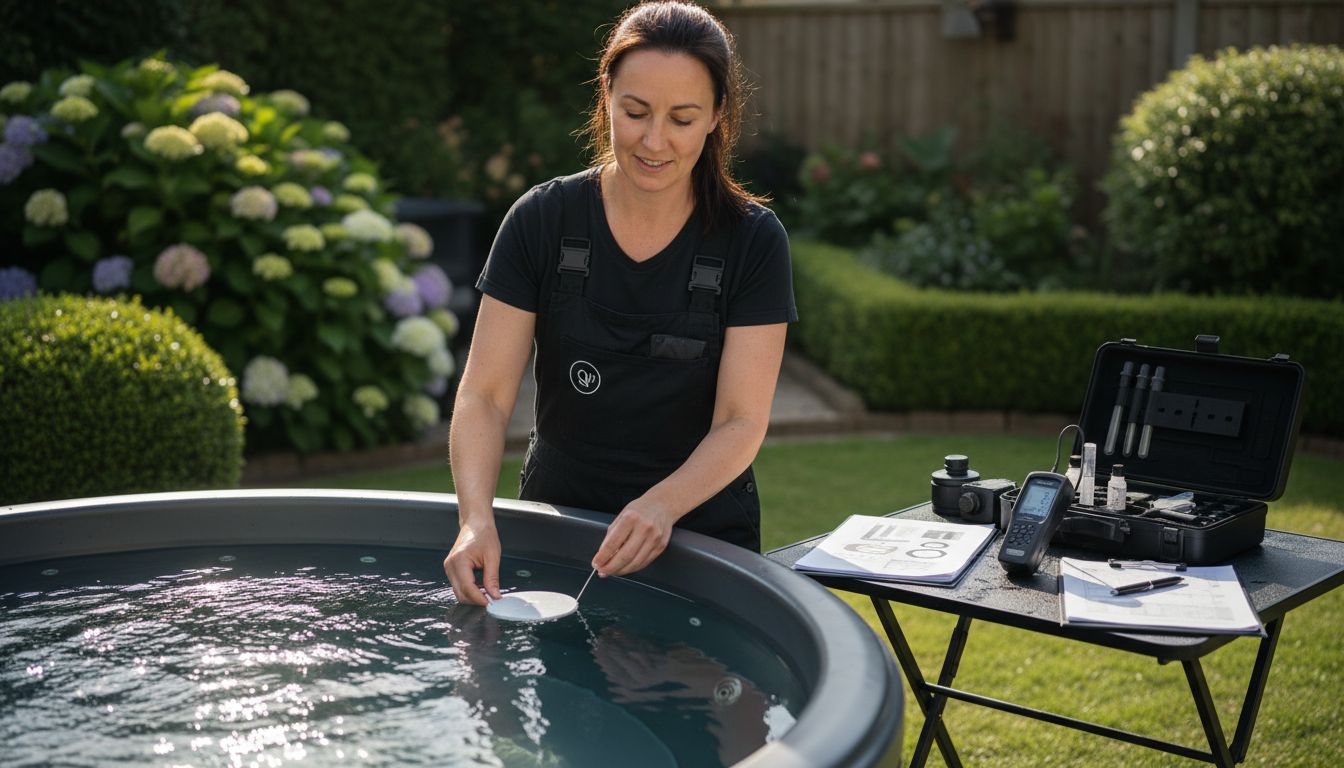 Water Testing covers more on advanced water quality assessment.
What It Means for Hot Tub Health and Safety
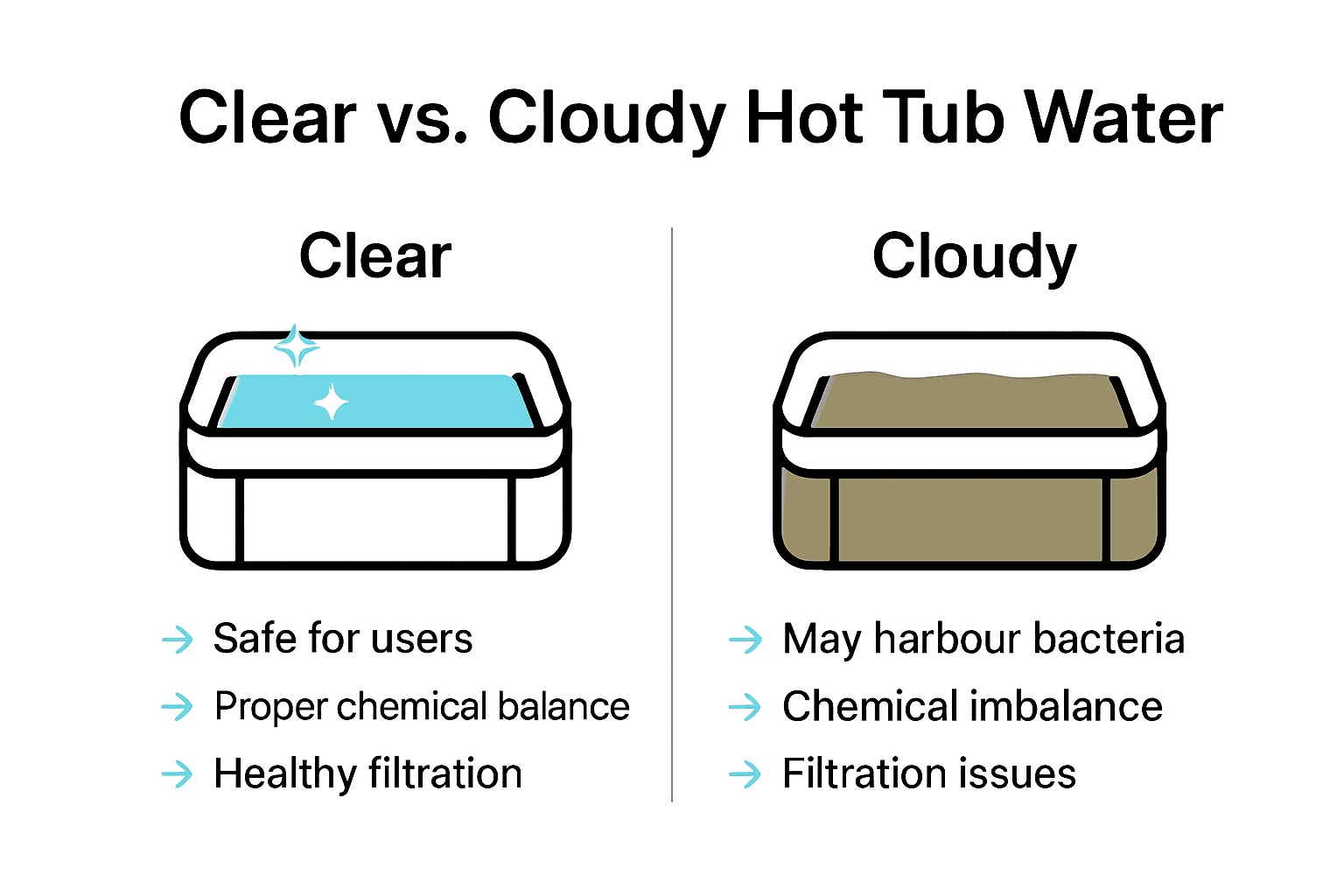
Keeping clarity up is vital to the health and safety of anyone using the tub. Poor water can turn a relaxing soak into a health hazard, exposing people to bacterial infections, skin irritation and breathing problems.
The main health risks tied to poor clarity include:
- Bacterial growth: cloudy or poorly kept water is an ideal breeding ground for harmful microorganisms
- Skin infections: contaminants can cause rashes, folliculitis and other skin issues
- Breathing problems: poorly treated water can release harmful aerosols carrying bacteria
- Chemical imbalance: poor clarity often signals wrong chemical levels
Regular testing and upkeep are the key preventive steps. Understanding Hot Tub Care highlights how steady monitoring and proactive treatment cut the risks. Seasoned owners know clarity is not just about looks, it is a core part of user safety and enjoyment.
A full water management routine covers regular testing, the right chemical treatment, and understanding how chemistry, filtration and user hygiene interact. Put clarity first and you create a safe, healthy and enjoyable spa for yourself and your guests.
Its Part in Upkeep and Longevity
Clarity plays a big part in keeping a hot tub healthy and long-lived. Steady monitoring and proactive care directly affect how key components perform and last, heading off premature wear and possible failures.
Key upkeep points tied to clarity include:
- Protecting the filtration system: clear water eases the load on the filter
- Preserving equipment: cuts mineral build-up and mechanical stress
- Pump and heater efficiency: prevents blockages and dropping performance
- Holding chemical balance: supports the right operating conditions
Regular clarity checks act as an early warning for mechanical problems. Spotting and fixing water quality concerns quickly helps owners avoid costly repairs and extend the life of their investment. 5 Most Frequently Asked Questions About Owning a Hot Tub adds more on long-term maintenance.
In the end, clarity is more than a cosmetic worry, it is a whole approach to hot tub care. Proactive upkeep, routine testing and quick action when problems appear can turn a potential maintenance nightmare into a smooth, enjoyable spa that keeps both the equipment and your enjoyment intact.
Pitfalls Worth Avoiding
Holding clarity takes vigilance and an eye for the pitfalls that can trip up performance. Many owners create problems by overlooking parts of water management, which leads to persistent, costly trouble.
The most common clarity mistakes include:
- Patchy chemical balancing: skipping regular pH and sanitiser checks
- Overcrowding: too many users without proper water preparation
- Poor filtration: not cleaning or replacing filters on schedule
- Skipping hygiene: no shower beforehand and not rinsing swimwear
- Ignoring water-change schedules: stretching the water beyond its recommended life
Good hot tub upkeep needs a proactive approach. Understanding Why Test Hot Tub Water for Health and Safety underlines how vital steady monitoring is. Each mistake can sharply raise the risk of bacterial growth, equipment damage and health hazards.
Owning a hot tub well means building a systematic approach to clarity. Spotting and dealing with these common issues early stops minor annoyances turning into major maintenance headaches, keeping the spa safe, clean and enjoyable.
Keep Your Hot Tub Crystal Clear and Safe with Zagosa Spa & Pool
Understanding clarity is central to a safe, enjoyable soak. Poor transparency can bring bacterial growth, skin irritation and costly equipment damage. This guide shows why balanced chemical levels, timely filtration and regular testing matter for avoiding the usual pitfalls like cloudy water and microbial contamination.
Take charge of your water quality today with Zagosa's trusted range of quality water treatment products. Our carefully formulated hot tub chemicals and spa essentials help you get clear water that protects your health and extends the life of your kit. Do not let murky water spoil the calm, see how our products help by visiting Zagosa's main site. For more, look at our Water Testing resources and our detailed take on Understanding Hot Tub Care to keep clarity high.
Make a start today on a safer, cleaner and more refreshing hot tub experience with Zagosa Spa & Pool.
Frequently Asked Questions
What is water clarity and why is it important?
Clarity measures how transparent water is, showing how well light gets down through it. It matters because it reflects the health of aquatic ecosystems, supporting processes like photosynthesis and signalling low pollutant levels.
How can I measure water clarity in my hot tub?
You can use several methods: the Secchi disk, transparency tubes, digital turbidity meters and light transmission sensors. Each gives insight into water quality, and some suit particular settings better.
What are the health risks of poor water clarity in hot tubs?
Poor clarity can bring bacterial infections, skin irritation, breathing problems and chemical imbalances. Cloudy water often points to conditions that are not safe for users.
What common mistakes should I avoid when maintaining water clarity?
The usual ones are patchy chemical balancing, overcrowding the tub, poor filtration, skipping hygiene before and after use, and ignoring water-change schedules. Avoiding these keeps clarity up and the soak safe.
Recommended
- Understanding What is Water Clarity and Its Importance - Zagosa Spa & Pool
- Why Pool Water Turns Cloudy: Complete Guide - Zagosa Spa & Pool
- Understanding the Reasons for Cloudy Hot Tub Water - Zagosa Spa & Pool
- 7 Essential Pool Water Treatment Tips for Crystal Clear Water - Zagosa Spa & Pool
- Demystifying Structured Water and Its Benefits - Omnia Radiation Balancer
- Water Structure Testing the Omnia Radiation Balancer