By The Zagosa Team. Published .
Reviewed or updated .
Cloudy water is the quiet troublemaker that turns a relaxing soak into a chore. Most people assume it just makes the spa look a bit dingy and less inviting. The bigger surprise is that cloudy water often points to a chemical imbalance, or even bacteria lurking below the surface, putting both your health and your hot tub at risk.
On This Page
- What Is Cloudy Hot Tub Water?
- Why Cloudy Water Matters For Your Hot Tub
- How Cloudy Water Develops
- The Main Causes Of Cloudy Water
- How Cloudy Water Affects Your Soak
The Short Version
| Takeaway | Explanation |
|---|---|
| Cloudy water indicates underlying issues | Cloudiness often signals problems with water chemistry, filtration, or bacterial growth, necessitating immediate attention. |
| Check chemical balance regularly | Maintaining proper pH, alkalinity, and sanitiser levels prevents cloudiness and ensures safe, clear water. |
| Contaminants worsen water clarity | Oils, lotions, and other residues from users can precipitate cloudiness; regular cleaning helps mitigate this. |
| Poor water quality poses health risks | Cloudy water can harbour harmful bacteria, increasing the risk of skin infections and respiratory issues for users. |
| Monitor environmental factors closely | Usage frequency and local conditions affect water quality; proactive maintenance is key to preserving clarity and safety. |
What Is Cloudy Hot Tub Water?
Cloudy water is a common water quality problem that can turn a relaxing spa into a frustrating, unhygienic one. It happens when the water loses its crystal-clear look and turns opaque, milky or hazy, which hits both the appearance and the safety of your hot tub.
What Throws Off Clarity
Clear water depends on several things working together. When that balance is upset, cloudiness shows up as the visible sign of a chemical or environmental problem underneath. The water goes murky because tiny suspended particles stop light passing through evenly.
According to Public Health England, poorly maintained spa pools can carry real health risks, so clarity is more than a cosmetic worry. Those suspended particles might include:
- Dissolved minerals
- Organic contaminants
- Body oils and lotions
- Bacteria and microorganisms
- Calcium and metal residues
The Health and Function Angle
Cloudy water is not only unsightly; it flags operational trouble too. Suspended particles can mean poor filtration, chemical imbalance or bacterial growth. If you want a fuller picture of managing your water, read our guide on hot tub water problems.
Getting to grips with cloudy water means accepting that clarity is a mix of chemical balance, filtration and environment. Pinning down the underlying causes is the key to getting your water clear again and keeping it that way.
Why Cloudy Water Matters for Your Hot Tub
Cloudy water is far more than an eyesore. It points to possible health risks, mechanical trouble and poor water quality that can turn your place of relaxation into a home for harmful microorganisms and system decline.
The Health and Safety Side
Cloudy water signals problems underneath that hit user safety directly. According to the Health and Safety Executive, poorly maintained spa systems can become serious sources of bacterial growth. Cloudy water suggests conditions where harmful microorganisms could thrive, exposing bathers to risks such as:
- Skin infections
- Respiratory complications
- Potential bacterial transmission
- Compromised immune system challenges
- Risk of Legionella bacteria growth
The Mechanical Side
Beyond health, cloudy water is an early warning of possible mechanical failure. Suspended particles can damage important components like pumps, filters and heating elements. Mineral deposits, organic matter and chemical imbalances build up, cutting efficiency and leading to costly repairs.
The Long Game
Keeping water pristine is not just about how it looks today; it protects your investment and your ongoing enjoyment. Read more about hot tub water management to see how staying ahead prevents trouble. Regular testing, keeping the chemistry balanced and understanding what causes cloudy water are the preventative habits that protect both your health and your tub.
How Cloudy Water Develops
Cloudy water comes from a tangle of chemical, environmental and biological factors that gradually chip away at clarity. Understanding how it happens helps you catch problems before they get out of hand.
Chemistry and Minerals
Cloudiness often starts with chemical instability. When pH, alkalinity and sanitiser levels stray from their ideal ranges, tiny particles start to gather and hang suspended in the water. According to the Health and Safety Executive, good water management means holding a precise chemical balance to stop particles forming.
The main chemical culprits behind cloudy water are:
- Incorrect pH levels (too high or too low)
- Insufficient sanitiser concentration
- High calcium hardness
- Elevated metal content
- Unbalanced total alkalinity
Contamination and Organic Build-Up
Bathers bring in plenty of contaminants that speed up cloudiness without meaning to. Body oils, cosmetics, skin cells and outdoor debris quickly change the water chemistry. These organics react with your chemical treatments, forming suspended particles that block clarity. With substances going in all the time, cloudiness can build fast.
Surroundings and Use
Outdoor conditions have a big say in water quality too. Heavy use, weak filtration and the surroundings all contribute to the water going off. Read more about hot tub water management to understand the balance needed for clear water. Regular checks, staying ahead of maintenance and knowing how cloudiness develops are all key to keeping it at bay.
The Main Causes of Cloudy Water
Cloudy water arises from a network of connected factors that steadily wear down quality and clarity. Knowing the main contributors lets you target your efforts and head off longer-term problems.
Water Chemistry and Minerals
The delicate balance of your water chemistry has a huge bearing on clarity. According to East Renfrewshire Council, poor water chemistry management can trigger real quality problems. Imbalances create conditions where tiny particles gather, turning clear water cloudy and potentially unsafe.
The key chemical factors behind cloudiness include:
- Calcium hardness levels exceeding recommended ranges
- Unbalanced pH levels (below 7.2 or above 7.8)
- Insufficient sanitiser concentrations
- High total dissolved solids (TDS)
- Elevated metal content in water supply
What Bathers Bring In
The people using the tub are a big source of cloudiness. Every dip introduces contaminants that upset the chemistry. Personal care products, body oils, dead skin cells and outdoor debris make a complex mix that quickly alters the water. These organics react with the chemical treatments, creating suspended particles that cut clarity and can give microorganisms somewhere to breed.
Environment and Operation
Outside factors and how you run the tub matter a lot too. Frequency of use, the surroundings and your maintenance routine all shape clarity. Explore our guide to hot tub water management for the strategies that keep conditions right. Staying ahead with checks, regular filter maintenance and an eye on these factors is what keeps your water clear.
The table below sums up the key factors behind cloudy water, grouped by their nature and source.
| Factor Type | Example Contributors | Description |
|---|---|---|
| Chemical Imbalance | Incorrect pH, high calcium hardness, insufficient sanitiser | Imbalances cause particles to form or remain suspended, clouding water. |
| Mineral Content and Metals | Elevated metal content, calcium, total dissolved solids (TDS) | Excess minerals react to form cloudy residues, which may damage systems. |
| Organic Contamination | Body oils, lotions, dead skin cells, cosmetics | Organics interact with chemicals, forming particles that cloud the water. |
| Environmental Debris | Dust, leaves, outdoor contaminants | External debris enters water, adding particulates and nutrients for bacteria. |
| Filtration and Operational Issues | Inadequate filtration, poor maintenance, frequent usage | Inefficiency in system increases suspended particles, reducing clarity. |

How Cloudy Water Affects Your Soak
Cloudy water goes well beyond looks. It disrupts the whole experience and can compromise the entire hot tub. Understanding the full range of effects shows just how important clear, clean water is.
The Health Risks
Cloudiness flags potential health hazards that can turn a place to relax into a source of infection. According to NHS guidelines, water environments like hot tubs can breed dangerous bacteria when they are not properly maintained. Suspended particles create ideal conditions for microbes to grow, which can expose bathers to serious problems.
The key health risks of cloudy water include:
- Increased potential for skin infections
- Respiratory system complications
- Higher risk of bacterial transmission
- Potential exposure to Legionella bacteria
- Compromised immune system challenges
Wear on the System
Cloudy water knocks the efficiency of your hot tub's systems. Suspended particles keep circulating through the pumps, filters and heating elements, speeding up wear and risking failures. Mineral deposits, organic matter and chemical imbalances gradually drag down performance, driving up maintenance costs and shortening the tub's life.
How It Feels to Use
Beyond the technical side, cloudy water changes how using the tub feels. Explore our guide to hot tub water management to see how water quality shapes enjoyment. The look and feel of a hot tub are tied to clear water, and cloudy water can turn a refreshing soak into something you would rather avoid. Regular checks, staying on top of maintenance and understanding these effects all help keep both the tub working well and the pleasure of owning it intact.
The table below compares the health, mechanical and experience impacts of cloudy water, as a quick overview.
| Impact Area | Main Consequences | Key Risks/Effects |
|---|---|---|
| Health | Promotes microbial/bacterial growth | Skin infections, respiratory issues, Legionella risk |
| Mechanical | Causes wear and inefficiency in pumps and heaters | Increased maintenance costs, equipment damage, shorter lifespan |
| User Experience | Diminishes enjoyment and sense of cleanliness | Psychological discomfort, reduced relaxation, reluctance to use the tub |
Get Back to Clear Water with Zagosa Spa & Pool
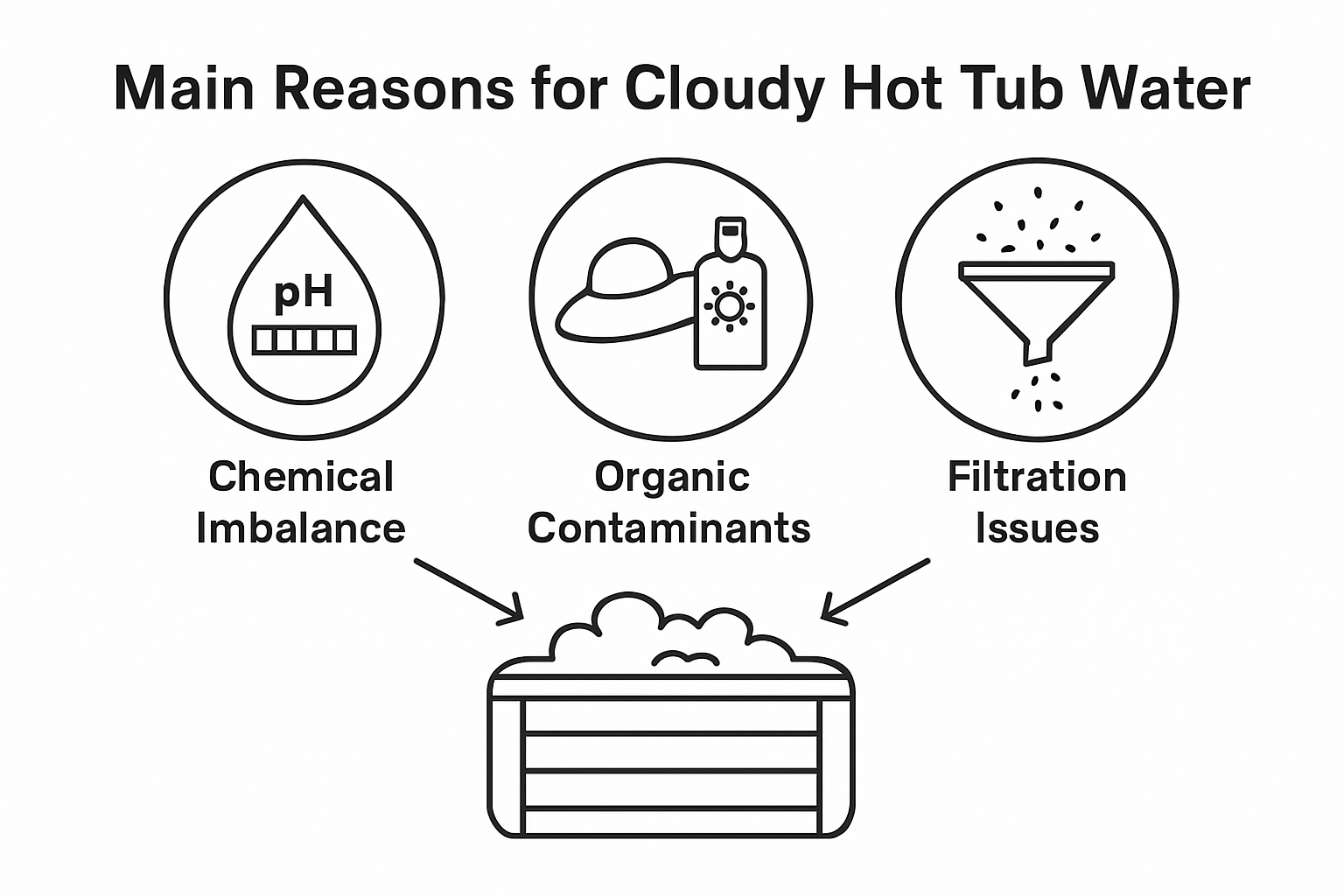
Battling stubborn cloudy water can quickly turn relaxation into frustration. As we have covered, chemical imbalances, organic contaminants and poor filtration ruin clarity and can also threaten your health and your equipment. If you are looking for an effective way to protect your spa from these common but tricky problems, you are in good company. Plenty of owners meet these hidden dangers every season.

Take charge and get back the clarity you want. Rely on Zagosa's expertly made water treatment products to tackle cloudy water at the source and protect both your health and your investment. Visit our main site for solutions that restore balance, fight bacteria and keep the water right every time. Do not wait for cloudy water to set in. See the difference Zagosa Spa & Pool can make and enjoy peace of mind with every soak.
Frequently Asked Questions
What causes cloudy hot tub water?
Cloudy hot tub water is caused by a combination of factors including chemical imbalances, organic contaminants, suspended particles, and inadequate filtration. These can stem from user introductions like body oils and cosmetics or improper water treatment.
How can I prevent cloudy water in my hot tub?
To prevent cloudy water, regularly test and balance the water chemistry, maintain proper sanitiser levels, ensure adequate filtration, and minimise the introduction of contaminants by showering before use.
What are the health risks associated with cloudy hot tub water?
Cloudy hot tub water can harbour harmful microorganisms, leading to health risks such as skin infections, respiratory complications, and exposure to bacteria like Legionella, especially in improperly maintained systems.
Is cloudy water a sign of mechanical issues in my hot tub?
Yes, cloudy water can indicate potential mechanical problems within the hot tub system, such as reduced filtration efficiency or damage to pumps and heating elements caused by suspended particles and chemical imbalances.