By The Zagosa Team. Published .
Reviewed or updated .
More than 60 percent of pool owners hit cloudy water at some point, often assuming it is just a minor annoyance. In truth, cloudy water points to deeper problems that go beyond simple chemical fixes. When the water turns hazy and uninviting, it may signal filtration problems, hidden bacteria or unsafe chemical levels that threaten both comfort and safety. Understanding what causes the murkiness, and why quick fixes rarely work, sets you up for clearer, safer, more enjoyable swimming.
Table of Contents
- What cloudy pool water is and common myths
- The main causes of cloudy pool water
- Telling the types of cloudiness apart
- Effective prevention and treatment
- Common mistakes and how to avoid them
Key Takeaways
| Point | Details |
|---|---|
| Understanding cloudiness | Cloudy water, or turbidity, signals possible problems beyond looks, including filtration failures and water imbalances.[1] |
| Common causes | Key factors include low chlorine, poor filtration and contamination from the surroundings. |
| Pool care strategies | Good care means regular testing, keeping the filtration system in shape and preventing contamination. |
| Avoiding mistakes | Common pitfalls include neglecting the chemistry and filtration upkeep, which make cloudiness worse. |
What Cloudy Pool Water Is and Common Myths
Pool water cloudiness is far more involved than most people think. According to pwtag, cloudy water is technically defined as turbidity, where suspended particles scatter light, giving a hazy, opaque look that turns clear water into a murky, uninviting one.[2]
Contrary to common belief, cloudy water is not just a cosmetic problem. Hayward Pool points out that cloudiness can signal serious underlying issues beyond simple chemical imbalances. These possible problems include:
- Poor filtration
- Build-up of contaminants from the surroundings
- Equipment faults
- Bacterial or algal growth
- Unbalanced water chemistry
One big misconception many owners hold is that simply adding more chlorine will instantly clear cloudy water. That oversimplifies a subtle problem. Proper pool care means understanding the root causes and applying targeted fixes. Water clarity needs a rounded approach that considers filtration efficiency, chemical balance and regular upkeep.
For those wanting to understand water management more deeply, our guide on water clarity offers full insight into keeping pool conditions pristine.
The Main Causes of Cloudy Pool Water
Cloudy water is not random but a complex mix of several factors. PWTAG shows the main culprits include low free chlorine, faulty circulation and unbalanced chemistry that undermine overall pool health.[1]
According to Hayward Pool, the biggest causes of cloudy water fall into a few key areas:
- Under-chlorination: lets harmful bacteria and microbes multiply fast
- Over-chlorination: sets off chemical reactions with organic matter
- Poor filtration: stops suspended particles being cleared efficiently
- Algae growth: takes hold quickly with insufficient treatment
- Contamination: brings in debris and particles
Understanding these causes means recognising the fine balance of pool care. Chemical levels, filtration efficiency and the surroundings all play their part in water clarity. High pH, for instance, can sharply reduce chlorine's effectiveness, creating a breeding ground for water quality problems.[2]
For owners wanting deeper insight into keeping the water pristine, our guide on pool water treatment tips offers full strategies for clear water.
Telling the Types of Cloudiness Apart
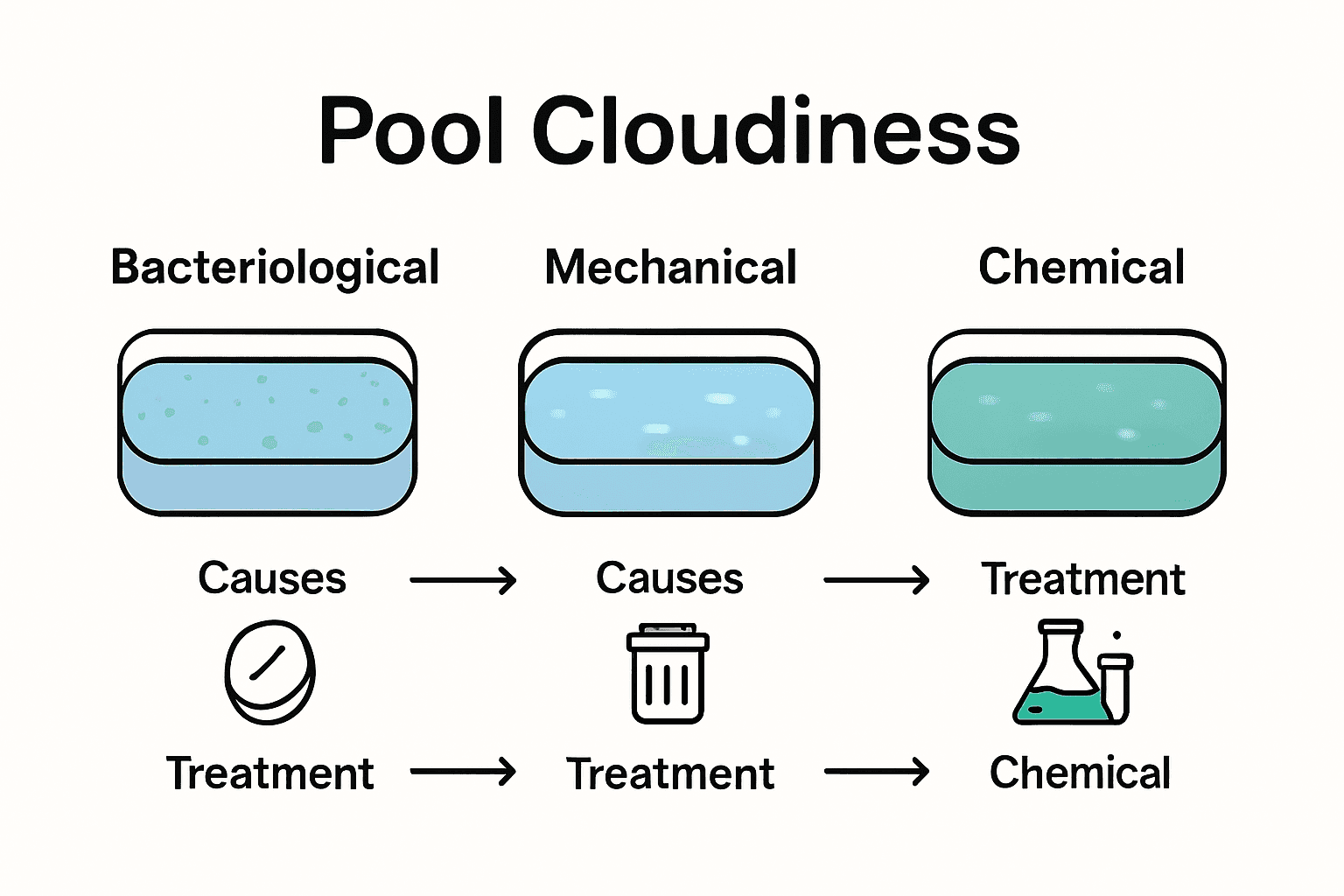
Pool water cloudiness is not a single thing but a condition with distinct variations. PWTAG gives a useful framework for understanding them, grouping cloudiness into three main types: bacteriological, mechanical and chemical.
According to Hayward Pool, each type has its own traits and challenges:
- Bacteriological cloudiness
- Caused by low chlorine
- Points to possible microbial growth
- Usually looks milky or hazy
- Needs immediate disinfection
- Mechanical cloudiness
- Comes from poor filtration
- Often tied to pump or circulation faults
- Marked by persistent suspended particles
- Calls for an equipment check and possible repair
- Chemical cloudiness
- Stems from wrong pH or chemical imbalances
- Can cause scale to form
- Looks dull and opaque
- Needs precise chemical rebalancing
Recognising these distinct types is key to targeted care. Each one needs its own approach, which makes accurate identification the first step towards clear water again.
Owners wanting more detail on filtration systems may find our guide on pool filter types especially useful for understanding water clarity.
Effective Prevention and Treatment
PWTAG stresses that preventing cloudy water calls for a planned, many-sided approach.[3] Managing the chemistry is the cornerstone of clear water, with close attention to chlorine, pH balance and filtration efficiency.
According to Hayward Pool, effective prevention involves a few key strategies:
-
Regular testing
-
Keep chlorine between 1 and 3 mg/l
-
Check the pH balance consistently
-
Monitor total alkalinity
-
Check the chemistry weekly
-
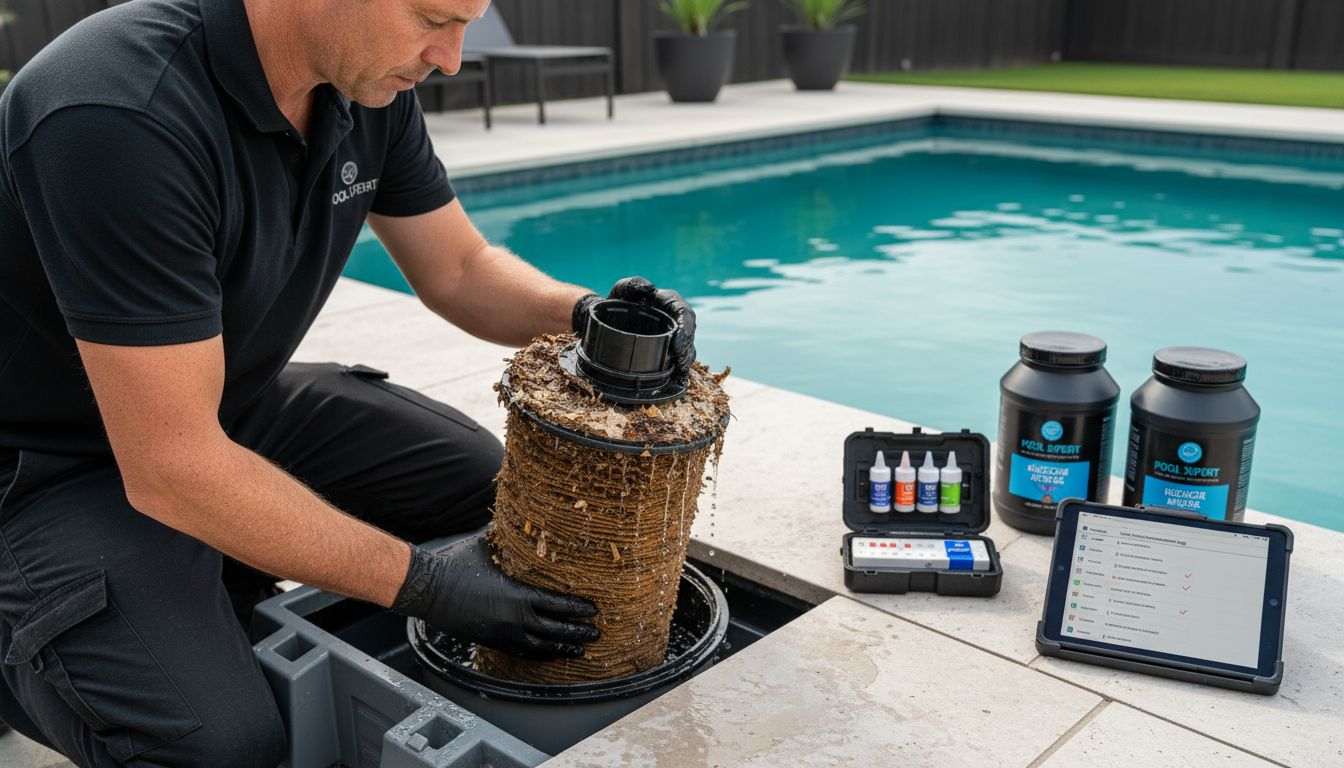
Filtration upkeep
-
Clean the filters regularly
-
Ensure good circulation
-
Replace filter media as recommended
-
Check the pump and circulation equipment
-
Preventing contamination
-
Remove debris straight away
-
Use pool covers when not in use
-
Shower before getting in
-
Limit organic material getting in
Good pool care needs a steady, systematic approach. Chemical balance, filtration efficiency and contamination control work together to prevent cloudiness. Owners should see water management as an ongoing task, not a one-off.
For full insight into keeping the water pristine, our chlorine management guide offers more expert strategies for clear water.
Common Mistakes and How to Avoid Them
PWTAG points out that pool care mistakes are often at the root of persistent water quality problems. These errors usually come from inconsistent testing, neglected chemistry and overlooked filtration upkeep.
According to Hayward Pool, owners often fall into a few problem patterns:
- Poor chemical management
- Over-chlorinating the pool
- Inconsistent testing
- Storing chemicals badly
- Neglecting the pH balance
- Filtration errors
- Cleaning filters too rarely
- Ignoring equipment upkeep
- Putting off filter media replacement
- Overlooking circulation checks
- Contamination neglect
- Letting debris build up
- Skipping pre-swim hygiene
- Not using pool covers
- Letting in too much organic material
Good pool care needs a proactive, systematic approach. Each mistake is a possible path to cloudy water, which makes steady monitoring and quick action crucial. Owners should build a disciplined routine that covers chemical balance, filtration efficiency and contamination prevention.
For owners wanting to sharpen their water management, our guide on pool water treatment tips offers full strategies to avoid common pitfalls and keep the water pristine.
Keep Your Pool Water Crystal Clear with Zagosa Spa & Pool
Battling cloudy water can feel frustrating, especially when issues like low chlorine, poor filtration or chemical imbalances keep coming back. You deserve a clear, inviting pool that refreshes you, not one that causes worry. At Zagosa Spa & Pool, we understand these challenges and offer a trusted selection of premium water treatment products made to restore and hold your pool's balance.

Take charge of your pool's clarity today by exploring our expertly formulated pool chemicals and spa essentials. With Zagosa Spa & Pool, you are set to tackle bacteriological, mechanical and chemical cloudiness effectively. Visit us at Zagosa Spa & Pool to see how our products can transform your routine and keep your water clear all season.
Frequently Asked Questions
What causes cloudy pool water?
It can come from several things, including low free chlorine, poor filtration, contaminants from the surroundings, bacterial or algal growth and chemical imbalances.
How can I effectively prevent cloudy water in my pool?
Test and hold the right chlorine level regularly, keep the filtration system in good shape, remove debris promptly and shower before getting in.
What are the different types of pool water cloudiness?
There are three main types: bacteriological, mechanical and chemical. Each needs its own approach to identify and treat the underlying cause.
What mistakes should I avoid that could lead to cloudy pool water?
Common ones include inconsistent testing, neglecting the pH balance, poor filtration upkeep and letting debris build up. Build a systematic routine for monitoring the pool.
Recommended
- The Power of Chlorine: Ensuring Clean and Safe Pool Water - Zagosa Spa & Pool
- What is the most critical pool chemical? - Zagosa Spa & Pool
- What Pool Chemicals Do You Need for a Swimming Pool - Here's the top 5 things? - Zagosa Spa & Pool
- 7 Essential Examples of Pool Chemicals for Your Pool - Zagosa Spa & Pool
- Water Purification Process Explained: Achieve Pure Drinking Water - Coway Water Purifier
Sources and review
Reviewed on . Next review due .
- PWTAG Code of Practice: the management and treatment of swimming pool water - Pool Water Treatment Advisory Group
- Guidelines for safe recreational water environments. Volume 2: swimming pools and similar environments - World Health Organization
- PWTAG technical notes on pool and spa water treatment - Pool Water Treatment Advisory Group