By The Zagosa Team. Published .
Reviewed or updated .
Plenty of British hot tub owners are surprised to learn that poor alkalinity is behind a large share of spa water problems. Getting the chemistry right is not just about keeping the tub looking clean; it protects your investment and makes for a safer, more comfortable soak. This guide explains why alkalinity matters, clears up the biggest myths and shows you how to keep your water balanced so the system lasts longer and every soak feels right.
In This Guide
- What Spa Alkalinity Is And The Myths
- How Alkalinity Holds Water Balance
- Ways To Test Spa Alkalinity
- The Risks Of The Wrong Alkalinity
- Fixing And Holding The Right Alkalinity
The Main Points
| Point | Details |
|---|---|
| Understanding Alkalinity | Spa alkalinity is crucial for pH stability and water quality, ideally sitting between 80-120 ppm. |
| Testing Methods | Use digital meters or liquid test kits for accurate readings; avoid test strips for critical water management. |
| Risks of Imbalance | Low or high alkalinity can damage equipment and make bathing unsafe; regular monitoring is essential. |
| Correction Techniques | Adjust carefully, using sodium bicarbonate to raise it and sodium bisulphate or muriatic acid to lower it, retesting often. |
What spa alkalinity is and the myths
Spa alkalinity is the water's ability to neutralise acids and hold a stable pH in your hot tub. Understanding this key property is essential for UK owners after good water quality. Total alkalinity measurement shows how well your water resists sudden pH changes, which directly affects comfort and how long your equipment lasts.
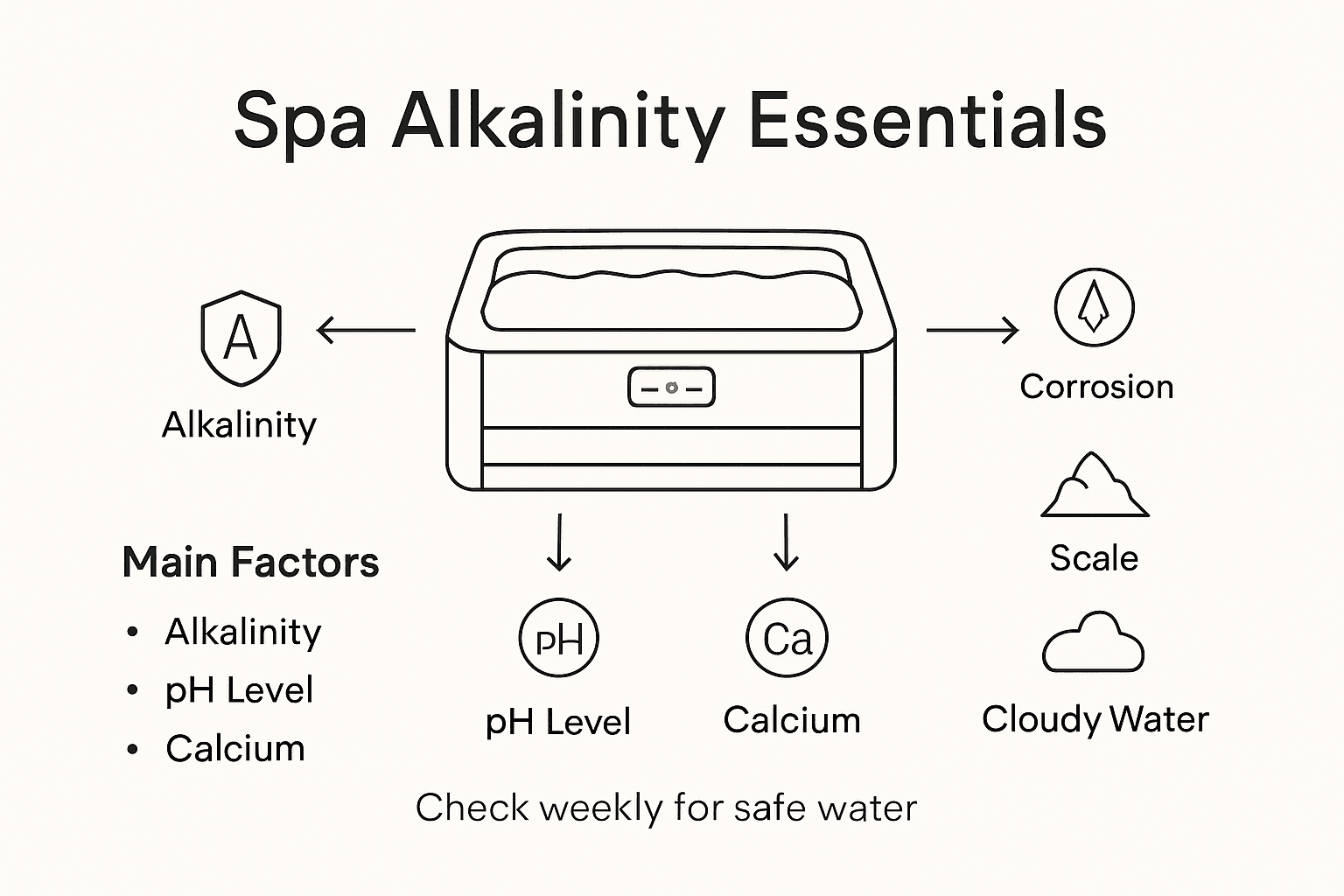
Many owners misread alkalinity, believing higher numbers always mean better water. That myth can cause real upkeep headaches. In truth, total alkalinity should usually sit between 80 and 120 parts per million (ppm) for most spas. Levels outside this range can bring scale, corrosion and an uncomfortable soak. The role of alkalinity goes beyond simple pH management, shaping the water chemistry in complex ways.
A common misconception is thinking pH and alkalinity are one and the same. They are distinct but linked. pH indicates how acidic or basic the water is, while alkalinity is the water's buffering capacity. UK owners should test both regularly to keep a balanced spa. Understanding these subtle interactions helps prevent damage to your equipment and keeps every soak comfortable and safe.
To help UK owners see the difference between alkalinity and pH, here is a quick comparison:
| Parameter | What It Represents | Ideal Range | Main Impact on Spa |
|---|---|---|---|
| Alkalinity | Water’s acid-neutralising power | 80-120 ppm | pH stability |
| pH | Acidity or basicity of water | 7.2-7.8 | Comfort and efficacy |
Pro Tip: Water Chemistry Check: Invest in a reliable digital water testing kit and test your spa’s alkalinity and pH levels every two weeks, recording results to track long-term water balance trends.
How alkalinity holds water balance
Keeping your tub in balance means understanding how alkalinity acts as a fundamental steadying agent. Alkalinity interactions with water chemistry create a protective buffer that prevents sudden pH changes, which can dramatically affect water quality and equipment. This buffering keeps the sanitiser working well and the spa comfortable and safe.
The link between alkalinity and pH is close and critical. Alkalinity acts as a shock absorber for your water, preventing the rapid acid or base swings that could harm equipment or spoil the soak. When total alkalinity sits within the recommended 80-120 parts per million, it helps hold a stable pH between 7.2 and 7.8, which is ideal for both comfort and chemical effectiveness.
For UK owners, understanding alkalinity's role means seeing how it affects water treatment. When it drops too low, pH becomes unstable and can swing wildly, risking corrosion of spa components. When it is too high, you can get scaling, weaker sanitiser and cloudy water. Regular testing and careful chemical management are essential to holding this fine balance.
Pro Tip: Chemical Harmony: Use a reliable liquid test kit rather than test strips for more accurate alkalinity measurements, and always add chemicals in small increments while retesting to avoid overcorrection.
Ways to test spa alkalinity
UK owners have several ways to measure total alkalinity, each with its own strengths and limits. Testing techniques for spa water chemistry usually come down to three main methods: digital meters, liquid test kits and test strips. Digital meters give the most precise readings, offering electronic results that cut out human error and deliver instant, highly accurate figures.
Liquid test kits are another reliable way to gauge alkalinity. These kits add specific chemical reagents to a water sample, which then change colour to show the alkalinity. Spa technicians often prefer liquid kits over strips because they give more nuanced, consistent readings. It means following the instructions carefully, adding precise amounts of reagent to the sample and comparing the colour changes against a standard chart.
Test strips, though quick and convenient, remain the least accurate method for UK owners. You dip these disposable strips straight into the water and read the colour change. However, user interpretation, lighting and the strip's age can all skew the reading. For critical water chemistry, liquid kits or digital meters are strongly recommended over simple strips for precise alkalinity readings.
Here is a summary of the accuracy and ideal use for each testing method:
| Method | Accuracy Level | Best Use Scenario |
|---|---|---|
| Digital Meters | Very high | Precision management, routine |
| Liquid Test Kits | High | Regular home and professional use |
| Test Strips | Moderate | Quick checks, not critical tests |
Pro Tip: Precision Monitoring: Always store your testing equipment in a cool, dry location and replace liquid reagents and test strips annually to maintain consistent and reliable water chemistry analysis.
The risks of the wrong alkalinity
The wrong alkalinity poses real risks to both your tub's workings and the soak itself. Comprehensive water chemistry analysis shows that swings in total alkalinity can set off a chain of problems for UK owners. When it drops below 80 parts per million, the water turns corrosive and can damage costly components like heating elements, pumps and surfaces.
Low alkalinity creates particularly dangerous conditions for both equipment and users. Rapid pH swings can corrode metal parts, leading to expensive replacements and possible system failures. Unstable chemistry can also weaken the sanitiser, creating conditions where harmful bacteria and algae might spread. That can bring skin irritation, sore eyes and an unsafe soak.
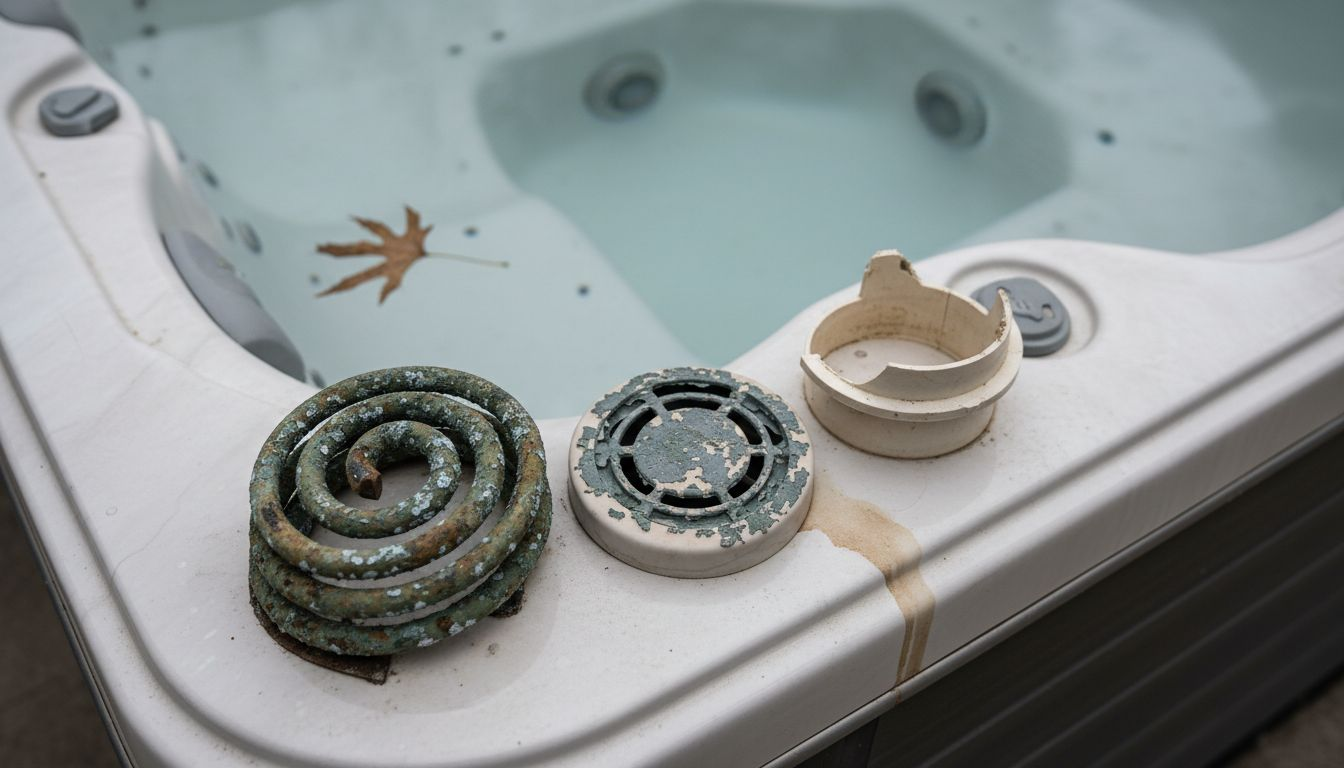
On the other side, alkalinity that is too high (above 120 parts per million) brings its own worries. High levels can cause calcium scaling, where mineral deposits gather on the surfaces and internal parts. These deposits cut heating efficiency, block the jets and leave an unsightly white residue that is hard to shift. The build-up can also speed up wear on pumps and filters, shortening your tub's life and leading to costly repairs.
Pro Tip: Chemical Balance Guard: Invest in a comprehensive water testing kit and schedule monthly professional water chemistry assessments to catch potential alkalinity issues before they escalate into expensive repair scenarios.
Fixing and holding the right alkalinity
Sorting out an alkalinity imbalance calls for a methodical, precise approach. Step-by-step alkalinity correction techniques mean choosing your chemicals carefully and making changes bit by bit. Total alkalinity can be raised using sodium bicarbonate, better known as baking soda, which is a safe, effective increaser when added in controlled amounts.
When the level drops below the ideal range, UK owners should follow a systematic process. First, run an accurate water test to confirm the exact reading. Then work out how much sodium bicarbonate you need based on your tub's volume. Add it in small amounts, mixing thoroughly and waiting 2 to 4 hours between applications. It is crucial to retest after each addition so you do not overshoot the 80-120 parts per million range, which would create fresh problems.
Bringing high alkalinity down needs the same care. Sodium bisulphate or muriatic acid can reduce alkalinity, but these chemicals demand extreme caution. Always add acid to water, never water to acid, and wear protective gear like gloves and safety glasses. Dilute the chemical thoroughly and add it in small amounts, retesting often so you edge towards the target without the dangerous pH swings that could damage equipment.
Pro Tip: Chemical Precision: Always keep a dedicated measuring cup for spa chemicals, never use kitchen utensils, and add chemicals systematically while wearing protective clothing to ensure safe and accurate water chemistry management.
Keep Your Spa Alkalinity Balanced with Expert Support from Zagosa Spa & Pool
Managing spa alkalinity is a crucial step for any UK owner who wants to avoid unexpected equipment damage and uncomfortable water. This article has flagged the common challenges, unstable pH, scaling and corrosion, all caused by the wrong alkalinity. These issues threaten both your tub's lifespan and your enjoyment. Zagosa Spa & Pool understands these frustrations and offers a carefully chosen range of quality water treatment products made to help you hold perfect alkalinity and overall balance.
Take control of your spa's water chemistry today with Zagosa Spa & Pool. Explore our extensive collection of hot tub chemicals and spa essentials formulated to steady alkalinity and improve water quality. Whether you need reliable alkalinity increasers or precise test kits, we provide tools trusted by UK owners and professionals alike. Visit Zagosa's website now to find everything you need to protect your investment and improve your soak. Do not wait for problems to arise - act now and enjoy balanced, crystal-clear water all year round.
Take a look at our products at Zagosa Spa & Pool and find expert advice on water management to keep your spa inviting and safe.
Frequently Asked Questions
What is spa alkalinity?
Spa alkalinity is the water's ability to neutralise acids and hold a stable pH in your hot tub. It is crucial for good water quality and comfort.
What is the ideal total alkalinity range?
The ideal total alkalinity range for a hot tub is usually between 80 and 120 parts per million (ppm). Levels outside this can lead to water quality issues.
How does alkalinity affect pH in spa water?
Alkalinity acts as a buffer for pH, helping to steady it. When it sits in the ideal range, it prevents the rapid pH swings that cause discomfort or equipment damage.
How do I raise the alkalinity in my hot tub?
To raise alkalinity, use sodium bicarbonate (baking soda). Add it in small amounts, mixing thoroughly, and retest the water every few hours until you reach the level you want.