By The Zagosa Team. Published .
Reviewed or updated .
More than 60 percent of hot tub problems start with water that is out of balance. Getting your total alkalinity right is the first step to clear, healthy spa water that lasts. Left unchecked, even slight shifts can lead to costly repairs and uncomfortable soaks. Knowing how total alkalinity works protects your tub and keeps every soak safe. This guide explains why these levels matter so much and how simple changes can save you time, money and frustration.
Table of Contents
- What total alkalinity is and why it matters
- How total alkalinity affects water balance
- Testing total alkalinity in your hot tub
- Adjusting alkalinity: methods and products
- Common mistakes and how to avoid them
Key Takeaways
| Point | Details |
|---|---|
| What total alkalinity is | Total alkalinity measures a tub's ability to resist pH changes and hold steady water, acting as a natural buffer. |
| Why balance matters | Holding total alkalinity between 80 and 120 ppm prevents pH swings, protects equipment and improves disinfection. |
| Testing methods | Regular testing is crucial; options include photometers for professionals, strips for ease and comparator kits for keen DIYers. |
| Adjustment strategies | Adjust safely with sodium bicarbonate to raise levels or acid-based products to lower them, making small changes and retesting often. |
What Total Alkalinity Is and Why It Matters
Total alkalinity is a key chemistry reading that reflects your tub's ability to resist pH changes and hold steady water conditions. Total alkalinity specifically measures the concentration of alkaline substances like bicarbonates, carbonates and hydroxides that act as natural pH buffers in your spa water.[1]
According to gov.uk, total alkalinity is fundamentally "the measure of water's capacity to neutralize acids". So it plays a key part in preventing unexpected, potentially damaging pH swings that could hurt your tub's performance and lifespan.
The importance of holding the right total alkalinity cannot be overstated. When it is balanced correctly, you ensure:
- Steady pH
- Protection against equipment corrosion
- More effective disinfection
- Less risk of scaling or mineral build-up
As narch.org.uk notes, total alkalinity is usually measured in milligrams per litre (mg/l) or parts per million (ppm). Most makers recommend holding it between 80 and 120 ppm, which gives the best setting for your spa's chemistry.
Interested in learning more about managing your tub's water balance? See our guide on why total alkalinity matters.
How Total Alkalinity Affects Water Balance
Total alkalinity plays a pivotal part in holding the fine chemical balance of your tub's water. Think of it as the foundation that supports and steadies your spa's overall chemistry, acting as a key buffer against rapid, potentially damaging pH swings.
According to narch.org.uk, total alkalinity strongly "influences water balance by buffering pH levels". When it is out of balance, you risk two problem scenarios:
- Low total alkalinity: creates unstable pH that can quickly turn acidic
- High total alkalinity: leads to possible scaling and mineral build-up
Gov.uk stresses that these imbalances can result in "corrosive water conditions or scale formation, both of which can damage equipment and affect water quality". The knock-on effects go beyond chemistry, they can directly hit your tub's lifespan and performance.
To understand this, think of total alkalinity as a protective shield. Balanced between 80 and 120 ppm, it prevents sudden pH swings, keeps water quality steady and protects your tub's parts from chemical damage. For more on managing your spa's chemistry, explore our guide on high pH and alkalinity.
Testing Total Alkalinity in Your Hot Tub
Testing total alkalinity is a crucial task that keeps your tub in top shape. It might seem technical, but the process is straightforward and essential for catching chemistry problems before they grow.
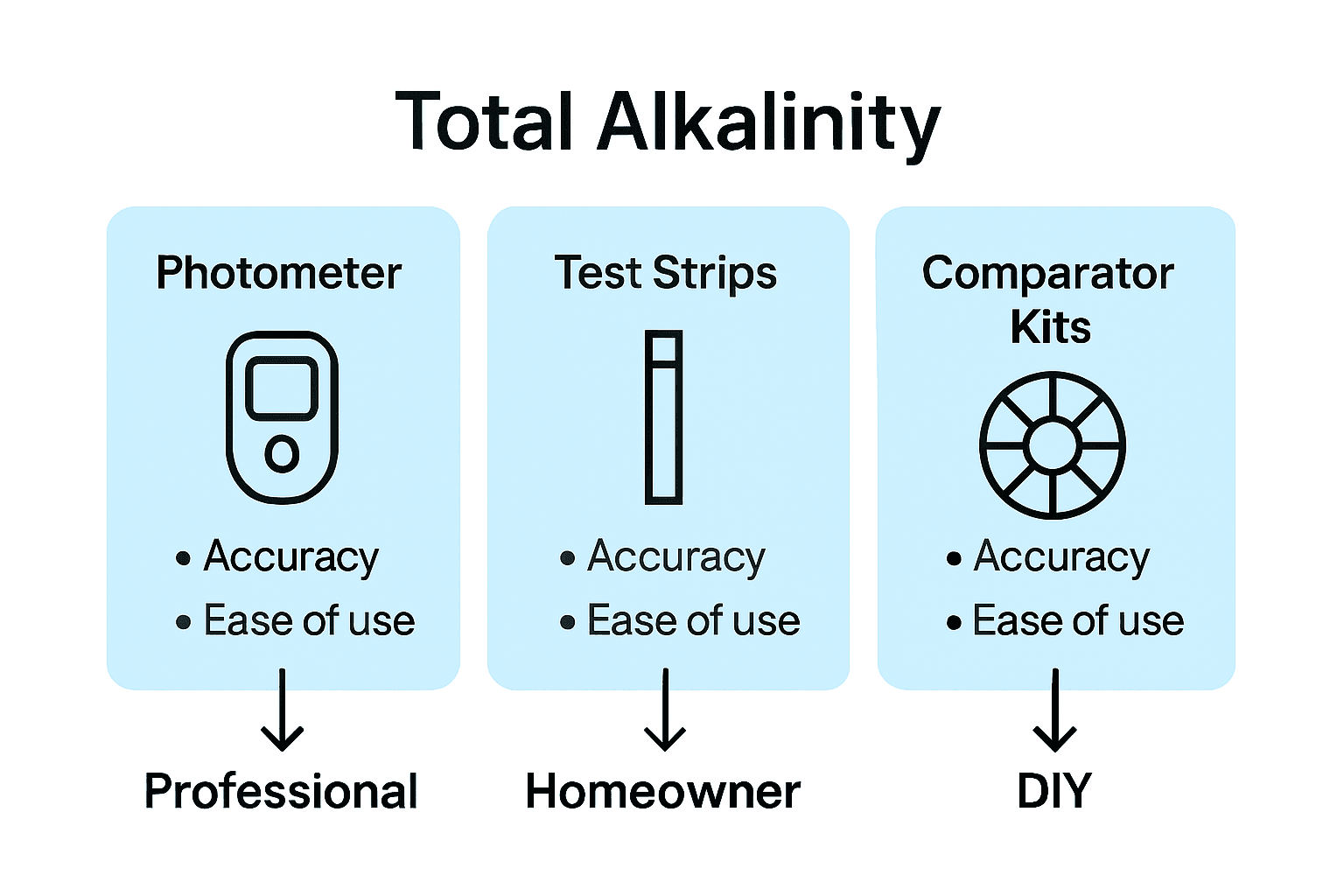
Here is a comparison of total alkalinity testing methods for hot tubs:
| Testing Method | Accuracy | Ease of Use | Recommended For |
|---|---|---|---|
| Photometer | Very High | Moderate | Professional technicians |
| Test Strips | Moderate | Very Easy | Home spa owners |
| Comparator Kits | High | Easy | Enthusiastic DIY users |
Narch.org.uk recommends several methods for accurately measuring total alkalinity, each offering a different level of precision:
- Photometer testing: the most accurate professional method
- Test strips: quick and convenient
- Comparator kits: a reliable visual approach
According to Gov.uk, regular testing is critical because it "helps in maintaining the appropriate balance, preventing issues like pH instability, corrosion, and scaling". Ideally, test your tub's total alkalinity at least once a week, or more often if the spa gets heavy use.
To make testing easier, invest in a reliable kit and set a steady routine. That way you catch any imbalances early and keep your water quality up.
 Want to learn more about managing your spa's chemistry? See our guide on water balancing.
Adjusting Alkalinity: Methods and Products
Balancing your tub's total alkalinity takes a considered approach and careful choice of chemicals. Knowing the right methods and timing can make a real difference to your spa's chemistry.
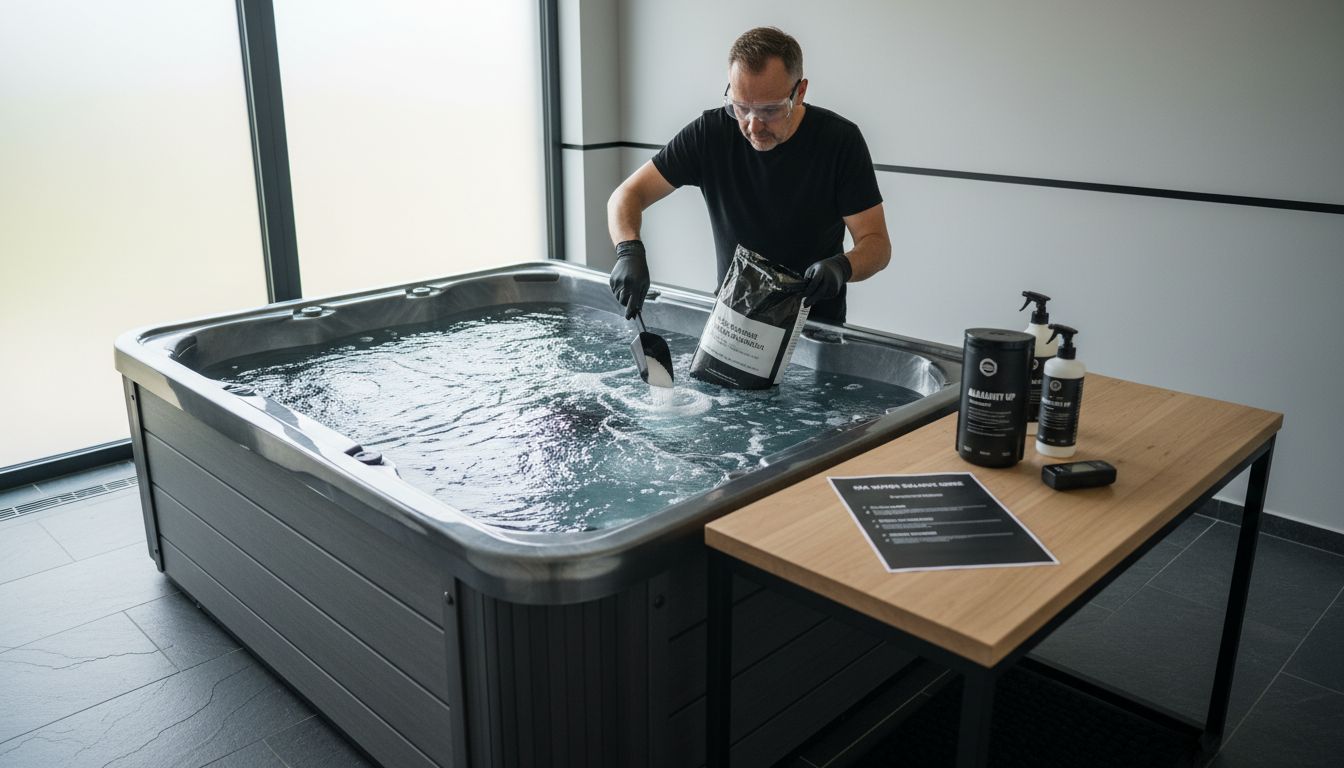
Narch.org.uk gives clear guidance on adjusting total alkalinity, recommending two main methods:
- Raising alkalinity: adding sodium bicarbonate
- Lowering alkalinity: using acid-based products
Gov.uk stresses that "careful monitoring and incremental adjustments are necessary" when changing alkalinity. That means adding chemicals in small amounts and retesting after each change to avoid overcorrecting.
Precise adjustments take patience and care. Start by adding the recommended amount of water balancing chemicals, wait 2 to 4 hours, then retest to confirm you have hit the target total alkalinity of 80 to 120 ppm.
 Gradual changes protect your tub's delicate chemical balance and prevent damage to its parts.
Common Mistakes and How to Avoid Them
Managing your tub's total alkalinity is not complicated, but it does take attention to detail and a steady approach. Even experienced owners can fall into traps that upset the chemistry and could damage the spa.
Narch.org.uk flags several key mistakes owners often make:
- Inconsistent testing: skipping regular checks
- Drastic chemical changes: making sudden, large adjustments
- Product misuse: using the wrong chemicals
- Ignoring the maker's guidance: overlooking specific advice
Gov.uk stresses that "infrequent testing, improper chemical dosing, and ignoring manufacturer guidelines can lead to water quality issues". The key is a systematic routine that heads off these pitfalls.
To keep your tub in top shape, set a weekly testing schedule, make small chemical adjustments and always follow the maker's specific instructions.[2] Want to dig deeper into your spa's water balance? See our guide on water balancing.
Keep Your Hot Tub's Total Alkalinity Perfectly Balanced with Zagosa Spa & Pool
Holding the right total alkalinity is essential to prevent unstable pH, equipment corrosion and scaling that can spoil your hot tub. Measuring precisely and adjusting carefully takes reliable products and expert guidance to avoid common pitfalls like drastic changes or inconsistent testing. Zagosa Spa & Pool understands that your goal is to enjoy a clean, balanced, refreshing spa without the stress of complicated chemistry.

Discover our range of trusted water balancing chemicals and test kits made specifically for hot tubs. Start taking charge of your water quality today and protect your spa investment. Visit Zagosa Spa & Pool to see how our products help you hold total alkalinity between 80 and 120 ppm with ease. For tips and detailed advice, see our full water balancing guide and learn why managing alkalinity correctly is the key to lasting enjoyment.
Frequently Asked Questions
What is total alkalinity in hot tubs?
Total alkalinity measures the water's ability to resist pH changes and hold steady conditions. It reflects the concentration of alkaline substances like bicarbonates, carbonates and hydroxides in your water.
Why is maintaining proper total alkalinity important for my hot tub?
The right total alkalinity keeps pH steady, protects against equipment corrosion, improves disinfection and reduces the risk of scaling or mineral build-up, all of which help your tub perform and last.
How can I test total alkalinity in my hot tub?
You can test it with several methods, including photometers for high accuracy, strips for convenience and comparator kits for reliable visual results. Test at least once a week.
What should I do if my hot tub's total alkalinity is too high or too low?
To raise it, add sodium bicarbonate; to lower it, use acid-based products. Make changes gradually and retest to avoid overcorrecting, aiming for 80 to 120 ppm.
Recommended
- Why is Total Alkalinity so important in hot tubs or pools - Zagosa Spa & Pool
- High pH and alkalinity in your hot tub - Zagosa Spa & Pool
Sources and review
Reviewed on . Next review due .
- PWTAG technical notes on pool and spa water treatment - Pool Water Treatment Advisory Group
- BISHTA standards for hot tub and spa water hygiene (British and Irish Spa and Hot Tub Association) - BISHTA