By The Zagosa Team. Published .
Reviewed or updated .
Nearly every UK spa owner runs into the same problem: keeping the water safe and clear. Warm spa water is a perfect nursery for bacteria, and the Health and Safety Executive warns that a badly managed hot tub can become a source of infectious disease. Get to grips with how sanitisers work and you head off those health risks while keeping soaks relaxing. This guide walks through how each option protects UK spa-goers and what to weigh up before you choose.
Table of Contents
- What spa sanitisers do
- The main sanitiser types
- How each one works
- Pros and cons of each
- Picking the right one for your spa
- Mistakes to avoid and safety advice
Key Takeaways
| Point | Details |
|---|---|
| Why sanitisers matter | They are essential for killing off harmful microorganisms and keeping the water safe, especially where several people share it. |
| The main types | Chlorine and bromine are the primary sanitisers, each with strengths and limits that suit different conditions. |
| How to choose | Weigh how often the spa is used, the water temperature and skin sensitivity to get the right comfort and safety. |
| Common mistakes | Steady testing and correct dosing are vital; sidestepping the usual errors improves both upkeep and the soak. |
What Spa Sanitisers Do
Spa sanitisers are chemical treatments made to kill off harmful microorganisms and keep the water safe in hot tubs, spas and hydrotherapy pools. The HSE classes these systems as potential sources of infectious disease, which underlines how much proper water management and sanitisation matter.
Sanitisers destroy the bacteria, viruses, algae and other risky microbes that multiply fast in warm water. Their job is more than cleaning, they form a protective barrier that stops waterborne pathogens taking hold and spreading. That is especially important in a spa, where several people share the same water and cross-contamination is a real risk.
The key jobs of a spa sanitiser include:
- Killing off harmful microorganisms
- Preventing bacterial and algal growth
- Keeping the water clear and clean
- Protecting the health and safety of users
- Extending the life of equipment and surfaces
As our spa chemicals guide explains, effective sanitisation means understanding the different treatments and where each fits. Whether you run a spa professionally or at home, you need a sanitiser that balances effectiveness, user safety and environmental sense.
The Main Sanitiser Types
Sanitisers fall into a few main types, with chlorine and bromine the most widely used in hot tub and spa water. Both play a central role in destroying harmful microorganisms and keeping the water in good shape.
Chlorine sanitisers are the traditional, most common choice for spa water. They act quickly to kill bacteria, viruses and other pathogens. Why are hot tub bromine tablets so widely used? notes that chlorine comes in several forms, including:
- Granular chlorine
- Chlorine tablets
- Liquid chlorine solutions
- Stabilised and unstabilised chlorine variants
Bromine sanitisers are an alternative to chlorine, often preferred for indoor spas and pools with higher water temperatures. Unlike chlorine, bromine stays active longer in warmer water and gives off fewer harsh chemical smells.
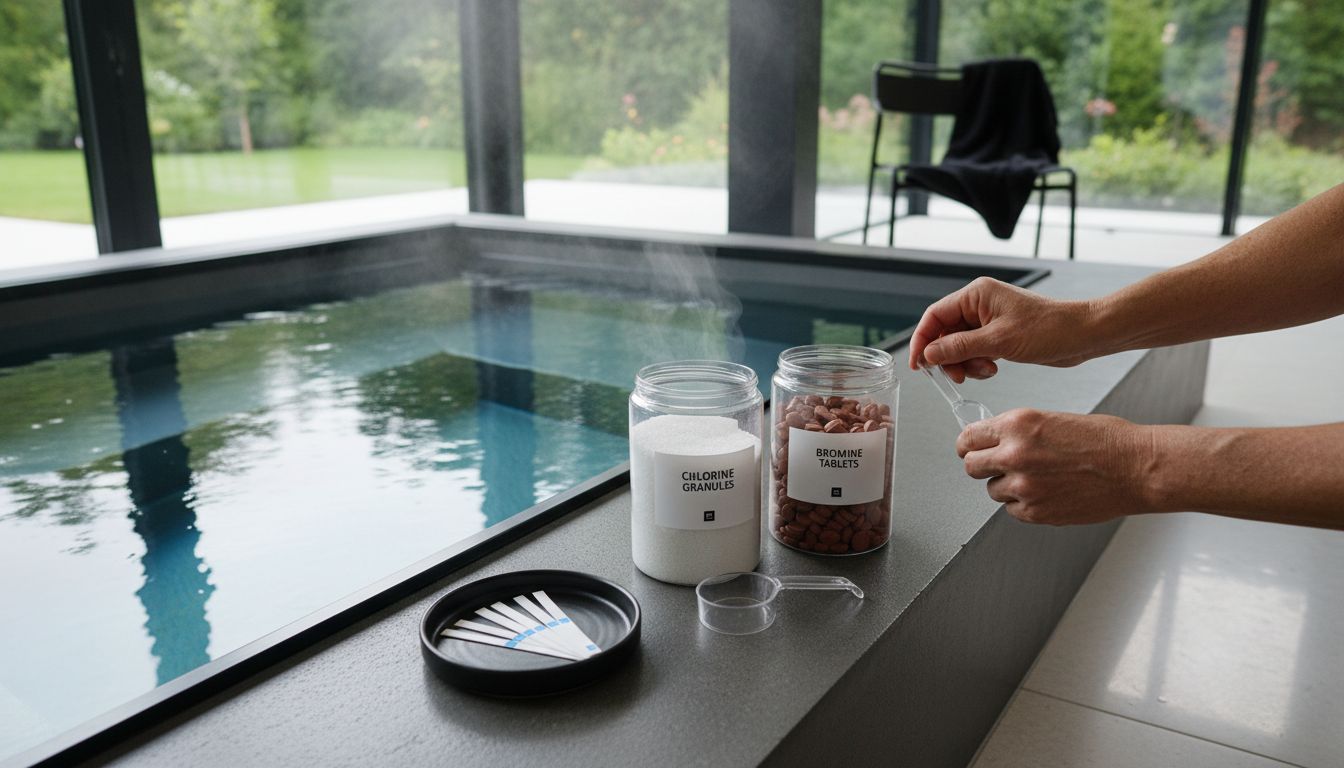 What are Bromine Granules? explains that bromine works especially well for anyone with sensitive skin or wanting a milder treatment.
Knowing the fine differences between these types helps owners treat the water well. Each brings its own benefits and trade-offs, so the right choice depends on your usage, water conditions and personal preferences.
How Each One Works
Sanitisers work through chemical processes that neutralise and kill harmful microorganisms in the water. Understanding Water Sanitizers explains that these agents break down the cell structures of bacteria, viruses and algae, stopping them reproducing and surviving in the spa.
Chlorine sanitisers work through oxidation and ionisation. Added to water, chlorine forms hypochlorous acid, a strong disinfectant that attacks the cell walls of microorganisms. That destroys pathogens by disrupting their internal structures and metabolism. Chlorine acts fast, usually clearing most harmful microbes within minutes of contact.
The key ways a sanitiser acts include:
- Oxidising cell membranes
- Disrupting microbial protein structures
- Neutralising enzymatic processes
- Preventing bacterial and viral reproduction
- Purifying the water continuously
Bromine sanitisers work much like chlorine but with some clear advantages. Bromine stays more stable at higher temperatures and holds its effectiveness longer in a spa. Unlike chlorine, it keeps working even after neutralising contaminants, making it a more persistent, reliable choice for hot tubs. Maintaining Clean and Safe Spa Water notes that bromine's molecular structure lets it keep attacking microorganisms after first contact, giving extended protection against water-based health risks.
Pros and Cons of Each
Each sanitiser type has traits that affect its effectiveness, safety and overall performance. Why are chlorine tablets so popular as a biocide gives a sense of the trade-offs owners weigh when choosing a treatment.
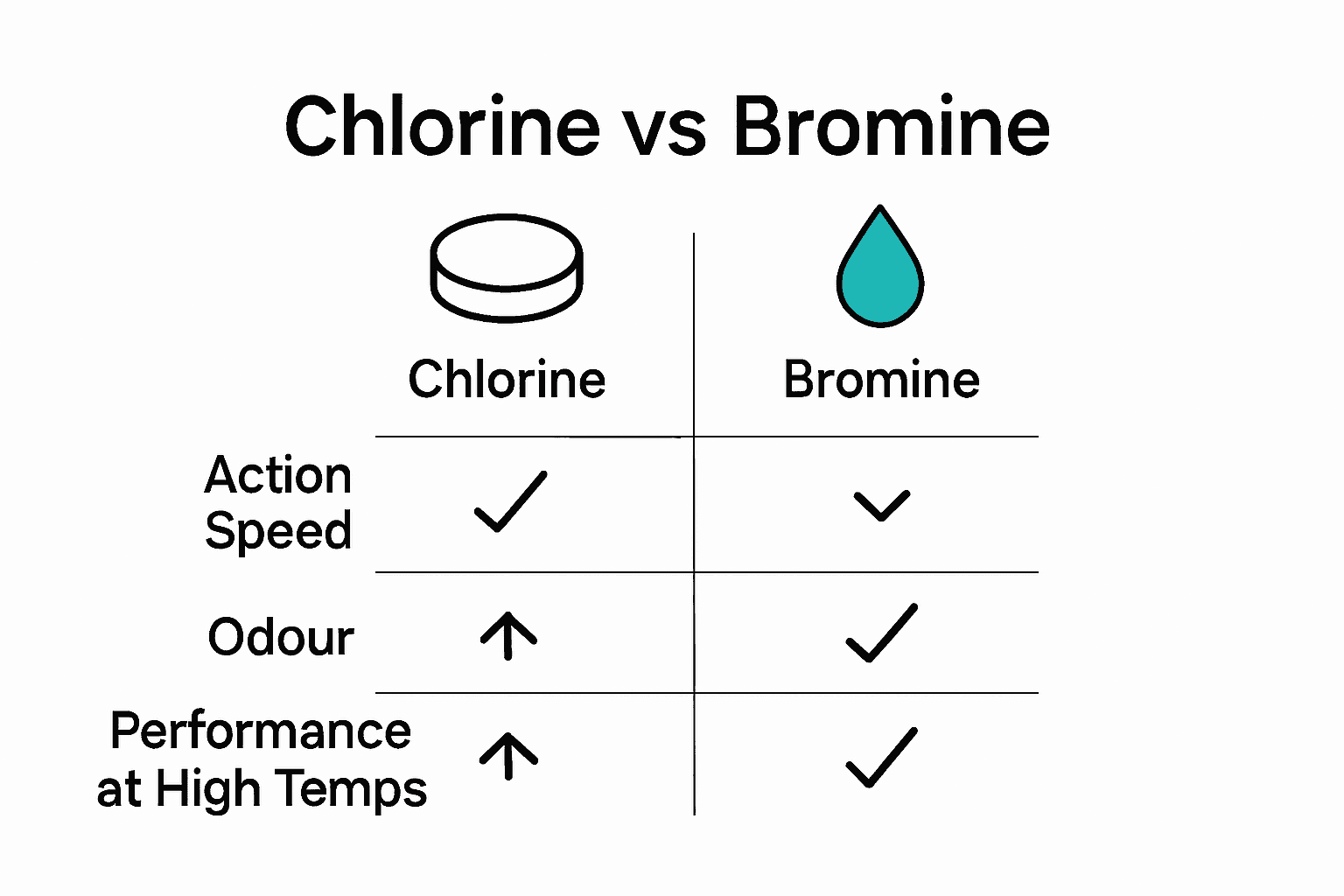
Chlorine sanitisers offer clear plus points, chiefly fast microbial kill and low cost. They have downsides too. Chlorine can give off strong smells, may irritate skin and eyes, and can degrade faster in warmer water. Because it is potent, careful dosing matters to avoid overchlorination.
The key things to compare across sanitisers include:
- Upfront cost of treatment
- How well it works against different microorganisms
- Stability across varying water temperatures
- Effect on comfort and sensitive skin
- Longer-term maintenance needs
Bromine sanitisers shine in hot conditions, which makes them a good fit for hot tubs and indoor spas. Though usually pricier than chlorine, bromine gives longer-lasting protection and milder smells. Stabilised Chlorine vs Un-stabilised Chlorine notes that bromine's structure allows more consistent sanitisation with less chance of a rapid breakdown.
In the end, the right sanitiser comes down to your preferences, your usage and how your skin reacts to chemicals. Weigh the pros and cons of each carefully to get the best water quality and comfort.
Picking the Right One for Your Spa
Choosing the ideal sanitiser means weighing several things that affect water quality, the soak itself and how much upkeep is involved. Ask An Expert - SPA Pool Maintenance stresses understanding your own spa setup before you decide.
Key things to weigh when choosing include your own circumstances, such as:
- How often the spa is used
- How many regular users there are
- The water temperature range
- Sensitivity to chemical treatments
- Budget for ongoing upkeep
- Time available for water management
Chlorine sanitisers suit owners after a low-cost, fast-acting and easily available option. They work well in outdoor spas and where lots of people use the tub. Anyone with sensitive skin or a dislike of chemical smells may find chlorine less appealing.
Bromine sanitisers come into their own for indoor spas, hot tubs held consistently warm, and users with chemical sensitivities. What is the most critical pool chemical? suggests bromine gives steadier protection, especially where sanitisation needs to last. Though usually pricier, it treats the water more gently with less skin and eye irritation, which appeals to owners wanting thorough, low-fuss water management.
Mistakes to Avoid and Safety Advice
HSE guidance makes clear that spa water management is more than casual maintenance, it needs a careful, systematic approach to keep health risks down. Knowing the common mistakes can noticeably improve how well your sanitiser works and how safe the water is.
The mistakes owners make most often include:
- Testing the chemistry only now and then
- Getting the dose wrong
- Skipping regular balance checks
- Overlooking filter maintenance
- Using expired or degraded products
Over-dosing and under-dosing are the two extremes to watch. Too much sanitiser can irritate skin, damage equipment and give off unpleasant smells; too little leaves users exposed to harmful microbial growth. Getting the balance right takes regular testing, usually with test strips that read pH, sanitiser levels and overall chemistry.
Safety advice for using sanitisers responsibly includes:
- Test the chemistry at least twice a week
- Follow the maker's recommended doses
- Clean and replace filters as specified
- Shower before a soak to cut down on contaminants
- Keep the water within a sensible temperature range
Good spa upkeep takes attention. Even small drifts in the chemistry can put user health and equipment at risk, so a steady, methodical routine is what keeps soaks safe and enjoyable.
Discover the Perfect Spa Sanitiser with Zagosa Spa & Pool for Healthier, Safer Water
Choosing the right sanitiser can feel like a lot when you are juggling water quality, comfort and safety. This guide flags the usual challenges, holding a precise balance and deciding between chlorine and bromine to suit your usage and skin. With the risks of over or under-dosing and the need for regular testing, you want trusted, effective products that make spa care simpler.
At Zagosa Spa & Pool we understand those sticking points. Our wide range of expertly formulated hot tub chemicals and spa essentials makes it easier to keep the water clear, healthy and comfortable every time. Whether you want the fast action of chlorine or the gentle, long-lasting cover of bromine, we offer quality products tested for reliability.
Lift your spa experience and sidestep the common mistakes by choosing Zagosa Spa & Pool today.
Browse our carefully chosen collection at Zagosa Spa & Pool. Make water management effortless and enjoy peace of mind with products that deliver consistent results. Start shopping and see the difference premium spa chemicals make.
Frequently Asked Questions
What are the main types of spa sanitisers?
The primary types are chlorine and bromine. Chlorine is the traditional, fast-acting choice, while bromine is favoured for indoor spas thanks to its stability in warmer water and milder smell.
How do chlorine and bromine sanitisers work in spas?
Chlorine works by oxidation, forming hypochlorous acid that targets and kills harmful microorganisms. Bromine keeps working even after neutralising contaminants, giving extended protection in warmer conditions.
What are the advantages of using bromine over chlorine in spa sanitisation?
Bromine lasts longer, gives off fewer smells and stays effective at higher temperatures, which makes it ideal for indoor spas or hot tubs where users may have sensitive skin.
How often should I test the water chemistry in my spa?
Test at least twice a week to keep sanitiser levels right and head off problems like over-dosing or microbial growth.
Recommended
- Spa Non-Chlorine Shock: Complete Guide for UK Owners - Zagosa Spa & Pool
- Safe Spa Chemistry Explained: Complete UK Guide - Zagosa Spa & Pool
- Water Sanitisers - Zagosa Spa & Pool
- What Is Chlorine Granules? Complete UK Spa Guide - Zagosa Spa & Pool
- Detox Protocols Explained: Types, Methods, and Safety - Mahoney inter
- Role of Supplements in Detox: Complete Expert Guide - Mahoney inter