By The Zagosa Team. Published .
Reviewed or updated .
Almost every hot tub owner worries about water safety and clarity, all the more since bacteria can multiply fast in warm water. Chlorine granules are the trusted choice for a large majority of spa owners, delivering quick, powerful disinfection right where it is needed most. Knowing how these granules work and which type to pick helps you protect your investment and enjoy a clean, safe soak every time.
Table of Contents
- What chlorine granules are
- Types of chlorine granules and how they differ
- How chlorine granules treat the water
- Safe use and UK legal requirements
- Common problems and mistakes
Key Takeaways
| Point | Details |
|---|---|
| Chlorine granules for sanitising | Chlorine granules sanitise hot tub water by releasing hypochlorous acid, which clears contaminants and keeps the water clear. |
| Types of chlorine granules | The main types are SDIC, calcium hypochlorite and lithium hypochlorite, each suited to particular water treatment needs. |
| Safe use | Follow strict safety steps, such as wearing protective gear and storing granules properly, for safe use. |
| Common mistakes to avoid | Head off problems by measuring accurately, not mixing incompatible chemicals and storing granules correctly. |
What Chlorine Granules Are
Chlorine granules are a powerful sanitising option made specifically for hot tub and spa care. As a key water treatment chemical, they play a big part in clearing harmful bacteria and keeping the water safe and clean to bathe in. According to gov.uk, chlorine is a reactive chemical used widely across many industries, including domestic cleaning products.
Chlorine granules are a concentrated, fast-dissolving form of chlorine formulated for spa and hot tub water. Unlike liquid chlorine or tablets, they give precise dose control and spread quickly through the water. They work by releasing active chlorine that quickly clears contaminants like bacteria, algae and organic matter that build up in warm water.
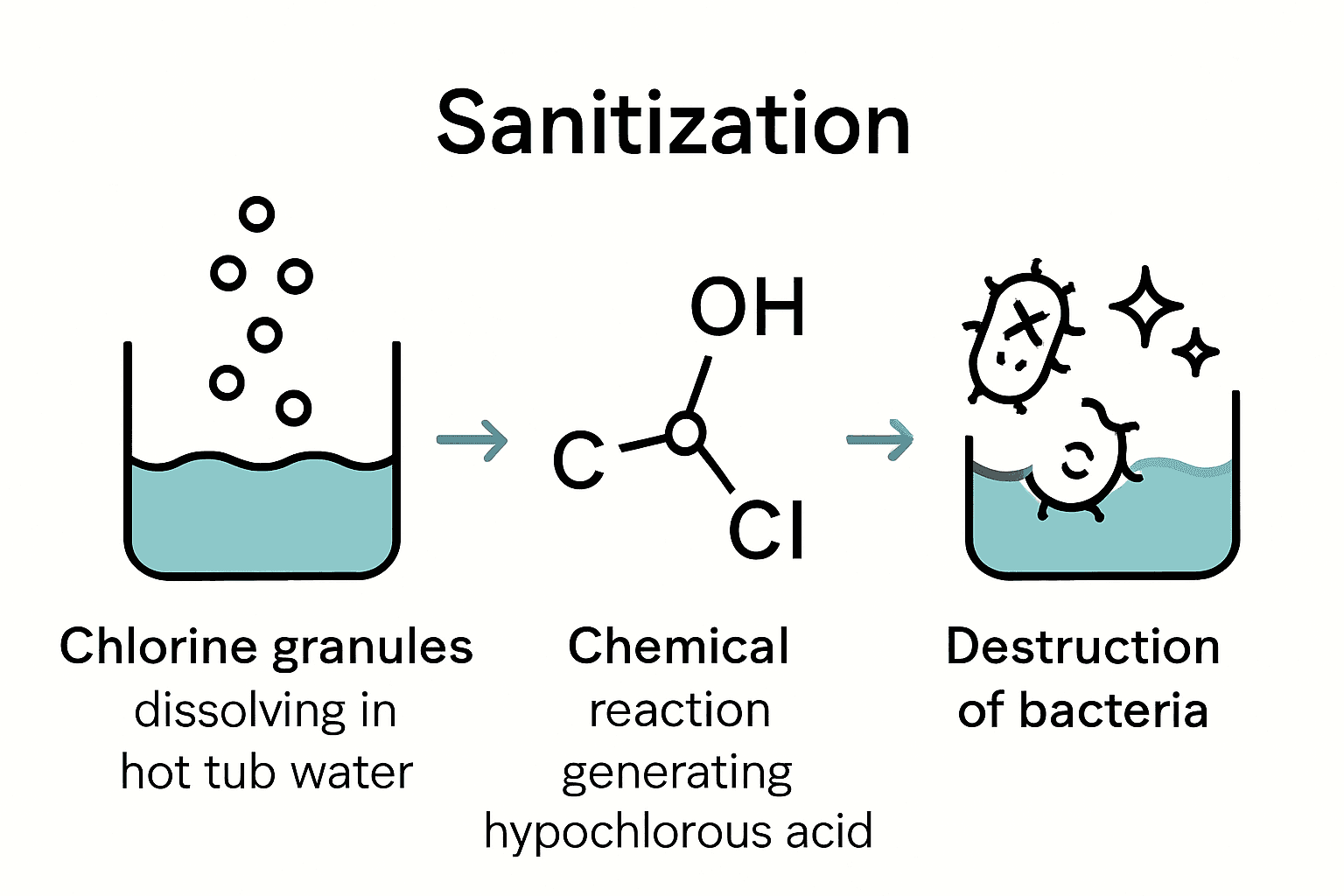
The main job of chlorine granules is sanitising the water. Added to your tub, they break down into hypochlorous acid, a powerful disinfectant that targets and destroys microorganisms. This keeps the water clear, prevents unpleasant smells and reduces the risk of waterborne illness. For spa owners, using stabilised chlorine granules SDIC gives steady water quality and a straightforward approach to upkeep.
Key traits of chlorine granules include their:
- Quick dissolving
- Precise measuring
- High concentration of active chlorine
- Ease of use for spa and hot tub owners
- Ability to sanitise water quickly
Understanding how to use and manage chlorine granules well is key to a safe, enjoyable hot tub. Regular testing, the right dose and steady application keep your spa water clean, clear and ready for a soak.
Types of Chlorine Granules and How They Differ
Chlorine granules come in several types, each made for particular hot tub and spa water needs. According to gov.uk, chlorine is a reactive chemical used across many industries, which underlines how much it helps to understand the different forms for precise water management.
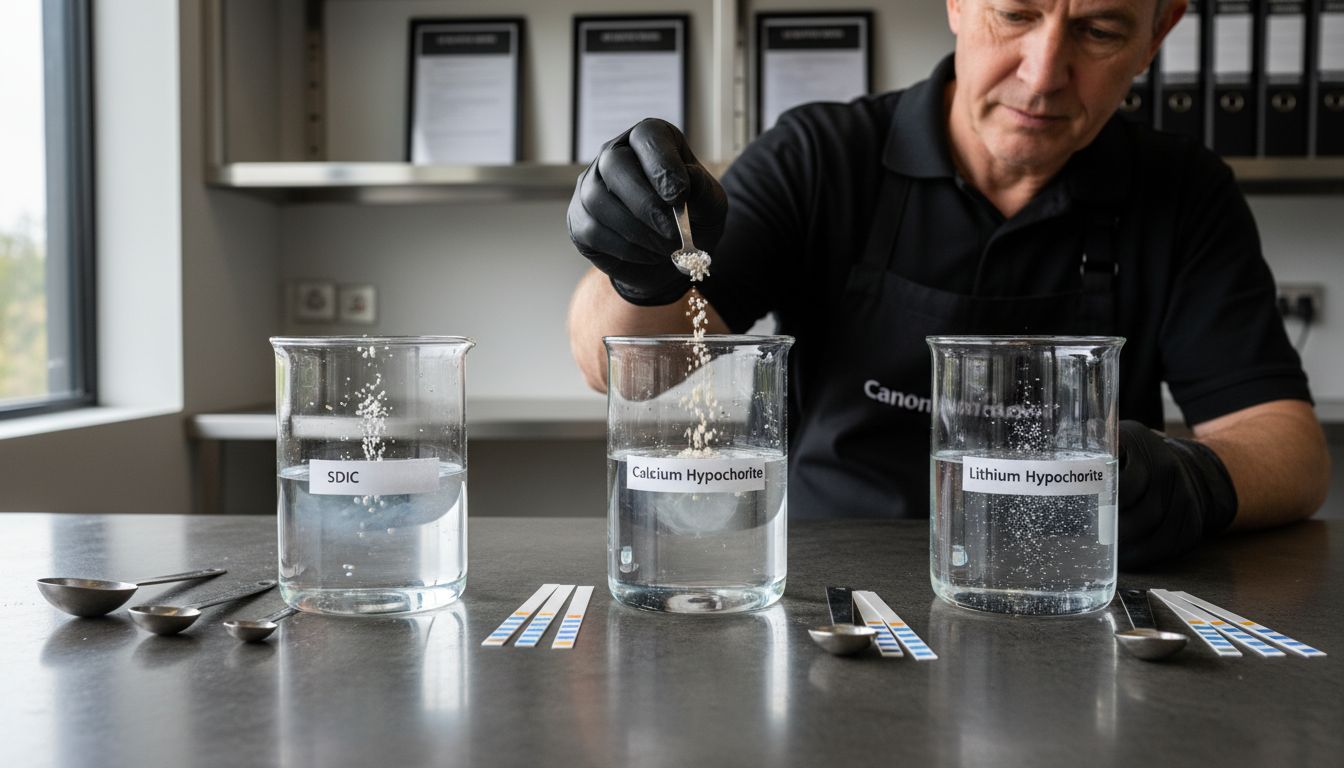
The main types are sodium dichloroisocyanuric acid (SDIC), calcium hypochlorite and lithium hypochlorite. Each has traits that suit different situations. Spa Calcium Hypochlorite Granules are especially popular for their high chlorine concentration and effectiveness at sanitising.
Here are the key differences between these types:
- SDIC granules
- Fast-dissolving
- Stabilised chlorine content
- Holds pH steady
- Ideal for regular upkeep
- Calcium hypochlorite granules
- Higher chlorine concentration
- Less expensive
- Nudges up the water's calcium hardness
- Best for shock treatments
- Lithium hypochlorite granules
- Fastest dissolving
- Lowest calcium content
- Little effect on water chemistry
- Most expensive option
Choosing the right granules depends on your particular tub, the state of the water and how you like to do your upkeep. Understanding these differences helps you keep the water in good shape for a safe, enjoyable soak.
How Chlorine Granules Treat the Water
Chlorine granules work through a chemical process that sanitises water by clearing harmful microorganisms. As gov.uk notes, chlorine is a reactive chemical used across many industries, which underlines its strong disinfecting power in water treatment.
When chlorine granules dissolve in water, they go through a key change called hydrolysis. This breaks the granules down, releasing hypochlorous acid (HOCl), a potent agent that destroys bacteria, viruses, algae and other harmful microorganisms. Why are chlorine tablets so popular as a biocide gives more insight into how chlorine-based sanitising works.
Treating water with chlorine granules involves a few key stages:
- Dissolving: the granules break down quickly in water
- Oxidising: hypochlorous acid attacks microbial cell structures
- Clearing: contaminants are destroyed
- Ongoing protection: continued sanitising prevents future contamination
Chlorine granules work by holding a fine balance of chemical reactions. The free chlorine seeks out and clears organic matter, creating a hostile setting for microorganisms. This not only clears existing contaminants but keeps protecting the water, so your hot tub stays clean, safe and clear.
Safe Use and UK Legal Requirements
Using chlorine granules for hot tub upkeep means sticking closely to safety steps and UK rules. As gov.uk points out, chlorine is a reactive chemical found in many domestic cleaning products, which underlines the need for careful handling and correct use.
In the UK, hot tub chemical use is covered by specific rules, in particular the GB BPR Biocidal Product Regulations. These make sure chemical treatments meet strict safety and environmental standards. Owners must follow full guidance to protect their health and the surroundings.
Key safety guidance for using chlorine granules includes:
- Personal protection
- Wear protective gloves and safety glasses
- Work in a well-ventilated area
- Keep chemicals away from children and pets
- Storage
- Store in the original, sealed containers
- Keep somewhere cool and dry
- Keep the temperature between 5 and 30°C
- Store out of direct sunlight
- Handling
- Always add chemicals to water, never water to chemicals
- Use precise measuring tools
- Avoid mixing different chemical types
- Wait the recommended time before getting in
Professional guidance, such as our Chemical Dosing Rate guide, can help owners work through the finer points of safe treatment. Understanding and following this guidance makes for a safe, enjoyable and compliant hot tub.
Common Problems and Mistakes
Chlorine granules can be fiddly to manage, and owners often hit a few common snags during treatment. As gov.uk notes, chlorine is a reactive chemical used in domestic cleaning products, so precise handling is crucial to avoid problems.
One of the most frequent mistakes is the wrong dose and concentration. Owners often under- or over-treat the water, which brings health risks and equipment damage. Chlorine Dioxide - powerful treatment offers another angle on effective sanitising when standard chlorine granule methods fall short.
Key problems and mistakes to watch for include:
- Measuring errors
- Inaccurate measurements
- Using the wrong measuring tools
- Not following the maker's guidance
- Guessing quantities by eye
- Chemical interaction problems
- Mixing incompatible chemicals
- Adding chemicals in the wrong order
- Not waiting between different applications
- Ignoring the water's pH
- Storage and handling mistakes
- Letting granules get damp
- Storing them at the wrong temperature
- Using expired products
- Not sealing containers properly
Knowing these common mistakes helps owners keep the water safe and clean while protecting their investment. Careful attention and following the recommended steps cut the risk of treatment errors sharply.
Keep Your Hot Tub Water Perfect with Zagosa Spa & Pool
Keeping hot tub water clean and safe can be tricky if you struggle to measure the right dose or manage the chemistry. This guide flags the usual hurdles: poor balance, getting the dose right and using stabilised chlorine granules like SDIC for steady sanitising. You want clear water without worrying about bacteria, bad smells or damage to your spa.
Zagosa Spa & Pool offers a carefully chosen range of quality water treatment products that tackle these exact concerns. Our stabilised chlorine granules SDIC help you sanitise quickly and reliably with easy dose control. And with expert advice like our Chemical Dosing Rate guide, you can manage your chemistry with confidence.

Take charge of your hot tub upkeep today for a safe, refreshing soak every time. Visit Zagosa Spa & Pool to explore our premium chlorine granules and spa essentials, made for your peace of mind and proper relaxation.
Frequently Asked Questions
What are chlorine granules used for in hot tubs?
They sanitise hot tub and spa water, clearing harmful bacteria, algae and contaminants for a safe, clean bathing environment.
How do I properly use chlorine granules in my hot tub?
Add the correct dose after measuring the current chlorine level. Always add granules to water, not the other way round, and wait the recommended time before getting in.
What are the different types of chlorine granules available?
The main types are sodium dichloroisocyanuric acid (SDIC), calcium hypochlorite and lithium hypochlorite. They differ in dissolving speed, effect on water chemistry and concentration, suiting different sanitising needs.
What common mistakes should I avoid when using chlorine granules?
Common ones include poor measuring, mixing incompatible chemicals and storing granules badly. Follow the maker's guidance and keep testing the water for effective treatment.