By The Zagosa Team. Published .
Reviewed or updated .
A tiny wobble in your water chemistry can be the difference between a lovely soak and irritated skin, cloudy water and a bill for new parts. Total alkalinity is the reading that decides which way it goes. It is not just a number on a strip, it is the buffer that keeps everything else stable. Get it right and the rest of your water care falls into place. Here is what total alkalinity actually is, and the handful of simple moves that keep it, and your hot tub, in good shape.
Table of Contents
- What Total Alkalinity Actually Is
- The Way It Steadies Your pH
- The Right Range For UK Hot Tubs
- Low Versus High Alkalinity
- What Goes Wrong When It Drifts
- Adjusting Alkalinity The Safe Way
The Short Version
| Point | Details |
|---|---|
| Why total alkalinity counts | Keeping it in the 80-120 PPM sweet spot is what holds your pH steady and your water clear. |
| What imbalance costs | Too low or too high and you risk equipment damage, sore skin and weaker sanitiser, so regular testing is a must. |
| How to move the number | Sodium bicarbonate raises it, an acid such as muriatic acid lowers it. Go gently and retest so you do not overshoot. |
| Stay on top of it | Test at least weekly and tweak as needed to keep the chemistry balanced and the water safe. |
What Total Alkalinity Actually Is
Total alkalinity is the reading that tells you how stable your hot tub water is. It measures the alkaline substances dissolved in the water, mainly carbonates, bicarbonates and hydroxides. Those compounds are tiny, but they do a big job: they hold your pH steady and keep the overall water quality where it should be.
The Centre for Municipal Aquatics and Hygiene Control describes total alkalinity as a figure given in parts per million (PPM) that shows the concentration of alkaline substances able to neutralise acids. The easiest way to picture it is as a cushion. When those alkaline substances are present in the right amount, they soak up sudden swings in acidity that would otherwise upset your water, damage your kit or leave the water unpleasant to sit in.
The healthy window for a hot tub sits between 80 and 120 PPM. Stray outside it and problems start to show. Drop too low and pH lurches about, and the water can turn corrosive enough to eat away at heating elements, jets and other delicate parts. Climb too high and you get scale, cloudy water and sanitiser that struggles to do its job.
Pro tip for owners: Test your total alkalinity often with a decent strip or digital kit, and adjust it before it wanders far from that 80-120 PPM window.
The Way It Steadies Your pH
The reason total alkalinity matters so much is the buffering it does. Alkaline substances act like a chemical shock absorber, stopping sharp swings in acidity before they happen. Alkalinity works as a protective buffer, mopping up acids that would otherwise send your water chemistry all over the place.
Acids find their way into hot tub water constantly, from body oils, from the environment, from the products you add. As soon as they arrive, the alkaline compounds get to work, absorbing and neutralising them so pH barely moves. That resistance to sudden change is exactly what keeps the water consistent and comfortable.
The chemistry behind it is not complicated. Carbonates and bicarbonates react readily with acids and turn them into steadier compounds, and it happens quickly. Take that buffer away and pH can swing hard in either direction, damaging equipment, irritating skin and leaving your sanitiser far less effective.
Pro tip for water management: A good digital pH and alkalinity kit gives you accurate numbers to work from, so you can make small corrections early rather than firefighting a big imbalance later.
The Right Range For UK Hot Tubs
Hitting the correct alkalinity range matters wherever you are in the UK. Small swimming pool guidance suggests a total alkalinity range of 75 to 200 milligrams per litre, which is a fair starting point. Most manufacturers and water treatment specialists, though, aim for a tighter target.
That ideal window is 80 to 120 parts per million (PPM), which is where pH stays steadiest and the water stays safe and clear. Keep alkalinity in this band and the water shrugs off sudden pH changes, your equipment is protected from corrosion and scale, and the soak itself is more comfortable.
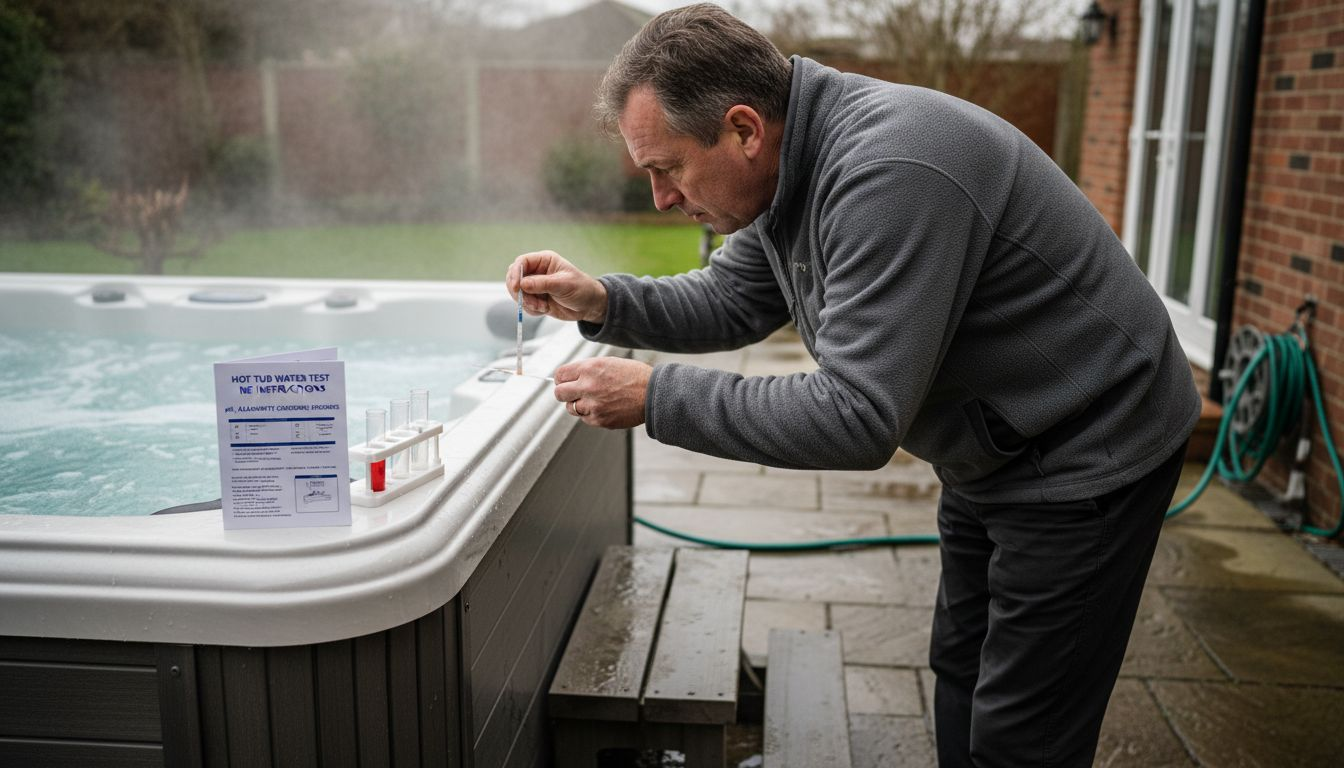
Plenty of things push alkalinity around: how hard your local water is, how often the tub gets used, how many people are in it, and which products you add. Because it moves with the environment, chemical additions and use, regular testing is not optional. Water varies a lot across different parts of the UK, so a harder or softer supply may mean you need to check more often.
Pro tip for maintenance: Get a digital kit for accurate readings and test at least once a week, making small tweaks as you go to hold that 80-120 PPM range.
Low Versus High Alkalinity
Both ends of the scale cause trouble, just different sorts. When alkalinity drifts away from the ideal range, the water chemistry starts fighting you, and either extreme can wear out expensive equipment.
Low alkalinity makes the water twitchy. pH becomes unpredictable, and even a small chemical addition or bit of contamination can send it swinging hard. Those swings turn the water corrosive, and it goes after metal parts such as heating elements and jets. Bathers can feel it too, with sore skin and eyes from the sharp chemical shifts.
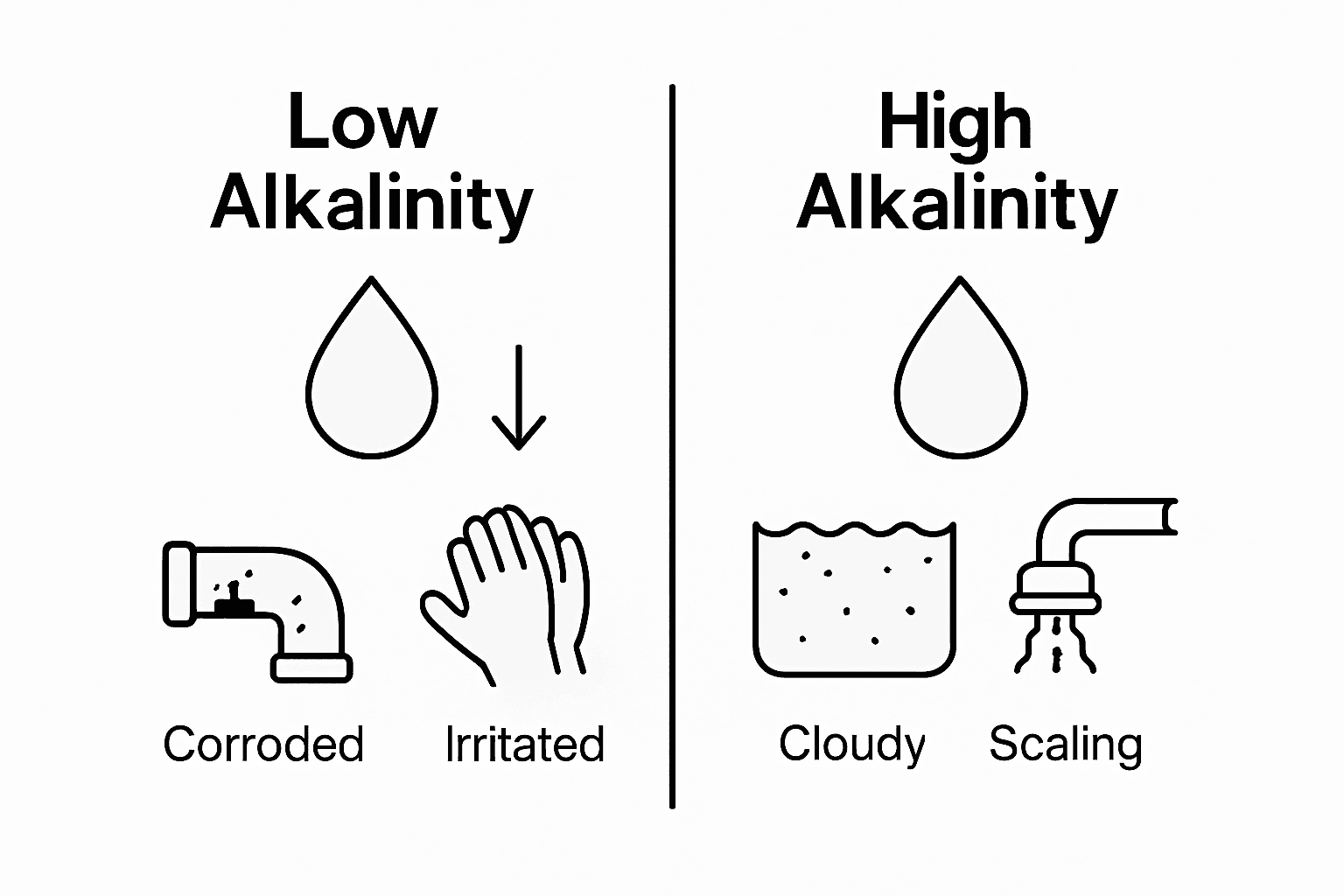
High alkalinity brings the opposite headache. Push it too high and pH becomes stubborn and hard to shift, locking the chemistry in place. The result is cloudy water, scale on the surfaces and sanitiser that no longer works properly. Those mineral deposits build up on heating elements and jets, drag down their efficiency and can shorten their life.
Pro tip for staying in control: Keep an eye on total alkalinity with a reliable digital kit and be ready to make small corrections with the right pH increaser or decreaser to hold the 80-120 PPM range.
Here is how low and high alkalinity compare:
| Impact Area | Low Alkalinity Consequences | High Alkalinity Consequences |
|---|---|---|
| pH Stability | Large fluctuations, unstable pH | pH difficult to adjust, rigid water chemistry |
| Equipment Longevity | Increased corrosion risk | Scale build-up, reduced efficiency |
| Water Clarity | Possible cloudiness during rapid changes | Persistent cloudy water due to minerals |
| Chemical Effectiveness | Sanitiser effectiveness decreases | Sanitiser becomes less effective |
| User Comfort | Skin and eye irritation | Discomfort due to residue or deposits |
What Goes Wrong When It Drifts
Getting alkalinity right is not a nicety, it is central to safe water. When it slips out of range, the problems pile up well beyond a bit of awkward chemistry.
Equipment damage is the big one. Low alkalinity turns the water acidic, which speeds up corrosion and can destroy pricey parts like heating elements, pumps and jets, sometimes beyond repair. High alkalinity does its damage the other way, laying down mineral scale that gradually clogs the mechanical systems and saps their efficiency.
The experience for bathers suffers too. Out-of-range alkalinity can bring on skin and eye irritation, turning a relaxing soak into something you would rather cut short. It also weakens your sanitiser, and once that happens harmful bacteria and other microorganisms get a foothold. That is a water quality problem and a health one, which is exactly why regular testing matters so much.
Pro tip for safe water: Get a proper digital test kit that reads total alkalinity accurately, and set up a steady weekly testing habit so you catch imbalances while they are still small.
Adjusting Alkalinity The Safe Way
Changing total alkalinity is a job for patience, not speed. Make your moves gradually, with the right products, and you avoid overshooting and knocking the water off balance.
To raise alkalinity, reach for sodium bicarbonate, better known as baking soda, which lifts the level steadily. Test the water with a reliable digital kit first. Then sprinkle the powder straight into the water with the jets running so it spreads evenly. Start with the smallest recommended dose, wait a few hours and retest, making small additions rather than one big one so you do not sail past the 80-120 PPM range.
To go the other way, lowering alkalinity means adding an acid product made for spa water. Muriatic acid or sodium bisulphate are the usual choices. These need real care, with precise measuring and slow addition while the jets circulate the water. Lowering alkalinity is fussier than raising it and it is easier to overdo, so take it slowly.
Pro tip for precise tweaks: Add treatments in small amounts, leave at least four to six hours between doses, and retest each time so you creep towards the right range without causing new problems.
Here is a quick summary of how to adjust alkalinity:
| Action | Typical Chemical Used | Safe Practice Tip | Testing Frequency |
|---|---|---|---|
| Raise Alkalinity | Sodium bicarbonate (baking soda) | Add minimum size dose, circulate with jets | Retest after 4-6 hours |
| Lower Alkalinity | Muriatic acid or sodium bisulphate | Add slowly with jets on, measure precisely | Retest after 4-6 hours |
| Monitoring | Digital or strip test kit | Test at least once a week | Weekly, or after changes |
Keep Your Hot Tub Water Perfectly Balanced with Zagosa Spa & Pool
Holding total alkalinity between 80 and 120 PPM is what keeps you clear of damaged equipment, cloudy water and uncomfortable soaks. As this guide shows, both low and high readings cause real trouble, which is why dependable water treatment matters for steadying pH and protecting your hot tub. If wandering pH or scale has ever caught you out, Zagosa Spa & Pool has water treatment products chosen to help UK owners manage total alkalinity with precision.
Take a look at our tried and tested range of hot tub chemicals and spa essentials at Zagosa Spa & Pool and get your water chemistry under control today. Do not wait for imbalance to turn into costly repairs or irritation. Keep your hot tub safe, crystal clear and comfortable by visiting Zagosa Spa & Pool for practical help with your alkalinity.
Frequently Asked Questions
What is total alkalinity in hot tubs?
It is a measure of the alkaline substances dissolved in your hot tub water, and it is what keeps pH steady and the water quality protected.
Why is maintaining the correct total alkalinity important for hot tubs?
Keeping it within 80-120 PPM stops pH swinging about, protects your equipment from corrosion and scale, and makes the soak more comfortable.
How can I raise total alkalinity in my hot tub?
Add sodium bicarbonate (baking soda) a little at a time with the jets running so it spreads evenly, then retest after a few hours to check where you are.
What are the signs of low or high total alkalinity in hot tubs?
Low alkalinity shows up as unstable pH, corrosion and irritated bathers, while high alkalinity brings cloudy water, scale build-up and weaker sanitiser.