By The Zagosa Team. Published .
Reviewed or updated .
Water quality trips up a lot of owners: as many as 34 percent run into problems in any given year. Balanced water is about more than looking clear. The right chemistry heads off real health risks and protects the money you have tied up in the tub. Follow a few sensible steps and you get water that is safe and relaxing, without the hidden problems that come from letting balance slide.
The Short Version
| Point | Details |
|---|---|
| Maintain Water Balance | Regularly test and manage pH, total alkalinity, calcium hardness, and sanitiser levels to ensure safe and clean spa water. |
| Health and Comfort | Proper water balance helps prevent bacterial growth, skin irritation, and respiratory issues, ensuring a comfortable experience for users. |
| Consistent Monitoring | Establish a routine for water testing and chemical adjustments, taking care to follow recommended guidelines for each parameter. |
| Avoid Common Mistakes | Prevent chemical mismanagement by accurately measuring chemical additions and regularly maintaining your filtration system. |
On This Page
- The Basics of Spa Water Balance
- The Core Measurements Explained
- What It Means for Health and Comfort
- How to Keep Your Water in Balance
- Common Mistakes and How to Avoid Them
The Basics of Spa Water Balance
Spa water balance represents a precise chemical equilibrium that ensures safe, clean, and comfortable water conditions for spa users. Water balance involves managing multiple chemical parameters to create an environment that prevents equipment damage, protects user health, and maintains optimal water quality. According to the Health and Safety Executive, proper water management matters a great deal for preventing health risks like legionella bacteria proliferation in spa systems.
At its core, water balance centres on understanding and regulating key chemical measurements, with pH being a critical factor. The UK Drinking Water Inspectorate establishes pH standards between 6.5 and 9.5, which provides a scientific benchmark for spa water management. This range helps prevent corrosion, scale formation, and ensures water remains safe and comfortable for users.
The fundamental components of spa water balance include:
- pH levels: Measuring water acidity or alkalinity
- Total Alkalinity: Stabilising pH and preventing rapid fluctuations
- Calcium Hardness: Preventing equipment scaling or corrosion
- Sanitiser Levels: Maintaining bacterial control and water hygiene
Maintaining these parameters requires regular testing and precise chemical adjustments.[1] Understanding water balancing is not just about chemical management but ensuring a safe, enjoyable spa experience for every user.
The Core Measurements Explained
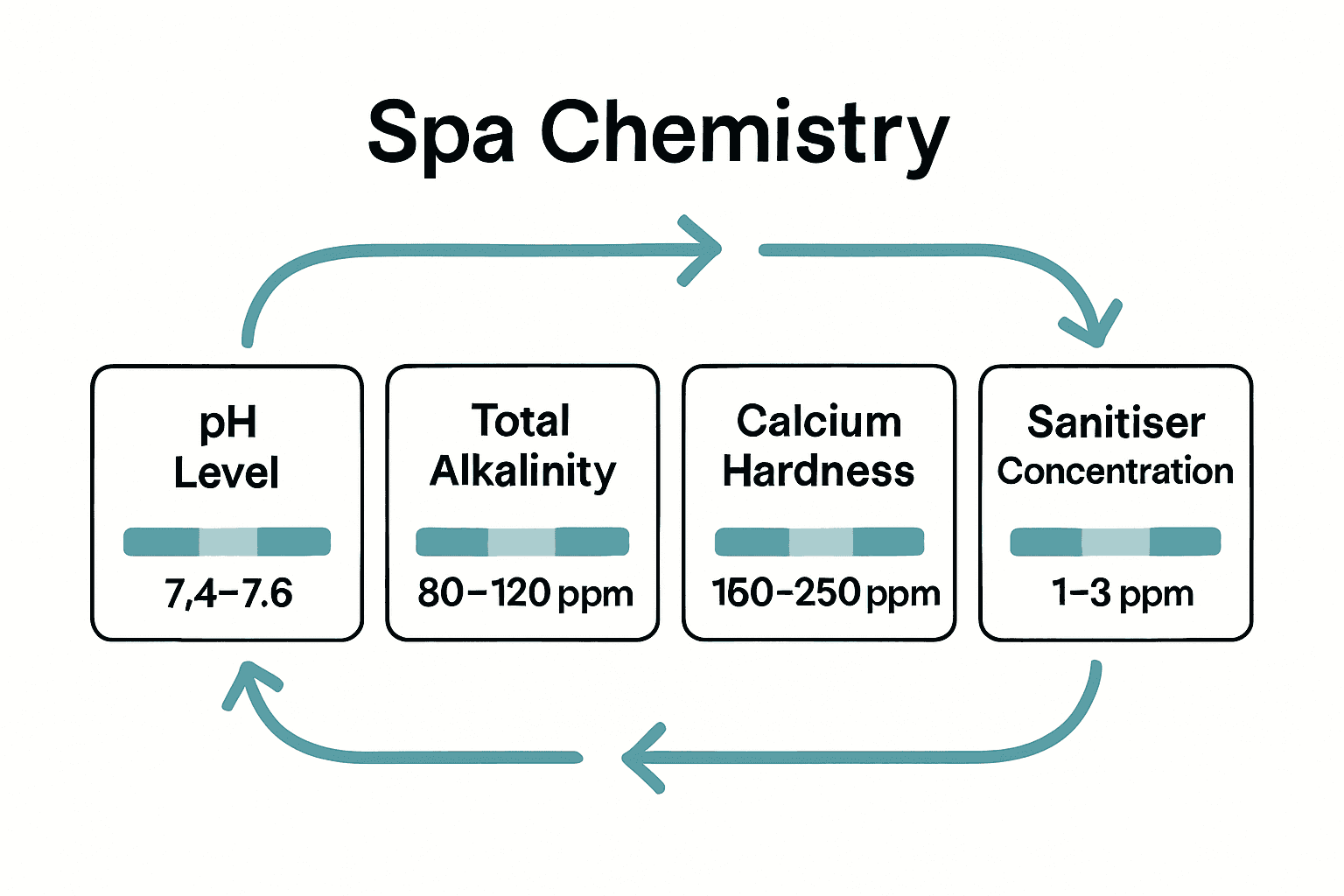
Spa water chemistry revolves around four critical chemical parameters that work together to maintain water quality and user safety. These interrelated measurements require precise monitoring and adjustment to create an optimal spa environment.[2] Each parameter plays a unique role in preventing potential water-related issues and ensuring a comfortable, hygienic experience.
The first parameter, pH level, measures water acidity or alkalinity on a scale from 0 to 14. Ideal spa water pH typically ranges between 7.2 and 7.8, which helps prevent equipment corrosion and skin irritation.[3] When pH drifts outside this range, it can cause scaling, reduce sanitiser effectiveness, and create an uncomfortable bathing environment.
Key chemical parameters include:
Here's how the core spa water parameters compare:
| Parameter | Purpose | Ideal Range |
|---|---|---|
| pH Level | Controls acidity & alkalinity | 7.2 - 7.8 |
| Total Alkalinity | Stabilises pH, prevents fluctuations | 80 - 120 mg/L |
| Calcium Hardness | Prevents scale & corrosion | 100 - 250 mg/L |
| Sanitiser Concentration | Kills bacteria, ensures hygiene | 3 - 5 mg/L (chlorine) 2 - 4 mg/L (bromine) |
- pH Levels: Indicates water's acid-base balance
- Total Alkalinity: Stabilises pH and prevents sudden changes
- Calcium Hardness: Controls mineral content and prevents scaling
- Sanitiser Concentration: Eliminates harmful bacteria and contaminants
Understanding these parameters requires consistent testing and strategic chemical management.
 For deeper insights into spa water chemistry, check out our spa chemicals explained resource, which provides thorough guidance on maintaining balanced, safe spa water.
What It Means for Health and Comfort
Proper spa water balance isn't just about maintaining equipment - it's fundamentally about protecting human health and ensuring user comfort. Water quality directly impacts the safety and enjoyment of spa users, with potential health risks lurking in poorly managed water systems.[1] According to the Health and Safety Executive, improperly balanced spa water can become a breeding ground for infectious agents like legionella, which poses serious health risks including legionnaires' disease.
Beyond microbial risks, unbalanced water chemistry can cause significant personal discomfort. Incorrect pH levels can lead to skin irritation, eye sensitivity, and allergic reactions. High mineral content might cause dry, itchy skin, while imbalanced chemical levels can result in unpleasant odours and potential respiratory irritation. These factors transform what should be a relaxing experience into an uncomfortable and potentially harmful encounter.
Key health and comfort considerations include:
- Bacterial Prevention: Eliminating harmful microorganisms
- Skin Protection: Maintaining gentle, non-irritating water chemistry
- Respiratory Safety: Preventing chemical-induced respiratory issues
- Sensory Comfort: Ensuring pleasant water texture and smell
For spa owners seeking thorough insights into maintaining safe and comfortable water conditions, understanding what is hot tub chemistry provides essential guidance for creating an optimal spa environment that prioritizes both health and relaxation.
How to Keep Your Water in Balance
Maintaining proper spa water balance requires a systematic approach combining regular testing, precise chemical adjustments, and consistent monitoring. Water management is not a one-time task but an ongoing process that demands attention to detail and understanding of your spa's unique chemical environment.[1] Successful water balance begins with developing a routine that becomes second nature to spa owners.
The fundamental steps involve thorough water testing using reliable test strips or digital testing kits. These tools measure critical parameters like pH, total alkalinity, calcium hardness, and sanitiser levels. Chemical correction follows testing, where you'll add specific chemicals to bring each parameter into its ideal range. This might involve adding pH increasers or decreasers, alkalinity adjusters, or sanitiser treatments to restore chemical equilibrium.[1]
Key maintenance steps include:
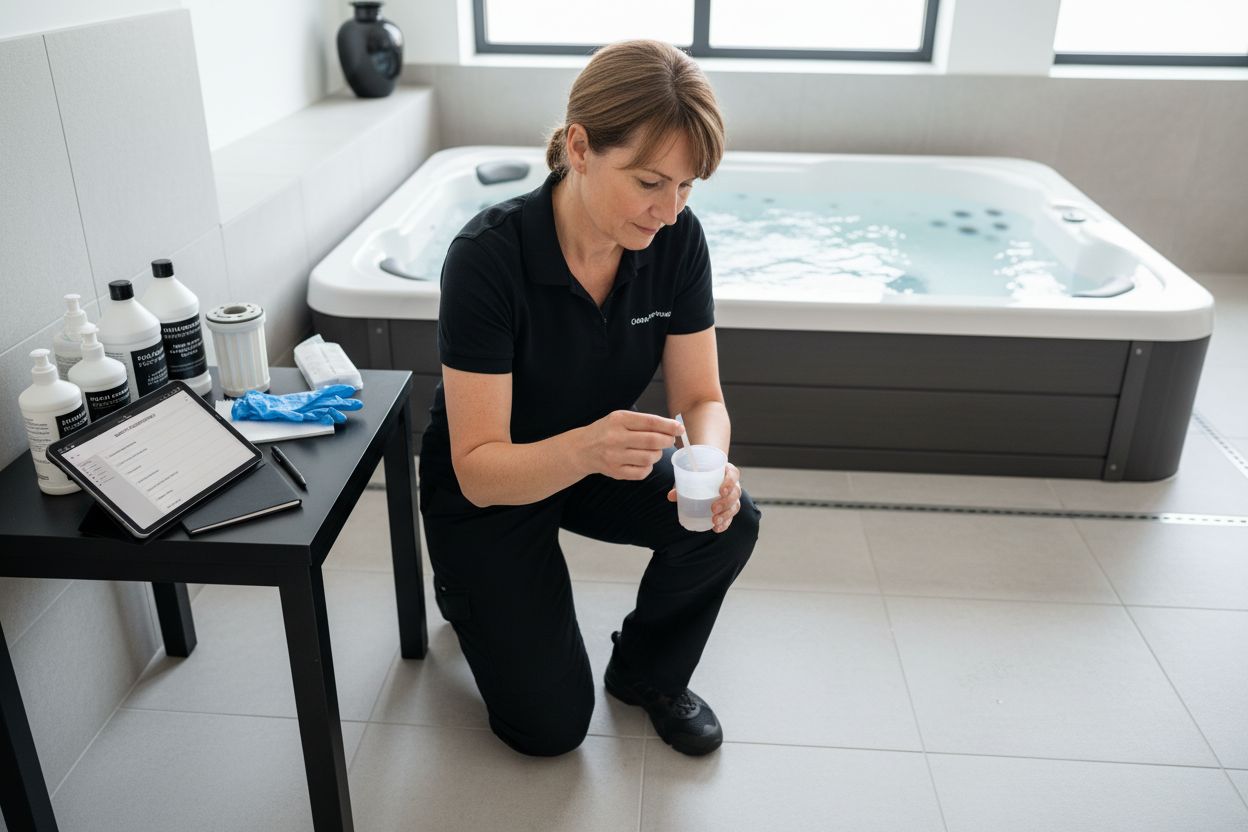
- Regular Testing: Check water chemistry at least weekly
- Precise Chemical Addition: Add treatments in recommended quantities
- Filtration System Maintenance: Clean and replace filters regularly
- Water Circulation: Run pumps to distribute chemicals evenly
- Temperature Management: Monitor and control spa water temperature
For spa owners seeking expert guidance on navigating these complex chemical balancing processes, top tips for balancing chemical levels provides invaluable insights into creating and maintaining optimal water conditions.
Common Mistakes and How to Avoid Them
Spa water maintenance is fraught with potential pitfalls that can quickly transform a relaxing sanctuary into a problematic water system. Chemical mismanagement represents the most common error spa owners encounter, often stemming from inconsistent testing, incorrect chemical dosages, or complete neglect of water balance principles. These mistakes can lead to equipment damage, reduced spa performance, and potential health risks for users.
One of the most frequent missteps involves over or under-treating water chemistry. Chemical overcompensation can create its own set of problems, such as extreme pH fluctuations or excessive sanitiser levels that irritate skin and damage spa components. Conversely, under-treating water leaves the spa vulnerable to bacterial growth, scale formation, and potential corrosion of critical spa equipment. Precise, measured approaches to chemical management are what count for maintaining optimal water conditions.
Key mistakes to avoid include:
- Irregular Testing: Skipping weekly water chemistry checks
- Guessing Chemical Quantities: Adding chemicals without accurate measurement
- Ignoring Filter Maintenance: Neglecting regular filter cleaning and replacement
- Inconsistent Water Circulation: Failing to run pumps sufficiently
- Temperature Fluctuations: Allowing significant temperature variations
To develop a more strategic approach to spa water maintenance, ask an expert about spa pool maintenance for personalized guidance on avoiding these common water balance pitfalls and creating a consistently safe, enjoyable spa experience.
Take Control of Spa Water Balance with Zagosa Spa & Pool Expertise
You have just learned how essential proper spa water balance is for health, comfort and lasting equipment. Still, even with the best intentions, many spa owners face headaches like inconsistent test results, chemical confusion and worrying about bacteria or skin irritation. If you are tired of guesswork or frustrated by constant chemical adjustments, you need reliable products designed for real-world results.
Choose Zagosa Spa & Pool for peace of mind on every soak. Our premium water treatment solutions make balancing your hot tub effortless. Explore our proven range of spa chemicals and discover guides such as spa chemicals explained for expert support. Visit Zagosa Spa & Pool today and experience the clarity and comfort you truly deserve. Take the first step towards easy, safe water balance right now.
Common Questions Answered
What is spa water balance?
Spa water balance refers to the precise chemical equilibrium of spa water that ensures it is safe, clean, and comfortable for users. It involves managing key chemical parameters to prevent equipment damage and protect user health.
What are the key parameters to maintain in spa water?
The key parameters to maintain in spa water include pH levels, total alkalinity, calcium hardness, and sanitiser concentration. Each of these factors plays a critical role in maintaining water quality and user safety.
How often should I test my spa water for chemical balance?
It is recommended to test your spa water chemistry at least once a week to ensure all crucial parameters remain within their ideal ranges and to prevent any potential water-related issues.
What are common mistakes to avoid when balancing spa water?
Common mistakes include irregular testing, incorrect chemical dosage, neglecting filter maintenance, inconsistent water circulation, and allowing significant temperature fluctuations. Avoiding these errors is vital for maintaining optimal water conditions.
Worth a Read Next
- Ask An Expert - SPA Pool Maintenance - Zagosa Spa & Pool
- Understanding Spa Water Care: A Thorough Guide - Zagosa Spa & Pool
- Understanding the Role of Spa Balancing Chemicals - Zagosa Spa & Pool
Sources and review
Reviewed on . Next review due .
- HSG282: The control of legionella and other infectious agents in spa-pool systems - Health and Safety Executive
- PWTAG Code of Practice: the management and treatment of swimming pool water - Pool Water Treatment Advisory Group
- Guidelines for safe recreational water environments. Volume 2: swimming pools and similar environments - World Health Organization