By The Zagosa Team. Published .
Reviewed or updated .
Plenty of British hot tub users are surprised to learn that a sudden shift in water temperature can set off complex physical reactions, not just mild discomfort. With the UK's unpredictable climate, even a few degrees of change can have a real effect on spa safety and comfort. Understanding spa temperature shock, and clearing up the common myths, gives owners practical ways to keep the water right and enjoy a more relaxing, healthier soak.
In This Guide
- What Spa Temperature Shock Is And The Myths
- The Types Of Temperature Shock In Spas
- How Temperature Shock Affects Users
- Preventing It For Safer Spa Enjoyment
- The Mistakes UK Owners Make And The Fixes
The Main Points
| Point | Details |
|---|---|
| What Temperature Shock Is | It involves complex physiological responses to rapid temperature changes, which can pose health risks, especially for vulnerable people. |
| Myths About Temperature Tolerance | Not everyone can handle the same temperature range; factors like age and health strongly affect individual responses. |
| Why Gradual Adjustment Matters | Allow at least 5-10 minutes for your body to adjust before fully entering a hot tub to prevent sudden health risks. |
| Regular Upkeep and Monitoring | Test the water chemistry regularly and hold steady temperatures to keep spa use safe and comfortable. |
What spa temperature shock is and the myths
Spa temperature shock is a physiological response that happens when your body meets sudden, significant changes in water temperature. It matters especially for UK hot tub users, where precise water management is key to safety and comfort. Spa temperature variations can bring on unexpected physical reactions that put wellbeing at risk.
Despite what many think, temperature shock is not simply about feeling uncomfortably warm or cold. It involves complex mechanisms where rapid transitions can trigger cardiovascular and nervous system responses. Most UK owners assume their bodies can adapt to a temperature change in an instant, but the evidence says otherwise. The body needs gradual acclimatisation to head off health risks such as sudden blood pressure swings, thermal stress and a raised heart rate.
One of the key myths is the dangerous belief that everyone can handle the same temperature range. In reality, factors such as age, fitness, underlying health conditions and individual thermal sensitivity strongly shape how someone experiences a change. Older adults and those with cardiovascular conditions are especially vulnerable to rapid shifts, which makes careful temperature management essential. Understanding these nuances helps owners create safer, more comfortable soaks.
Expert Tip: Always allow your body at least 5-10 minutes to gradually adjust when entering a hot tub, and monitor your comfort levels carefully during temperature transitions.
The types of temperature shock in spas
Temperature shock in spas shows up through several distinct physiological and chemical responses that can affect both the soak and the water quality. The main types cover the body's thermal response, disruption to the water chemistry and stress on the mechanical system. Comprehensive shock treatments show how complicated it can be to manage these interactions within a hot tub.
Physiological temperature shock is the body's immediate reaction to a sudden thermal change. It splits into two main mechanisms: external thermal shock, where the skin and surface tissues meet a rapid change, and internal thermal shock, which affects deeper systems like the cardiovascular and nervous networks. People with different physical conditions experience these shifts differently, with older adults and those with existing health conditions more prone to dramatic swings.
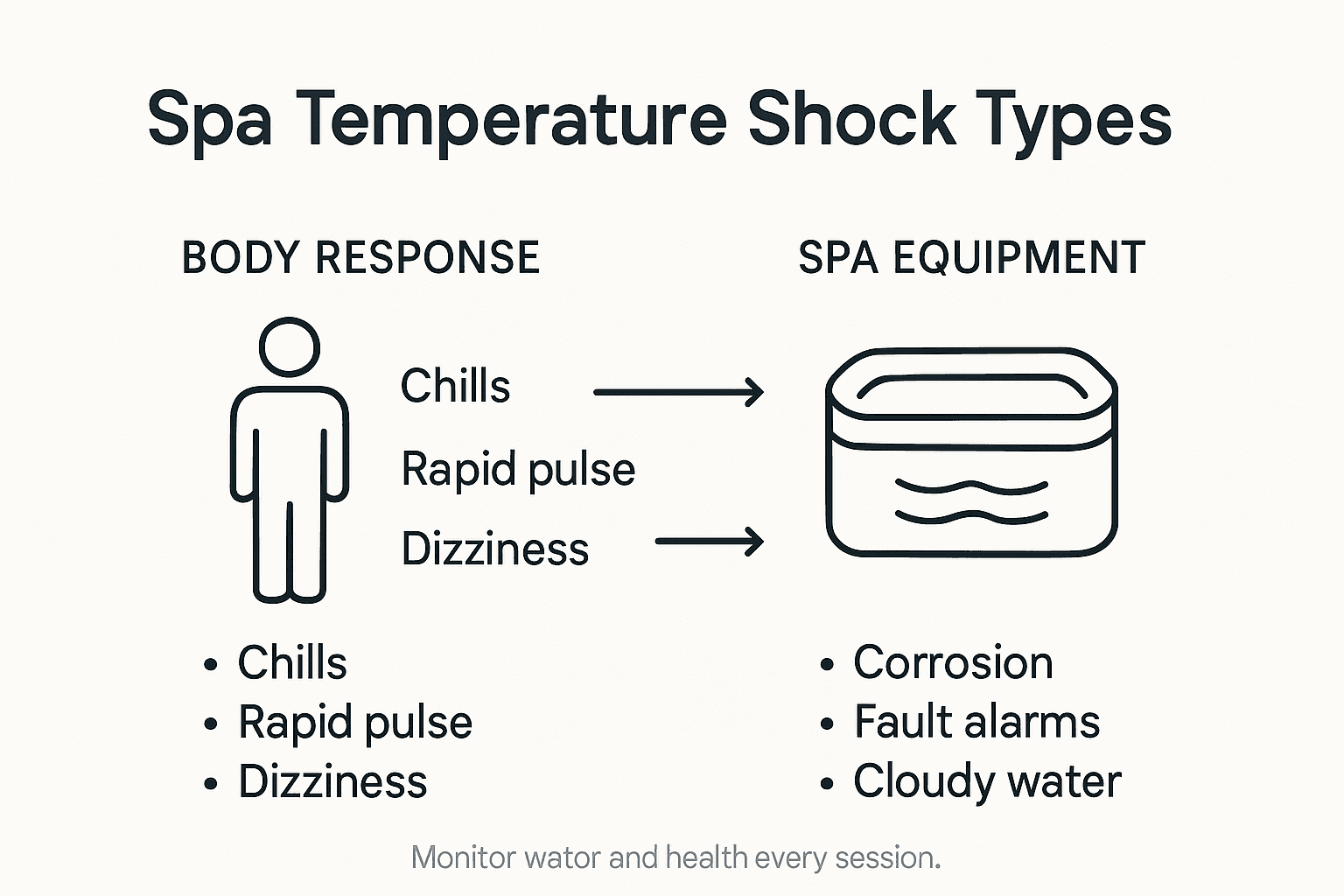
Chemical temperature shock is another critical dimension, tied to water treatment and sanitising. When the water swings significantly in temperature, the effectiveness of chemical treatments can change dramatically. Chlorine and bromine-based sanitisers become less stable, potentially creating conditions where bacteria can multiply. This type of shock calls for precise management to hold good water quality and prevent the health risks that come with poor chemical balance.
Pro Tip: Invest in a high-quality digital thermometer with rapid response times to monitor and manage spa water temperature transitions accurately and safely.
Below is a summary of the main types of temperature shock and their effects on users and equipment:
| Type of Shock | Main Trigger | Impact on Users | Impact on Equipment |
|---|---|---|---|
| Physiological | Rapid change in water temperature | Dizziness, increased heart rate | Minimal direct impact |
| Chemical | Sudden water temperature fluctuation | Increased bacterial growth risk | Sanitiser effectiveness drops |
| Mechanical | Abrupt heating or cooling cycles | None directly | Greater wear and tear |
How temperature shock affects users
Temperature shock brings real physiological challenges for spa users, particularly those with underlying health conditions. Medical research on thermal risks reveals the complex interactions between human physiology and sudden thermal transitions. The body runs through several cascading responses when exposed to a rapid change, ranging from mild discomfort to potentially life-threatening situations.
The cardiovascular system feels the most immediate and profound effects during a shock. A sudden change can trigger rapid heart rate swings, blood pressure changes and possible fainting, especially in vulnerable groups such as the elderly or those with existing cardiac conditions. When the body's temperature control is overwhelmed, users may feel dizzy or nauseous and, in extreme cases, lose consciousness. These responses are not just uncomfortable; they can be genuine health risks that need careful management and awareness.

Key physiological mechanisms get disrupted during a shock, with possible long-term health implications. The body's thermoregulatory systems can come under stress, leading to possible immune suppression and greater susceptibility to thermal-related complications. Plumbing and health professionals stress how important it is to understand these risks, particularly for anyone with compromised health or limited ability to adapt to heat. Different groups experience these transitions uniquely, with age, fitness and overall health all playing a part in the potential for a bad reaction.
Pro Tip: Always conduct a gradual temperature acclimation by entering spa water incrementally and monitoring your body’s immediate physiological responses.
Preventing it for safer spa enjoyment
A safe soak calls for an all-round approach to temperature management and user protection. UK government guidelines for spa safety offer valuable insight into cutting the thermal and health risks that come with hot tub use. These strategies take in the physiological, hygienic and environmental sides to keep users comfortable and well.
Good prevention starts with knowing your own thermal tolerance and using gradual adaptation. Approach getting in methodically, letting your body adjust step by step to the water temperature. That means entering slowly, starting with the feet and lower legs, then immersing deeper while watching how you feel. Pay particular attention to vulnerable groups, including the elderly, those with cardiovascular conditions and anyone with reduced ability to regulate heat. Monitoring the temperature is crucial, with recommended spa water usually between 36 and 38 degrees Celsius to keep the shock risk low.
Full spa safety goes beyond temperature to include rigorous water quality and personal health precautions. Do a proper pre-entry health check, thinking about any current conditions, medication interactions and your own thermal sensitivity. Hydration plays a key part in regulating heat, and experts recommend drinking more water before and during use to support the body's adaptation. Limiting continuous sessions to 15 to 20 minutes also helps prevent thermal stress and allows for recovery.
Pro Tip: Always keep a digital thermometer and water bottle nearby during spa sessions, and listen to your body’s signals of thermal discomfort.
Here is a comparison of recommended prevention strategies and what each one offers for safer spa use:
| Strategy | How It Works | Main Benefit |
|---|---|---|
| Gradual spa entry | Stepwise immersion for body acclimation | Reduces thermal shock risk |
| Constant temperature monitoring | Use digital thermometer frequently | Prevents unsafe conditions |
| Hydration before/during spa | Increased water intake | Supports thermal regulation |
| Routine water testing | Test chemical balance regularly | Ensures water safety |
The mistakes UK owners make and the fixes
UK owners often run into temperature-related challenges that can undermine both the equipment and user safety. Comprehensive maintenance guides reveal a set of recurring mistakes that can lead to temperature shock and health risks. Knowing these common pitfalls is key to keeping a safe, enjoyable soak.
One of the most common errors is inconsistent temperature management and abrupt thermal transitions. Many owners change the temperature too quickly, which stresses both the equipment and the user's physiology. That can raise energy use, strain the heating elements and heighten the risk of shock. Better practice includes making gradual changes, holding a consistent baseline between 36 and 38 degrees Celsius, and using programmable controls that allow smooth, incremental adjustments.
Chemical balance and water quality are another critical area where UK owners often slip up. Poor sanitising and irregular treatments can worsen shock risks by creating conditions ripe for bacteria and unpredictable chemistry. Owners should build a rigorous routine that includes regular testing, precise balancing and systematic cleaning. This not only reduces the temperature-related risks but also keeps the spa hygienic and safe, protecting both health and the equipment's lifespan.
Pro Tip: Invest in a digital spa maintenance log to track temperature changes, chemical levels, and cleaning schedules, helping you maintain consistent and safe hot tub conditions.
Protect Your Health and Comfort with Zagosa Spa & Pool
A sudden change in water temperature can cause serious spa temperature shock, affecting both your comfort and your wellbeing. If you want to avoid rapid thermal transitions, dizziness and chemical imbalances, reliable water treatment is essential. Zagosa Spa & Pool offers a trusted range of spa essentials and hot tub chemicals made to help you hold a steady temperature and chemical balance safely and effectively.
See how Zagosa's carefully formulated products can support your spa's water chemistry and temperature stability. Take control today by visiting Zagosa Spa & Pool and browse our selection, which helps you prevent temperature shock, improve your soak and protect your health. Do not wait until discomfort strikes - act now to enjoy safer, more relaxing spa sessions.
Learn more about our water treatment products and enjoy peace of mind with every soak.
Frequently Asked Questions
What is spa temperature shock?
Spa temperature shock is the body's physiological response to sudden, significant changes in water temperature, which can affect comfort and health.
How do I prevent temperature shock in my hot tub?
Acclimatise gradually by getting in slowly and watching how you feel. Hold a consistent water temperature between 36 and 38 degrees Celsius and stay well hydrated.
What are the health risks of temperature shock?
It can cause dizziness, a raised heart rate and blood pressure swings. It poses particular risks to vulnerable groups such as the elderly or those with cardiovascular conditions.
How does water chemistry change with temperature swings?
Rapid changes can alter how well sanitisers like chlorine and bromine work, potentially creating conditions that favour bacteria. Regular testing and balancing are essential for safe water.
Recommended
- Shock Treatment in Hot Tubs: What It Does for You - Zagosa Spa & Pool
- Shock Treatment for Hot Tubs - Why It Matters - Zagosa Spa & Pool
- How Hot Are Hot Tubs? Understanding Temperature and Comfort - Zagosa Spa & Pool
- Complete Guide to Safe Hot Tub Usage UK - Zagosa Spa & Pool
- 7 Key Benefits of Foot Health Shoes for Everyday Comfort - YDA UK