By The Zagosa Team. Published .
Reviewed or updated .
A hot tub is the classic place to shake off a hard day, but there is more going on than the gentle bubbling. Most hot tubs sit between 36 and 40 degrees Celsius, and once the water climbs past 44 degrees you are into genuine scalding territory.[1] That often surprises people. Relaxation is only half the picture, and picking the right temperature matters far more for your safety and wellbeing than it might seem.
On This Page
- What Are Hot Tubs And What Do They Run At?
- Why The Setting Matters For Comfort And Safety
- How Do Hot Tubs Heat The Water?
- The Health Benefits Of Hot Tub Temperatures
- What Changes A Hot Tub's Temperature
The Short Version
| Takeaway | Explanation |
|---|---|
| Maintain temperatures between 37-39°C | This range provides comfort while ensuring safety and promoting health benefits during hydrotherapy. |
| Avoid exceeding 40°C for safety | Higher temperatures pose risks of heat-related health issues, including dehydration and heat stress. |
| Use effective heating systems | Reliable electric or gas heaters ensure consistent water temperatures, enhancing user experience and safety. |
| Consider individual health factors | Age and pre-existing conditions affect tolerance to temperature, so monitor personal comfort levels closely. |
| Insulate your hot tub effectively | Quality insulation minimizes heat loss, helping maintain desired temperatures despite external weather conditions. |
What Are Hot Tubs and What Do They Run At?
Hot tubs are hydrotherapy vessels built to deliver relaxation, therapeutic relief and comfort through warm water immersion. They create a controlled setting where you can enjoy heated water and jets positioned to massage the muscles and support your general wellbeing.
Design and How They Work
In essence, a hot tub is a standalone pool of heated water, usually seating between 2 and 8 people. They come with temperature controls that let you set the warmth precisely, and modern ones are built from hard-wearing materials such as acrylic, fibreglass or rotomoulded plastic for a long, consistent life.
The heater is central to the whole thing. An electric or gas heater brings the water up to a comfortable temperature, generally between 36 and 40 degrees Celsius. That range gives good comfort while steering clear of the health risks that come with too much heat.
Temperature and Staying Safe
Managing the temperature is everything. Medical News Today notes that most health professionals suggest keeping the water between 37 and 39 degrees Celsius for safe, comfortable use.[2] The main points to bear in mind:
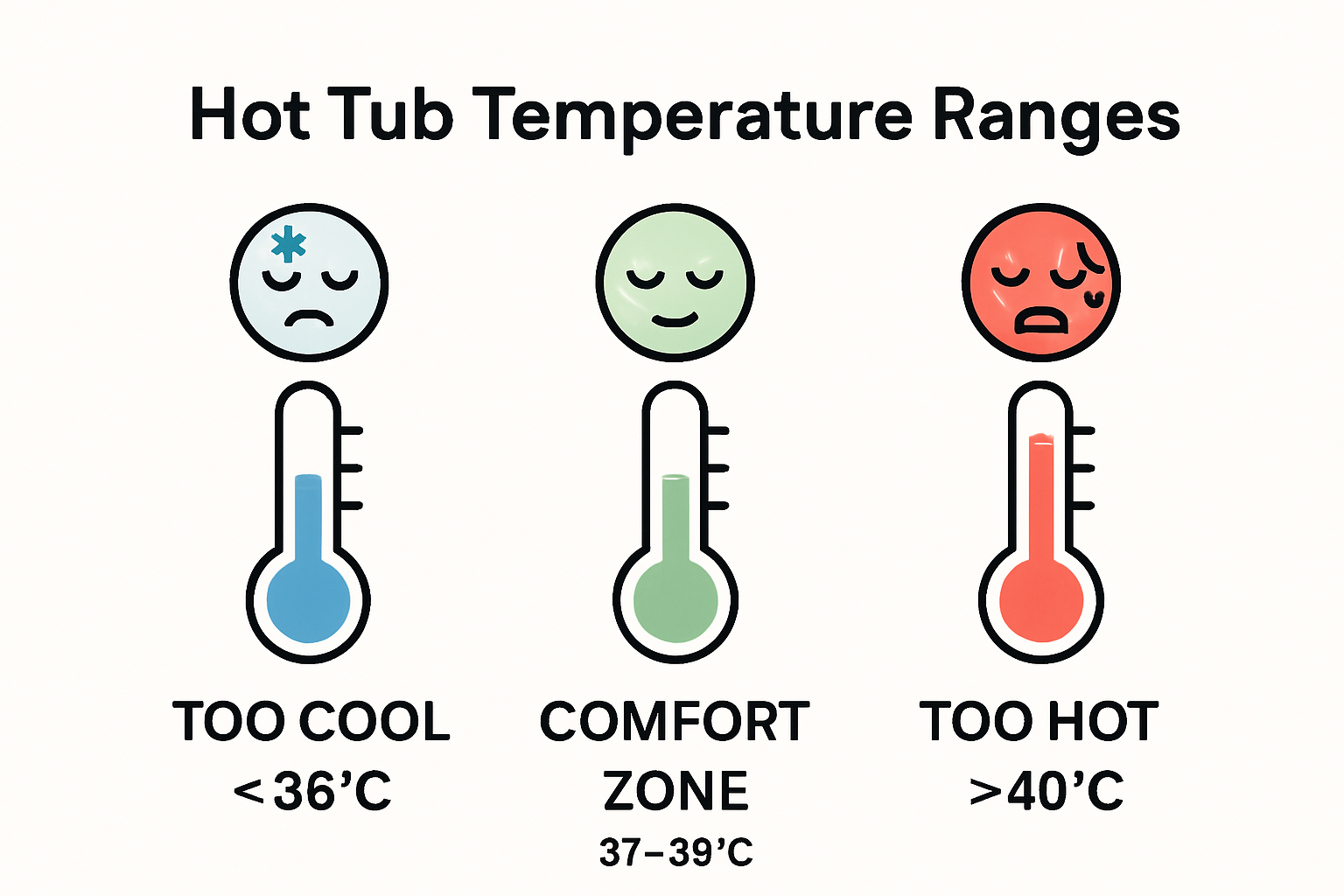
- Avoiding temperatures above 40 degrees Celsius to prevent potential heat-related health complications[2]
- Ensuring consistent water temperature through reliable heating systems
- Monitoring individual tolerance and comfort levels
Want to know more about keeping your water in good shape? Take a look at our guide on hot tub water management.
Why the Setting Matters for Comfort and Safety
Temperature shapes the whole experience, affecting both comfort and health. Understanding how water warmth and your body interact is key to safe, enjoyable hydrotherapy.
How Your Body Reacts
Your body responds actively to water temperature, kicking off its thermal regulation mechanisms. In warm water, blood vessels widen, which improves circulation and can ease muscle tension. Push the temperature too high, though, and it can overwhelm your natural cooling, leading to heat stress.
Reactions vary from person to person depending on age, health and fitness. Older people and anyone with existing cardiovascular conditions are especially sensitive to temperature changes, which is exactly why keeping a close eye on the water temperature matters.
Health and Safety Points
The Health and Safety Executive warns that water above 44 degrees Celsius carries a serious scalding risk. The key safety points are:
- Maintaining water temperatures between 37 to 39 degrees Celsius for optimal comfort
- Avoiding prolonged exposure to temperatures exceeding 40 degrees Celsius
- Monitoring individual health conditions and heat tolerance
Beyond comfort, the wrong temperature can bring on real problems. Too much heat can cause dehydration, dizziness and, in the worst cases, heat exhaustion. Water that is too cool, on the other hand, misses out on the therapeutic benefits of hydrotherapy altogether.
The table below sums up how different temperature ranges affect your body and health, so you can find the sweet spot for safety and comfort.
| Temperature Range (°C) | Physiological Effects | Recommended Usage |
|---|---|---|
| 36-37 | Gentle warming, suitable for most users | Relaxation, extended soaks |
| 37-39 | Muscle relaxation, promotes circulation | Hydrotherapy, pain relief |
| 40 | Intense heat, may cause dehydration and dizziness | Short sessions only, healthy adults |
| 41-44 | Increased risk of heat stress and scalding | Generally not recommended |
| Above 44 | Dangerous, risk of serious scalding or heat illness | Avoid - poses significant health hazards |
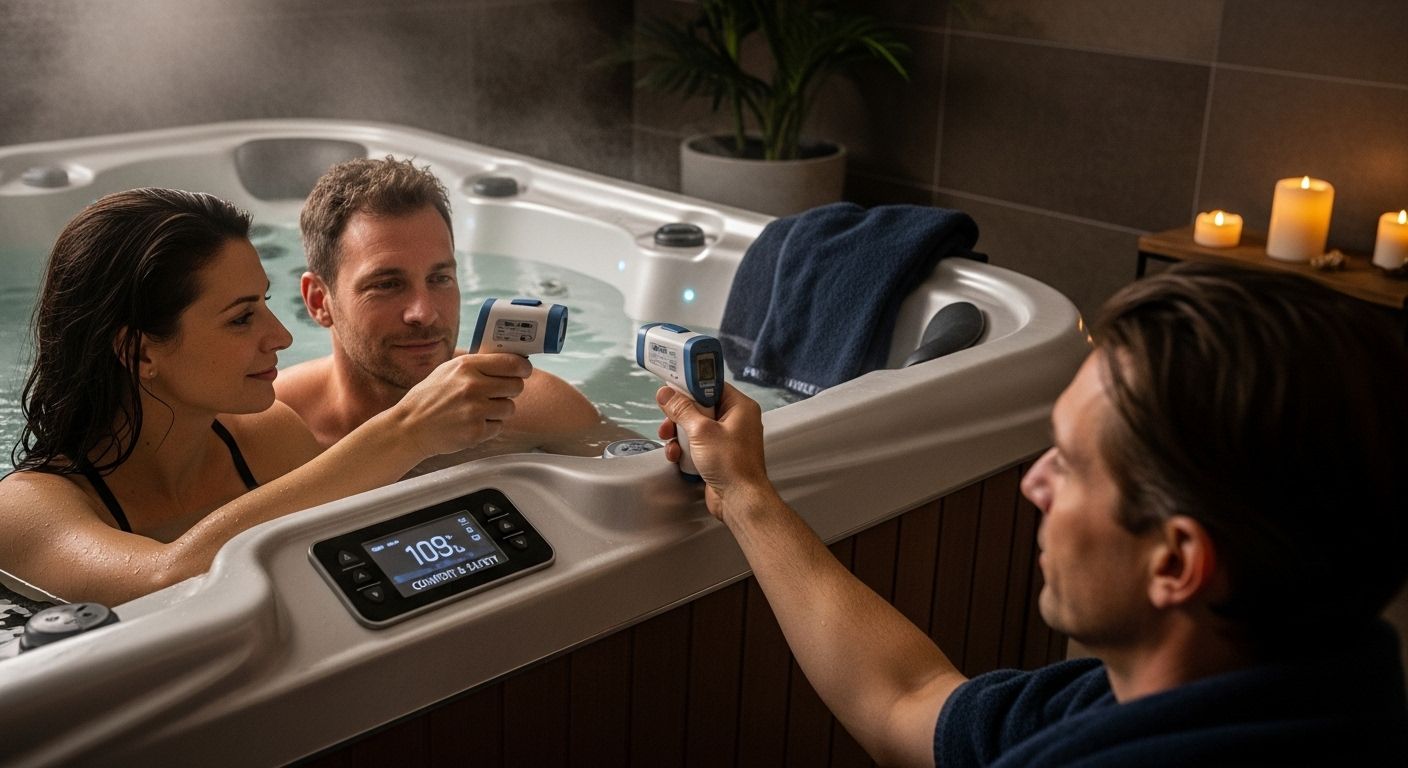
If you want a safe, enjoyable hot tub, our water management guide is full of pointers on getting the water conditions right.
How Do Hot Tubs Heat the Water?
Heating is what turns ordinary water into a therapeutic soak. Modern hot tub heating brings together electrical engineering, thermal dynamics and precise temperature control.
The table below compares the main heating technologies, with their standout features and benefits.
| Heating Technology | Description | Key Benefits |
|---|---|---|
| Electric Resistance Heater | Utilises an immersed metal element to heat water directly. | Precise temperature control; common |
| Gas-Powered Heater | Burns gas to rapidly heat the water. | Fast heating; suitable for colder weather |
| Heat Pump | Transfers ambient heat to warm the water. | Energy efficient; eco-friendly |
| Solar-Assisted Heating | Uses solar panels to supplement water heating. | Low running costs; sustainable |
Electric Heaters
Electric resistance heaters are the mainstay of most modern hot tubs. They use a metal heating element sitting directly in the water, generating heat through electrical resistance. As current passes through the element, it produces thermal energy that warms the water as it circulates.
The process involves a careful dance between the heating element, the circulation pump and the temperature sensors. The temperature control unit constantly checks and adjusts the warmth, holding the water at a safe, steady temperature. Better models use digital thermostats that manage the temperature to within a fraction of a degree.
Other Heating Options
Some hot tubs go beyond the standard electric heater. The National Renewable Energy Laboratory points to heat pumps as an energy-efficient option for water heating. The main technologies are:
- Electric resistance heaters with digital temperature control
- Gas-powered heating systems for rapid water warming
- Advanced heat pump technologies leveraging ambient environmental heat
- Solar-assisted heating mechanisms for eco-conscious users
Keen to keep your water in top condition? Explore our water management strategies to keep the tub at its best.
The Health Benefits of Hot Tub Temperatures
The warmth of a hot tub does more than feel nice. It is a genuine tool for physical wellness. The controlled heat can set off real physiological responses that support your health and wellbeing.
Muscles and Pain
Warm water makes a great environment for easing muscle and joint trouble. When your body meets temperatures between 37 and 39 degrees Celsius, blood vessels dilate, circulation improves and your metabolism speeds up. That better circulation helps relax tense muscles, ease long-standing aches and support quicker recovery after exertion.
The pressure of the water adds to the effect. By taking some of the gravitational strain off your joints and muscles, a hot tub offers a low-impact setting that suits rehabilitation and pain management.
Stress and Mind
According to Harvard Medical School, warmth therapy has a real part to play in reducing stress and supporting mental health. The steady, controlled heat of a hot tub encourages the release of endorphins, the body's own feel-good hormones. The main benefits include:
- Reduction of cortisol levels associated with chronic stress
- Improved sleep quality through relaxation mechanisms
- Enhanced mood regulation through neurochemical balance
- Potential mitigation of anxiety and depressive symptoms
If you are after a well-rounded wellness routine, our water management guide has more on keeping a healthy hot tub.
What Changes a Hot Tub's Temperature
Holding a steady temperature involves a mix of technology, surroundings and the person in the water. Knowing what is at play helps you keep the conditions right and get more from every soak.
Weather and Build
The air temperature around the tub matters a great deal. Outside weather has a big effect on the water's warmth. In colder months, heat escapes faster, so the heater works harder to hold the temperature. In a hot summer, the opposite is true, and there can even be a risk of overheating.
Insulation and the tub's design have a direct bearing on how stable the temperature stays. Top models use good thermal barriers that keep heat loss down, so the water stays more consistent whatever the weather. The materials used and the cover design both make a big difference to thermal efficiency.
The Person in the Water
According to the Health and Safety Executive, individual differences have a lot to do with how warm the water feels and how much heat someone can take. The user-specific factors include:
- Age and overall health status
- Individual metabolic rate
- Body composition and thermal sensitivity
- Pre-existing medical conditions
- Hydration levels
Because of all that, a single temperature will not suit everyone, so it pays to stay flexible. Our water management guide has more on keeping your hot tub conditions spot on.
Keep Your Hot Tub Warm and Safe With Zagosa Spa & Pool
Finding it tricky to keep your hot tub at the right temperature for both comfort and safety? As we have covered, managing heat, water quality and steady performance all matter for your wellbeing. If you have ever worried about the temperature wandering or the water not feeling right, you are far from alone. A clean, reliably heated tub is the key to a relaxing soak and real peace of mind.
Get precise control and clear water every time by choosing Zagosa Spa & Pool. Take a look at our trusted, thoroughly tested water treatment products, from hot tub chemicals to spa maintenance solutions. Do not leave your comfort or health to chance. Visit Zagosa Spa & Pool and see how easy it is to create the safest, most enjoyable hot tub setting for you and your family. For advice on keeping your water pristine, have a read of our hot tub water management guide. The perfect soak starts with the right care.
Frequently Asked Questions
How hot are the typical temperatures for hot tubs?
Most hot tubs are set to water temperatures ranging from 36 to 40 degrees Celsius, which provides optimal comfort and therapeutic benefits.
What are the safety considerations for hot tub temperatures?
Health professionals recommend maintaining hot tub temperatures between 37 to 39 degrees Celsius, avoiding prolonged exposure above 40 degrees Celsius to prevent heat-related complications.[1]
How do hot tubs heat water effectively?
Hot tubs typically use electric resistance heaters that warm the water through direct immersion of a heating element, along with temperature control systems to ensure consistent warm water.
What health benefits can be gained from using hot tubs?
Warm water immersion in hot tubs can improve blood circulation, alleviate muscle tension, and promote mental well-being by reducing stress and improving sleep quality.
Recommended
Sources and review
Reviewed on . Next review due .
- Guidelines for safe recreational water environments. Volume 2: swimming pools and similar environments - World Health Organization
- HSG282: The control of legionella and other infectious agents in spa-pool systems - Health and Safety Executive