By The Zagosa Team. Published .
Reviewed or updated .
Skip the routine care and a hot tub stops being relaxing fast. Stale, badly managed water is a genuine health risk, and worn parts left unchecked turn into big bills. The fix is not luck, it is a simple schedule you actually stick to. This guide walks through why a planned routine matters, which jobs to do and when, and what UK owners and hospitality operators need to have in place.
Table of Contents
- Why A Planned Spa Routine Matters
- The Jobs That Make Up Hot Tub Care
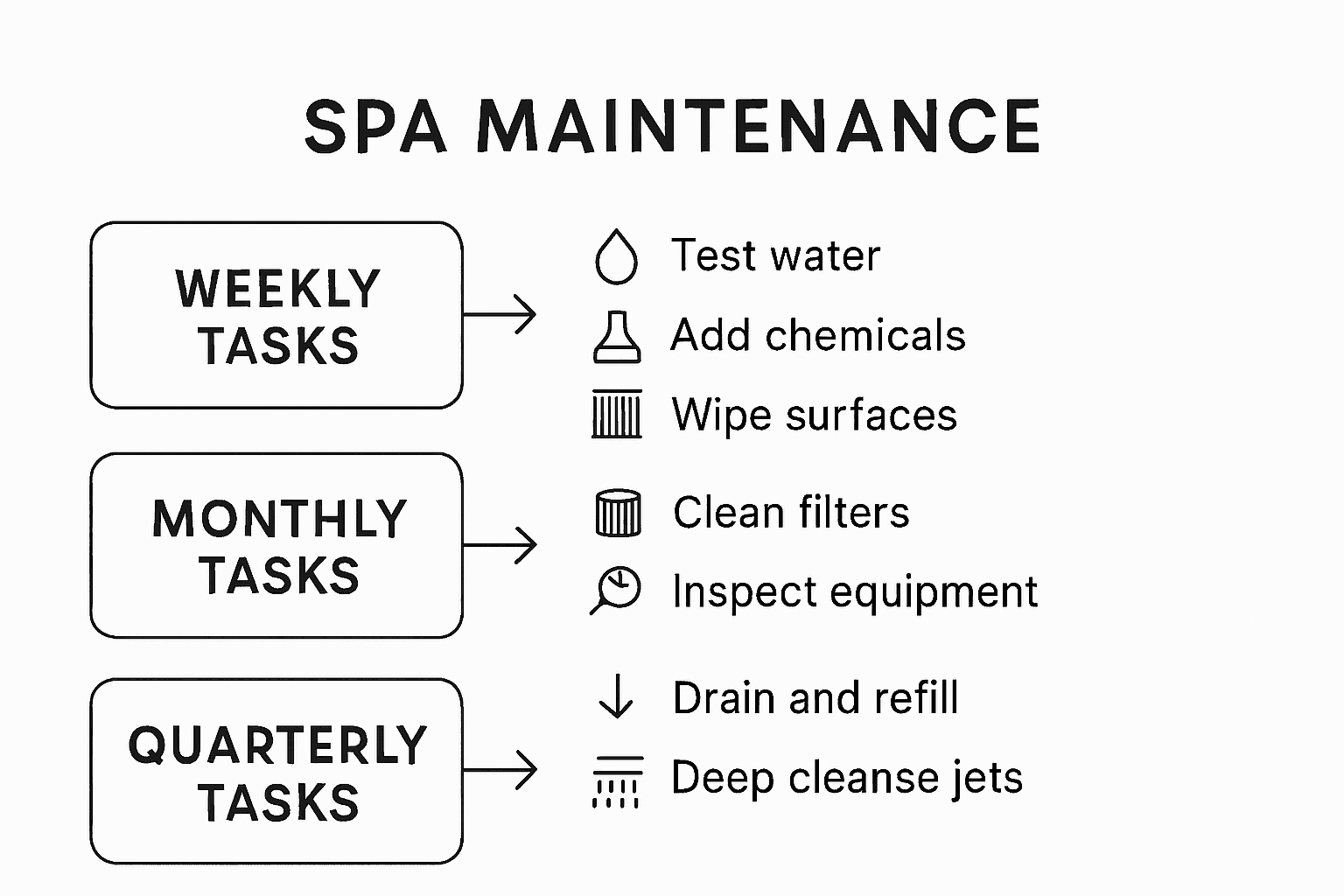
- How Often Each Task Needs Doing
- What Happens When Care Slips
- Your Legal Duties In The UK
The Quick Version
| Point | Details |
|---|---|
| Why bother with a schedule | A set routine keeps the spa working properly and protects everyone using it from avoidable health risks. |
| How often to act | Tasks split into daily, weekly, monthly and quarterly jobs, each one keeping the water and the kit in good shape. |
| The cost of neglect | Let care slide and bacteria take hold, putting bathers at real risk of illness. |
| The rules you must follow | UK owners have to meet health and safety law to protect public health and stay out of legal trouble. |
Why A Planned Spa Routine Matters
A hot tub asks for more than the odd wipe-down. It needs a proper plan. Think of your maintenance schedule as the thing standing between you and both worn-out equipment and dodgy water. Set up steady habits and you protect how the spa works and, just as importantly, keep the water clean and safe for anyone getting in.
The best routines are built around the parts of spa care that genuinely matter. Health and safety regulations set out why planned maintenance procedures matter for heading off breakdowns and hazards. In practice that means testing the water, cleaning filters, checking surfaces, going over the mechanical bits and keeping the sanitiser topped up. Catch small problems on one of these passes and they never grow into expensive ones, which is how you keep a spa performing well for years.
The backbone of any good routine is the same: regular water testing, balancing the chemistry, looking after the filters and inspecting the equipment. Test the water weekly to keep pH, sanitiser and total alkalinity where they should be. Clean filters monthly and swap them out once a year. Give pumps, heaters and jets a proper professional look-over every quarter to spot wear early. Stick to that and surprise repair bills largely disappear.
Handy tip: Keep a simple logbook of everything you do, from chemical doses to equipment checks, so you always have a clear record of your spa's condition.
The Jobs That Make Up Hot Tub Care
Hot tub care covers a fair spread of jobs, all aimed at keeping the water clean, the equipment working and bathers safe. Treat these as the tasks that protect your investment and keep the spa enjoyable for the long haul. Knowing what each one does makes it much easier to stay ahead of problems.
Hot tub safety guidance calls for a methodical approach to maintenance that covers several fronts. The main jobs fall into a few groups:
-
Water Chemistry Management
- Weekly pH and alkalinity testing
- Monthly sanitiser level checks
- Quarterly comprehensive water analysis
-
Equipment Inspection
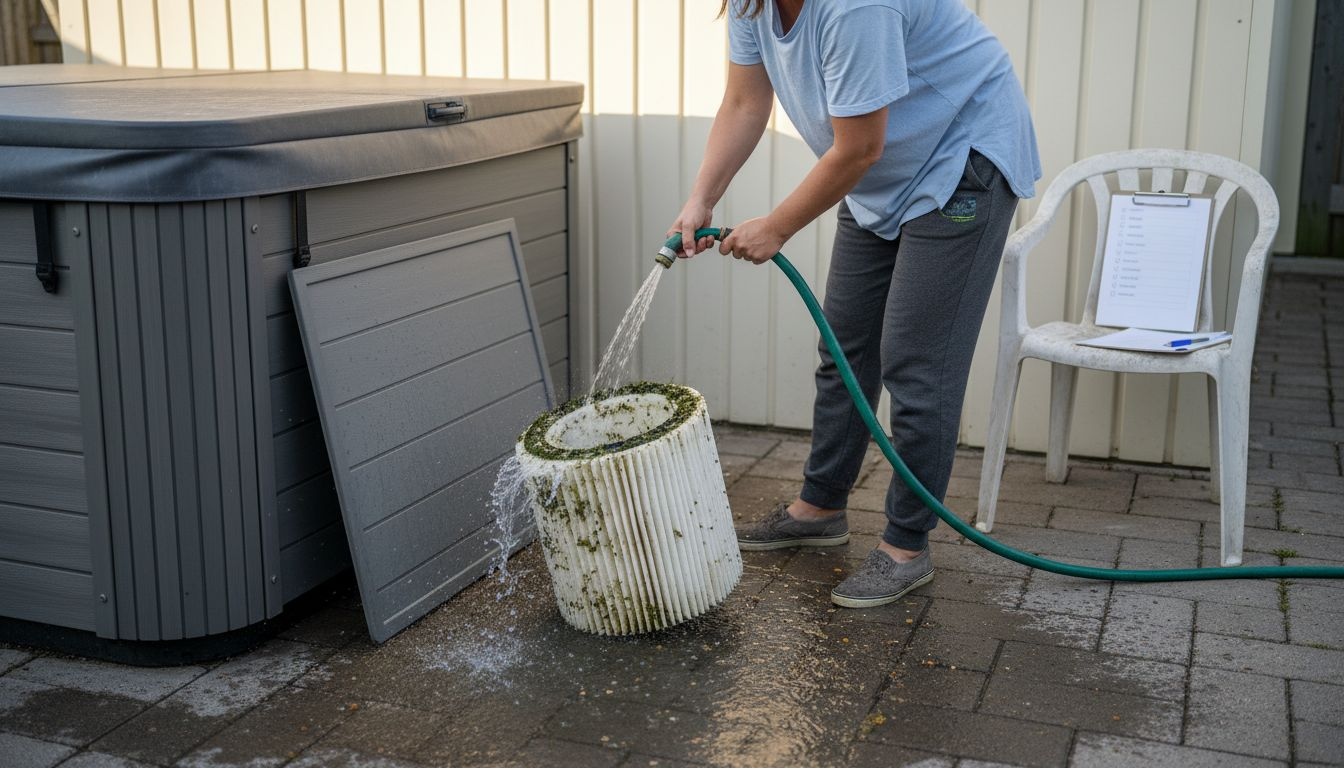
- Monthly filter cleaning and assessment
- Quarterly pump and jet functionality checks
- Annual mechanical system comprehensive review
-
Surface and Structural Maintenance
- Weekly surface cleaning
- Monthly deep cleaning of shell and waterline
- Periodic inspection of shell integrity
Every one of these earns its place. Keeping the chemistry right stops bacteria breeding and keeps the water safe to sit in. Equipment checks flag wear and mechanical trouble before it turns costly. Looking after the surfaces keeps the tub looking good and stops chemical imbalance or physical wear doing lasting damage.
Handy tip: Print a checklist, laminate it and stick it near the tub, so the jobs get done on time all year round.
How Often Each Task Needs Doing
Good spa care runs on timing. Some jobs are quick daily glances, others are once-a-year deep checks, and knowing which is which is how you protect the tub and keep the water and equipment performing.
Health and safety guidelines recommend structured maintenance intervals for consistent spa care. Those intervals break down into clear time frames:
Daily Maintenance Tasks
- Water level check
- Surface skimming
- Visual equipment inspection
- Basic water chemistry testing
Weekly Maintenance Tasks
- Comprehensive water chemistry analysis
- Filter rinse
- Waterline and shell surface cleaning
- Chemical balance adjustment
Monthly Maintenance Tasks
- Deep filter cleaning
- Detailed equipment functionality check
- Inspect and clean spa cover
- Lubricate moving mechanical parts
Quarterly Maintenance Tasks
- Professional mechanical system inspection
- Comprehensive water quality assessment
- Calibrate and test sensors and controls
- Evaluate overall spa system performance
These intervals are chosen for a reason. Acting little and often stops issues snowballing, keeps the water clean and heads off the big repair bills. Each slot on the calendar has its own job to do in keeping the spa working and safe to use.
Handy tip: Set up a colour-coded calendar, on paper or your phone, with reminders so nothing slips through the year.
What Happens When Care Slips
Letting maintenance drift is not just about wearing out the kit. It puts people at risk. Warm, neglected spa water is exactly the kind of place harmful microorganisms love, and bathers can end up with far more than a bit of wear and tear to worry about.
Health and safety guidance is clear about the dangers of poor spa care, especially when it comes to bacteria taking hold. The main threats include:
Bacterial Risks
- Legionella Bacteria: Causes potentially fatal Legionnaires' disease
- Pseudomonas Aeruginosa: Responsible for skin and ear infections
- E. Coli: Can trigger severe gastrointestinal complications
- Mycobacterium: Potentially causing respiratory infections
Specific Health Consequences
- Respiratory tract infections
- Skin rashes and dermatological conditions
- Urinary tract infections
- Potential immune system complications
- Risk of systemic bacterial infections
Warm, damp conditions are the perfect nursery for bacteria. In still water with the chemistry out of kilter, colonies can multiply fast, turning a relaxing soak into a health hazard. Balanced water, a working filter and steady sanitising are not extras. They are the basic defences that keep those unseen threats in check.
Here is a quick summary of how neglect hits both the spa and the people using it:
| Neglected Area | Consequences for Spa | Health Risks for Users |
|---|---|---|
| Water Chemistry | Corrosion, cloudy water | Bacterial infections |
| Filter Maintenance | Reduced filtration, blockages | Increased exposure to pathogens |
| Mechanical Components | Equipment failure, leaks | Interrupted safe usage |
| Surface Cleaning | Staining, material decay | Skin irritations, rashes |
Handy tip: Buy a decent test kit and run a full chemistry check at least once a week, treating the water with the same care you would drinking water.
Your Legal Duties In The UK
Owning a hot tub in the UK comes with legal strings attached, especially once other people use it. Owners and operators have to work within several sets of rules built to protect public health, keep bathers safe and hold hygiene to a proper standard.
Health and safety guidance expects operators to carry out risk assessments and follow set maintenance procedures across all kinds of settings. The main duties cover a few key areas:
Key Legal Obligations
- Conduct thorough risk assessments
- Implement systematic maintenance procedures
- Maintain detailed operational records
- Ensure water quality meets health standards
- Provide appropriate user safety information
Regulatory Compliance Requirements
- Control of Substances Hazardous to Health (COSHH) Regulations
- Health and Safety at Work Act
- Management of Health and Safety at Work Regulations
- Reporting of Injuries, Diseases and Dangerous Occurrences Regulations (RIDDOR)
- Public Health legislation
Whether you run a holiday let, a hospitality venue or a private spa, the expectation is that you get ahead of safety rather than react to it. That means going beyond the bare minimum and building genuine safe habits. Fall short and the consequences can be serious, from heavy fines to prosecution and being held liable for anyone who falls ill.
Here is a table setting out which UK rules apply and what each one asks of you:
| Regulation Name | Applies To | Core Requirement |
|---|---|---|
| COSHH Regulations | All spa operators | Control chemical exposure |
| Health & Safety at Work Act | Employers and businesses | Ensure safe environment |
| Management of H&S at Work Regs | All workplaces | Implement risk assessments |
| RIDDOR | Businesses and hospitality | Report serious health incidents |
| Public Health Legislation | Private and public hot tubs | Maintain hygiene and standards |
Handy tip: Keep one folder with all your maintenance records, risk assessments and safety procedures, so you have a clear paper trail showing you take the rules seriously.
Keep Your Hot Tub Healthy and Sparkling with Zagosa Spa & Pool
A steady spa maintenance schedule is your best defence against surprise repairs, bacteria and equipment failure, all the problems covered above. Balancing the chemistry, cleaning filters and checking the equipment go far more smoothly when you have products you can rely on. That is where we come in, with a proper range of hot tub chemicals, sanitisers and spa care kit chosen to help you protect your spa for the long run.

Get on top of your spa care by taking a look at Zagosa's water treatment solutions. Our products make it easier to keep the water hygienic, the chemistry balanced and the equipment happy, so your hot tub stays safe, enjoyable and on the right side of the rules. Do not wait for neglect to cost you money or your health. Visit Zagosa Spa & Pool and give your tub the care it deserves.
Frequently Asked Questions
How often should I test the water chemistry in my hot tub?
Test weekly. Keeping an eye on pH, sanitiser and total alkalinity each week is what keeps the water safe and pleasant to sit in.
What are the key components of a hot tub maintenance schedule?
The essentials are regular water testing, balancing the chemistry, looking after the filters and inspecting the mechanical parts so everything keeps working and lasts.
What happens if I neglect hot tub maintenance?
Neglect leads to equipment failure, poor water and health risks from bacteria, which threatens both how the spa works and the safety of anyone using it.
How can I keep track of my hot tub maintenance activities?
Keep a dedicated logbook or calendar for every job, dose and check, and you will always know exactly where your spa stands.