By The Zagosa Team. Published .
Reviewed or updated .
Most UK hot tub owners hit an unexpected maintenance snag within their first year, and that alone tells you why regular care cannot slide. Stay on top of a routine and you protect your money, your health and the life of the spa. This guide lays out exactly what good spa maintenance looks like, so every soak stays safe and hassle-free.
Table of Contents
- Definition Of Spa Maintenance Routines
- Daily, Weekly, And Monthly Maintenance Types
- Essential Spa Care Steps And Chemicals
- Health, Safety, And Environmental Considerations
- Consequences Of Neglecting Regular Maintenance
Key Takeaways
| Point | Details |
|---|---|
| Why regular care matters | Steady maintenance stops equipment failing and keeps the water clean, split across daily, weekly and monthly jobs. |
| Managing the chemicals | Getting the chemistry right keeps bacteria out and the water safe for everyone using it. |
| Health and the environment | Keeping an eye on health and green factors avoids risks to people and cuts the impact on the surroundings. |
| The cost of neglect | Let it slide and you face pricey repairs and health hazards as the kit wears out and bacteria take hold. |
Definition Of Spa Maintenance Routines
A spa maintenance routine is simply a regular, organised way of keeping your hot tub working, clean and lasting. It ties together water treatment, equipment checks and a bit of preventive care to protect your money and keep performance up. The key thing to grasp is that a hot tub needs steady attention, not just the occasional clean.
A full routine usually covers a few core areas: the water chemistry, the filters, the surfaces and the equipment. Spa water maintenance steps show that regular water testing is the foundation of it all. That means keeping tabs on pH, sanitiser and total alkalinity to head off damage and keep the water clean.
The point of a routine is to stop bacteria growing, shield the internal parts from scale and corrosion, and keep the water safe and comfortable. It is not just about the tub looking clean, it is about looking after the mechanical and chemical systems that make it run. Keep at it and you noticeably extend the spa's life and cut the odds of an expensive repair.
Handy tip: Set aside 15 minutes a week to test and balance the water, and you head off long-term damage while keeping the tub in top shape.
Daily, Weekly, And Monthly Maintenance Types
Spa care splits neatly into daily, weekly and monthly jobs, each doing its bit to keep the tub performing and lasting. A structured routine gives you organised care that heads off trouble and holds the water quality steady over time.
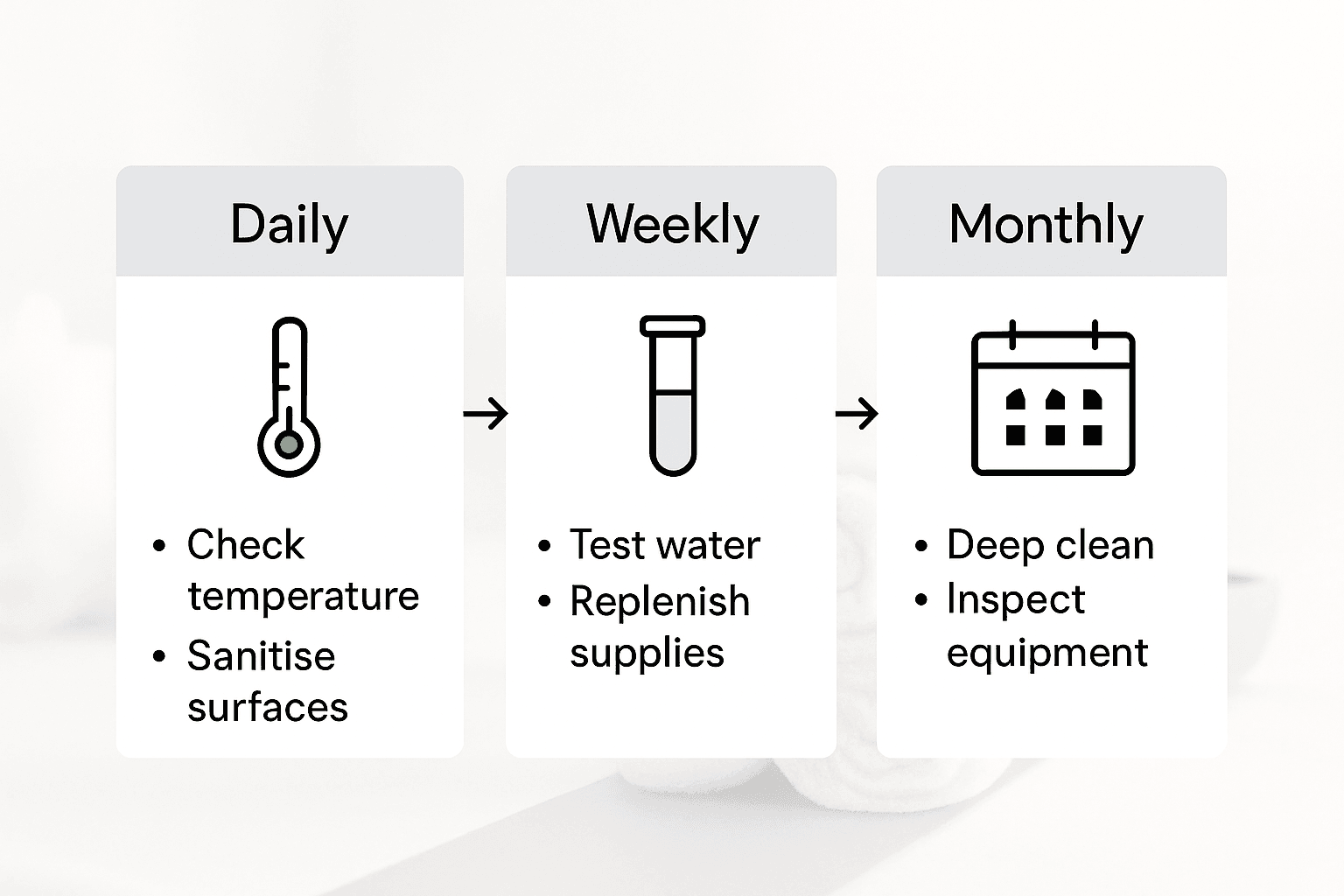
Daily jobs are the quick, frequent ones. Check the water temperature, make sure the cover is on securely, and give the water a quick once-over for clarity. Test the sanitiser and clear off any visible debris. Deal with small things straight away and they never grow into big ones that take the whole system down.
Weekly care goes deeper, with proper water testing and balancing. Measure pH, total alkalinity and sanitiser with decent instruments, clean the waterline, check the filter and add whatever chemicals the water needs. Monthly care is deeper still, with a good look over the equipment, a filter cartridge clean and a full system check. That might mean testing the jets, deep-cleaning the filter and going over the mechanical parts.
Handy tip: Keep a maintenance log or digital calendar so every job gets recorded and nothing important gets missed.
This table sets out the differences between daily, weekly and monthly care to help you plan:
| Frequency | Typical Tasks | Primary Purpose |
|---|---|---|
| Daily | Check water clarity, water temperature, and sanitiser level | Quick issue detection and immediate response |
| Weekly | Balance water chemistry, clean waterline, check filter condition | Prevent water imbalance and improve hygiene |
| Monthly | Deep clean filters, inspect jets, review all equipment | Ensure overall longevity and spot hidden faults |
Essential Spa Care Steps And Chemicals
The heart of spa care is getting the chemistry right and following sensible cleaning steps that protect both the equipment and the water. Spa water balance essentials show just how closely chemical management and overall performance are linked.
The main chemicals you will use are sanitisers, pH balancers, alkalinity adjusters and shock treatments. Chlorine and bromine are the usual sanitisers, killing bacteria and stopping microbial growth. pH balancers keep the water in the ideal 7.2 to 7.8 range, protecting the equipment and keeping bathers comfortable. Alkalinity adjusters steady the chemistry, acting as a buffer against sudden pH swings that could harm the tub.
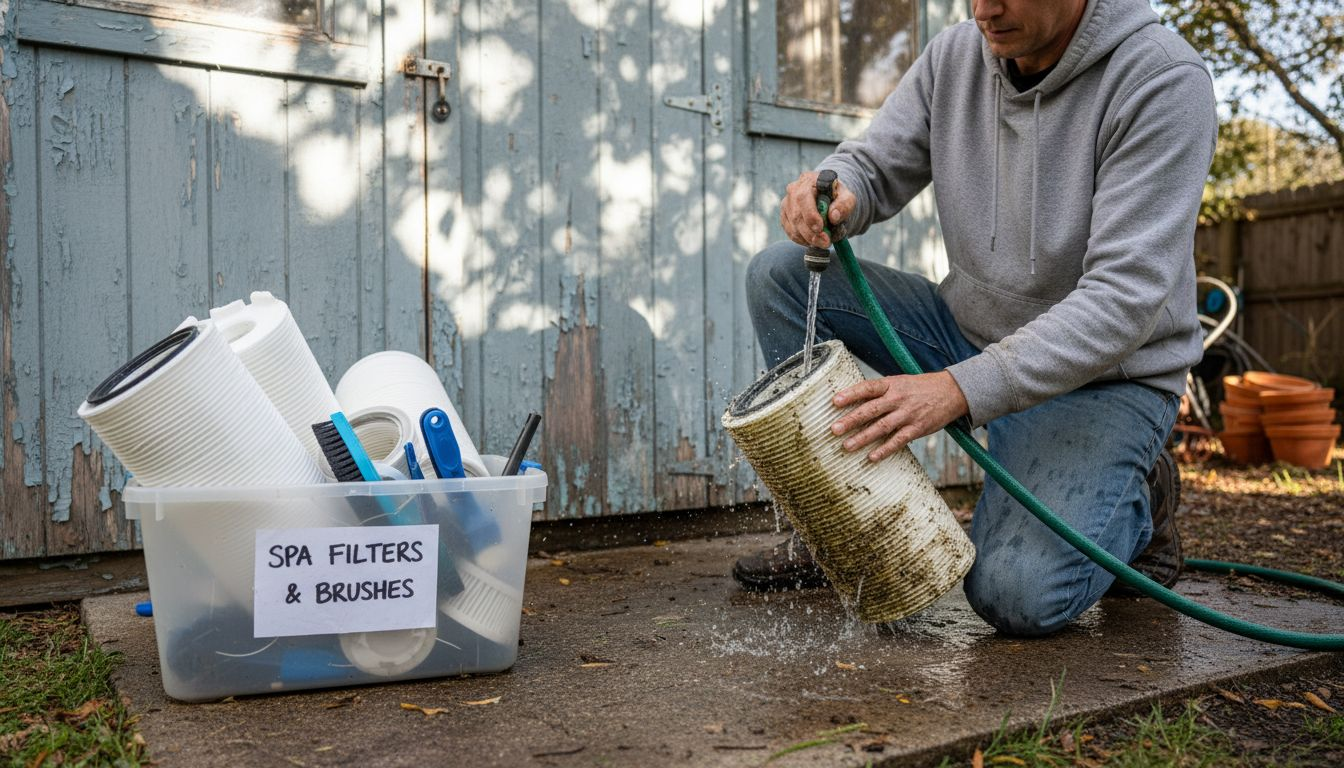
Chemistry aside, the physical jobs matter too. Clean the filter cartridges, check the jets, look over the surfaces for wear and keep the water at the right level. Watch the clarity, clear out debris and keep the water circulating properly to stop bacteria settling. Good care blends chemical precision with hands-on attention, looking after both how the tub looks and how it works.
Handy tip: Keep your spa chemicals in one place, sealed, tidy and out of direct sun, so they stay effective and do not degrade.
Here is a quick reference to the essential spa chemicals and what they do:
| Chemical Type | Main Function | Typical Effect on Spa Water |
|---|---|---|
| Chlorine/Bromine | Disinfect and kill bacteria | Maintains safe, sanitised water |
| pH Balancer | Adjust water acidity/alkalinity | Protects equipment and user comfort |
| Alkalinity Adjuster | Stabilise pH fluctuations | Prevents rapid pH swings |
| Shock Treatment | Oxidise contaminants | Restores clarity, tackles odours |
Health, Safety, And Environmental Considerations
Spa care is about more than nuts and bolts. It also involves real health, safety and environmental points that protect both bathers and the wider surroundings. Habits that help a spa last show why proper care goes beyond simply treating the water.
Health comes first, which means stopping bacteria, avoiding chemical exposure and heading off waterborne illness. Good sanitising with careful chlorine or bromine management clears out harmful microorganisms. You need to keep the chemical levels right, wear protective gear when handling products, and make sure there is decent ventilation while you work. Chemicals need respect too, since mixing or storing them badly can create toxic compounds that put people at risk.
The environmental side reaches beyond the tub itself, to responsible chemical disposal, saving water and keeping your impact low. Cut water waste where you can, for instance with a cover to reduce evaporation and by managing water changes sensibly. Chemical disposal needs particular care, with proper steps to neutralise and dispose of cleaning agents and treatments so nothing pollutes. Responsible care means weighing the wider impact of every choice, from which products you buy to how you handle the water.
Handy tip: Always dilute and neutralise spa chemicals before disposal, and check your local environmental guidance so you handle them safely for both people and the surroundings.
Consequences Of Neglecting Regular Maintenance
Let maintenance go and the damage snowballs, hitting both how the tub works and the money you have put into it. Spa water maintenance steps show exactly why steady care matters for stopping a slow decline.
The mechanical fallout is the worst of it. Neglected equipment wears out fast, with key parts like pumps, heating elements and jets prone to scale, corrosion and early failure. Calcium and mineral deposits build up in the pipes and equipment, cutting the flow and piling extra strain on the system. What starts as a minor issue can turn into a costly repair or full replacement, potentially hundreds or even thousands of pounds you did not plan for.
It is not just the machinery, either. A neglected tub becomes a haven for harmful bacteria and a health risk. Out-of-balance water lets microorganisms multiply, raising the chances of skin infections, breathing problems and waterborne illness. Bad chemistry can also damage the surfaces, causing cracks, discolouration and a weaker shell. For bathers, the risks include legionella, algae and other dangerous organisms that can make people seriously unwell.
Handy tip: Keep a monthly checklist that logs the spa's performance, chemical levels and any little changes in the water, so you catch problems before they turn into big bills.
Keep Your Hot Tub Pristine with Expert Spa Maintenance Solutions
Skip regular care and you invite costly repairs and health risks like bacteria and chemical imbalance. As this guide shows, keeping the chemistry right, cleaning the filters and watching the equipment is what extends your tub's life and keeps every soak safe. If keeping up with the daily, weekly and monthly jobs is a struggle, or you just want reliable, quality chemicals to balance the water properly, Zagosa Spa & Pool has the trusted products you need.

Take a look at our tried and tested range of hot tub chemicals and spa essentials at Zagosa Spa & Pool, made to protect your tub from scale, corrosion and bacteria. With our products it is easier than ever to hold the right pH, keep sanitiser balanced and enjoy sparkling clear water. Look after your spa now with proper water treatment and keep every soak safe and refreshing. Visit us today and take the first step towards easy spa care.
Frequently Asked Questions
What are the key components of a spa maintenance routine?
A full routine covers regular water chemistry, filter care, surface cleaning and equipment checks, so the tub keeps performing and lasts.
How often should I check the water chemistry in my hot tub?
Test weekly, spending around 15 minutes to balance pH, total alkalinity and sanitiser for safe, comfortable water.
What happens if I neglect spa maintenance?
Neglect brings costly damage, from fast-worn mechanical parts to bacteria and health hazards, which adds up to expensive repairs and risks for bathers.
What chemicals are essential for maintaining hot tub water quality?
The essentials are a sanitiser such as chlorine or bromine, pH balancers, alkalinity adjusters and shock treatments to manage the water and protect both bathers and equipment.
Recommended
- 7 Best Practices for Hot Tubs Every UK Owner Should Know - Zagosa Spa & Pool
- Hot Tub Cleaning Cycles: Complete Guide for UK Owners - Zagosa Spa & Pool
- Step by Step Hot Tub Cleaning for Spotless Spa Results - Zagosa Spa & Pool
- Complete Guide to Why Replace Spa Water - Zagosa Spa & Pool
- Preventive Maintenance Checklist for Diesel Injection Pros - My WordPress