By The Zagosa Team. Published .
Reviewed or updated .
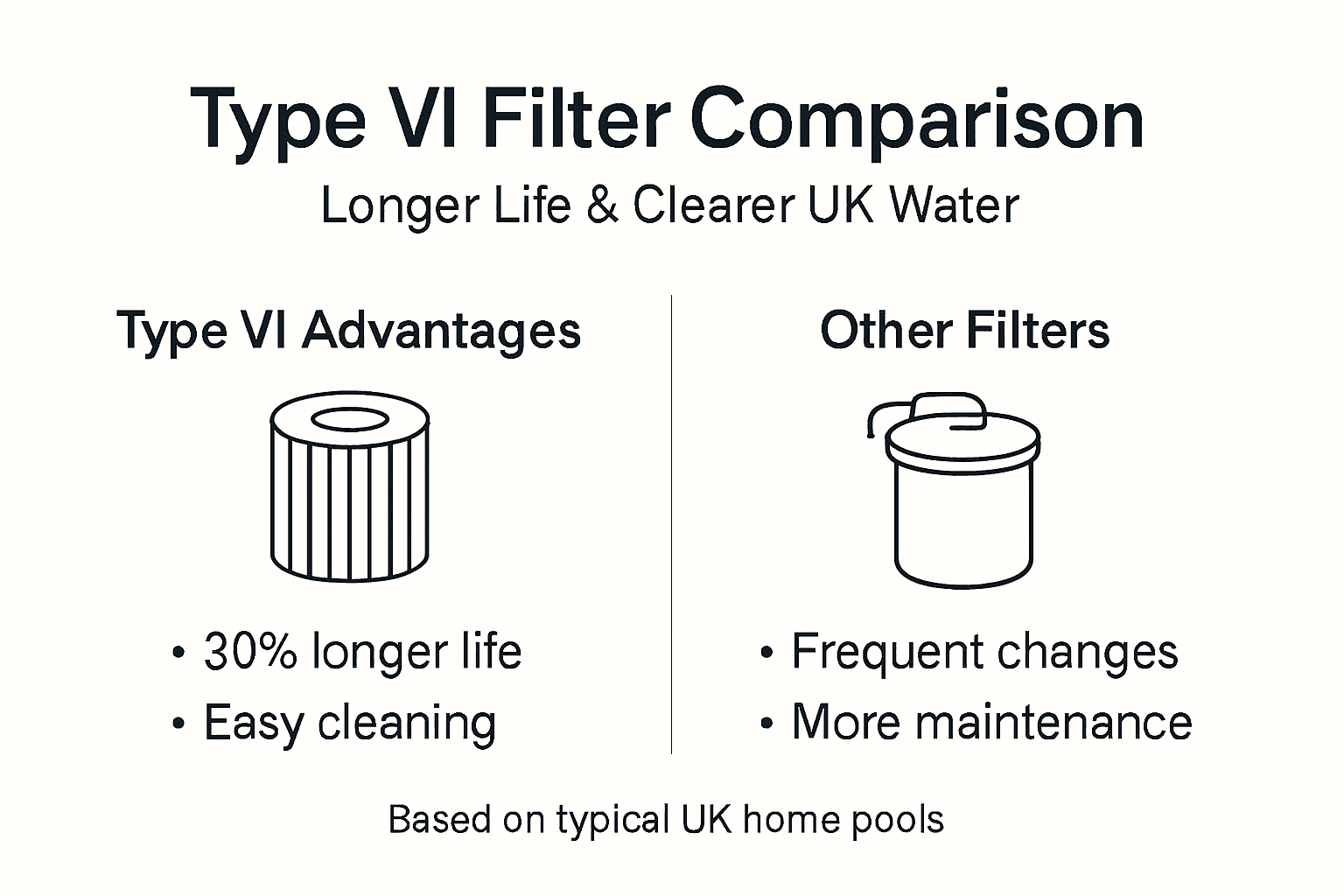
Ask around and you will hear that sand filters are the last word in water clarity. For a home hot tub that is simply not true, and believing it costs you money. Type VI cartridge filters are easier to look after, filter better for domestic use, and with sensible care can last up to 30% longer. This guide shows you how to run a Type VI filter well, clear cloudy water, and spend less time on maintenance.
Table of Contents
- Type VI Filters: What UK Owners Should Know
- How A Type VI Filter Works And Why It Helps
- UK Water Quality And What PWTAG Adds
- Looking After Your Type VI Filter
- Type VI Against The Other Filter Types
- Advanced Tips And Fixing Common Faults
- A Summary And Your Next Moves
- Round Out Your Care With Zagosa Spa & Pool
Key Takeaways
| Point | Details |
|---|---|
| Type VI Design | Pleated dacron fabric captures debris from microscopic to visible particles efficiently. |
| Maintenance Schedule | Weekly rinsing and monthly deep cleaning extend filter life by 30%. |
| Replacement Timing | Replace every 12 to 18 months to prevent pump strain and maintain clarity. |
| UK Standards | PWTAG requires filtration to control pathogens like cryptosporidium resistant to chemicals alone. |
| Cartridge Advantage | Easier maintenance than sand filters with no backwashing or bulky equipment needed. |
Type VI Filters: What UK Owners Should Know
Once you understand how your filter is built, maintenance stops being guesswork. Type VI filters use pleated dacron filter media made to catch everything from tiny contaminants to hair and leaves. It is a clever middle ground compared with the sand systems that suit commercial pools but overwhelm the average household.
So why do so many UK owners settle on Type VI? It comes down to practicality. These cartridges perform well without the footprint or the fiddly upkeep of sand. Their compact shape slots neatly into small and medium tubs, including the inflatable and plug-and-play models so common in British gardens.
Here is what sets Type VI apart:
- Pleated structure maximizes surface area within a compact cartridge
- Compatible with most UK residential hot tub brands and models
- No backwashing required, saving water and reducing chemical waste
- Easy visual inspection to assess cleanliness and wear
If you are weighing up the types of hot tub filters, Type VI hits the sweet spot between performance and ease of use. You get proper filtration without needing to think like a pool engineer. The dacron fabric holds up to repeated cleaning while keeping its grip on particles, which makes it a sound-value choice for everyday home use.
How A Type VI Filter Works And Why It Helps
How a filter works matters, because it feeds directly into your water quality and how hard your chemicals have to work. Water passes through the pleated media and particles are trapped physically, which means less reliance on sanitiser. Think of the filter as the front line, pulling out contaminants before they dissolve or need a chemical response.
The pleats are not just decoration. Those folds pack far more surface area into a small cartridge, so more water meets the media as the pump pushes it round. Particles lodge in the dacron layers while clean water heads back to the tub.
Physical filtration like this pays off in real ways:
- Reduced sanitizer consumption since fewer contaminants remain in suspension
- Clearer water with improved light reflection and visual appeal
- Lower chemical costs over time as filtration handles the heavy lifting
- Healthier bathing environment with fewer irritants and allergens
Pro Tip: Give your pool filter parts a regular once-over to confirm the seals are sound. A small leak lets water skip the media entirely, wasting the pump's effort and returning unfiltered water to the tub.
The gains build up over time. With better filtration your chlorine or bromine can focus on sanitising rather than burning off suspended debris. You will see it in the sparkle of the water and in how long your chemicals keep working between doses.
UK Water Quality And What PWTAG Adds
Compliance is not something to skip, and knowing the UK standards protects both your health and your kit. The PWTAG Code of Practice sets minimum safety standards for treating water to control pathogens such as cryptosporidium and legionella. These apply to commercial sites, but they offer useful pointers for keeping a home tub safe.
Why does PWTAG lean so heavily on filtration? Because some pathogens shrug off chemical treatment. Cryptosporidium, a parasite that causes severe stomach illness, survives normal chlorine levels. Physical removal through good filtration becomes vital, particularly for children and anyone with a weakened immune system.
The PWTAG points most relevant to Type VI filters are:
- Minimum turnover rates ensuring all water passes through filtration multiple times daily
- Particle removal standards to reduce pathogen harboring debris
- Regular maintenance schedules to maintain filtration effectiveness
- Water testing protocols to verify both chemical and physical treatment adequacy
Type VI cartridges meet those filtration-rate targets when they are sized and maintained properly. The pleated media captures particles down to 10 to 15 microns, comfortably inside the range needed for pathogen control. That makes them a good fit for home use where you want commercial-grade safety without industrial complexity.
For the fine detail, read the full PWTAG Code of Practice to see how your home spa sits against professional standards. You are not legally bound by commercial rules, but following them lifts your water safety and helps your equipment last.
Looking After Your Type VI Filter
Good upkeep is the line between crystal-clear water and endless frustration. Weekly rinsing with dedicated cleaners prevents clogs and keeps filtration efficient, with replacement every 12 to 18 months for best results. That timing is not arbitrary, it reflects how quickly oils, minerals and organic matter build up in the media.
Stick to this tried-and-tested routine:
- Remove the cartridge weekly and rinse thoroughly with a garden hose, spraying between pleats to dislodge trapped debris.
- Perform monthly deep cleaning by soaking the filter overnight in a specialized filter cleaner solution.
- Inspect for tears, compressed pleats, or persistent discoloration indicating material breakdown.
- Rotate between two filters if possible, allowing one to dry completely while the other operates.
- Replace filters showing visible damage or reduced flow even after deep cleaning.
Outdoor tubs in UK gardens pick up extra contamination from leaves, pollen and airborne dirt. Rinse more often through autumn when the leaves come down, and after any heavy storm that blows debris in. Staying ahead like this keeps deep-set grime from taking hold and stretches the filter's life.
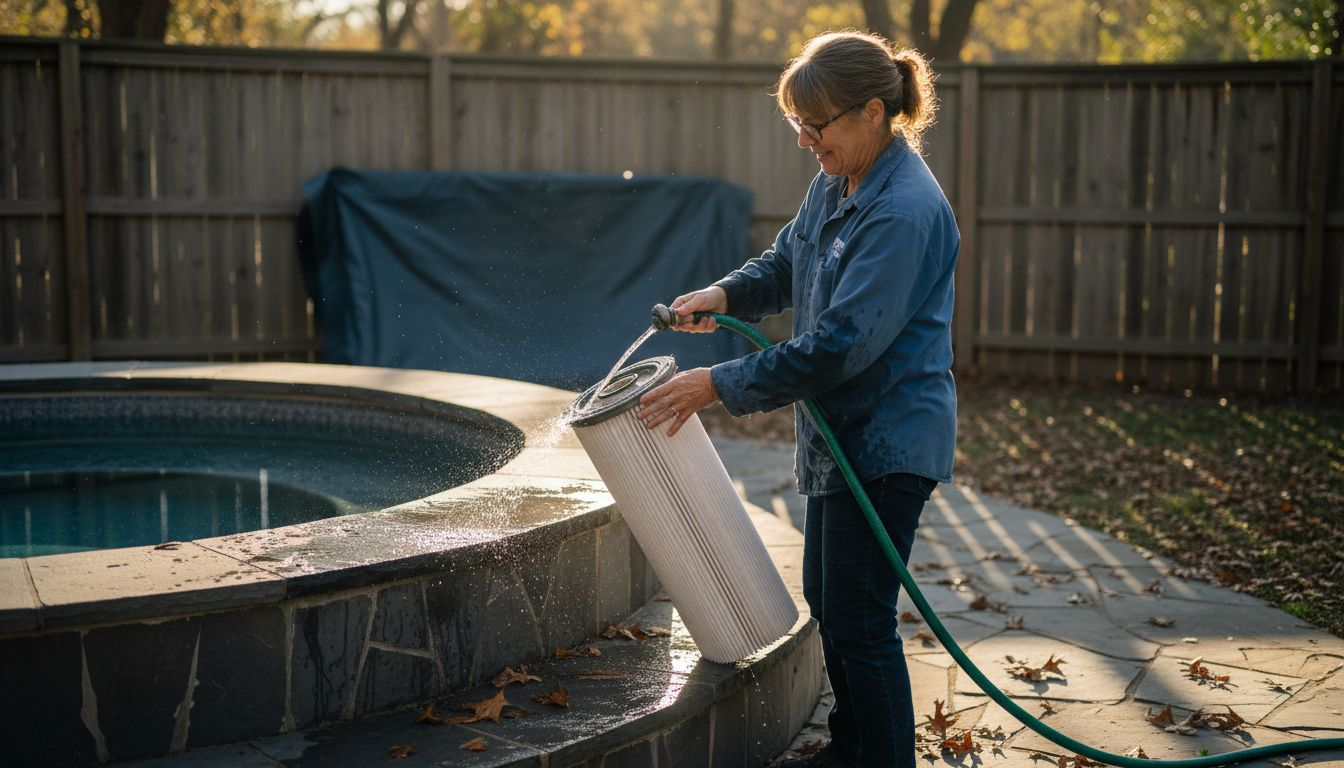
Pro Tip: Keep the pressure washer well away from Type VI filters. The high pressure tears the dacron structure, opening gaps that let particles slip past. A standard garden hose at moderate pressure is all you need.
Keeping a simple maintenance log turns guesswork into data. Note each clean, anything you spotted, and the water quality before and after. Over time that record shows you patterns, sharpens your schedule, and tells you exactly when the 12 to 18 month mark has arrived. For more, browse our UK hot tub maintenance tips covering the seasons and common problems. Detailed filter maintenance guidance is also worth a look for specific techniques.
Type VI Against The Other Filter Types
Pick the right filter type and you save yourself years of avoidable hassle. Cartridge filters like Type VI are simple to run and compact, while sand filters need backwashing and bulky housings better suited to commercial pools. Knowing the differences lets you decide on what you actually need rather than on old assumptions.
| Feature | Type VI Cartridge | Sand Filter |
|---|---|---|
| Maintenance | Weekly rinsing, monthly deep clean | Regular backwashing, media replacement every 5 years |
| Size | Compact, fits small spaces | Large tank requires dedicated area |
| Water Usage | Minimal, only for rinsing | High during backwashing process |
| Filtration | 10 to 15 microns | 20 to 40 microns |
| Cost | Moderate initial, regular replacements | Higher initial, lower ongoing |
The old belief that sand filters clean better does not survive a closer look. Cartridge filters actually trap smaller particles and give clearer water for normal home use. Sand comes into its own in high-volume commercial settings where the extra maintenance is worth the durability.
The main points in Type VI's favour for UK homes:
- No backwashing means lower water bills and simpler operation
- Visual inspection shows exactly when cleaning is needed
- Lighter weight makes handling easier for solo maintenance
- Better particle capture improves water clarity noticeably
For a full run-through of every category, see our guide on types of spa filters and when each one makes sense. Your choice should suit your tub size, how often you use it, and how much maintenance you are happy to take on.
Advanced Tips And Fixing Common Faults
A few advanced habits turn decent maintenance into excellent results. Running two filters in rotation keeps filtration continuous and extends filter life by letting each dry out fully between uses. It is especially worthwhile if you use the tub a lot or host regular gatherings that pile on contamination.
Expert moves for top filter performance:
- Balance your water chemistry religiously since improper pH accelerates filter degradation and microbial growth
- Store spare filters in a cool, dry location away from direct sunlight to prevent material breakdown
- Mark installation dates directly on the cartridge with permanent marker for instant reference
- Monitor pump pressure gauges if equipped; rising pressure indicates filter clogging even if visual inspection looks acceptable
Pro Tip: If clarity drops even after a fresh clean, check your sanitiser levels straight away. The culprit is often chemical imbalance rather than the filter, which saves you buying a replacement you did not need.
Reading the signs of wear stops bigger damage. Longer pump run times, weaker jet pressure, or lingering cloudiness after cleaning all say the filter has reached the end. Do not flog a worn filter past its limit. The few pounds saved risks pump-motor damage that costs hundreds to put right.
For thorough problem-solving, see our hot tub troubleshooting tips covering everything from chemistry to equipment. Extra advanced care notes offer manufacturer-specific pointers for your particular system.
A Summary And Your Next Moves
You now know enough to turn your filtration from a mystery box into a system you control. Type VI cartridges give efficient, low-fuss filtration that suits UK home tubs perfectly when you follow proven routines. That 30% extra life is not marketing spin, it comes straight from steady weekly rinsing and monthly deep cleaning.
Your plan from here:
- Establish a weekly filter rinsing routine, marking calendar reminders to build the habit
- Purchase a backup filter to enable rotation and eliminate downtime during cleaning
- Commit to 12 to 18 month replacement cycles regardless of visual appearance
- Test water chemistry weekly to catch imbalances before they damage your filter
- Keep detailed maintenance logs to optimize your schedule and predict replacement needs
Following PWTAG standards protects your family's health even though the commercial rules are not legally yours to keep. Knowing your water meets professional safety criteria is worth the small extra effort. Pair good filtration with correct chemistry and you cut sanitiser use while enjoying consistently clear, inviting water.
Money spent on quality filter maintenance comes back in longer-lasting equipment, lower chemical bills and better soaks. Your hot tub is a real investment in relaxation and wellbeing. Protect it with informed, proactive filter care that keeps water safe and sparkling all year.
Round Out Your Care With Zagosa Spa & Pool
Shift your routine from reactive firefighting to proactive care with the full range from Zagosa Spa & Pool. Our water filtration parts include Type VI replacements built for UK hot tub compatibility and a long service life.

Stay ahead of trouble with our expert hot tub maintenance tips tailored to UK owners facing our particular climate and water. Fine-tune your sanitiser with our detailed chemical dosing guide for hot tubs, which takes the guesswork out and cuts waste. Zagosa Spa & Pool supplies professional-grade products with guidance that puts expert care within every owner's reach.
FAQ
What is a Type VI pool filter and how is it different?
Type VI is a cartridge style filter featuring pleated dacron fabric media designed for residential hot tubs and small pools. Unlike sand filters requiring backwashing or DE filters needing powder additions, Type VI offers simple rinse and replace maintenance ideal for UK homeowners.
How often do I clean and replace a Type VI filter?
Rinse your filter weekly with a garden hose and perform monthly deep cleaning soaks in specialized solution. Replace the cartridge every 12 to 18 months regardless of appearance, as internal media degradation isn't always visible but compromises filtration effectiveness.
Can filtration alone keep water safe?
No, filtration removes physical particles but cannot kill harmful microorganisms like bacteria and viruses. Chemical sanitizers such as chlorine or bromine remain essential for destroying pathogens and maintaining safe bathing water.
What tells me a Type VI filter needs replacing?
Watch for increased water cloudiness despite regular cleaning, longer pump operating times to maintain circulation, visible tears or compressed pleats in the media, or persistent odors indicating bacterial colonization. Any of these signals demand immediate filter replacement to protect your equipment and water quality.