By The Zagosa Team. Published .
Reviewed or updated .
Cloudy or unsafe water usually comes down to one thing: chemicals added the wrong way. With millions of hot tubs in use across the UK, keeping the water balanced is about far more than comfort, it looks after your health and your equipment too. Follow a few proven steps and you can climb in knowing every soak is clean, safe and enjoyable for everyone.
Table of Contents
- Step 1: Prepare Your Hot Tub For Chemical Dosing
- Step 2: Test Your Water With Accurate Kits
- Step 3: Calculate And Measure The Right Chemical Dosage
- Step 4: Add Chemicals Safely To The Hot Tub
- Step 5: Verify Chemical Balance For Safe Soaking
Quick Summary
| Key Insight | Explanation |
|---|---|
| 1. Clean and maintain your hot tub | Start by giving the shell a proper clean and checking the filter, so the chemicals spread evenly. |
| 2. Test water regularly and accurately | Use a good testing kit to read pH, alkalinity, sanitiser and calcium hardness for safe water. |
| 3. Measure chemical dosages precisely | Work out and use the right amounts to keep the water balanced and problems at bay. |
| 4. Add chemicals correctly and safely | Always add chemicals to water, never the reverse, and wear protective gear while you handle them. |
| 5. Verify chemical balance before use | Check the key readings sit in their ideal ranges before anyone gets in for a safe, pleasant soak. |
Step 1: Prepare your hot tub for chemical dosing
Getting the tub ready is the step that makes everything else work. It lays the groundwork for good water management and keeps the spa hygienic and pleasant to use.
Start by giving the shell a thorough clean and clearing out any debris or residue. Drain the old water completely and wipe the inside down with a proper spa cleaner. Good preparation is what lets the chemicals spread properly and it heads off water chemistry problems before they start. Check the filter is fully working too, since it does the job of moving the chemicals evenly through the water.
With the tub clean, refill it with fresh water to the recommended level. Use a garden hose with a clean fitting and make sure the water temperature suits chemical treatment. This prep stage is what sets you up for accurate dosing and genuinely good water quality.
Pro tip: Fit a pre-filter to your garden hose when filling the tub, so you strip out contaminants and sediment that could throw the chemistry off.
Step 2: Test your water with accurate kits
Testing is where you find out what the water actually needs. Test properly and you catch imbalances early, long before they turn into a problem.
Pick a good testing kit that reads all the key numbers. Testing works best with a set workflow for reliable results. Most decent kits use strips or a digital tester to measure pH, total alkalinity, sanitiser and calcium hardness. Follow the instructions carefully, dipping the strip and matching the colour changes against the chart.
Take your sample from elbow depth in the middle of the tub, away from the inlets and skimmer. Hold the strip still for exactly the time the kit says, usually 10 to 15 seconds. Note the results and compare them with the ideal ranges to see what needs adjusting.
Pro tip: Keep your strips somewhere cool and dry and mind the expiry date, so your readings stay accurate.
Here is how the testing methods compare:
| Testing Method | Accuracy | Ease of Use | Cost |
|---|---|---|---|
| Test Strips | Moderate | Very easy | Low |
| Liquid Reagents | High | Requires mixing | Moderate |
| Digital Testers | Very high | Simple, fast | Higher, upfront cost |
Step 3: Calculate and measure the right chemical dosage
Getting the amounts right is what keeps the water balanced and healthy. Knowing exactly how much to add heads off water quality problems and keeps every soak safe.
Dosing rates depend on the size of your tub and how much it gets used, so work out your amounts carefully. For a typical 4-person spa you will need roughly 1 to 2 teaspoons of chlorine a day, and about 1 teaspoon of pH adjuster to shift pH by 0.2 units. Always dissolve granular products fully before they go in, and use measuring tools made for spa chemicals so you get it right.
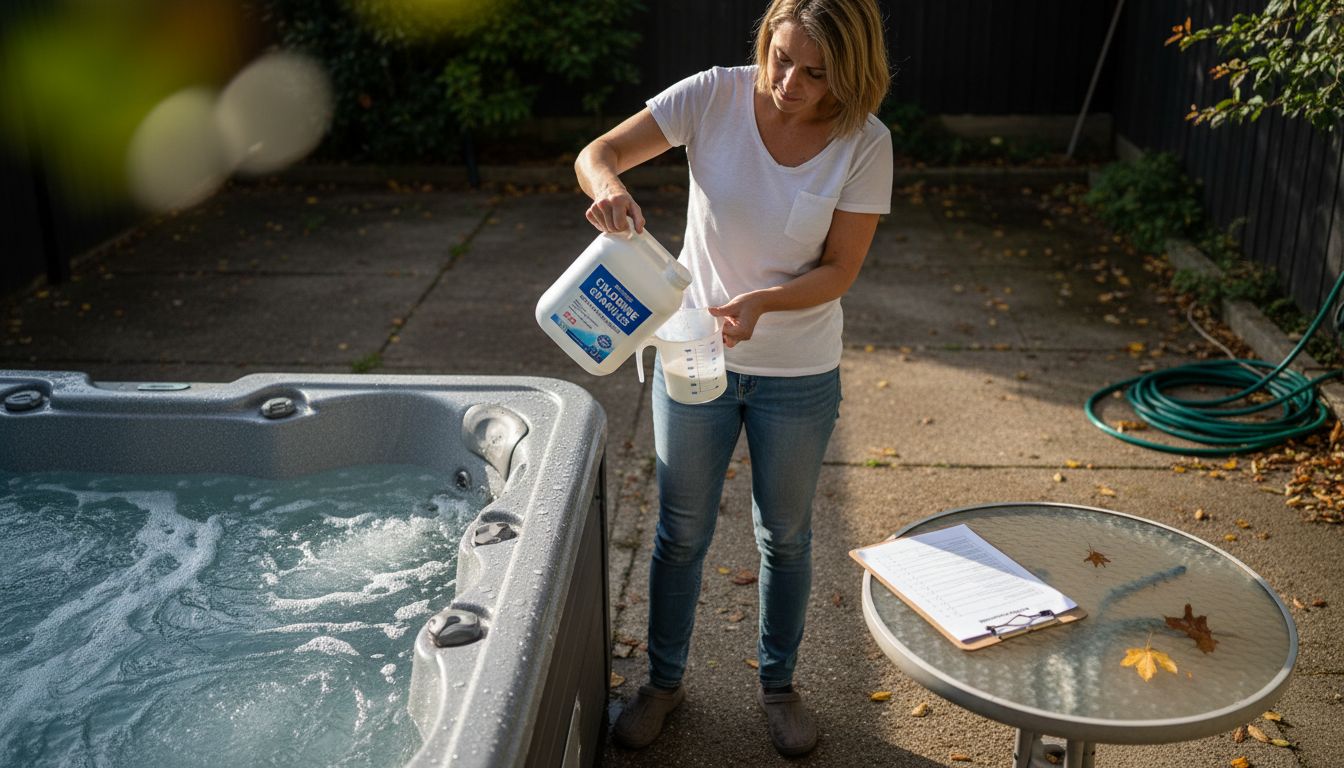
Work methodically when you add them. Turn the jets on first to help spread the chemicals evenly. Measure each one precisely with dedicated spoons and add them slowly with the jets running. Pour near the water inlets to mix things through, and never add several products at once, which risks a bad reaction.
Pro tip: Keep a log of what you add and your test results, so you can track your routine and spot any repeating patterns in the chemistry.
Step 4: Add chemicals safely to the hot tub
Adding chemicals safely is as much about you as the water. Get the procedure right and you keep the quality up while protecting yourself.
Always add chemicals to the water, not water to the chemicals, to avoid dangerous splashing and reactions. Knowing the safety basics matters for both your health and your equipment. Put on chemical-resistant gloves and safety goggles before handling anything. Work somewhere well ventilated and well lit, and keep the containers sealed and stored cool, dry and out of direct sun.
When adding to the tub, pour slowly and steadily near the inlets with the jets running to spread things evenly. Measure each chemical precisely with dedicated tools, and never mix products directly. Leave at least 20 minutes between different chemicals, and keep the circulation running so the treatment works right through the water. Let everything circulate fully before you get in.
Pro tip: Set up a little chemical station with your protective gear, measuring tools and an emergency eyewash close by whenever you handle spa chemicals.
Step 5: Verify chemical balance for safe soaking
The last step is checking your work. Reading the chemistry accurately keeps health risks away and protects the equipment.
Testing and adjusting regularly keeps the water safe and stops problems like sore skin and equipment damage. Full water balance means watching several readings at once, including pH, total alkalinity and sanitiser. Use your strips to check them, matching the colours to the chart. The ideal ranges are usually a pH of 7.2 to 7.8, total alkalinity of 80 to 120 parts per million, and a sanitiser level suited to your type of tub.
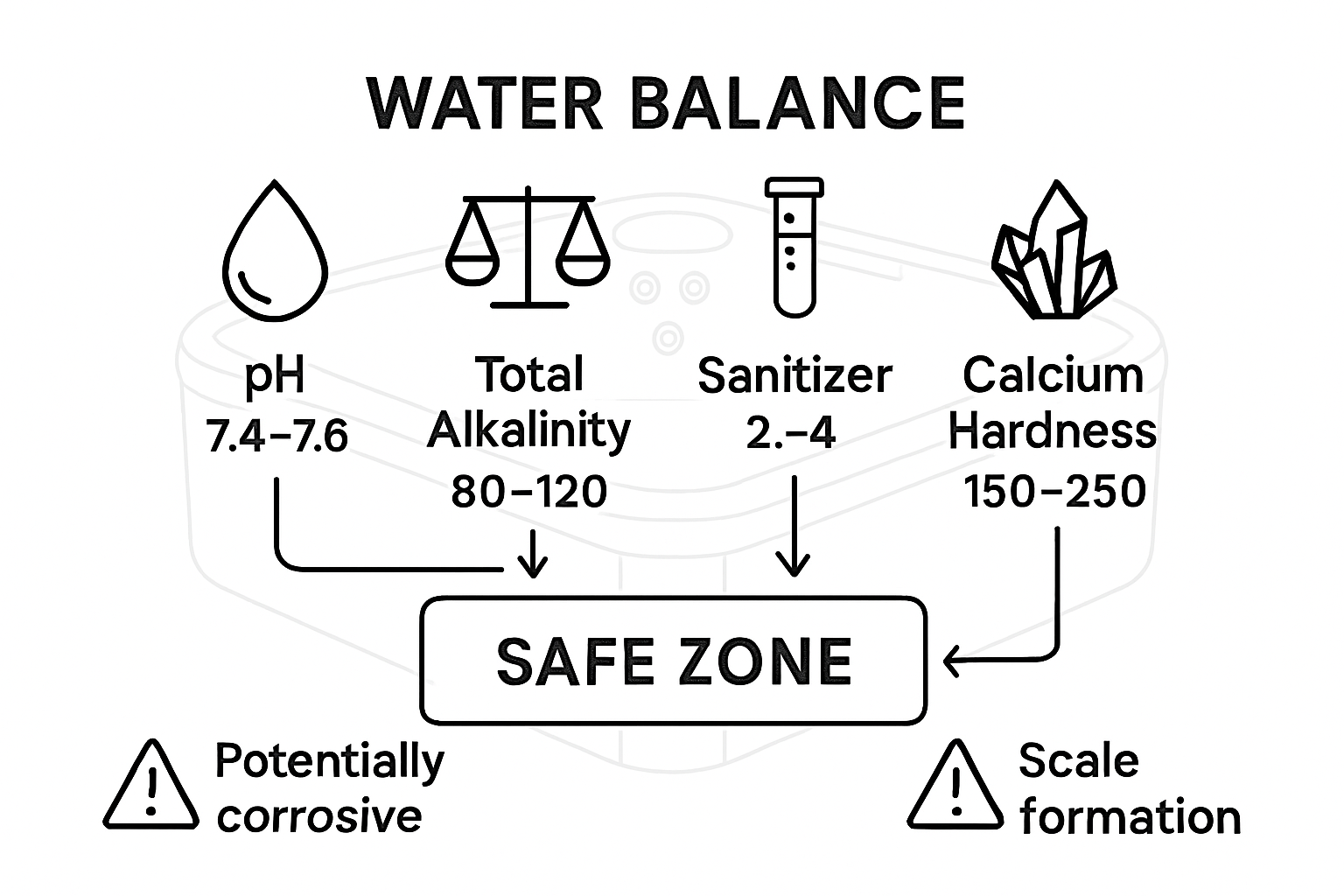
Here is a summary of the key readings and why they matter:
| Parameter | Ideal Range | Purpose | Effects if Incorrect |
|---|---|---|---|
| pH | 7.2 - 7.8 | Maintains comfort, protects equipment | Skin irritation, corrosion |
| Total Alkalinity | 80 - 120 ppm | Buffers pH fluctuations | Unstable pH, cloudiness |
| Sanitiser (Chlorine) | 3 - 5 ppm | Disinfects water | Poor hygiene, odour, algae |
| Calcium Hardness | 100 - 250 ppm | Prevents scale/corrosion | Scaling or equipment damage |
If any reading falls outside its range, make small adjustments with the right products. Add pH increasers or reducers carefully, following the instructions, and retest after each change. Give the chemicals time to circulate fully before retesting, and never get in until the levels have settled and returned to safe figures.
Pro tip: Keep a testing log to track your levels over time, which helps you spot patterns and predict when a tweak is due.
Achieve Crystal Clear Water with Expert Chemical Solutions
Keeping your hot tub chemicals balanced can be fiddly, but it is what stops cloudy water, sore skin and damage to your equipment. This guide shows why precise dosing, accurate testing and safe handling matter for a good soak every time. If pH, total alkalinity or sanitiser levels give you trouble, Zagosa Spa & Pool has solutions to suit.

Make your routine easier with our tried and trusted range of hot tub chemicals and spa essentials, built to simplify dosing and help the chemicals spread evenly for great water quality. Visit Zagosa Spa & Pool to browse products that make looking after your tub simpler and more reliable. Start today and keep every soak crystal clear and worry-free by following the steps in this guide. Take charge of your hot tub care with quality products from Zagosa.
Frequently Asked Questions
How do I prepare my hot tub for chemical dosing?
Clean the shell and drain the old water first. Wipe the inside with a proper spa cleaner, then refill with fresh water to the recommended level.
What is the best method to test my hot tub water?
Use a good testing kit that reads pH, total alkalinity, sanitiser and calcium hardness. Dip the strip at elbow depth and match the colours to the reference chart.
How do I measure the right chemical dosage for my hot tub?
Base the amount on your tub size. A typical 4-person spa, for example, needs 1 to 2 teaspoons of chlorine a day. Use dedicated measuring tools and add the chemicals with the jets running so they spread evenly.
What safety precautions should I take when adding chemicals to my hot tub?
Always pour chemicals into the water rather than the other way round to avoid splashing. Wear gloves and goggles, and keep the area well ventilated while you work.
How can I verify my hot tub's chemical balance after dosing?
Test regularly with your kit to check pH, total alkalinity and sanitiser, and make sure they sit within the ideal ranges before anyone gets in.
What should I do if my hot tub's chemical levels are outside the ideal range?
Make small adjustments with the right products, retest after each addition to check it has settled, and do not get in until the levels are back within safe limits.