By The Zagosa Team. Published .
Reviewed or updated .
Most British hot tub owners are looking for water care that protects both their comfort and their health. With chemical irritation affecting close to one in three spa users, finding an alternative to the harsher traditional methods is no longer a preference; it is a necessity. Non-chlorine treatments offer a smart way to keep the water crystal clear without the stinging smells or itchy skin. This guide sets out the modern options that help you enjoy a gentler, more natural soak here in the UK.
In This Guide
- What Non-Chlorine Shock Actually Is
- How It Cleans The Water Safely
- The Types Of Non-Chlorine Shock Products
- The Benefits For Sensitive Skin And Comfort
- Non-Chlorine Shock Against Chlorine Treatments
- Choosing And Using It Safely
The Main Points
| Point | Details |
|---|---|
| Non-Chlorine Shock Treatment | A water purification method using potassium monopersulfate to clear organic contaminants without harsh chlorine compounds, so it suits sensitive skin. |
| Effective Water Management | It breaks down body oils, cosmetics and sweat, boosting the performance of your existing sanitising system while keeping the tub hygienic. |
| Product Types Available | Non-chlorine shock comes as granules, liquid and pre-measured packets, to suit different upkeep needs and preferences. |
| Safety and Application | Correct measuring, careful handling and following the usage instructions are vital for good performance and safety. |
What non-chlorine shock actually is
Non-chlorine shock treatment is a refined way of purifying water made specifically for hot tub upkeep in the UK. Non-chlorine shock is a powerful oxidising agent, based mainly on potassium monopersulfate, designed to clear organic contaminants without bringing harsh chlorine compounds into the water.
At its heart, non-chlorine shock is a key water management tool for owners. The treatment focuses on breaking down troublesome organic matter such as body oils, sunscreen residues, cosmetics and sweat that build up during use. By going after these microscopic contaminants, the shock frees up your existing sanitiser to concentrate more efficiently on clearing harmful bacteria and microorganisms.
Unlike traditional chlorine-based treatments, non-chlorine shock has several clear advantages for British hot tub enthusiasts. It is odourless, reduces chemical irritation and works in harmony with various sanitising systems. That makes it especially appealing for anyone with sensitive skin or after a gentler approach. It also helps keep the water crystal clear while cutting the environmental impact that comes with harsher chemical treatments.
Hot Tub Pro Tip: Always dilute non-chlorine shock in a clean bucket of water before adding it to your hot tub to ensure even distribution and prevent potential damage to spa surfaces.
How it cleans the water safely
Non-chlorine shock works as a refined purification method that tackles organic contaminants with real efficiency. Routine weekly maintenance becomes much more effective through this targeted process, which breaks down the microscopic waste particles, body oils, sweat, cosmetic residues and other organic matter, that can spoil water quality.
The cleaning works through oxidation, where the potassium monopersulfate molecules go after and break apart organic compounds. Unlike traditional chlorine treatments, this delivers a thorough cleanse without adding extra harsh chemicals. The oxidation neutralises contaminants, prevents bacterial growth and keeps the water safe and hygienic for users.
British owners particularly value non-chlorine shock for being gentle yet powerful. It not only clears organic waste but also lifts the performance of the existing sanitising system. By freeing up the sanitiser to focus on clearing bacteria, non-chlorine shock creates a more efficient strategy that keeps chemical use down and reduces potential skin irritation.
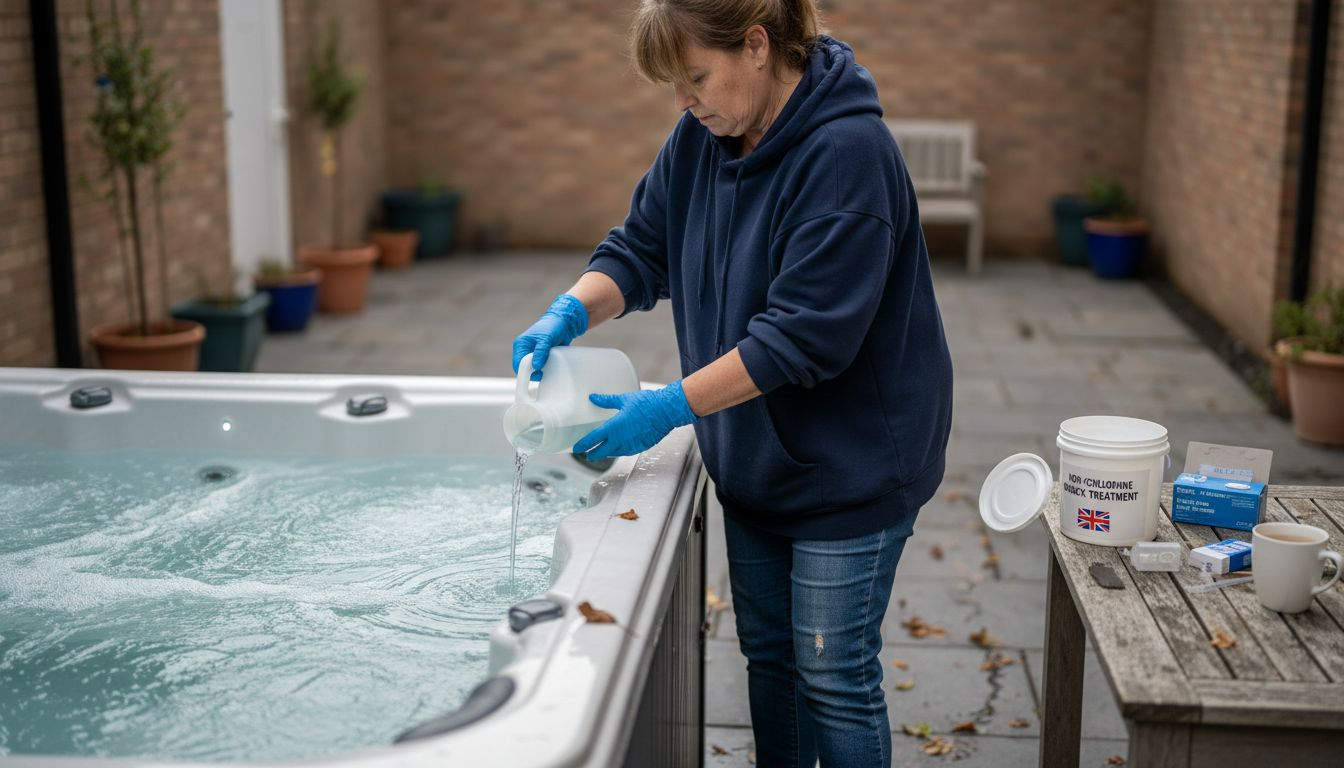
Hot Tub Pro Tip: Perform non-chlorine shock treatments during low-usage periods, preferably in the evening, to allow the oxidation process to work thoroughly without interruption from active hot tub use.
The types of non-chlorine shock products
Non-chlorine shock products cover a refined range of water treatment solutions made specifically for hot tub upkeep. These formulations mainly contain potassium peroxymonosulfate, a powerful oxidising agent that clears organic contaminants without adding more chlorine to the water.
The market offers several distinct types, each geared to particular upkeep needs. Granular formulations are the most common, available in various particle sizes to suit different sanitising systems. Liquid treatments give an alternative for owners who want more precise dosing, while pre-measured packets offer convenience and remove the risk of measurement errors. Each version has the same core active ingredient but differs in how it is applied and in its concentration.
UK enthusiasts can choose from specialist non-chlorine shock products made for specific water needs. Some are geared for sensitive skin, with hypoallergenic ingredients that keep irritation to a minimum. Others focus on rapid oxidation, tackling complex organic compounds more aggressively. Professional-grade products often add minerals and stabilising agents that lift water clarity and give extended protection against microbes, which makes them especially appealing for frequent users.
Below is a summary of common non-chlorine shock product types and what makes each one distinct:
| Product Type | Application Method | Best For |
|---|---|---|
| Granular | Scoop and dissolve | Most general maintenance needs |
| Liquid | Pour directly, measure | Precise dosing, quick action |
| Pre-measured packets | Drop-in convenience | Easy use, avoiding user error |
Hot Tub Pro Tip: Always check your specific hot tub manufacturer’s recommendations before selecting a non-chlorine shock product to ensure complete compatibility with your spa’s sanitisation system.
The benefits for sensitive skin and comfort
Anyone with sensitive skin can find real relief through non-chlorine shock treatments, a gentler alternative to traditional chlorine-based water care. These treatments sharply reduce the chance of skin irritation, cutting out the harsh chemical interactions that usually cause discomfort during use. Being odourless, non-chlorine shock lets users enjoy the spa without the overpowering chemical smells that so often come with traditional sanitising.
The make-up of non-chlorine shock products brings several comfort benefits beyond protecting the skin. Using potassium peroxymonosulfate as the main active ingredient, these treatments create a more balanced water environment that keeps allergic reactions to a minimum. The oxidation neutralises organic contaminants without introducing aggressive compounds, so the water feels softer and more natural and far less synthetic.
British enthusiasts with particularly sensitive skin will appreciate the careful approach of non-chlorine shock. These specialist products work in harmony with existing sanitising systems, giving thorough water management without spoiling comfort. The hypoallergenic qualities mean anyone prone to sensitivities can enjoy longer sessions without worrying about post-soak irritation, rashes or unexpected reactions that often follow harsher treatments.
Hot Tub Pro Tip: Perform a small patch test with new non-chlorine shock products to ensure complete skin compatibility and monitor any potential sensitivity before full application.
Non-chlorine shock against chlorine treatments
British owners face a key decision when choosing water treatment, and understanding the differences between non-chlorine and chlorine shock is paramount. Water treatment approaches reveal significant differences in effectiveness, user experience and long-term upkeep. Chlorine remains a traditional way to sanitise, but non-chlorine shock offers a considered alternative that addresses many of its limitations.
Chlorine shock excels at immediate bacterial clearance but comes with notable drawbacks. These traditional methods bring strong chemical odours, can irritate the skin and can make for an uncomfortable soak. Non-chlorine shock, by contrast, gives a more balanced approach. The oxidation clears organic contaminants without the harsh side effects tied to chlorine, which makes it especially appealing for anyone with sensitive skin or after a gentler solution.
Comparing how they perform highlights how hot tub upkeep is evolving. Chlorine stays essential for deep sanitising, especially after heavy use or contamination, but non-chlorine shock is better for routine upkeep. Its ability to work alongside existing sanitisers without spoiling water quality makes it an increasingly favoured option among discerning UK owners. Its knack for breaking down organic compounds while keeping the water more natural marks a real step forward in spa water care.
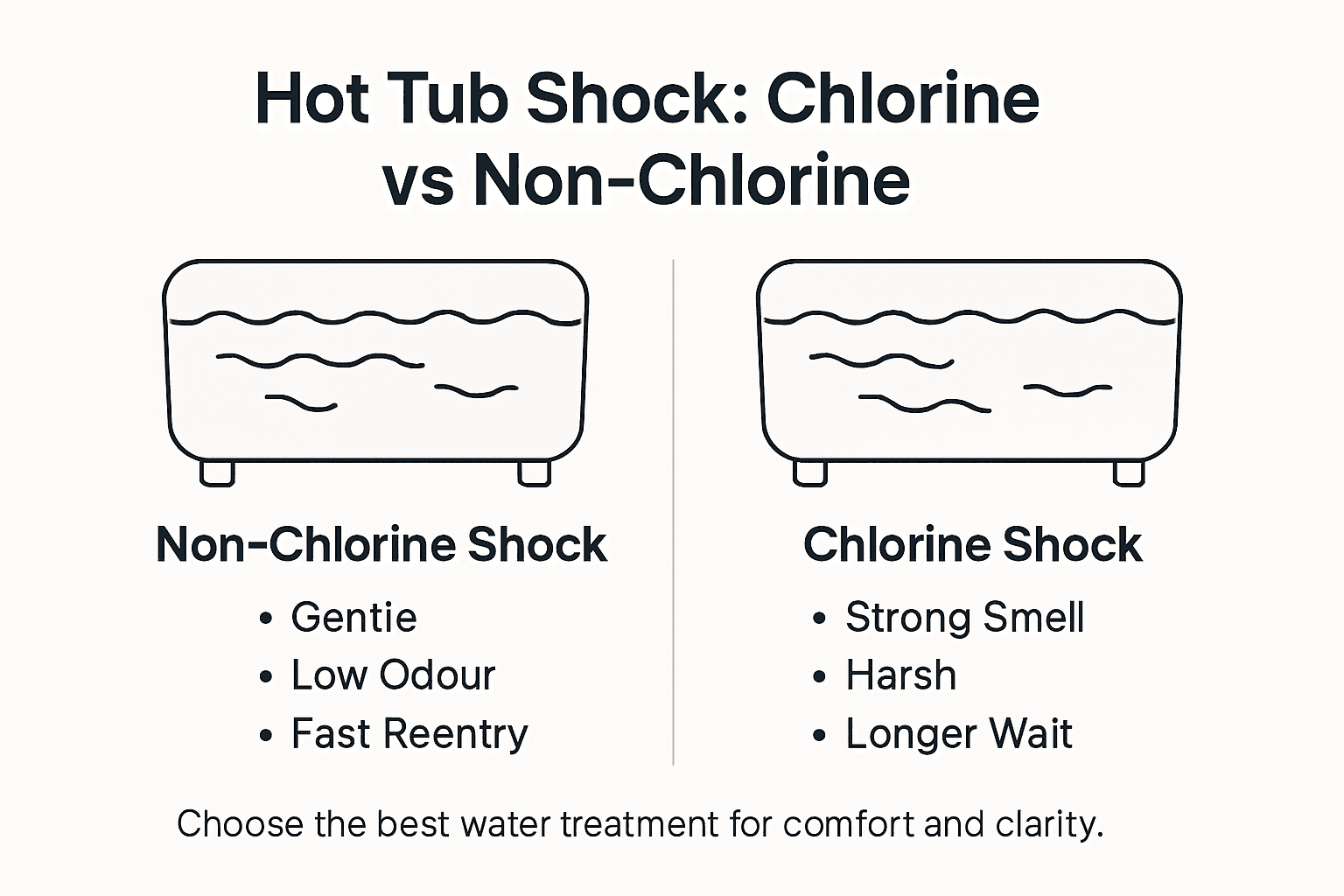
Here is a quick comparison of non-chlorine shock and traditional chlorine shock for hot tub water care:
| Aspect | Non-Chlorine Shock | Chlorine Shock |
|---|---|---|
| Main action | Oxidises organic residues | Kills bacteria directly |
| Odour | Odourless | Strong chlorine smell |
| Skin comfort | Gentle, suitable for sensitivities | Can cause irritation |
| Environmental impact | Lower, fewer harsh chemicals | Higher, with chemical byproducts |
| Use frequency | Ideal for routine maintenance | Best for major sanitisation |
Hot Tub Pro Tip: Consider alternating between chlorine and non-chlorine shock treatments to optimise your hot tub’s water quality while minimising potential chemical buildup.
Choosing and using it safely
UK owners need to approach non-chlorine shock with precision and care. Weekly maintenance protocols are critical for good water quality and safety. Getting the application right means carefully measuring chemical levels, judging how often to treat, and following the manufacturer's recommended dosing to head off any imbalance in the chemistry.
Safety starts with proper storage and handling. Keep these chemicals in a cool, dry place out of direct sunlight, with containers tightly sealed and well out of reach of children and pets. When you come to apply the treatment, protective gloves and eyewear are wise to avoid skin or eye irritation. Read and follow the specific instructions for your particular product, since the dose can vary a lot between formulations and tub volumes.
Knowing the signs that a shock treatment is due is key to a healthy tub. Cloudy water, unusual odours or a clear drop in clarity are the main indicators. Avoid mixing different types of shock treatment, as that can set off unpredictable reactions. It is also essential to give the chemicals time to disperse fully before getting in, typically waiting at least 15 to 20 minutes after treatment for complete integration and safety.
Hot Tub Pro Tip: Always keep a dedicated measuring cup for your non-chlorine shock treatments to ensure precise and consistent chemical application.
Lift Your Hot Tub Care with Zagosa's Non-Chlorine Solutions
Keeping crystal-clear, comfortable water without harsh chemicals can be a challenge. This article, "Non-Chlorine Shock for UK Hot Tubs: Why It Works", shows how non-chlorine shock clears organic contaminants and lifts sanitiser performance while staying gentle on sensitive skin. Many UK owners struggle with the irritation and unpleasant odours that traditional chlorine shocks can bring. Zagosa Spa & Pool understands these common frustrations and offers a carefully chosen range of water treatment products made to support your tub's health and your comfort.

Discover our excellent selection of non-chlorine shock products and spa essentials at Zagosa Spa & Pool. Made to reduce skin sensitivity and keep the water pristine, our products help you carry out routine weekly upkeep safely and easily. Do not wait for cloudy water or chemical discomfort to spoil your relaxing time. Visit Zagosa Spa & Pool today to find the right solution and enjoy a gentler, more refreshing soak with expert-tested treatments made for British hot tubs.
Frequently Asked Questions
What is non-chlorine shock treatment for hot tubs?
Non-chlorine shock treatment is a powerful oxidising agent, mainly made of potassium monopersulfate, designed to clear organic contaminants in hot tubs without harsh chlorine compounds.
How does non-chlorine shock improve water quality?
It works by oxidising and breaking down organic pollutants like body oils, sweat and sunscreen residues. This frees up your existing sanitiser to focus on clearing harmful bacteria, giving cleaner, safer water.
Can non-chlorine shock be used with all sanitising systems?
Yes, non-chlorine shock is compatible with various sanitising systems, making it a versatile option for upkeep without compromising effectiveness or safety.
What are the benefits over traditional chlorine treatments?
Non-chlorine shock is odourless, reduces skin irritation and gives a gentler water treatment experience than traditional chlorine, making it ideal for those with sensitive skin.