By The Zagosa Team. Published .
Reviewed or updated .
Ordinary chlorine can leave a spa smelling strong and feeling harsh, but there is a gentler option that still works hard. More owners are turning to non-chlorine shock, which uses active oxygen to clear contaminants without the side effects of the usual chemicals. In fact, these methods are proven to fight harmful bacteria like E. coli across a range of pH levels. Here is how this modern approach keeps a hot tub both clean and comfortable.
Table of Contents
- What spa non-chlorine shock is
- How it works in a spa
- The main benefits and when to use it
- Using it safely and well
- Non-chlorine versus chlorine shock
Key Takeaways
| Point | Details |
|---|---|
| Non-chlorine shock | Uses active oxygen compounds to oxidise contaminants without harsh chemicals, a gentler alternative to chlorine. |
| Good microbial control | Proven to clear harmful microorganisms like E. coli and P. aeruginosa while holding clarity and hygiene across a range of pH levels. |
| Kinder all round | Cuts chemical smells and is kinder to skin and swimwear, which suits owners after a greener water management routine. |
| How to use it well | Accurate testing, sticking to the maker's dose and sensible safety steps are all vital for an effective treatment. |
What Spa Non-Chlorine Shock Is
A spa non-chlorine shock treatment is a water sanitisation method built to clear contaminants from hot tub water without traditional chlorine chemicals. Unlike standard chlorine treatments, non-chlorine shock uses active oxygen compounds to rapidly oxidise organic matter, bacteria and other unwanted substances in the water.
According to research from cronfa, non-chlorine shock treatments like eco3spa can effectively prevent bacterial growth, targeting troublesome microorganisms such as E. coli and P. aeruginosa across varying pH ranges. That makes them a powerful choice for owners after a greener approach to water management.
The main benefits of non-chlorine shock include:
- Fast removal of organic contaminants
- Fewer chemical smells
- Gentler on skin and swimwear
- A more environmentally sound approach
- Good at keeping water clear and hygienic
Where traditional shock treatments lean on chlorine, non-chlorine versions use active oxygen to reach similar results. They work by releasing oxygen molecules that break down impurities, leaving a clean, safe spa without the harsh side effects that often come with chlorine. For a fuller look at shock treatments, see our water shock treatments guide.
How It Works in a Spa
Non-chlorine shock treatments change spa sanitisation by using advanced active oxygen technology. This approach breaks down organic contaminants through a strong oxidation process that neutralises bacteria, oils and other unwanted substances without relying on chlorine.
According to research from cronfa, treatments like eco3spa are scientifically shown to prevent microbial growth across various pH ranges. The active oxygen molecules rapidly disrupt the cell structures of harmful microorganisms such as E. coli and P. aeruginosa, clearing potential health risks.
The oxidation process in non-chlorine shock works through several key mechanisms:
- Breaking down organic matter at a molecular level
- Releasing oxygen molecules that attack contaminant structures
- Creating an environment where bacteria struggle to reproduce
- Neutralising oils, cosmetics and bodily fluids in the water
- Holding clarity without harsh chemical residues
Grasp the chemistry involved and you can see how non-chlorine shock offers a smart alternative to traditional methods. These treatments clean the water and do so with minimal environmental impact. For more on natural water treatment, see our guide on shocking hot tubs naturally.
The Main Benefits and When to Use It
Non-chlorine shock treatments give owners a smart, greener way to look after their water, with benefits that reach well beyond traditional sanitisation. They are especially useful for anyone after a gentler, more sustainable solution.
Research from cronfa shows that active oxygen treatments like eco3spa offer excellent microbial control while keeping environmental impact low. The typical uses of non-chlorine shock cover several key scenarios:
Common uses include:
- Regular upkeep for home hot tubs
- Restoring the water after heavy use
- Sanitising after several bathers
- An occasional deep clean of the water
- Preparing for a longer spell of spa downtime
The main benefits are substantial and varied. Non-chlorine shock gives better clarity, cuts harsh smells and creates a more skin-friendly environment than chlorine. It is especially good for owners with sensitive skin, those wary of chemical exposure, or anyone wanting a more natural approach. For a fuller look at advanced water management, see our non-chlorine shock granules guide.
Using It Safely and Well
Non-chlorine shock treatments need careful use to be as effective and safe as possible. Understanding the guidelines is key to holding good water quality and protecting both your equipment and your health.
Research from cronfa stresses the importance of holding the right pH range when using active oxygen treatments like eco3spa. That keeps the sanitisation efficient and prevents microbial growth across different water conditions.
Key safety and usage steps include:
- Always test the chemistry before you start
- Follow the maker's recommended dose exactly
- Wear protective gloves during treatment
- Make sure the area is well ventilated
- Wait the recommended time before getting back in

The important steps come down to knowing your particular product's requirements. Before treating, test the water's pH and alkalinity, as a poor balance can noticeably cut the shock's effectiveness. Always add the treatment to circulating water with the jets running, which spreads the active compounds evenly. For fuller guidance on water management, see our water shock treatments guide.
Non-Chlorine Versus Chlorine Shock
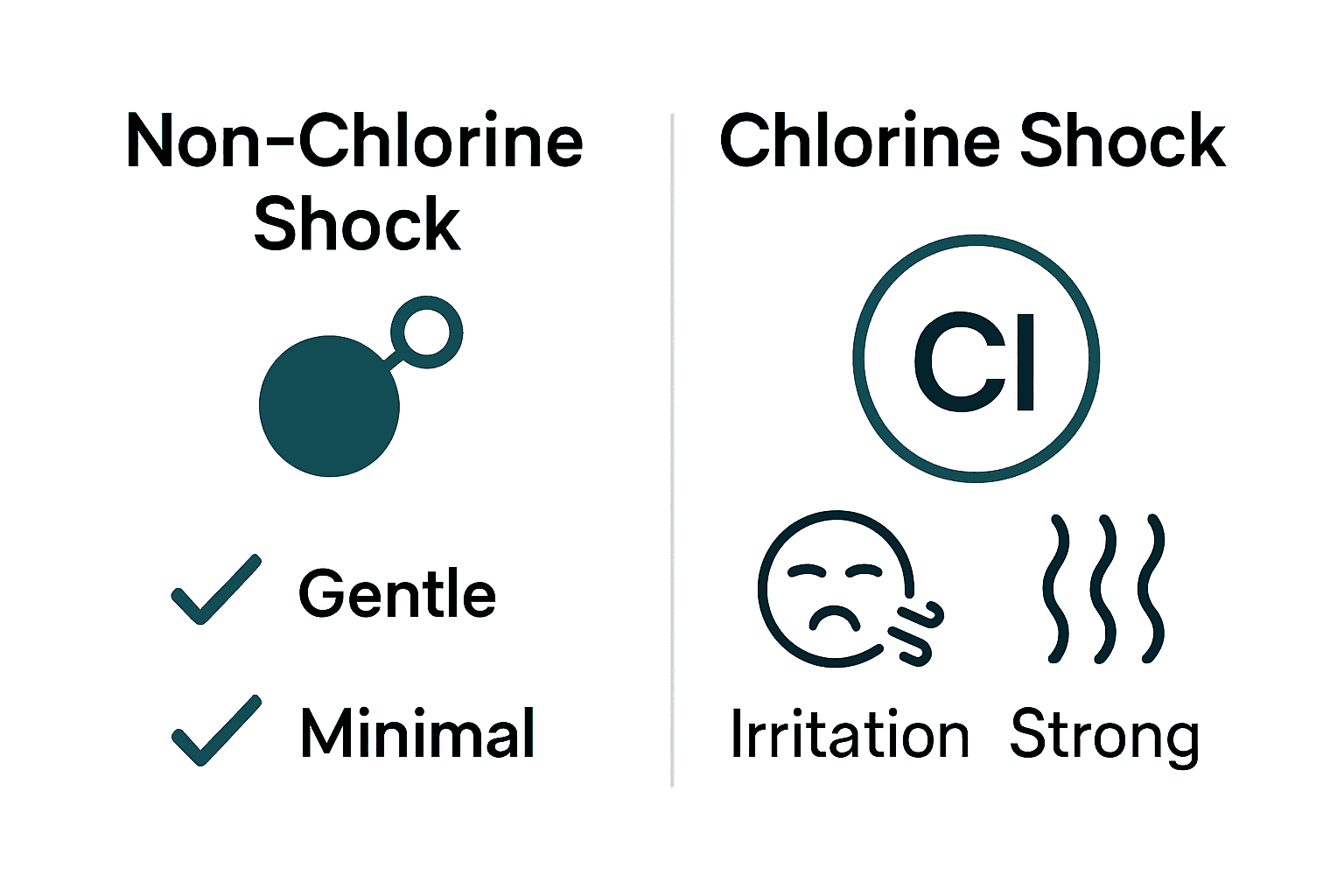
Spa shock treatments come in two distinct forms, each with its own strengths and drawbacks. Understanding the core differences between non-chlorine and traditional chlorine shock is key to a well-judged maintenance plan.
Research from cronfa shows active oxygen treatments make a compelling alternative to chlorine-based methods, giving strong microbial control with minimal environmental impact. Unlike chlorine shock, non-chlorine treatments take a gentler, smarter approach.
The key points of comparison include:
- Chemical make-up
- Chlorine: harsh chemical compounds
- Non-chlorine: active oxygen molecules
- Skin sensitivity
- Chlorine: can irritate
- Non-chlorine: gentle and low-allergen
- Environmental impact
- Chlorine: more chemical residue
- Non-chlorine: eco-friendly breakdown
- Smell
- Chlorine: strong chemical smell
- Non-chlorine: little to no smell
- Long-term equipment protection
- Chlorine: can be corrosive
- Non-chlorine: minimal stress on equipment
Both methods aim to sanitise the water, but non-chlorine shock is a more advanced choice for owners who put health, sustainability and equipment life first.
 For a deeper look at water treatment technologies, see our full guide on chlorine dioxide effectiveness.
Experience Fresher Spa Water with Zagosa's Trusted Solutions
If you have been after a gentle but powerful way to keep your hot tub water pristine, non-chlorine shock treatments are worth a look. This guide flags the usual frustrations: harsh smells, skin irritation and worries about the environment. At Zagosa Spa & Pool we understand those and provide quality water treatment products that keep water clear and safe without the drawbacks of chlorine. Our range supports your aim of a spa that is refreshing and kind to skin.
Lift your spa experience today by exploring our carefully chosen hot tub chemicals, thoroughly tested for strong performance. With Zagosa's products you can confidently manage your water's balance and hygiene while protecting both your equipment and your health. Turn your hot tub care into something easy and greener. Visit Zagosa Spa & Pool and see how our products can bring lasting freshness and comfort to your soaks.
Frequently Asked Questions
What is a spa non-chlorine shock treatment?
It is a water sanitisation method that clears contaminants without traditional chlorine. Instead, it uses active oxygen compounds to rapidly oxidise organic matter and bacteria, leaving a clean spa.
How does non-chlorine shock treatment work in spas?
It uses active oxygen technology to oxidise and break down organic contaminants at a molecular level. That neutralises bacteria and clears oils and other unwanted substances without harsh chlorine.
What are the benefits of using non-chlorine shock treatments?
The main ones are fast removal of organic contaminants, fewer smells, a skin-friendly environment, better clarity and a more sustainable approach to water management.
How do I properly use non-chlorine shock treatments in my spa?
Always test the water's pH and alkalinity, follow the maker's dose, wear protective gloves, keep the area well ventilated, and wait the recommended time before using the spa again.