By The Zagosa Team. Published .
Reviewed or updated .
Wrestling with water that looks cloudy, foamy or simply not quite right takes all the pleasure out of your hot tub routine. Effective solutions start with understanding the root cause, not just papering over the symptoms with more chemicals. For UK owners who want consistently clear, inviting water, getting the hang of systematic troubleshooting means fewer interruptions and a more relaxing soak. This guide untangles the process so you can quickly pinpoint and put right the common water problems.
Table of Contents
- What Is Hot Tub Water Troubleshooting?
- Types of Common Water Problems Explained
- How Chemical Balance Affects Clarity
- Identifying and Treating Algae or Scale
- Avoiding Mistakes With Spa Chemicals
- When to Replace Water or Seek Help
Key Takeaways
| Point | Details |
|---|---|
| Water Chemistry Is Crucial | Regular testing of chemical levels is essential to maintain clarity and prevent problems such as algae growth and cloudy water. |
| Identify Problems Early | Recognising specific water issues, such as cloudy or foamy water, allows for targeted solutions and efficient troubleshooting. |
| Routine Maintenance Saves Time | Consistent chemical management and maintenance prevent significant issues, making it easier to keep your hot tub in optimal condition. |
| Know When to Seek Help | If chemical adjustments do not resolve issues, it may indicate the need for water replacement or professional equipment servicing. |
What Is Hot Tub Water Troubleshooting?
Hot tub water troubleshooting is the systematic business of finding and putting right the water quality issues that affect your spa's performance and safety. Rather than guessing what is wrong or draining the whole tub in frustration, troubleshooting gives you a structured way to pinpoint problems and fix them efficiently. For UK owners, it is the difference between enjoying crystal-clear water year-round and battling recurring cloudiness, foam or equipment failures that cut into your relaxation.
At heart, troubleshooting covers three main categories of problem. First, there are water chemistry imbalances such as pH drifting out of range, alkalinity issues or chlorine swings that turn the water murky or unsafe. Second, there are equipment faults such as heater failures that stop the water reaching temperature, or pump problems that weaken filtration. Third, common water issues such as cloudiness, foaming or algae develop when any of the above go unchecked. The good news is that diagnosing and resolving hot tub issues becomes straightforward once you know what to check first.
Proper troubleshooting always starts with the basics. Begin by checking your water level, as both low and overfilled tubs strain the equipment and cause clarity problems. Next, verify your chemical balance, which forms the foundation of crystal-clear water. Then inspect your filtration system and pump to make sure the water is circulating and being cleaned effectively. This methodical approach means you are not throwing money at random chemical additions or calling engineers too soon. A grasp of water chemistry fundamentals is particularly handy here, as many issues trace back to imbalanced pH, total alkalinity or sanitiser levels rather than equipment.
What sets troubleshooting apart from general maintenance is that it is problem-focused and diagnostic. Maintenance keeps your spa ticking over through routine tasks. Troubleshooting is what you do when something has already gone wrong. You are hunting for the root cause, not just treating symptoms. Someone with cloudy water does not simply add clarifier and hope; they test the chemistry, check filtration, look at whether the cartridge needs cleaning and consider whether the equipment is working properly. This diagnostic mindset separates owners who resolve issues quickly from those who keep wrestling with the same problems.
Pro tip: Keep a water testing kit accessible near your hot tub and test at least twice weekly; catching imbalances early prevents most cloudy water problems before they require extensive corrective treatment.
Types of Common Water Problems Explained
Working out what is wrong with your water is half the battle. Rather than treating every issue the same way, you need to recognise which specific problem you face, because each has different underlying causes and needs a targeted fix. The four most common water problems UK owners run into each call for a different approach, so knowing how to tell them apart saves you time, money and frustration.
Cloudy or Milky Water is probably the most frequent complaint you will hear from owners. It happens when suspended particles or fine debris float in the water rather than settling or being filtered out. The usual culprits are a dirty or clogged filter that is not catching particles well, a chemical balance that stops particles clumping together for easier filtration, or simply debris that has got into the tub. Sometimes minerals in your water cause a haze if your pH drifts too far. The good news is that cloudy water from various causes responds well to a mix of filter cleaning, chemical adjustment and, sometimes, a water clarifier. Once your filtration and chemistry are right, the water clears within hours.
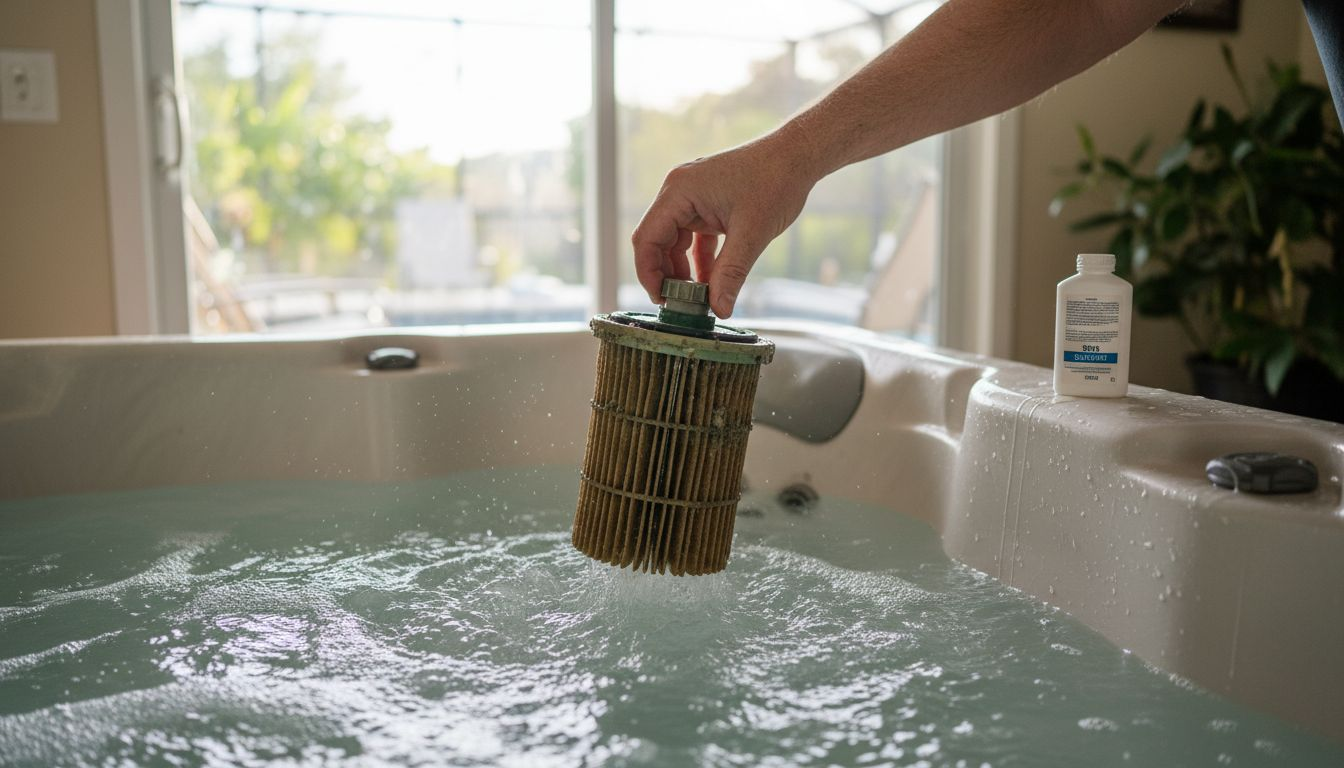
Foamy Water looks dramatic but is usually harmless, if annoying to deal with. It happens when body oils, cosmetics, shampoo residue and detergents from swimwear create a layer of foam on the surface. Soaking in foamy water will not hurt you, but it suggests your chemistry is off balance and your filtration is not working as well as it should. Foam suppressants can help for a while, but the real fix means lowering your pH slightly, shocking the spa to break down organic compounds and making sure your filter is clean enough to remove those oils. Running your jets helps too, as the agitation breaks up the foam.
Green or Discoloured Water is your alarm bell. It means bacterial growth or an algae bloom is taking hold. Green water means your sanitiser has dropped too low, letting microorganisms multiply. That is a genuine safety concern, because you could be soaking in water harbouring harmful bacteria. Your response needs to be decisive: test your chlorine or bromine at once, perform a shock treatment to kill the growth, clean your filter thoroughly and consider running the pump continuously until the water clears. If the water is brown or yellow instead, it often points to iron or manganese minerals or organic decay. These need specific mineral-sequestering treatments rather than standard chlorine adjustments.
Organic Buildup and Sludge gathers over time in the bottom of your tub or in the pipes. You might notice slime around the waterline, a musty smell or bits of organic matter in the water. It develops as dead skin cells, bacteria and other organic material settle and start to break down. Regular testing and maintenance prevent it, but once it starts, you need to drain and refill the tub, clean out the pipes and shell, and rebuild your water chemistry from scratch. Prevention really is easier than cure here, which is exactly why consistent maintenance matters.
Each of these problems tells you something different about what is going on. Cloudy water suggests a filtration failure. Foam suggests a chemistry imbalance. Green water signals sanitiser failure. Sludge points to neglected maintenance. Learn to read these signals and you can respond properly rather than guessing.
Here is a comparative overview of common hot tub water problems and their typical indicators:
| Issue Type | Appearance | Root Cause | Key Warning Sign |
|---|---|---|---|
| Cloudy Water | Dull or milky liquid | Filtration or chemistry error | Water loses sparkle quickly |
| Foamy Water | Surface bubbles, foam | Residue or pH imbalance | Foam remains after agitation |
| Green/Discoloured | Green/yellow/brown hue | Algae or bacterial bloom | Musty odour, quick colour shift |
| Sludge/Buildup | Slime or residue seen | Organic waste accumulation | Smell or visible deposits |
Pro tip: Photograph or write down exactly what your water looks like when you notice a problem, as describing colour changes to chemical suppliers or engineers helps them diagnose faster and recommend the right treatment.
How Chemical Balance Affects Clarity
Think of your hot tub water as a delicate ecosystem. Chemical balance is not just about safety; it is the foundation of crystal-clear water that sparkles when you switch on the jets. When your chemicals drift out of range, suspended particles start floating about, algae finds room to bloom and cloudiness develops almost overnight. The link between chemical balance and clarity is direct and unavoidable, which is why understanding these connections helps you head off problems before they start.
The four key chemical parameters work together to keep the water clear. Sanitiser levels (chlorine or bromine) stop bacteria and algae multiplying by killing microorganisms before they get established. When sanitiser drops below the recommended range, nothing holds back organic growth, and your water turns green or cloudy within hours. pH controls how well your sanitiser works and how comfortable the water feels on your skin. If pH climbs too high, your chlorine becomes less effective at killing contaminants even though you have added plenty. If pH drops too low, the water turns corrosive and cloudy. Total alkalinity acts as a buffer that keeps pH steady rather than bouncing about with every chemical addition or environmental change. Without proper alkalinity, your pH becomes unpredictable and hard to control. Calcium hardness affects how the water feels and whether minerals will scale onto your surfaces or cloud the water. Too little calcium and the water feels flat and can corrode your equipment. Too much and minerals precipitate out, creating cloudiness and buildup.
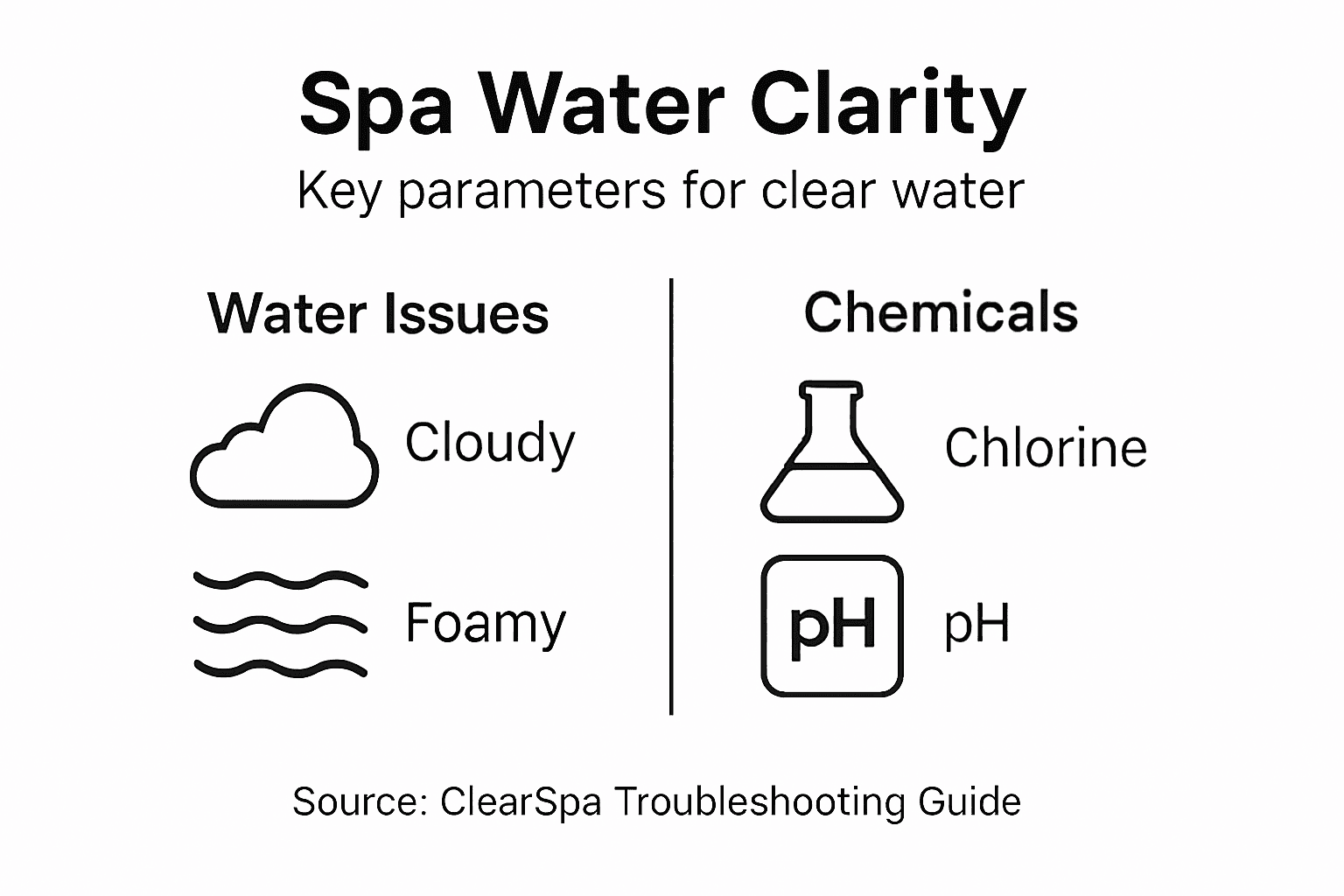
These four parameters do not work in isolation. Maintaining appropriate sanitiser, pH, and alkalinity levels keeps at bay the suspended particles and organic buildup that cloud your water. For instance, if your pH sits at 7.2 but your alkalinity is only 40ppm, adding more sanitiser might barely raise the chlorine residual because the chemistry is working against you. Bring alkalinity up to 80-120ppm and that same sanitiser addition gives you the results you expect. In the same way, cloudy water sometimes has nothing to do with dirty filters or debris. It is caused by calcium precipitation because your pH drifted upward and minerals came out of solution. Testing all four parameters tells you which one is actually behind your problem.
Regular testing is where clarity begins. Most UK owners test once or twice a week using strips or a liquid kit, checking their main parameters against the target ranges. If everything sits in range, your water stays clear and safe. But the moment one parameter drifts, clarity suffers. A chlorine level that drops to 1ppm instead of your target 2-4ppm lets algae spores take hold. A pH that creeps up to 7.8 cuts your chlorine's killing power by roughly 50 percent. Catching these drifts early means adjusting with small chemical additions rather than waiting until the water turns green and needs an emergency shock and days of recovery. The routine becomes automatic after a few weeks, and you spare yourself the frustration of troubleshooting cloudy water because you have prevented it in the first place.
For quick reference, here is a summary of the main water chemistry targets for optimal clarity:
| Parameter | Ideal Range | Why It Matters | Common UK Issue if out of Range |
|---|---|---|---|
| Sanitiser (Chlorine/Bromine) | 2-4 ppm | Disinfects, prevents algae growth | Algae and cloudiness |
| pH | 7.2-7.6 | Supports sanitiser effectiveness | Skin irritation, poor clarity |
| Total Alkalinity | 80-120 ppm | Stabilises pH | Fluctuating pH levels |
| Calcium Hardness | 200-400 ppm | Prevents corrosion/scale | Scaling or equipment wear |
Understanding Why Balance Matters More Than You Might Think
You might assume that as long as you add chlorine regularly, the water should stay clear. But chlorine alone is not enough. Shock treatments work best when pH and alkalinity are right. Water clarifiers only work on particles small enough to be filtered out, and that needs the right chemical conditions to make particles clump together. Filter cleaning prevents cloudiness, but a clean filter cannot do its job if your chemistry keeps particles in suspension rather than letting them settle. That is why experienced owners do not troubleshoot by adding random chemicals and hoping something works. They test first, work out what is actually wrong and then deal with the root cause.
Pro tip: Invest in a quality liquid test kit rather than relying solely on test strips, as they provide more accurate readings for pH and alkalinity, allowing you to catch imbalances before they affect clarity.
Identifying and Treating Algae or Scale
Algae and scale are two quite different problems that need completely different treatments, yet many owners lump them together and reach for the wrong solution. Knowing which one you face, and catching it early, makes treatment faster and far less disruptive to your routine. Both stem from neglected chemistry, but they show up differently and respond to different interventions.
Algae shows up as green, yellow or brown discolouration in the water or on your surfaces. Green algae clouds the water and makes it look uninviting. Yellow algae tends to grow in shaded corners or on the waterline. Brown algae is tougher and sticks to surfaces rather than suspending in the water. All types grow when your sanitiser drops too low, letting spores establish and multiply. The tell-tale sign of algae is a musty or earthy smell, with the cloudiness or discolouration developing within hours or a day or two of lower sanitiser readings. If your chlorine test suddenly reads zero or close to it and the water has taken on colour, algae is almost certainly developing.
Treating algae calls for decisive action. First, test the water to confirm the chlorine is depleted. Then shock the tub using a dose well above your normal sanitiser level to kill the bloom. Zagosa's shock treatments are formulated specifically for this. Run your pump and jets continuously for at least 24 hours to keep the water circulating and stop algae settling into dead zones. Clean your filter during this time, as it will be working overtime capturing dead algae cells. Your water should clear within 24 to 48 hours if you caught the problem early. If algae has been growing for several days, you may need to shock twice, or even drain and refill, as established algae is harder to kill than early growth.
Scale is mineral buildup that shows as white, chalky deposits on your waterline, jets or heating elements. Unlike algae, scale does not discolour the water much, but it damages equipment and looks unsightly. It forms when your pH climbs too high or your calcium hardness rises above the recommended level, causing minerals to precipitate out of solution. Hard water in certain UK areas makes it more common. You will notice scale building up gradually over weeks rather than appearing suddenly like algae. Sometimes understanding water clarity and preventing mineral issues helps you catch scale forming before it gets severe.
Preventing scale is easier than removing it. Keep your pH between 7.2 and 7.6 and your calcium hardness between 200 and 400ppm. If you live in a hard water area, you may need a scale inhibitor or sequestrant that keeps minerals suspended rather than letting them precipitate. If scale has already formed, you will need to drain and refill, then chemically treat the inside surfaces with a descaling solution. Some owners use vinegar for light deposits, but commercial descalers work faster on heavier buildup. Once you have cleaned off the scale, keeping the chemistry right stops it returning.
The distinction matters because shocking scale does nothing to remove it, and a scale inhibitor will not kill algae. Testing your chemistry tells you which problem you actually have. If your sanitiser is low and you see discolouration or smell algae, shock immediately. If your pH is high and you see white deposits, focus on pH reduction and scale treatment. Many cloudiness problems are actually scale combined with suspended mineral particles rather than algae at all.
Prevention Beats Treatment Every Time
The reason experienced owners rarely face serious algae or scale problems is that they prevent them through consistent chemical management. Testing twice a week catches drifting pH or a depleting sanitiser before algae takes hold. Knowing your local water hardness and adjusting calcium or adding an inhibitor stops scale ever forming. You spend five minutes testing and perhaps five making minor adjustments, rather than hours dealing with an emergency algae bloom or draining the tub to remove scale.
Pro tip: Keep your shock treatment and any scale inhibitors readily accessible near your testing supplies so you can respond to early warning signs within hours rather than allowing problems to worsen overnight.
Avoiding Mistakes With Spa Chemicals
Chemical mistakes are among the easiest problems to make and the hardest to fix. You can add chemicals in seconds and then spend weeks dealing with the fallout. Most mistakes come from good intentions gone wrong: you want clear water so you add extra chlorine, or you worry about pH so you adjust it without testing first. The result is water that gets harder to manage rather than easier. Learning the most common pitfalls before you fall into them spares your spa from damage and your water from becoming a chemical mess.
The biggest mistake is dosing chemicals without testing first. You assume your chlorine is low because the water looks slightly hazy, so you add a full shock treatment. Then you test afterwards and find your chlorine was actually fine and is now dangerously high. Or your pH seems off by eye, so you add pH increaser, only for a test to reveal your pH was already in range. This guessing game causes wild swings that make the water harder to stabilise. Every adjustment should follow a test. No test, no adjustment. That discipline takes five minutes and prevents hours of troubleshooting.
Another critical error is using the wrong type of chemical. Understanding spa chemical mistakes and using the right products is essential. Some owners use standard pool chlorine tablets containing Trichlor, which continuously lowers your pH and corrodes equipment over time. Zagosa Spa & Pool stocks spa-specific chlorine products formulated for hot tub water, which do not have the same aggressive pH effects. Calcium hypochlorite shock is different from sodium hypochlorite shock, and using the wrong one for your water type causes problems. Reaching for household chemicals such as bleach might seem cheaper but it damages equipment and creates dangerous reactions with other spa chemicals. Always check that any chemical you add is made specifically for hot tubs rather than pools or general household use.
Incorrect dosing is another frequent problem. The instructions on a chemical bottle set out exact dosages based on your tub's volume, water temperature and current chemical levels. Doubling the dose for faster results is tempting, but it creates overdosed conditions that are harder to correct than the original issue. Some owners underdose, thinking smaller amounts are safer or cheaper. Underdosing means the chemical does not work well, so you end up adding more anyway, wasting money and risking imbalance. Measure carefully and follow the instructions exactly, adjusting only for your specific tub volume.
Neglecting regular testing and maintenance sets off a snowball effect. You skip testing for a week or two because you are busy. During that time, your sanitiser gradually depletes and your pH drifts. By the time you finally test, several parameters are out of range. Now you are making multiple adjustments at once, which is riskier than keeping the balance steady all along. It is far easier to add a small amount of chlorine twice a week than to shock the tub because chlorine dropped to zero. In the same way, small pH adjustments made regularly keep the water stable. Large adjustments made rarely cause swings that unsettle everything.
The Chemistry of Patience
One mistake that catches newcomers is expecting instant results. You add a chemical and test again straight away, frustrated the water has not changed. Chemicals need time to disperse and work. Shock treatment typically needs 12 to 24 hours of circulation before the water clears. pH adjustments need several hours of circulation to balance fully. Adding more chemical out of impatience just overdoses your water. Wait the recommended time between adjustments. That restraint is hard but necessary.
Pro tip: Create a simple testing log where you record your chlorine, pH, alkalinity, and calcium levels each time you test, allowing you to spot trends and catch drifting parameters before they cause visible water problems.
When to Replace Water or Seek Help
There comes a point with every hot tub where you have to decide whether you can fix the problem yourself or whether it is time to drain the water and start fresh. That call is not always obvious, and many owners either give up too soon or press on too long with a losing battle. Understanding the line between manageable problems and situations that need professional help or a complete water change saves you time, money and frustration.
You should drain and replace the water when chemical imbalances become too severe to correct. If your pH has drifted so far that adjustments barely shift it, or if you have been making corrections for days without improvement, your chemistry may be too compromised to recover. Green algae that will not clear within 48 hours of a shock treatment often means the water has too much organic buildup or the sanitiser situation is beyond recovery through chemicals alone. In the same way, if you have shocked the tub several times in a short spell and the cloudiness persists, fresh water is your best bet. Heavy scale buildup needs draining, because no chemical treatment removes mineral deposits that have already formed and hardened. Once you have cleaned the interior, fresh water gives you a clean slate to keep scale from returning. Understanding when water replacement becomes necessary helps you make the right call at the right time.
You should also replace the water if you suspect contamination beyond what chemicals can handle. If the tub has stood unused for several weeks or months, the water may have developed bacterial growth that a chemical shock cannot entirely clear. If someone has been ill in the tub, or you suspect the water has been contaminated with something harmful, draining is the safest option. In hard water areas where mineral content is exceptionally high, you might find that draining and refilling with fresh water is actually cheaper than constantly fighting mineral buildup with inhibitors and descalers. Some UK postcodes have water so hard that replacing it every 3 to 4 months makes more sense than endless chemical adjustments.
Equipment problems are another matter entirely. If your heater is not working and the water is cold, that is a heater issue, not a water issue. If your pump is making strange noises or not circulating properly, that is a pump problem. If your filter is not cleaning the water despite being freshly cleaned, the cartridge may be damaged or the pump may be failing. These situations need professional service from a hot tub engineer, not chemical adjustments or a water change. Trying to solve equipment failures with chemicals wastes money and delays the real fix. A qualified engineer can diagnose the problem quickly and either repair or replace the faulty part.
Seek professional help if you meet any of these situations. Your tub will not hold temperature despite the heater being on. Your jets are not producing pressure even though the pump sounds normal. You see leaks coming from pipes or seals. Your control panel is playing up or showing error codes. You smell burning or notice electrical problems. These all point to equipment failure rather than water chemistry. A professional service saves you from guessing and possibly making things worse. The cost of a service call is far cheaper than damaging your equipment or creating a dangerous electrical situation by attempting repairs yourself.
Knowing Your Limits
Water troubleshooting is well within reach for most owners with basic testing and chemical knowledge. Equipment troubleshooting is not. The line between them is clear once you understand it. Water problems are solved with tests and chemical adjustments. Equipment problems need professional diagnosis and repair. If you have tested your water, made appropriate chemical corrections, waited the recommended time and the problem persists, it is either a water replacement situation or an equipment one. Either way, you have done what you can, and further action needs professional help or a complete water change.
Pro tip: Keep records of when you last drained your water and how quickly cloudiness problems typically develop; this pattern tells you whether you're managing water chemistry effectively or whether more frequent water changes would solve recurring issues more cost-effectively.
Clear Solutions for Your Hot Tub Water Troubleshooting Needs
If you are struggling with cloudy water, fluctuating pH or persistent foam in your hot tub, you know how frustrating it can be to keep the water perfectly clear. This guide sets out the importance of chemical balance, filtration and timely shock treatments to prevent algae and scale. At Zagosa Spa & Pool, we understand these challenges and offer a carefully chosen range of spa chemicals and water treatment products made specifically to restore and hold crystal-clear water with ease.
Take charge of your spa water health by exploring our comprehensive selection of hot tub essentials at Zagosa Spa & Pool. Whether you need precise sanitiser levels, pH adjusters or shock treatments, our products help you tackle common problems such as cloudy or foamy water effectively. Do not wait until minor imbalances turn into costly issues; find your perfect solution today and add to your relaxation with confidence by visiting Zagosa's trusted water treatment solutions.
Discover more tips and shop expertly formulated products at Zagosa Spa & Pool for a spa that shines and performs at its best year-round.
Frequently Asked Questions
What causes cloudy water in hot tubs?
Cloudy water in hot tubs is typically caused by a combination of filtration issues, improper chemical balance, or the presence of debris. Factors such as a dirty or clogged filter, imbalanced pH, or low sanitiser levels can lead to water clarity problems.
How can I fix foamy water in my hot tub?
Foamy water can be addressed by lowering the pH slightly, shocking the spa to break down organic compounds, and ensuring that the filter is clean. Running the jets can also help to disperse foam more effectively.
When should I consider draining my hot tub water?
You should drain your hot tub water when chemical imbalances are too severe to correct, such as persistent cloudiness or algae growth that does not clear after appropriate chemical treatments. Additionally, if there is significant organic buildup or mineral scale, a water change may be necessary.
How often should I test my hot tub water?
It is recommended to test your hot tub water at least twice a week to ensure that the chemical balance remains within the ideal ranges. Regular testing helps prevent issues like cloudiness and algae growth by allowing for timely adjustments.
Recommended
- Spa Water Clarity: Key Steps for a Sparkling Hot Tub - Zagosa Spa & Pool
- Cloudy Hot Tub Water - Causes And Quick Solutions - Zagosa Spa & Pool
- Understanding the Reasons for Cloudy Hot Tub Water - Zagosa Spa & Pool
- Step by Step Hot Tub Cleaning for Spotless Spa Results - Zagosa Spa & Pool
- Why Hard Water Stains Keep Coming Back (And How Plano TX House Cleaning Services Stop Them for Good)