By The Zagosa Team. Published .
Reviewed or updated .
It catches a lot of British owners off guard to learn that badly kept water can hold up to 100 times more bacteria than a public swimming pool. A hot tub is about more than unwinding after a long day. It is a system in its own right that needs regular attention to stay clean and inviting. This guide sets out the simple steps that matter most for beginners, so you can protect your investment and step into clear water every time.
In This Guide
- Getting To Grips With The Basics
- The Chemicals And Treatments You Need
- Building A Cleaning Routine That Works
- Balancing The Water And Testing Tips
- The Care Mistakes Beginners Make
The Main Points
| Point | Details |
|---|---|
| Steady Upkeep Matters Most | Regular care, including water testing and chemical balancing, is what keeps a hot tub performing well. |
| Good Chemical Habits Prevent Problems | Using sanitisers such as chlorine and bromine properly is key to keeping the water safe. |
| Set a Structured Cleaning Routine | A clear cleaning calendar keeps upkeep thorough and helps the tub last longer. |
| Watch the Water Quality | Test the water often to avoid chemical imbalances that can harm both health and equipment. |
Getting to grips with the basics
A hot tub is more than a luxury spot to relax. It is a sophisticated water management system that needs steady care and attention. These complex hydrotherapy environments bring together intricate plumbing, water circulation and precise temperature control, all of which need a thought-out approach to keep working well.
At heart, hot tubs are built to give a therapeutic soak through powerful jets and carefully held temperatures. Knowing the main parts really helps new owners. The key elements are the filtration, the heating unit, the jets and the electrical connections, all working together to make bathing safe and enjoyable. Electrical safety is particularly crucial, given the inherent risks of electrical components immersed in water.
Looking after a hot tub comes down to a few key habits that protect both the equipment and the people using it. Regular water testing, chemical balancing, filter cleaning and keeping an eye on the electrical connections are the foundations. UK owners should watch the chemistry closely, holding the right pH, sanitiser levels and total alkalinity to stop bacteria growing and the equipment wearing. Hot Tub Maintenance Practices for UK Owners suggest a deep clean each quarter and a water quality check every month.
Pro tip: Invest in a reliable water testing kit and establish a consistent maintenance schedule to prevent costly repairs and ensure a safe, enjoyable hot tub experience.
The chemicals and treatments you need
Chemical treatment is the bedrock of a safe, hygienic hot tub. Managing your chemicals well stops bacteria growing and keeps the water clean and safe. Hot tub water can quickly become a breeding ground for harmful microorganisms like Pseudomonas aeruginosa if not carefully treated, which is why regular, considered chemical care is absolutely vital.
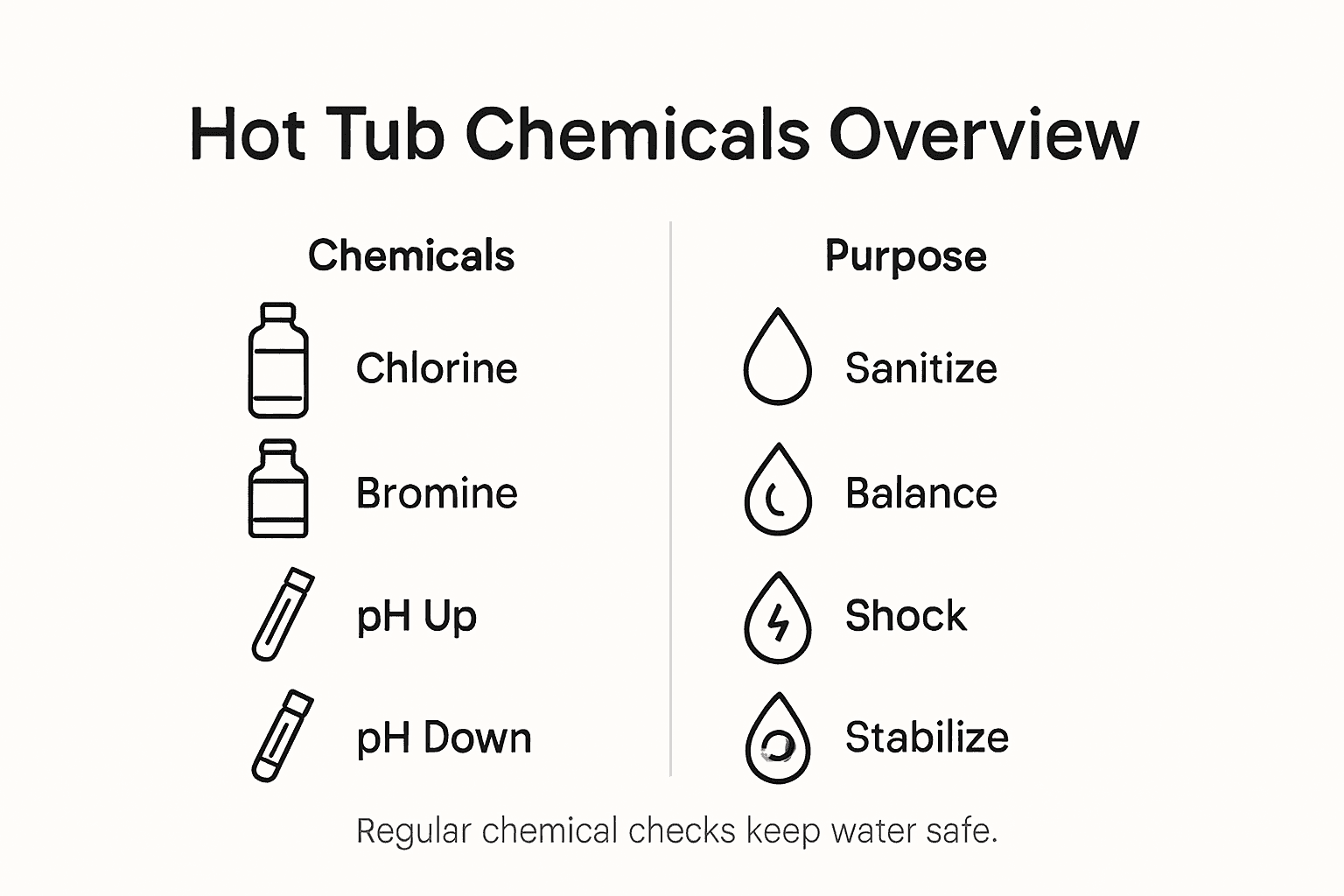
The main chemicals in hot tub care are sanitisers, pH balancers and shock treatments. Chlorine and bromine are the most common sanitisers, and each has its strengths. Chlorine works fast to kill bacteria, while bromine holds up at higher temperatures and is kinder to the skin. Understanding hot tub chemistry basics means keeping a fine balance of these chemicals to avoid health risks and equipment damage.
Here is a comparison of the most common sanitisers and what sets them apart:
| Sanitiser Type | Effectiveness | Skin Sensitivity | Temperature Stability |
|---|---|---|---|
| Chlorine | Rapid bacterial kill | Can be irritating to some | Less effective at high heat |
| Bromine | Steady bacterial control | Gentler on skin | Remains active at higher temperatures |
Environmental factors matter just as much when picking hot tub chemicals. International guidelines, such as the OSPAR List of Chemicals for Priority Action, emphasise the need for environmentally responsible chemical treatments that keep the ecological impact low while still sanitising the water. Owners should choose chemicals that clean thoroughly without adding harmful substances to the water.
Pro tip: Keep a detailed log of your chemical treatments and water test results to track your hot tub's chemical balance and identify any potential issues before they become serious problems.
Building a cleaning routine that works
Hot tub upkeep takes a methodical, thorough cleaning routine that goes well beyond wiping the surface. Good cleaning means regular filtration, water circulation and periodic draining to keep bacteria out and the tub hygienic. How often and how hard you clean depends on several things, including how often the tub is used, how many people use it and the conditions around it.
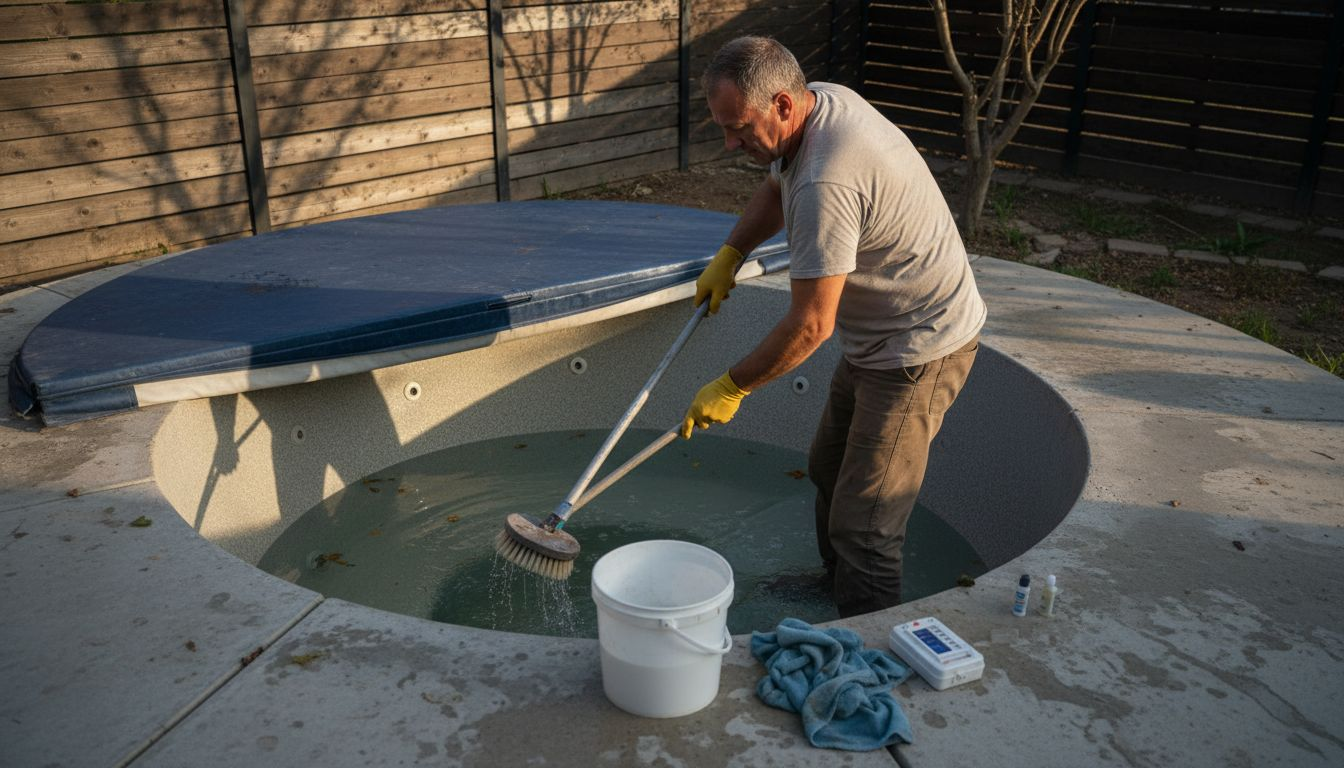
A good routine works in stages. First, skim the surface daily to lift out debris such as leaves, insects and other floating bits. Weekly, check and clean the filters, test the chemistry and wipe down the interior. Monthly upkeep is heavier, with a deep clean of the filter cartridges, a check on how the equipment is working and, where needed, replacing worn parts. Steady cleaning helps head off serious health risks such as spa pool folliculitis, which can come from poorly kept water.
Experienced owners recommend a structured calendar that splits the jobs by how often they are needed. That might be daily quick checks, weekly thorough cleans, monthly comprehensive upkeep and quarterly deep cleans. Give particular attention to the spots that get overlooked, such as jet nozzles, filter compartments and water lines, where bacteria and biofilm build up unseen. Regular inspection and staying ahead of problems can add a lot to your tub's life and keep every soak safe.
Pro tip: Create a laminated cleaning checklist and mount it near your hot tub to track maintenance tasks and ensure no critical steps are missed during your routine.
Balancing the water and testing tips
Keeping the water right takes a methodical approach to chemical balance and regular testing. Spa water balancing is a critical process that goes beyond simple chemical addition, involving careful measurement and adjustment of several parameters to keep the soak safe and enjoyable.
The main things to watch are pH, total alkalinity, calcium hardness and sanitiser level. Most owners should test at least twice a week, using reliable test strips or a digital kit. pH should ideally stay between 7.2 and 7.8, while total alkalinity should sit from 80 to 120 parts per million. Calcium hardness matters for protecting the equipment and is usually held between 150 and 250 parts per million. Hot tub water testing requires a methodical workflow to achieve consistently crystal-clear results.
Below is a summary of the recommended water parameters for British owners:
| Parameter | Ideal Range | Main Purpose | Risks if Unbalanced |
|---|---|---|---|
| pH Level | 7.2 - 7.8 | Comfort and chemical effectiveness | Skin irritation, poor sanitiser function |
| Total Alkalinity | 80 - 120 ppm | Buffer pH changes | Unstable pH, damage to surfaces |
| Calcium Hardness | 150 - 250 ppm | Prevent scale and corrosion | Scaling or equipment corrosion |
| Sanitiser Level | Manufacturer's guide | Maintain hygiene | Bacterial growth, user health risks |
Understanding how these readings are linked is key to getting upkeep right. When one parameter drifts, it can quickly knock the others off. Things like how often the tub is used, the conditions around it and the water source all affect the balance. Regular testing lets you make small adjustments and head off the big imbalances that could damage the equipment or put users at risk.
Pro tip: Invest in a digital water testing kit with colour-coded results and keep a dedicated log to track your hot tub's chemical changes over time.
The care mistakes beginners make
Water sanitising is the single most important part of hot tub care, yet many owners unknowingly make mistakes that undermine their spa's safety and performance. Neglecting proper water treatment can lead to serious health risks like hot tub folliculitis, a bacterial skin infection that thrives in poorly kept water.
One of the most common slip-ups is inconsistent chemical management. Plenty of owners either under-dose or over-dose, creating conditions that either fail to kill harmful bacteria or damage the internal parts. Poor care of the circulation and filtration greatly raises the risk of infection, so a systematic approach to treatment is important. Common pitfalls include ignoring the test readings, not replacing filters often enough and skimping on cleaning the filter compartments.
Another serious mistake is weak testing and record-keeping. Owners should build a strict testing routine, using a reliable digital kit and keeping a detailed log of chemical levels and adjustments. Understanding comprehensive hot tub maintenance practices helps prevent long-term harm to both the equipment and your health. Factors like temperature, how often the tub is used and the number of bathers can swing the water quality sharply, so it pays to stay alert and keep on top of upkeep.
Pro tip: Create a laminated maintenance checklist and place it near your hot tub to track chemical levels, filter changes, and cleaning schedules systematically.
Raise Your Hot Tub Care with Zagosa Spa & Pool
Keeping the water perfectly balanced and the tub hygienic is a familiar worry for many owners. This article has flagged the key sticking points, steady chemical management, regular testing and avoiding the common sanitising mistakes that can spoil both your enjoyment and your safety. Once you understand terms like pH balance, sanitiser concentration and filtration routines, upkeep turns from a chore into a confident, rewarding job.

Take charge of your hot tub care today with Zagosa's quality range of carefully formulated chemicals and maintenance products. Our solutions draw on real water treatment know-how to help you keep clear water and protect your equipment for the long term. Visit Zagosa Spa & Pool to browse trusted products suited to your needs and put the routines described here into practice. Start now and enjoy a safer, healthier soak every time you step in.
Frequently Asked Questions
Which chemicals do I need for upkeep?
The main ones are sanitisers such as chlorine and bromine, pH balancers and shock treatments. These stop bacteria growing and keep the water safe and clean for users.
How often should I test the water?
Test at least twice a week using reliable test strips or a digital kit. Regular testing keeps the pH, sanitiser level and other key parameters in balance.
Which mistakes should I avoid?
Common ones are inconsistent chemical management, weak testing and neglecting the filters. These undermine water quality and put users' health at risk.
How do I set up a cleaning routine?
A good routine includes daily skimming for debris, weekly filter cleaning and chemistry checks, and heavier monthly jobs such as deep cleaning the filter cartridges and checking the equipment works.
Recommended
- 7 Best Practices for Hot Tubs Every UK Owner Should Know - Zagosa Spa & Pool
- Understanding Hot Tub Care: Essential Insights and Practices - Zagosa Spa & Pool
- Essential Hot Tub Maintenance Checklist for 2025 Success - Zagosa Spa & Pool
- Step by Step Hot Tub Cleaning for Spotless Spa Results - Zagosa Spa & Pool