By The Zagosa Team. Published .
Reviewed or updated .
Plenty of UK spa owners find it hard to keep the water in their hot tub clear and safe. Balance is not just about looks, it protects your health and your investment too. With a bit of know-how and some practical tips, anyone can manage their spa's water chemistry to avoid irritation, equipment problems and bacterial growth, for a genuinely relaxing soak.
Table of Contents
- What Is Spa Water Balancing?
- Key Water Parameters And Their Functions
- How To Adjust Water Levels Safely
- Common Mistakes And Troubleshooting
- Choosing UK-Suitable Water Testing Tools
Key Takeaways
| Point | Details |
|---|---|
| Water Balancing is Essential | Holding the right pH, alkalinity, sanitiser level and calcium hardness is key to user safety and long-lasting equipment. |
| Regular Testing is Crucial | Checking the water regularly helps head off problems like equipment damage and user irritation. |
| Safe Chemical Adjustments | Adjust the chemicals gradually, with thorough testing, to avoid hazards for users and equipment. |
| Avoid Common Mistakes | Patchy testing and poor chemical handling can lead to costly trouble; always work through problems methodically. |
What Is Spa Water Balancing?
Spa water balancing is the careful business of holding the right chemical conditions in your hot tub for good water quality, user safety and long-lasting equipment. At heart it means keeping an eye on and adjusting the key chemical readings to create a stable, hygienic soak. Good water management needs a delicate balance of pH, alkalinity, sanitiser and mineral content.
The main aim of balancing is protecting both the people using the spa and the spa itself. Unbalanced water causes real problems: corrosive conditions that damage equipment, sore skin and eyes for users, and potential breeding grounds for harmful microorganisms. By understanding the essential role of water chemistry, owners can head off these issues and keep the soak safe and comfortable.
The key parts of spa water balancing include:
- pH Levels: Keeping the water between 7.2 and 7.8 to protect equipment and keep users comfortable
- Total Alkalinity: Holding alkalinity between 80 and 120 parts per million to buffer pH changes
- Sanitiser Concentration: Keeping the right chlorine or bromine level to clear bacteria
- Calcium Hardness: Managing the calcium to avoid scaling or corrosive water
Regular testing and precise adjustments are the foundation of good spa water management, protecting both your investment and the wellbeing of everyone enjoying the spa.
Key Water Parameters And Their Functions
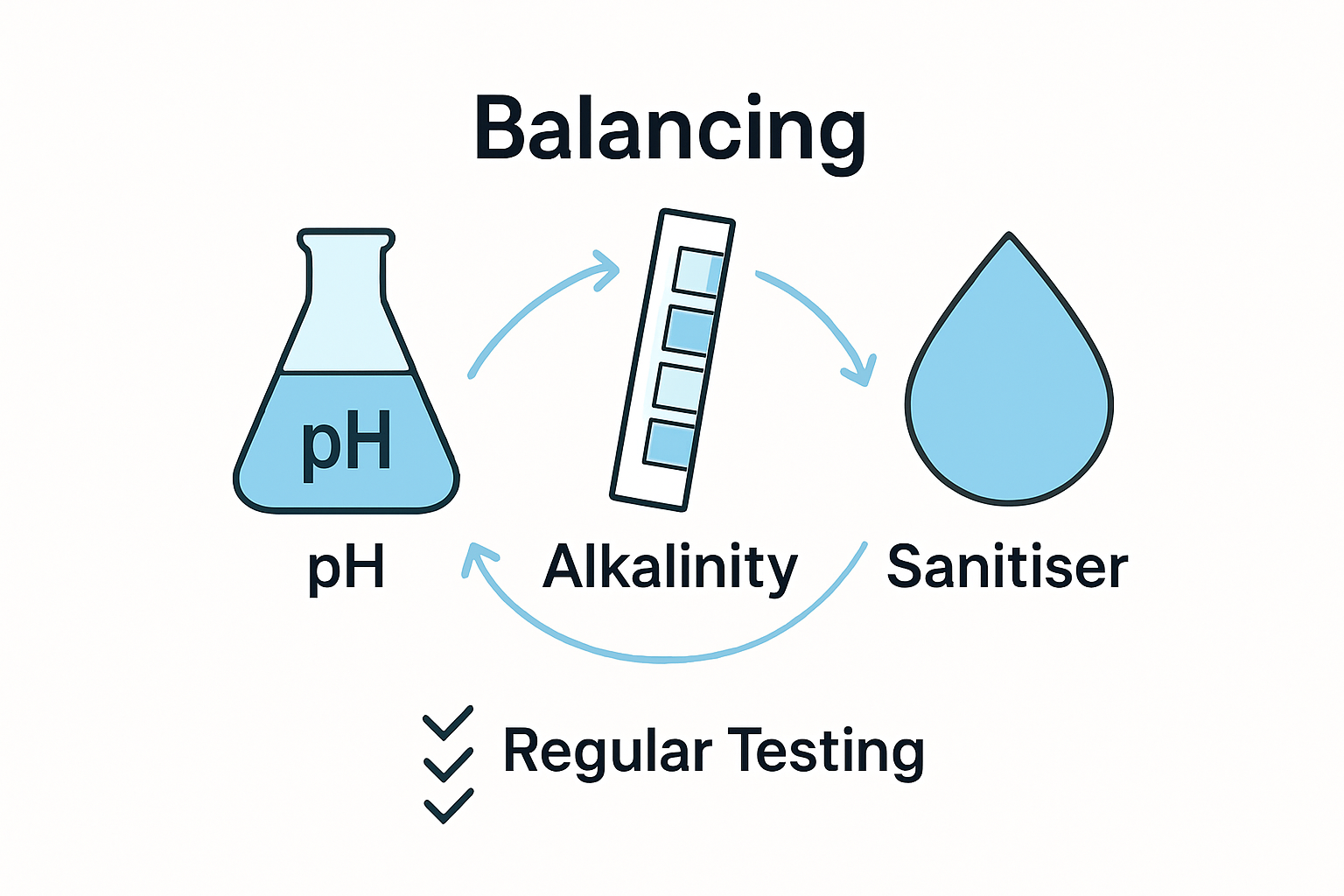
Understanding the key readings is vital for a safe, hygienic spa. Technical water management standards highlight four key readings that directly affect the water quality and your experience: pH, total alkalinity, sanitiser concentration and calcium hardness.
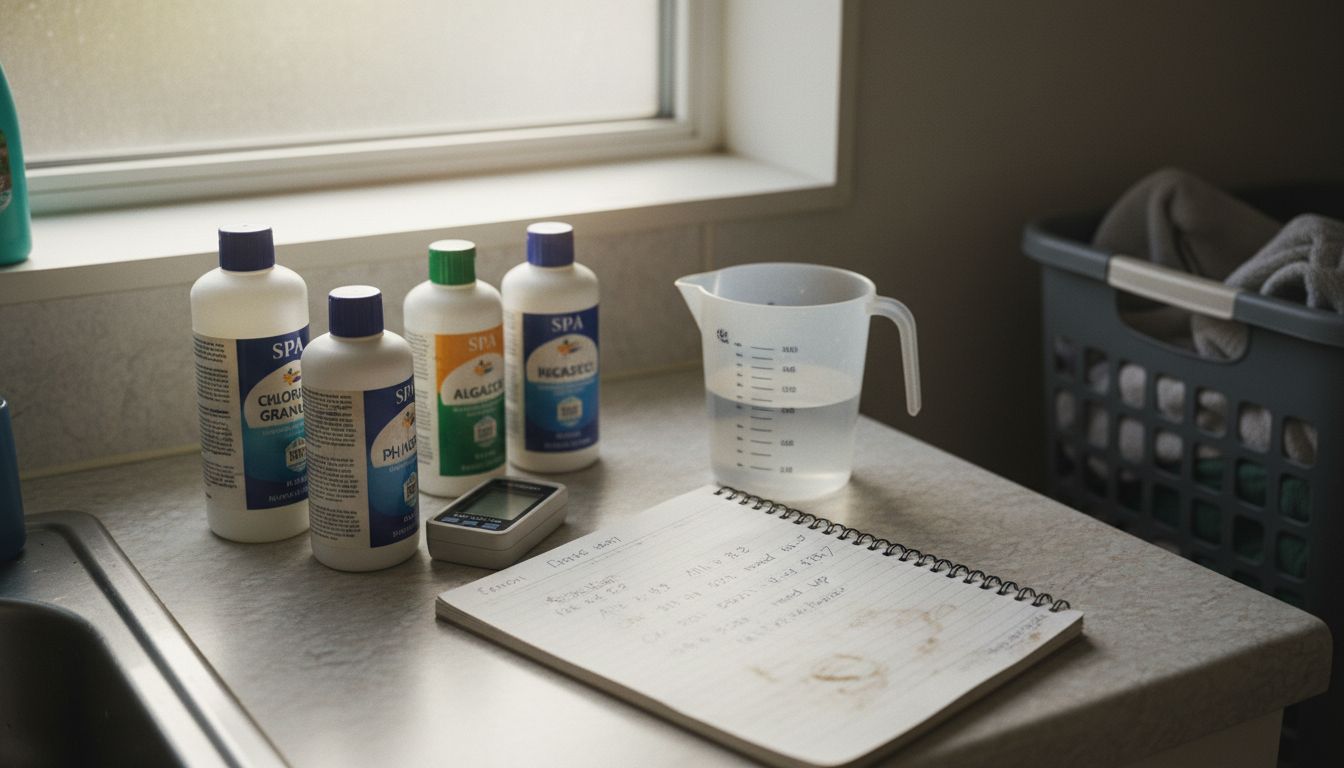
The pH level is the foundation reading, telling you how acidic or alkaline the water is. When the pH drifts outside the recommended 7.2 to 7.8 range, it causes real problems. Water quality guidance stresses that the wrong pH can lead to equipment corrosion, sore skin and less effective sanitising chemicals. An extreme pH can also weaken how well chlorine or bromine works, leaving your spa open to bacterial growth.
The other key readings include:
- Total Alkalinity: Acts as a pH buffer, preventing sudden chemical swings
- Calcium Hardness: Stops the water turning corrosive or causing scale build-up
- Sanitiser Concentration: Clears harmful bacteria and microorganisms
Regular testing and precise adjustment of these readings are essential. Water chemistry is always shifting, so it needs steady checking to keep the spa balanced, safe and protecting both your equipment and everyone's health.
How To Adjust Water Levels Safely
Balancing the chemistry needs care and a proper method. Technical water management guidance stresses the importance of steady, gradual adjustments when changing your spa's chemistry. Safety starts with knowing that sudden chemical changes can create hazardous conditions for both equipment and users.
Before making any change, thorough testing is key. Safe chemical handling means using reliable test strips or a digital tester to get accurate readings of the pH, alkalinity and sanitiser. Always wear protective gloves and eye protection, and make sure there is good ventilation when handling spa chemicals. The general approach is:
- Measuring the current readings precisely
- Identifying the specific imbalances
- Adding chemicals in small, gradual amounts
- Retesting after each change
- Waiting the recommended intervals between treatments
Key safety points include mixing chemicals separately, never combining different products directly, and always adding chemicals to water rather than water to chemicals. Store all treatment products in a cool, dry spot out of direct sunlight, and always follow the maker's instructions carefully. Steady, patient adjustments protect your spa and keep the soak safe and comfortable for everyone.
Common Mistakes And Troubleshooting
Good water management shows that most spa water problems come from the same overlooked bits of care. Owners often make key mistakes that can knock the water quality, the equipment's performance and user safety. Understanding these common mistakes is the first step to heading off potentially costly and dangerous chemistry problems.
The most common errors include:
- Inconsistent Testing: Skipping regular water checks
- Over-Chlorination: Adding too much sanitiser, which can damage equipment and irritate skin
- pH Imbalance: Not holding the recommended pH between 7.2 and 7.8
- Chemical Layering: Mixing or adding chemicals in the wrong order
Safe chemical handling means working through problems methodically. When the water quality slips, start by pinning down the specific issue with thorough testing. Common signs like cloudy water, unusual smells or sore skin often point to an underlying chemical imbalance. Gradual, measured corrections are key, since dramatic changes can create more problems than they solve. Good test kits give you the most accurate picture, letting you make precise, informed changes that restore the balance and keep the soak safe and enjoyable.
Choosing UK-Suitable Water Testing Tools
Picking the right testing tools is key to keeping your spa water in good shape. Hot tub water testing workflows recommend thorough methods that give owners across the UK accurate, reliable results.
When choosing testing tools, weigh up these key points:
- Accuracy: Precise readings across several parameters at once
- Ease of Use: Simple, straightforward testing
- Comprehensive Coverage: Tests for pH, alkalinity, sanitiser and mineral content
- Compatibility: Suited to typical UK spa and hot tub water
Digital methods have transformed how we check water quality. Water test kit comparison guides highlight the benefits of digital test strips that give instant, multi-parameter readings. These take the guesswork out, giving owners precise readings that make quick, accurate adjustments easy. Look for kits with simple colour-coded results, digital readouts and thorough parameter testing to keep your spa water perfectly balanced and safe to enjoy.
Keep Your Spa Water Perfectly Balanced with Zagosa Spa & Pool
Getting the balance right means careful control of the pH, total alkalinity, sanitiser and calcium hardness to protect your equipment and keep users comfortable. The trick is steady checking and safe adjustments to avoid the usual pitfalls like over-chlorination or a pH imbalance. Zagosa Spa & Pool offers a wide range of quality water treatment products made specifically to help you reach and hold the perfect chemistry set out in this guide.

Improve your hot tub today by choosing from our trusted hot tub chemicals and spa essentials that make testing and balancing straightforward. Visit Zagosa Spa & Pool now to explore our carefully made products and get expert advice to protect your spa investment and enjoy safe, refreshing water all year round.
Frequently Asked Questions
What is spa water balancing?
It is the process of holding the right chemical conditions in your hot tub for good water quality, user safety and long-lasting equipment, by checking and adjusting the pH, alkalinity, sanitiser and mineral content.
Why is pH important in spa water balancing?
The pH tells you how acidic or alkaline the water is. Keeping it between 7.2 and 7.8 is key to preventing equipment corrosion and sore skin, and to making sure the sanitising chemicals work.
How can I safely adjust the water levels in my spa?
Test the water thoroughly first, then make gradual changes in small amounts while retesting after each one, and always follow safe chemical handling practice.
What are common mistakes to avoid when balancing spa water?
Common mistakes include patchy testing, over-chlorination, not holding the right pH, and mixing chemicals in the wrong order.
Recommended
- Complete Guide to Spa Water Balance Essentials - Zagosa Spa & Pool
- The Essential Guide to Spa Water Balance Role - Zagosa Spa & Pool
- Complete Guide to Why Balance Spa Water - Zagosa Spa & Pool
- Complete Guide to Spa Water Balance Essentials - Zagosa Spa & Pool
- Understanding the Effects of Water Contamination - My WordPress
- Complete Guide to Buffered Electrolytes for Athletes - Interval