By The Zagosa Team. Published .
Reviewed or updated .
Picking the right hot tub and keeping its water clean can feel like a puzzle for a lot of UK owners. Staying on top of upkeep is not just about comfort; it is about safety, since the UK Health and Safety Executive warns that spa-pool systems carry health risks tied to infectious agents such as Legionella pneumophila. This guide walks you through the key hot tub ideas, the water treatment essentials and the practical upkeep that make for a safer, more relaxing soak.
Table of Contents
- What Are Hot Tubs? Key UK Concepts
- Types of Hot Tubs and Their Features
- Water Treatment Essentials for Safe Use
- UK Safety Standards and Legal Requirements
- Ongoing Maintenance Costs and Common Pitfalls
Key Takeaways
| Point | Details |
|---|---|
| Health and Safety Risks | Proper maintenance and water treatment are crucial to prevent the transmission of diseases like Legionella from hot tubs. |
| Types and Features | Hot tubs vary in style and functionality, with options such as inflatable, acrylic, and wooden, each catering to different needs and aesthetics. |
| Water Treatment Essentials | Regular water testing and balancing of chemicals are vital for maintaining hygienic conditions and preventing bacterial growth. |
| Ongoing Costs | Owners should anticipate annual maintenance and operational costs, budgeting appropriately for service, electricity, and chemical treatments. |
What Are Hot Tubs? Key UK Concepts
Hot tubs are clever personal hydrotherapy systems built for relaxation, therapeutic recovery and sociable enjoyment, in homes and commercial settings alike across the UK. These water-based leisure installations create a controlled warm-water space where people can soak for the good of both body and mind.
It really matters to understand the possible health side of things. The UK Health and Safety Executive points out that spa-pool systems pose specific health risks tied to infectious agents such as Legionella pneumophila. These systems need careful handling to keep disease from spreading, which is why sound upkeep and water treatment are so essential.
In the UK, hot tubs come in all sorts of configurations, from compact two-person models that suit a small city garden to roomy eight-person installations meant for larger outdoor spaces. They come with capable filtration systems, temperature controls and hydrotherapy jets that let users tailor their soak. Modern tubs pack in technologies such as digital temperature management, energy-efficient heating and programmable jets that lift both comfort and running efficiency.
Hot Tip: Always test and balance your hot tub's water chemistry weekly to maintain optimal hygiene and prevent potential bacterial growth.
Types of Hot Tubs and Their Features
Hot tubs in the UK cover a broad range of hydrotherapy systems, with plenty of designs to suit different homes and commercial needs. Getting to grips with the variations helps buyers pick the model that fits their needs, lifestyle and space.
Broadly, hot tubs fall into a few main types. Inflatable tubs are the portable, affordable choice for budget-minded buyers, while built-in models are permanent fixtures with greater durability. Acrylic tubs remain the most popular, with tough construction and advanced jet configurations that allow precise hydrotherapy. These models usually include ergonomic seating, several jet zones and refined temperature controls.
UK buyers increasingly lean towards models with energy-efficient technologies, built-in digital controls and modular designs that fit varying garden sizes. Wooden tubs offer a traditional look that sits well against a natural backdrop, while modern fibreglass and polymer versions bring sleek, contemporary styling. Each type has its own features, including adjustable jet pressures, LED lighting, built-in sound systems and programmable heating that make for a better, easier experience.
Pro Tip: Measure your intended installation space precisely and consider weight distribution requirements before purchasing your hot tub to ensure optimal placement and structural compatibility.
Here is a quick comparison of the main hot tub types on the UK market:
| Hot Tub Type | Portability | Typical Lifespan | Common User Profile |
|---|---|---|---|
| Inflatable | Highly portable | 2-5 years | Renters, budget-conscious |
| Acrylic | Stationary | 10-20 years | Long-term homeowners |
| Wooden | Semi-portable | 10-15 years | Nature-focused or rural |
| Fibreglass/Polymer | Stationary | 10-20 years | Style-oriented homeowners |
Water Treatment Essentials for Safe Use
Keeping hot tub water pristine and safe is one of the big responsibilities of UK ownership, calling for careful water chemistry management and steady treatment routines. The aim is a space that stays hygienic, comfortable and clear of harmful microorganisms.
Water treatment starts with understanding the core chemical readings. Water sanitiser selection deserves careful thought, with chlorine and bromine the main sanitisers used in hot tub care. These see off bacteria, algae and other risky microbes that could spoil the water. Experts advise holding pH neatly between 7.2 and 7.6, which keeps the sanitiser working well and helps avoid skin irritation or equipment damage.
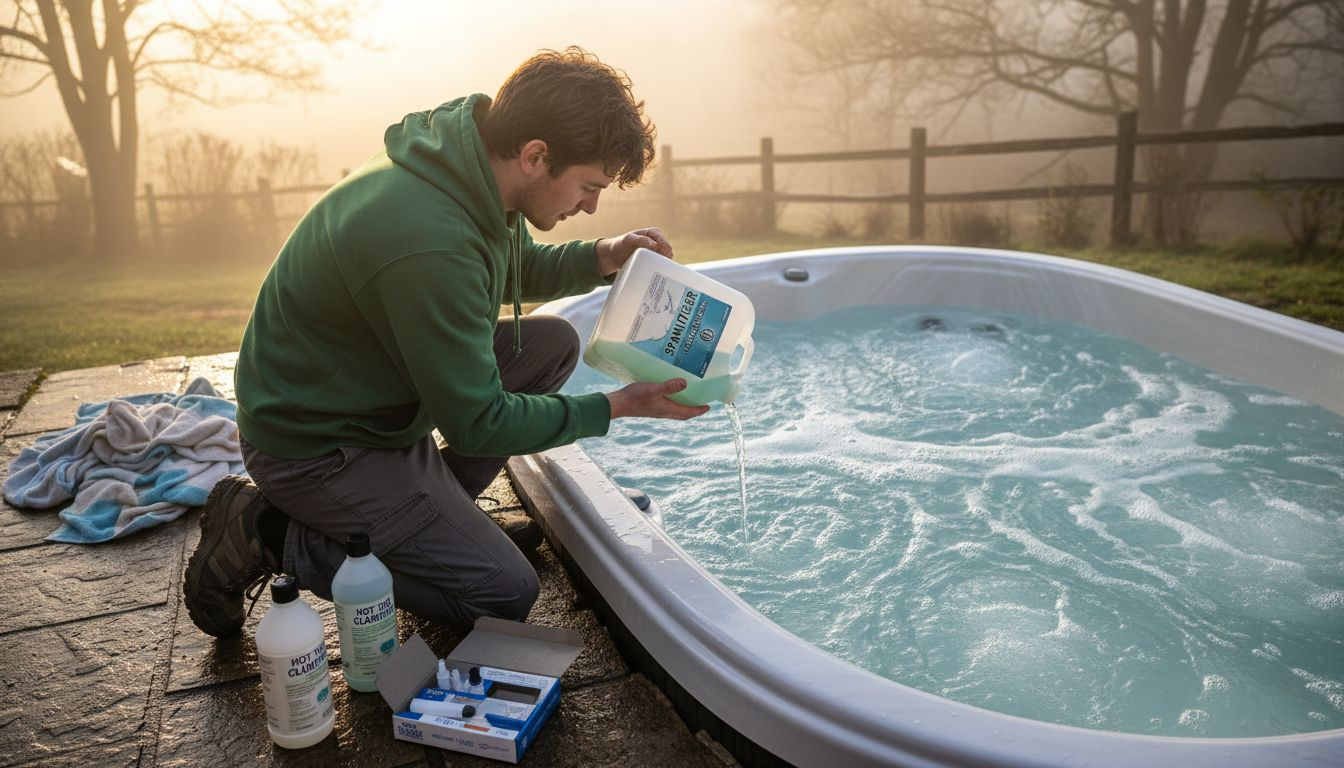
UK owners need a full water management plan that goes beyond basic chemical dosing. That means regular testing with digital kits or professional strips, routine filter cleaning and the odd shock treatment to clear built-up contaminants. Total alkalinity and calcium hardness both need watching to prevent scaling or corrosion inside the tub. More advanced care also means understanding how the water circulates, keeping the chemicals evenly spread and holding the right temperature to support proper sanitisation.
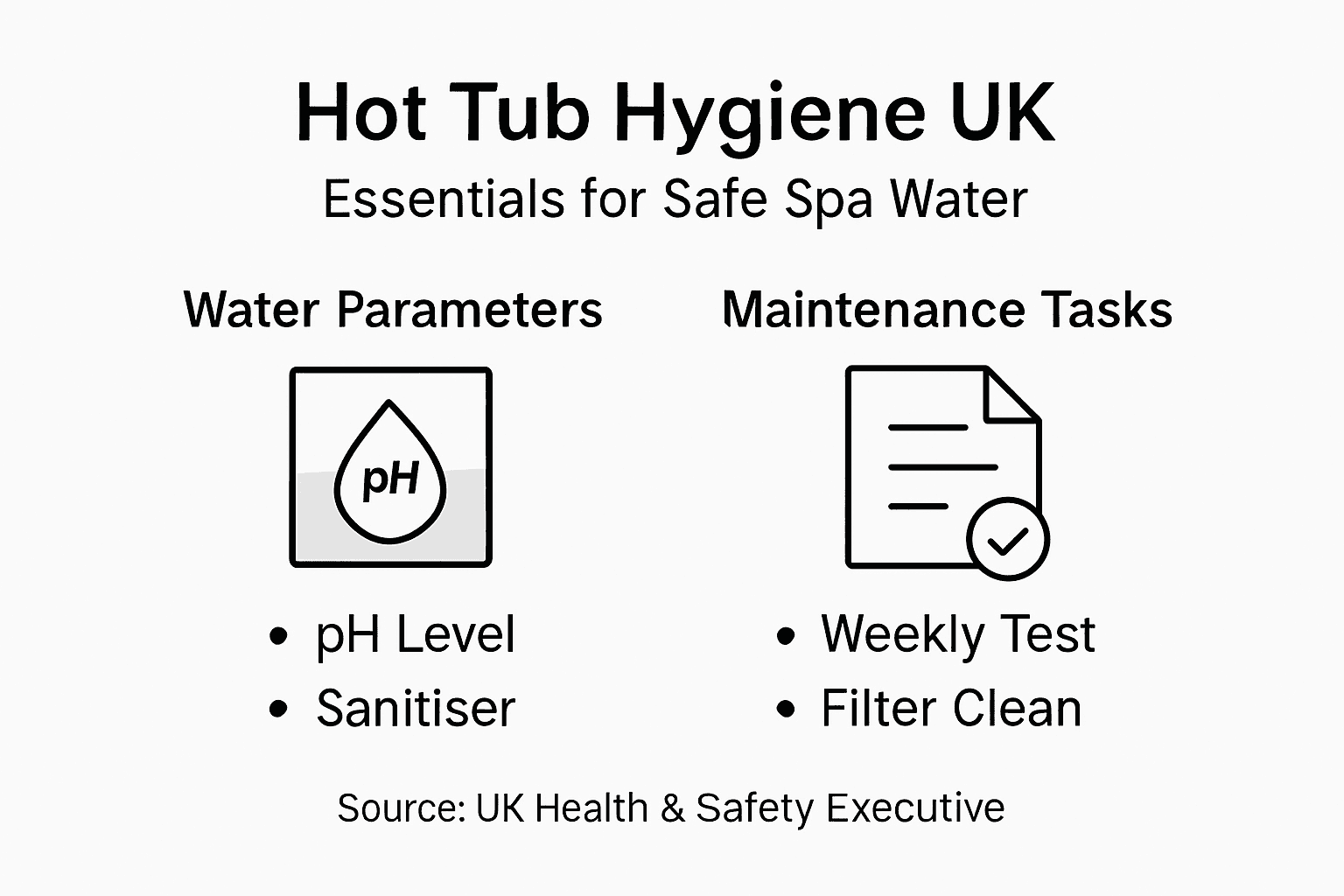
Pro Tip: Invest in a reliable digital water testing kit and establish a consistent weekly water maintenance schedule to prevent complex water chemistry issues before they develop.
UK Safety Standards and Legal Requirements
Finding your way through the legal side of hot tub ownership in the UK means understanding the safety rules and the duties that come with them. Operators, whether commercial or residential, have to follow strict guidance designed to protect public health and keep users safe.
The Health and Safety Executive (HSE) offers vital guidance through its comprehensive legionella control documentation, which spells out the requirements for managing infectious disease risks in spa and hot tub settings. Commercial operators carry particular legal duties, including thorough risk assessments, robust water treatment routines and detailed records of maintenance and testing. These rules apply to hotels, leisure centres, spas and any commercial premises offering hot tub facilities.
For home owners, the legal demands are lighter, but real responsibilities remain around water quality, equipment upkeep and user safety. Key points include making sure electrical work meets British Standard BS7671, keeping the chemistry right to prevent bacterial growth and putting safety measures in place such as secure covers, non-slip surfaces and clear usage guidance. Local authorities may also have their own rules on hot tub installations in homes, particularly in shared or public spaces.
Pro Tip: Consult with a local environmental health officer or hot tub safety specialist to ensure your specific installation meets all current UK safety regulations and standards.
Ongoing Maintenance Costs and Common Pitfalls
Owning a hot tub in the UK is about more than the sticker price; it brings ongoing cost and a need for planned upkeep. Would-be owners should understand the full economic picture to avoid unwelcome surprises and keep things running well.
Annual maintenance costs can swing quite a bit, with hot tub servicing costs ranging between £80 and £500 depending on how involved the job is. Basic home maintenance usually covers water testing, chemical balancing and filter cleaning, while bigger services might take in deep cleaning, equipment diagnostics and part replacements. UK labour rates generally sit between £50 and £100 an hour, and call-out fees can push the total higher.
The common pitfalls include skipping regular chemistry checks, putting off filter replacements and ignoring early signs of mechanical wear. Replacement parts such as pumps, heaters and control panels can be a real expense, with individual components sometimes running to several hundred pounds. Energy is another sizeable ongoing cost, varying with tub size, insulation and how often you use it. Owners should budget roughly £30-£50 a month for electricity, allowing for the seasons and their own habits.
Pro Tip: Create a dedicated maintenance savings fund of approximately £500-£750 annually to cover unexpected repairs and routine servicing requirements.
For a quick reference, here is a summary of the main cost drivers of UK hot tub ownership:
| Cost Component | Typical Annual Range | Key Influencing Factor |
|---|---|---|
| Electricity Usage | £360 - £600 | Insulation, frequency of use |
| Routine Servicing | £80 - £500 | Service complexity, call-out fees |
| Chemical Treatments | £100 - £250 | Tub size, water volume |
| Part Replacements | £100 - £400+ | Age and brand of components |
Elevate Your Hot Tub Hygiene with Zagosa Spa & Pool
Keeping the water pristine and the chemistry balanced is the heart of safe, enjoyable hot tub ownership in the UK. This guide sets out the usual challenges, keeping bacterial growth in check, managing pH and avoiding costly upkeep mistakes. With Zagosa's expertly formulated hot tub chemicals and spa essentials, you can take these on with confidence and keep your hydrotherapy space both hygienic and inviting.
See how Zagosa's trusted water treatment products, made with the UK market in mind, help you keep ideal water conditions with little fuss. Take charge of your spa routine today by exploring our full range of effective sanitisers, balancers and filtration aids at Zagosa's website. Do not let avoidable water treatment problems interrupt your relaxation - visit Zagosa Spa & Pool now and lift your hot tub experience safely and easily.
Frequently Asked Questions
What are the main types of hot tubs available?
Hot tubs can be categorised primarily as inflatable, acrylic, wooden, and fibreglass/polymer models. Inflatable hot tubs are portable and budget-friendly, while acrylic tubs offer durability and advanced features. Wooden tubs provide a traditional aesthetic, and fibreglass or polymer models offer sleek designs.
How often should I test and treat my hot tub water?
It is recommended to test and balance your hot tub's water chemistry weekly. Regular testing helps maintain optimal hygiene and prevents bacterial growth. Implement a consistent water maintenance schedule to support effective sanitisation.
What are common pitfalls in hot tub maintenance?
Common pitfalls include neglecting regular water chemistry checks, delaying filter replacements, and overlooking early signs of mechanical wear. It's crucial to stay on top of maintenance to prevent costly repairs and ensure optimal performance.
What are the key safety standards for hot tub ownership?
Hot tub owners must adhere to specific safety regulations, including water quality management and equipment maintenance. Ensuring electrical installations meet safety standards, implementing secure covers, and maintaining proper water chemistry are essential for user safety.