By The Zagosa Team. Published .
Reviewed or updated .
A hot tub cover can look like a simple accessory, sitting quietly on your spa and keeping the water clear. Yet a hot tub cover can cut your energy bills by up to 50 percent compared with leaving the spa open overnight. Most people think a bit of cleaning and the odd replacement is all there is to it, but there is more to the story. The real value comes from how well you care for the cover and how a little effort keeps the whole investment going for longer.
On This Page
- What Hot Tub Covers Actually Do
- Why Cover Care Extends Its Life
- What Keeps Covers Going
- Common Problems And Fixes
- What You Get From Good Care
The Short Version
| Takeaway | Explanation |
|---|---|
| Ensure Proper Hot Tub Cover Fit | A well-fitting cover prevents heat loss and maintains water cleanliness. |
| Regularly Inspect and Clean Covers | Consistent cleaning and inspection prevent material degradation and preserve functionality. |
| Maintain Balanced Water Chemistry | Proper chemical balance protects the cover from premature deterioration caused by aggressive contaminants. |
| Implement Routine Safety Checks | Regular checks on locking mechanisms keep hot tubs safe from unauthorized access and accidents. |
| Use Protective Treatments for Covers | Applying treatments improves durability against UV exposure and environmental wear, extending cover life. |
What Hot Tub Covers Actually Do
Hot tub covers are protective parts built to shield your spa from the outside world and keep it running well. They do far more than sit on top; they act as an all-round barrier that supports safety, efficiency and the long life of your tub.
The Main Job of a Cover
At heart, a cover has several jobs. It keeps debris, leaves, insects and other contaminants out of the water, so the spa stays cleaner and needs less upkeep. Learn more about water management techniques.
The cover also plays a big part in holding heat. By sealing the tub, it cuts heat loss, which feeds straight into energy efficiency. When the tub is not in use, the cover keeps the water warm, so you burn less energy reheating it and spend less to run the spa.
Safety and Build
According to the Royal Life Saving Society UK, hot tub covers are important safety devices. They form a physical barrier against accidental falls, which matters most for children and pets. Modern covers often lock, adding a layer of security and keeping people out when the tub should be shut.
In build terms, good covers use hard-wearing materials like marine-grade vinyl and closed-cell foam insulation. These hold heat in and stand up to changing weather, so the cover lasts and keeps performing.
The things that make a cover effective include:
- Proper fit and seal to prevent heat loss
- Robust construction resistant to UV radiation
- Adequate weight-bearing capacity
- Integrated safety locks
Once you see everything a cover does, it is easier to appreciate its part in a clean, safe and efficient spa.
Why Cover Care Extends Its Life
Looking after your cover is not just a nice-to-have; it is a real strategy for keeping your spa working, looking good and performing well. Skip the care and you invite early breakdown, poorer efficiency and costly replacements.
Stopping Material Breakdown
Covers face harsh conditions all the time, including UV, moisture, temperature swings and chemical contact. Those factors gradually break the material down, weakening its structure and its insulating power. Explore our water management strategies to see how staying ahead helps.
According to Torridge District Council's safety resources, regular inspection and maintenance are key to a longer cover life. Marine-grade vinyl and closed-cell foam covers need consistent care to resist wear and keep protecting the tub.
Chemistry and Preservation
Chemical balance plays a big role in preserving a cover. Poor water chemistry speeds up vinyl breakdown, causing cracking, fading and weakening. Too much chlorine or bromine can break the material down, while unbalanced pH adds to the wear.
Key ways to protect the cover from chemical damage include:
- Maintaining precise water chemistry parameters
- Regularly cleaning cover surfaces
- Avoiding direct chemical contact with vinyl
- Using protective treatments specifically designed for hot tub covers
Cost and Performance
Time spent on cover care pays off directly over the long run. A well-kept cover stops heat escaping, cuts energy use and lengthens the life of both the cover and the tub. Replacing covers early through neglect costs far more than steady maintenance.
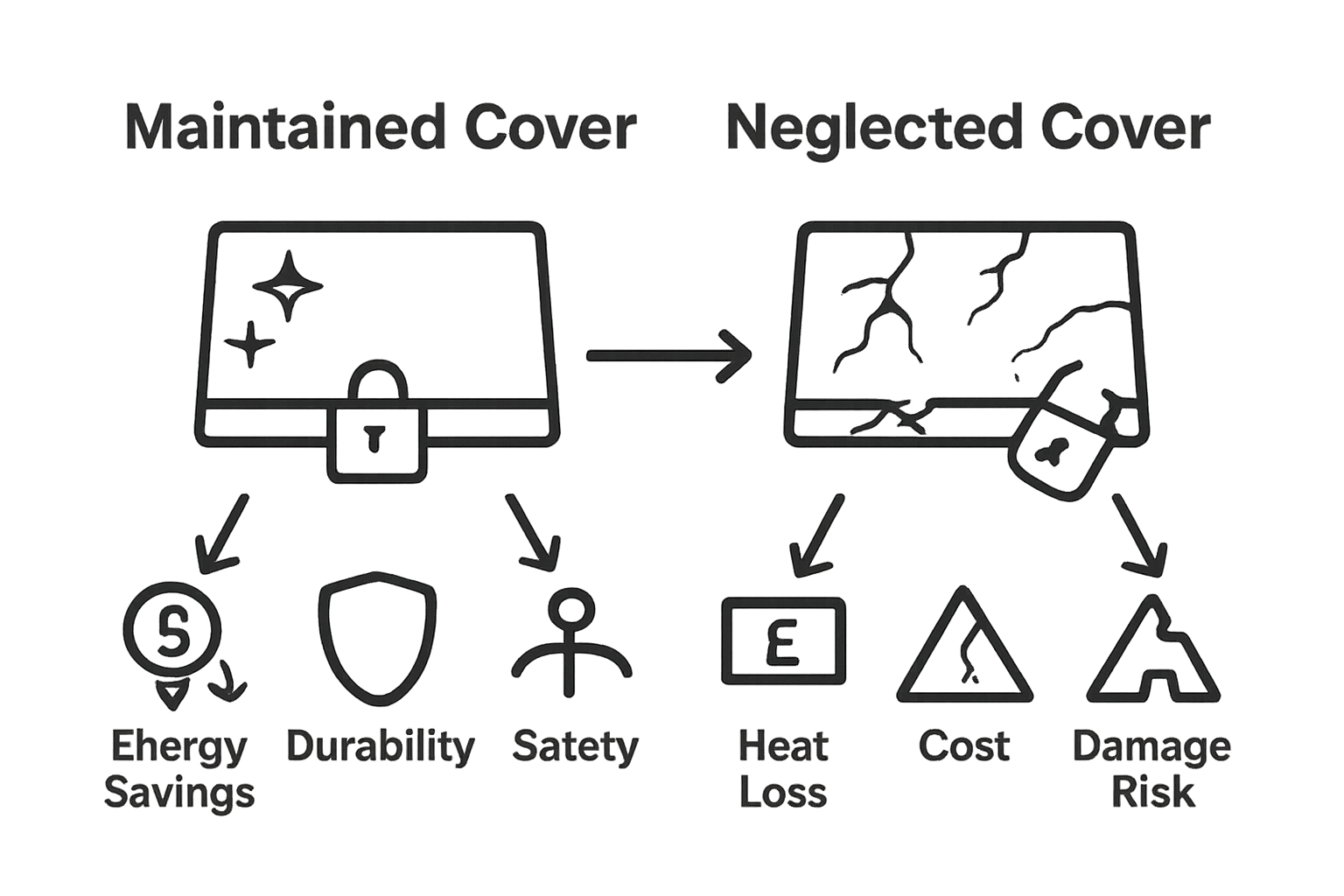
With a systematic care routine, you can keep a cover working, efficient and good-looking for years, protecting your valuable spa investment.
What Keeps Covers Going
Keeping a cover in shape means a joined-up approach across care, preservation and performance. Knowing these key factors helps you protect your investment and keep the cover working as it should.
Cleaning and Checking
Regular cleaning is the foundation of cover care. Dirt, debris and pollutants build up on the surface, leading to material breakdown and marks. Check out our maintenance checklist to make your routine easier.
According to the Centers for Disease Control and Prevention, routine inspection and cleaning are vital for preventing contamination and keeping things hygienic. Build a steady cleaning routine that includes:
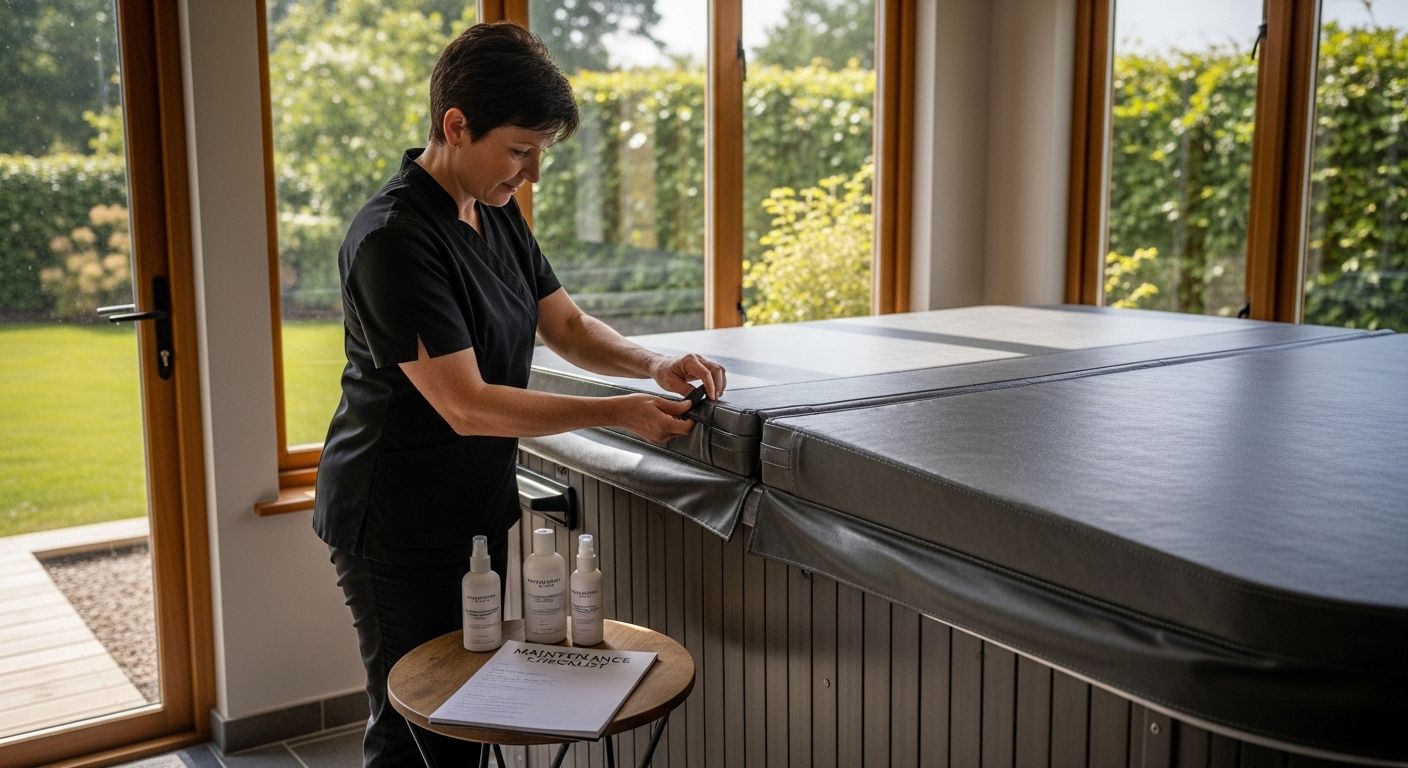
- Removing surface debris
- Using mild, non-abrasive cleaning solutions
- Checking for signs of wear or damage
- Wiping down surfaces with soft, lint-free cloths
Managing the Chemicals
Chemical exposure is a real challenge for cover care. Chlorine, bromine and other sanitisers can break the material down quickly if you do not manage them carefully. Good balance and sensible application are essential to keeping the cover sound.
Key protective steps include:
- Maintaining balanced water chemistry
- Avoiding direct chemical splashes on cover surfaces
- Using protective conditioning treatments
- Ensuring proper chemical dilution before spa use
Weather and Storage
The weather has a big say in how long a cover lasts. UV, temperature extremes and moisture all speed up wear. Sensible protection and good storage habits can add years to a cover's life.
The main things that help are placing the tub in a partly shaded spot, using treatments that resist UV damage, and storing the cover properly when it is off. Take a rounded approach to maintenance and you can keep a cover performing, looking good and holding its shape for years.
Common Problems and Fixes
Covers face plenty of challenges that can undermine their strength, performance and looks. Knowing the likely problems and acting early is the key to keeping the cover in good shape and lengthening its life.
Wear and Damage
Material breakdown is a real worry for covers. Constant exposure to UV, moisture and temperature swings gradually weakens the structure. Explore our water management strategies for preventative techniques.
According to the Health and Safety Executive, regular professional assessment can catch early signs of wear. Common structural issues include:
- Foam core water absorption
- Vinyl surface cracking
- Seal and seam deterioration
- Compromised thermal insulation properties
Chemistry Trouble
Poor water chemistry can speed up cover breakdown. Imbalances create an aggressive environment that attacks the material and does lasting damage. Too much chlorine, unbalanced pH and careless sanitiser use all play a big part in wearing the cover out.
Key preventative steps cover:
- Maintaining precise water chemistry parameters
- Regularly testing and adjusting chemical levels
- Using protective conditioning treatments
- Minimising direct chemical exposure to cover surfaces
Weather and Use
The weather and how you use the cover both matter for its lifespan. UV, big temperature swings, physical stress and poor storage all speed up wear. Owners need a full set of protective habits to keep these in check.
Sensible moves include choosing covers with tough UV-resistant materials, using protective treatments, storing the cover properly and avoiding needless stress on it. Understand and tackle these common challenges and you can add a lot to a cover's working life.
The table below sums up common cover problems and the practical fixes, as a quick reference.
| Issue | Description | Recommended Solution |
|---|---|---|
| Foam core water absorption | Water enters the foam, reducing insulation and adding weight | Regular inspections and timely replacement |
| Vinyl surface cracking | Cracks develop due to UV, weather, or chemical exposure | Use UV-protective treatments, gentle cleaning |
| Seal and seam deterioration | Failure at seams allows moisture and contaminants inside | Thorough inspection, prompt maintenance |
| Compromised thermal insulation | Reduced ability to retain heat, higher energy usage | Maintain chemical balance, early repairs |
| Accelerated chemical degradation | Unbalanced water chemistry breaks down materials | Monitor and adjust chemistry frequently |
| Structural weakening from environment | UV and fluctuation exposure harms structure | Use covers with robust materials, storage practices |
| Damage from physical stress or misuse | Excess weight and mishandling lead to distortion or tears | Avoid sitting/placing objects on cover |
What You Get from Good Care
Looking after a cover well goes beyond simple preservation. It brings real, practical gains in safety, cost and overall spa performance. See these benefits clearly and cover care starts to look like a smart investment rather than a chore.
Safety Benefits
Cover care plays a key role in heading off accidents and health risks. Explore our maintenance guidelines for the full picture on safety.
According to the Royal Life Saving Society UK, well-kept covers are essential safety barriers. Good care makes sure:
- Secure locking mechanisms remain functional
- Physical barriers prevent unauthorized access
- Reduces risk of accidental drowning
- Maintains structural integrity for consistent protection
Saving Money and Energy
The financial side is a big reason to keep up with cover care. A well-kept cover saves a lot of energy by cutting heat loss and lowering running costs. Preserved properly, it works as an effective thermal barrier and stops you wasting energy.
Key money-saving benefits include:
- Reducing hot tub heating expenses
- Extending cover and equipment lifespan
- Minimising replacement frequency
- Preventing costly water chemistry related damages
Performance and Hygiene
Care feeds straight into how well the tub performs and how clean the water stays. Covers that get regular attention help keep water conditions right, preventing contamination and cutting the health risks that come with bacterial growth.
With a systematic routine, you protect your investment while enjoying a safe, efficient and pleasant spa. Regular care turns a cover from a simple accessory into a key part of running the spa, with benefits that reach well beyond the basics.
Keep Your Cover in Shape with Zagosa Spa & Pool
Worried your hot tub cover is losing its edge through chemical imbalance, wear or a thin maintenance routine? This guide shows how neglecting the cover can lead to structural damage, higher running costs and even safety risks in your home spa. To avoid frequent replacements, wasted energy and a less enjoyable soak, you need smarter routines and better water care products to protect your investment.

Take charge of your cover's lifespan today with expertly made water treatment solutions from Zagosa Spa & Pool. Our range of hot tub chemicals and spa essentials helps you keep clean water, the right chemical balance and lasting cover performance. Give your hot tub the care it deserves and see how Zagosa Spa & Pool can transform your routine. Visit Zagosa Spa & Pool now and find the key to a safer, more efficient and more enjoyable spa.
Frequently Asked Questions
What is the primary purpose of a hot tub cover?
Hot tub covers primarily protect the spa from debris, insects, and external contaminants while minimising heat loss. They help maintain water temperature, leading to greater energy efficiency and lower operational costs.
How do I properly maintain my hot tub cover?
Proper maintenance involves regular cleaning with mild, non-abrasive solutions, inspecting for wear and damage, and ensuring balanced water chemistry to prevent degradation of materials.
What materials are best for hot tub covers?
High-quality hot tub covers are typically made from marine-grade vinyl and closed-cell foam. These materials offer excellent thermal insulation and are durable enough to withstand various weather conditions.
Why is chemical balance important for my hot tub cover?
Chemical balance is crucial because improper water chemistry can accelerate material degradation of the cover. Excessive chlorine or unbalanced pH levels can cause cracking and structural weakening of the vinyl and foam materials.