By The Zagosa Team. Published .
Reviewed or updated .
Plenty of UK hot tub owners are looking for ways to cut water waste and their impact on the environment. Sustainable water management is fast becoming a priority as people grow more aware of the pressure on local resources across the UK. Spa water recycling offers more than just a green reputation. It gives owners real ways to save water, cut costs and stay ahead of changing rules.
Table of Contents
- Spa Water Recycling Defined And Debunked
- Methods Of Recycling Spa Water In The UK
- How Spa Water Recycling Systems Operate
- Legal And Environmental Guidelines For Recycling
- Risks, Costs, And Mistakes To Avoid
- Comparing Recycling To Standard Water Changes
Key Takeaways
| Point | Details |
|---|---|
| Sustainability Focus | Recycling reduces environmental impact and saves water by treating and reusing spa wastewater. |
| Advanced Treatment Stages | Effective recycling runs through several stages, including collection, filtration and disinfection, to keep the water quality up. |
| Regulatory Compliance | Sticking to local rules is key to safe, effective recycling in a spa. |
| Long-term Cost Efficiency | A recycling system can noticeably cut water costs compared with a traditional water change. |
Spa Water Recycling Defined and Debunked
Spa water recycling is a fresh way of managing hot tub water, built around treating it sustainably and potentially reusing it. Unlike simply pouring the old water away, this treats and possibly repurposes spa wastewater to keep the environmental impact down.
The idea rests on advanced filtration that turns potentially contaminated water into a reusable resource. According to the Drinking Water Inspectorate, water recycling uses sophisticated treatments like membrane filtration to remove contaminants and hold to strict safety standards. These processes let water be purified and redirected for other uses, cutting overall consumption.
The UK Water Reuse Association flags several key stages in recycling that are particularly relevant to spas. These usually include:
- Collection: Gathering used spa water from the main source
- Filtration: Removing physical and chemical contaminants
- Treatment: Applying advanced purification
- Storage: Safely holding treated water for future use
- Distribution: Redirecting treated water to suitable secondary uses
Recycling is an appealing sustainability option, but it does have its challenges. Thorough testing, proper filtration and sticking to strict water quality standards are essential to keep any recycling approach safe and effective. Owners need to weigh up their own situation, their water chemistry and local rules before setting up any recycling.
Methods of Recycling Spa Water in the UK
Recycling spa water in the UK uses sophisticated techniques designed to save as much water as possible and cut environmental impact. These methods go beyond simply pouring water away, turning what could be wasted into a valuable reusable resource for hot tub and pool owners.
The UK Water Reuse Association flags several thorough approaches to recycling that are particularly relevant to spas. These systems usually run through several detailed stages such as:
- Collection: Gathering used spa water systematically
- Sedimentation: Letting particulates settle
- Filtration: Removing physical and chemical contaminants
- Disinfection: Clearing harmful microorganisms
- Storage: Keeping treated water safely
- Redistribution: Redirecting water to suitable secondary uses
Advanced recycling, as noted by the Drinking Water Inspectorate, uses cutting-edge membrane filtration that removes contaminants well. These sophisticated treatments turn potentially unusable wastewater into a clean, sustainable resource. Membrane filtration works by pushing water through microscopic barriers, catching impurities and making sure the recycled water meets strict safety standards.
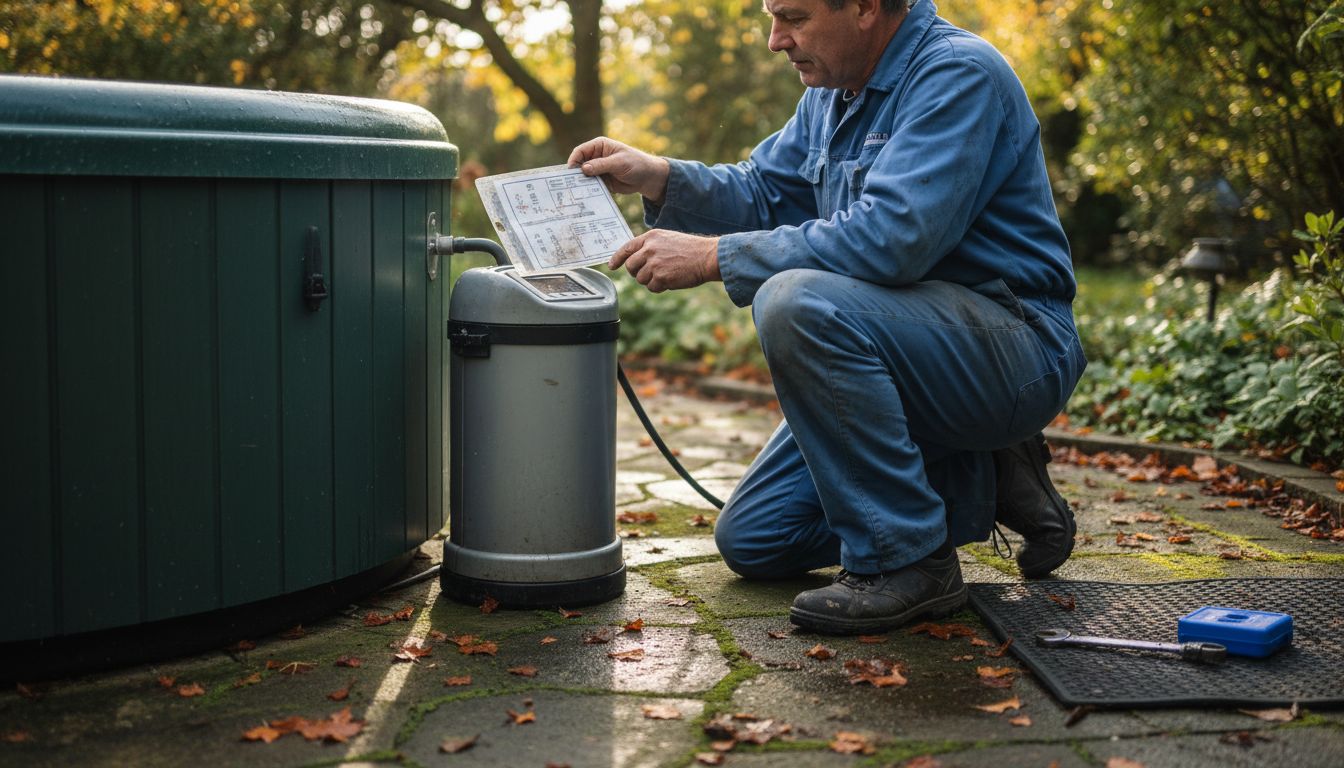
That said, successful recycling needs careful thought about several key factors. Water chemistry, how often you treat it, the quality of the filtration and your local rules all play a big part in how effective and safe any recycling is. Owners need to invest in good filtration kit, test the water regularly and keep up with the latest treatment technology to make recycling work.
How Spa Water Recycling Systems Operate
Recycling systems are a sophisticated bit of technology, turning what was once seen as waste into a valuable sustainable resource. These detailed systems use advanced engineering to capture, treat and repurpose water from hot tubs and similar setups.
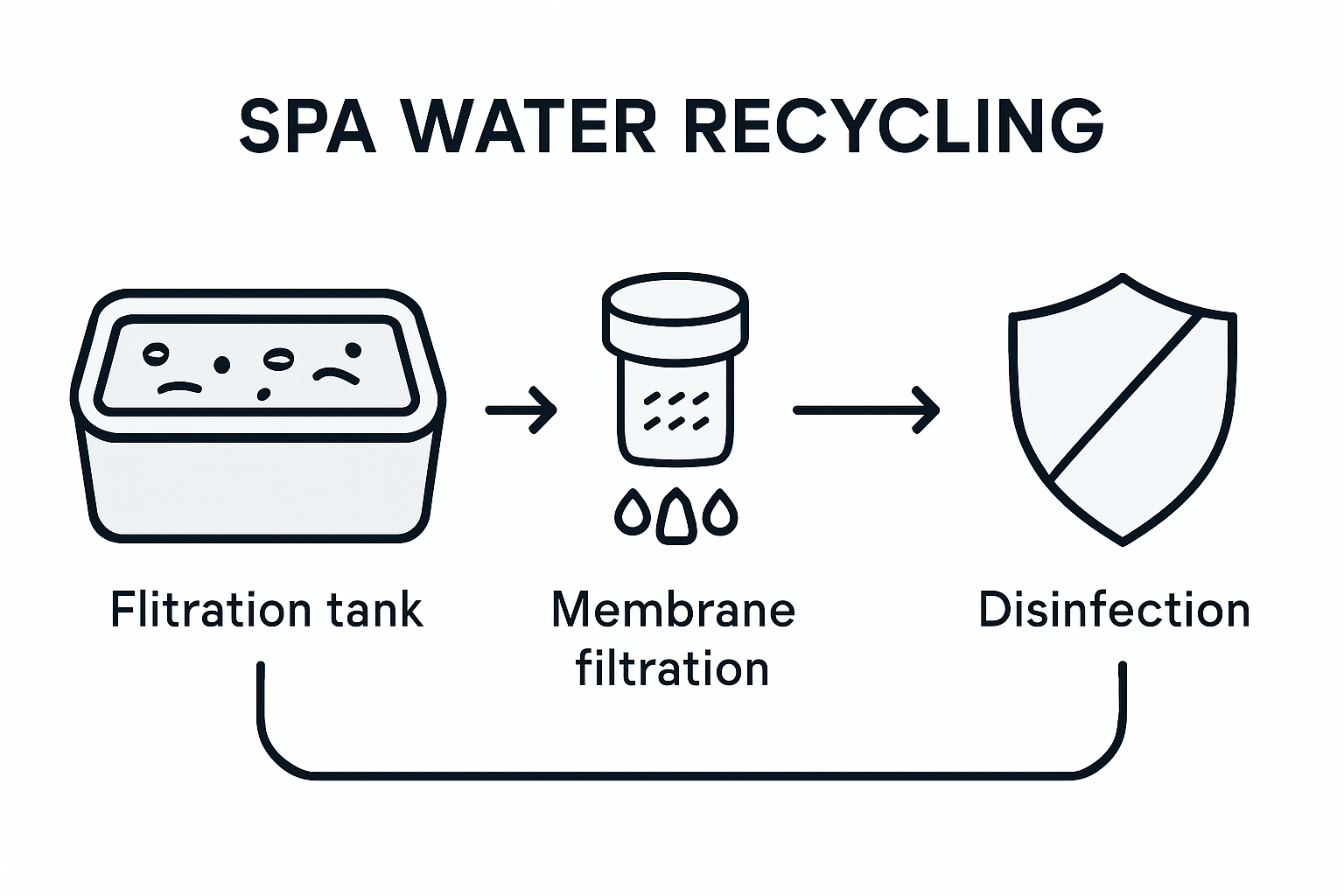
According to the UK Water Reuse Association, the process runs through several key stages of treatment:
- Collection: Gathering used spa water systematically
- Preliminary Screening: Removing large particulate matter
- Sedimentation: Letting heavier particles settle
- Chemical Treatment: Neutralising potential contaminants
- Membrane Filtration: Extracting microscopic impurities
- Disinfection: Clearing harmful microorganisms
- Quality Testing: Making sure the water meets safety standards
The Drinking Water Inspectorate explains that advanced membrane filtration plays a key role in these systems. These microscopic barriers push water through complex membranes, catching contaminants as small as bacteria and chemical residues, turning potentially hazardous wastewater into a clean, reusable resource.
Successful recycling needs close attention to several technical and environmental factors. Analysing the water chemistry, precise filtration, regular maintenance and complying with strict environmental rules are all vital. Owners need to invest in good filtration kit, test the water often and stay flexible as treatment technology moves on, to keep the recycling performing well.
Legal and Environmental Guidelines for Recycling
Recycling spa water in the UK is governed by a complex set of environmental rules designed to protect public health and the local ecology. These guidelines make sure recycling meets strict safety and sustainability standards in both homes and businesses.
Scottish Environment Protection Agency guidelines give a useful steer on the rules for hot tub and pool water. The key requirements include:
- Discharge Authorisation: Getting official permission to dispose of water
- Treatment Standards: Meeting specific water quality criteria
- Environmental Impact Assessment: Weighing up the possible ecological effects
- Contamination Prevention: Putting robust filtration in place
- Reporting Obligations: Keeping detailed records of the treatment process
The Drinking Water Inspectorate stresses that recycling operations must comply strictly with drinking water quality legislation. This means thorough testing for microorganisms, chemical contaminants and metal levels to guarantee recycled water is safe and wholesome.
Working through these legal requirements calls for a proactive approach from owners and water management professionals. Getting it right means keeping up with changing environmental rules, investing in advanced treatment technology and keeping careful records of water quality checks. Regular chats with environmental regulators and professional water treatment experts can help you fully meet the complex legal and environmental guidelines around recycling.
Risks, Costs, and Mistakes to Avoid
Setting up a recycling system needs careful thought about the possible risks and the money involved. Owners have to approach recycling with a clear plan, understanding the tricky challenges that can undermine their sustainability efforts.
The UK Water Reuse Association warns that poor recycling can lead to real problems, including:
- Water Stagnation: The risk of bacterial growth in unused systems
- Odour Development: Unpleasant smells if the water is not treated properly
- Contamination Risks: Harmful microorganisms potentially taking hold
- System Inefficiency: Higher maintenance costs from poor design
- Regulatory Non-Compliance: Fines for inadequate water management
The Drinking Water Inspectorate stresses how important it is to build in several treatment barriers and thorough risk assessments. Successful recycling needs careful planning, including a detailed look at possible contamination routes and robust filtration.
The money side goes beyond the initial install cost. Owners have to budget for ongoing maintenance, regular water testing and possible system upgrades. Cutting corners can lead to far higher long-term costs, including replacing equipment, health risks and possible legal trouble. Professional advice and investing in good filtration technology are essential for keeping the risks down and making recycling sustainable and cost-effective.
Comparing Recycling to Standard Water Changes
Comparing recycling with a traditional water change shows big differences in sustainability, resource use and long-term environmental impact. More and more owners are seeing the potential upsides of moving beyond the usual water change towards more inventive recycling.
The Drinking Water Inspectorate points out that recycling offers a continuous, sustainable water source with clear advantages over a standard change. The key comparisons include:
- Water Consumption: Recycling dramatically cuts overall water use
- Resource Efficiency: Less reliance on fresh mains water
- Environmental Impact: A much smaller ecological footprint
- Cost Management: Lower long-term water replacement costs
- Water Quality: More consistent treatment standards
The UK Water Reuse Association points out that greywater recycling systems can potentially cut mains water use by up to 40% compared with a traditional water change. That is a substantial reduction, and not just an economic win but a genuine contribution to conserving water.
Moving from a standard change to recycling means an upfront investment in sophisticated filtration and a systematic treatment process. Even so, the long-term benefits include lower water bills, better environmental stewardship and a more sustainable approach to hot tub care. Owners need to weigh up their own needs, their local water rules and the technology available to set up an effective recycling approach.
Enhance Spa Water Recycling with Expert Treatment Solutions
Managing spa water recycling well means overcoming challenges like contamination risks, strict water quality standards and keeping the filtration in shape. This guide highlights key steps like membrane filtration and chemical treatment that keep water reuse safe and sustainable. If you are trying to cut water use and keep the water crystal clear, Zagosa Spa & Pool offers quality products made for precise water chemistry control and reliable filtration support.

See the difference with Zagosa Spa & Pool and protect your hot tub against contamination while taking up eco-friendly habits. Visit Zagosa Spa & Pool to explore our full range of specialist hot tub chemicals and spa essentials that fit advanced recycling systems perfectly. Do not put off your move towards sustainable spa care, kit your tub out with expert water treatment products today for safety and efficiency in every cycle.
Frequently Asked Questions
What is spa water recycling?
It is a process that treats and repurposes used hot tub water to cut environmental impact. It uses advanced filtration and purification to turn potentially contaminated water into a reusable resource.
What methods are used for recycling spa water?
Common methods include collection, sedimentation, filtration, disinfection, storage and redistribution. Each stage is there to make sure the reclaimed water meets safety and quality standards.
What are the legal guidelines for recycling spa water?
They involve getting discharge authorisations, meeting treatment standards, carrying out environmental impact assessments and complying with drinking water quality legislation to protect public health and the environment.
What are the benefits of recycling spa water compared to standard water changes?
Recycling noticeably cuts overall water use, reduces reliance on fresh water, lowers environmental impact and cuts long-term maintenance costs compared with a traditional water change.
Recommended
- Complete Guide to Why Replace Spa Water - Zagosa Spa & Pool
- 7 Best Practices for Hot Tubs Every UK Owner Should Know - Zagosa Spa & Pool
- Step by Step Hot Tub Cleaning for Spotless Spa Results - Zagosa Spa & Pool
- Water Filtration & Parts - Zagosa Spa & Pool
- Understanding the Effects of Water Contamination - My WordPress