By The Zagosa Team. Published .
Reviewed or updated .
A large share of spa owners run into problems caused by unbalanced water hardness, often without knowing what set it off. The level of dissolved minerals in your hot tub affects not just water quality but how long the equipment lasts and how much upkeep it needs. Understand how hardness works and what it means for your system, and you gain a real edge in protecting your investment and enjoying trouble-free soaks.
Table of Contents
- What spa water hardness is
- The types of hardness in spas
- How hardness affects a hot tub
- Testing and managing hardness
- The risks of getting it wrong
Key Takeaways
| Point | Details |
|---|---|
| What hardness is | Hardness affects hot tub performance and comes mainly from calcium and magnesium. Regular testing and management are essential. |
| The two types | Hardness is either temporary (bicarbonate salts) or permanent (chloride and sulphate salts), each needing a different approach. |
| Effect on equipment | High mineral content can cause scale, cutting heating efficiency, slowing circulation and pushing up upkeep costs. |
| Risks of imbalance | Wrong hardness can damage components and lead to costly repairs; regular testing and balanced treatments are key. |
What Spa Water Hardness Is
Spa water hardness is a key factor in how your hot tub performs and how much upkeep it needs, set by the amount of dissolved minerals in the water. According to the Drinking Water Inspectorate, hardness comes mainly from dissolved calcium and magnesium, which vary with local geology.[1]
Understanding water hardness means knowing its measurement scale. As Severn Trent Water explains, hardness is measured in milligrams per litre (mg/l) of calcium carbonate, with ratings from soft to very hard.[1] Those mineral levels directly shape your water quality and how long the equipment lasts.
The key features of water hardness include:
- Minerals made up mainly of calcium and magnesium salts
- Variations tied to local rock and water sources
- A tendency to leave scale in heating systems
- A direct effect on how well soap and chemicals work
Hardness matters beyond the numbers. High mineral content can cut your spa's heating efficiency and shorten the life of costly equipment. Understanding Spa Water Balance Essentials goes deeper into managing these mineral challenges.
The Types of Hardness in Spas
Knowing the different types of hardness is key to good upkeep. According to Brita, total hardness splits into two main types: temporary hardness and permanent hardness, set apart by their mineral make-up and how you treat them.
Temporary hardness comes mainly from bicarbonate salts of calcium and magnesium. As NHS Scotland explains, these salts can be removed by boiling, which makes them drop out of the water. This type is shaped by local geology and can noticeably affect your water chemistry.
The key features of each type include:
- Temporary hardness: caused by bicarbonate salts
- Permanent hardness: caused by chloride and sulphate salts
- Varies with the local water source and geology
- Affects how well soap works and how much scale forms
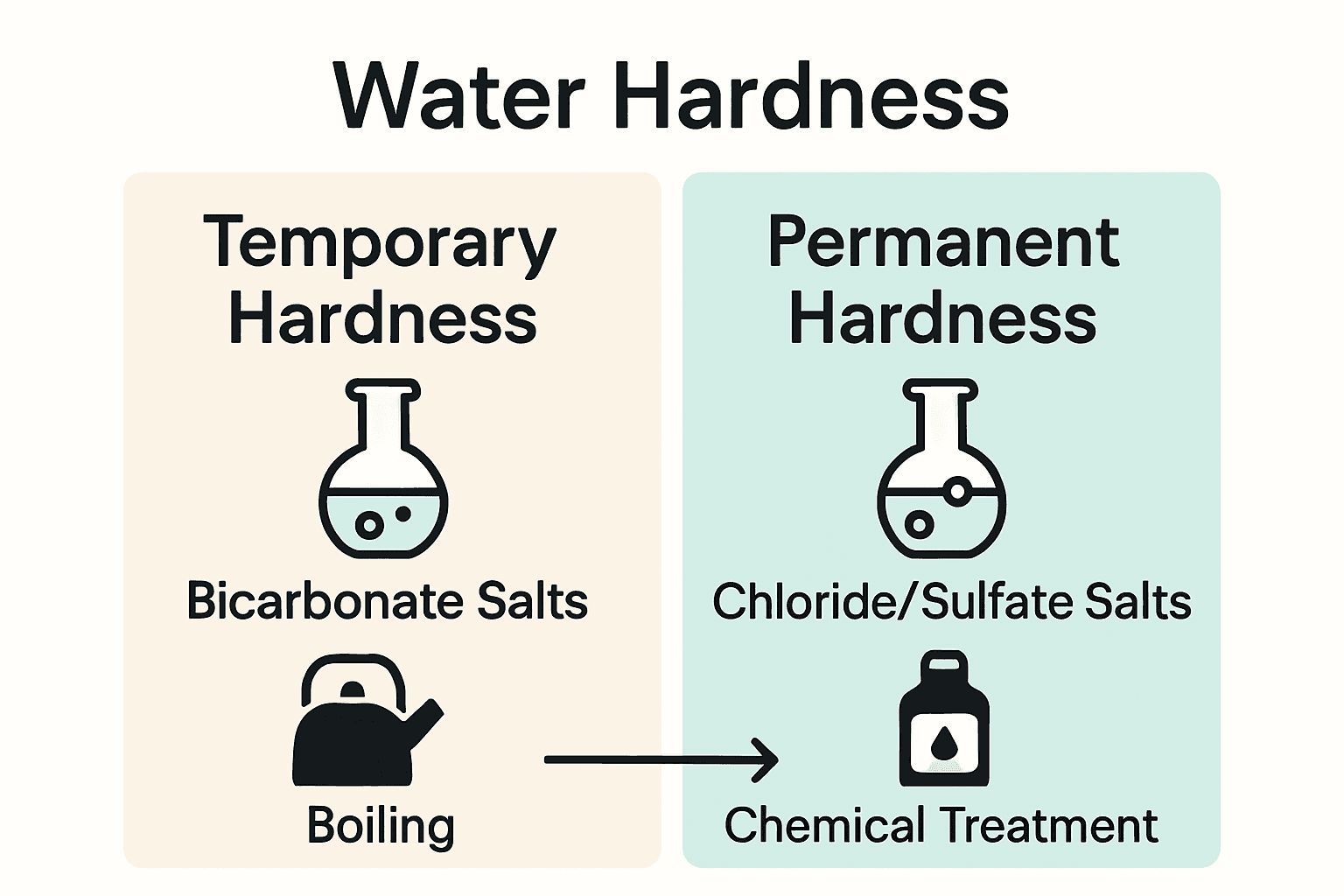
Understanding the Hot Tub Water Softening Process can help owners build better water management routines and keep the equipment performing and long-lived.
How Hardness Affects a Hot Tub
Hardness can have a big effect on how a hot tub performs and how long it lasts, throwing up challenges every owner should understand. According to the Drinking Water Inspectorate, hard water causes real scaling in hot water systems, which cuts efficiency and can shorten the life of costly equipment.[1]
Mineral build-up is the main worry with hard water. Excess calcium and magnesium deposits can gather on heating elements, jets and internal parts, forming a layer of scale that blocks heat transfer and drags down performance. Over time that means more energy used and more frequent upkeep.
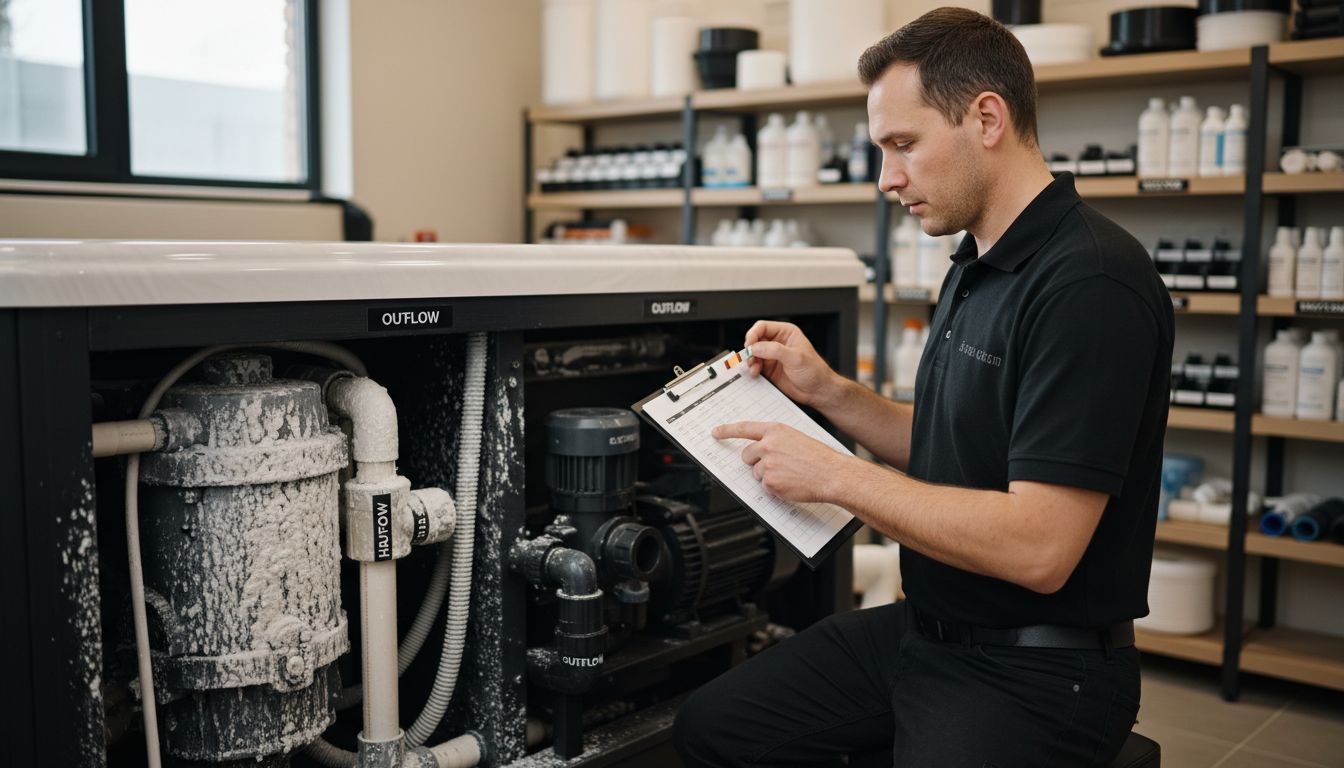
The main effects of hardness on a hot tub include:
- Lower heating efficiency
- More wear on mechanical parts
- Possible blocked jets and pipes
- Higher risk of equipment failure
- Weaker water circulation
Managing hardness needs a proactive approach. Understanding Water Balancing can help owners build full strategies to head off these problems and keep the tub performing at its best.
Testing and Managing Hardness
Keeping a close eye on hardness is key to your spa's performance and lifespan. According to Severn Trent Water, hardness is measured in milligrams per litre (mg/l) of calcium carbonate, a standard way to understand mineral levels and head off scaling or corrosion.
Good hardness management blends testing with well-judged action. As NHS Scotland explains, treatment may be needed to adjust what is in the water and keep it right for your particular spa, ultimately preventing damage to the equipment.
The key steps for managing hardness include:
- Use reliable test strips or a digital test kit
- Measure calcium hardness regularly
- Adjust the mineral content with the right chemical treatments
- Watch pH and alkalinity alongside hardness
- Use water-softening methods when needed
Top Tips for Balancing Chemical Levels in Your Hot Tub offers more guidance on getting the balance right.
The Risks of Getting It Wrong
Keeping hardness right is central to protecting your spa's long-term function and performance. According to the Drinking Water Inspectorate, both very hard and very soft water can cause real problems for hot tub systems, leading to costly damage and dropping efficiency.
The main risks of wrong hardness include damage to key components. When water is too hard, mineral deposits build up fast on heating elements, jets and internal parts, sharply cutting their effectiveness. When it is too soft, the water turns corrosive and can badly damage metal pipework and mechanical systems.
The common mistakes owners make with hardness include:
- Neglecting regular testing
- Not tackling mineral imbalances promptly
- Overdoing chemical treatments
- Ignoring the maker's recommended hardness levels
- Using the wrong softening methods
High pH and Alkalinity in Your Hot Tub offers more on holding the fine balance of your spa's chemistry and avoiding longer-term damage.
Protect Your Hot Tub from the Hidden Dangers of Hard Water
If you have been worried about mineral build-up cutting your spa's heating efficiency or scaling up the equipment, you are not alone. Managing water hardness, especially telling temporary from permanent hardness, can feel like a lot. Hard water can quietly degrade a spa by clogging jets, pushing up energy costs and shortening the life of key parts. Holding the right balance and testing calcium hardness regularly matters if you want to avoid expensive repairs or an early replacement.
Take charge with Zagosa's trusted range of spa chemicals made specifically to tackle hardness issues.
Enjoy peace of mind with products that help soften hard water safely and balance mineral levels before problems grow. Start with expert guidance on water balancing and find chemical treatments that protect your investment. Do not wait for scale to harm your hot tub. Visit Zagosa Spa & Pool to explore solutions that keep your spa running smoothly and save you money in the long run.
Frequently Asked Questions
What is spa water hardness?
It is the amount of dissolved minerals, mainly calcium and magnesium, in your hot tub's water. It affects both water quality and how long the equipment lasts.
How does water hardness affect my hot tub?
High hardness can leave mineral build-up that cuts heating efficiency, adds wear to components and can block jets and pipes, shortening the life of the equipment.
What are the types of water hardness?
There are two: temporary hardness, from bicarbonate salts that can be removed by boiling, and permanent hardness, from chloride and sulphate salts that need chemical treatment to remove.
How can I test and manage water hardness in my spa?
Test with strips or a digital kit, measuring calcium hardness regularly.[2] To manage it, adjust the mineral content with the right treatments and watch pH and alkalinity alongside hardness.
Recommended
- Understanding the Hot Tub Water Softening Process - Zagosa Spa & Pool
- Calcium Hardness Increaser - Calcium Chloride Flakes - Zagosa Spa & Pool
- Ask An Expert - SPA Pool Maintenance - Zagosa Spa & Pool
- Role of Spa Water Balance: Complete Owner's Guide - Zagosa Spa & Pool
Sources and review
Reviewed on . Next review due .
- Drinking Water Inspectorate: drinking water quality in England and Wales - Drinking Water Inspectorate
- PWTAG Code of Practice: the management and treatment of swimming pool water - Pool Water Treatment Advisory Group