By The Zagosa Team. Published .
Reviewed or updated .
Plenty of UK hot tub owners underestimate the health risks that come with poor spa care. Owning a spa is about a lot more than topping up the water and tossing in a bit of chemical now and then. Get the maintenance wrong and problems creep in fast, from bacterial outbreaks to costly equipment failure. This guide sets the record straight on spa upkeep, clears up the common myths and lays out the key steps every UK homeowner needs for safe, stress-free relaxation.
Table of Contents
- What Spa Care Involves and Common Myths
- Types of Spa Water Treatments Explained
- Essential Steps for Chemical Balance
- Routine Maintenance for Spa Longevity
- Common Spa Care Mistakes to Avoid
Key Takeaways
| Point | Details |
|---|---|
| Importance of Spa Maintenance | Regular, systematic care keeps the spa safe and hygienic, with proper water testing and chemical balancing. |
| Myths About Spa Care | Beliefs like fresh water clearing all bacteria risk can lead to unsafe water and poor care. |
| Chemical Balance Management | Getting the chemistry right matters, with set figures for pH, sanitiser and total alkalinity to watch. |
| Routine Maintenance Practices | Weekly checklists and monthly deep cleans extend the spa's life and prevent health risks, so stay consistent. |
What Spa Care Involves and Common Myths
Spa care is far more than the odd water top-up and occasional wipe-down. The health risks of poor spa management can be serious, which is why water treatment and hygiene need a proper, methodical approach.
Whatever you might have heard, a home hot tub is not low-maintenance kit. The Chartered Institute of Plumbing and Heating Engineering points out that spas need steady, careful attention to keep health hazards away. Bacterial growth, Legionella especially, is a real worry you cannot ignore. Regular water testing, chemical balancing and thorough cleaning are simply part of responsible ownership.
The usual myths lead owners astray. Many wrongly assume that:
- Filling the spa with fresh water clears all the bacteria risk
- Chlorine on its own fully protects against waterborne bugs
- Occasional use means occasional cleaning is fine
- Water that looks clean must be safe
In truth, good spa care means getting to grips with a bit of water chemistry. Proper maintenance involves:
- Weekly water quality testing
- Getting the chemistry balanced
- Regular filter cleaning and replacement
- Thorough surface sanitising
- Keeping an eye on total dissolved solids (TDS)
Clear the myths, adopt a methodical routine, and you can keep the spa safe, hygienic and genuinely enjoyable.
Types of Spa Water Treatments Explained
Water treatment is at the heart of keeping a spa safe and hygienic. Steady chemical dosing is what controls the bugs and heads off the risks that come with stagnant water.
The main treatment methods split into two camps: chemical disinfection and physical filtration. Chemical treatments usually mean chlorine or bromine as the main disinfectant, neutralising harmful microorganisms. East Renfrewshire Council notes these treatments must keep a steady residual level to hold bacteria back.
The most common treatment techniques include:
-
Chlorine Treatment
- The most widely used disinfectant
- Kills bacteria and viruses quickly
- Needs careful pH balancing
-
Bromine Treatment
- More stable at higher temperatures
- Gentler on skin and eyes
- Works across a wider pH range
-
Oxidation Treatments
- Shock doses to clear out contaminants
- Helps reset the water chemistry
- Usually done weekly or fortnightly
There are other options too, like ultraviolet light, hydrogen peroxide and ozone systems, but experts warn these are not enough on their own without chemical disinfection alongside. Good spa care blends different methods so the water stays clean and safe.
Regular testing, careful chemical management and understanding how the methods work together are what keep a spa healthy. Owners need to stay on top of their water care and get ahead of problems.
Essential Steps for Chemical Balance
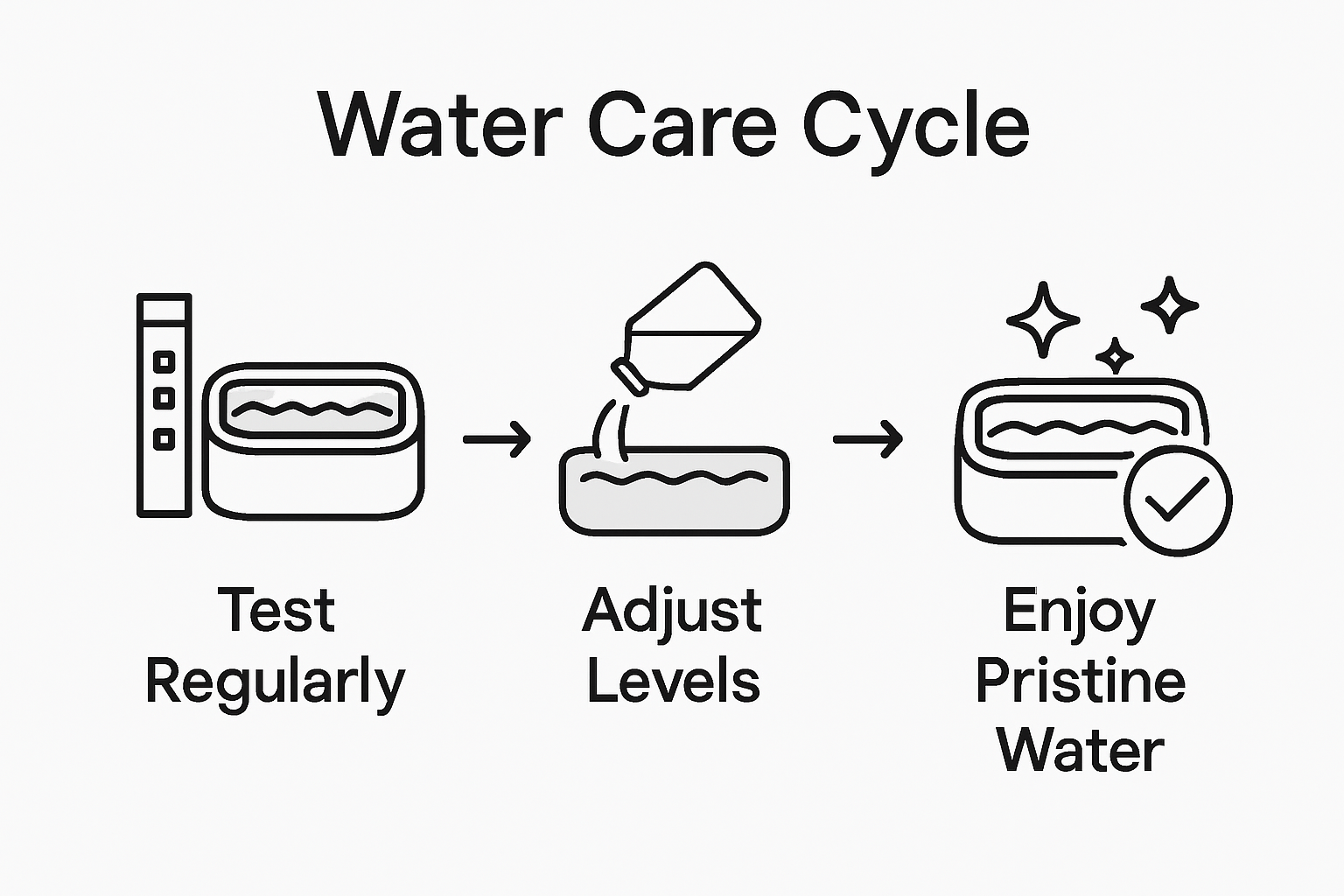
Keeping the chemistry balanced is the foundation of a safe, hygienic spa. Good water chemistry stops bacteria, protects the equipment and keeps bathers safe.
The Chartered Institute of Plumbing and Heating Engineering stresses that chemical management needs a methodical approach and steady monitoring. Certain figures have to be kept in check to head off health risks. Good water care means understanding and following a few key balance steps:
-
pH Level Regulation
- Ideal range: 7.0 to 7.6
- Prevents equipment corrosion
- Gets the best out of your disinfectant
-
Sanitiser Concentration
- Chlorine: 3-5 mg/L
- Bromine: 4-6 mg/L
- Kills harmful bacteria and viruses
-
Total Alkalinity Management
- Recommended range: 80-120 ppm
- Steadies the pH
- Prevents swings in the water chemistry
-
Calcium Hardness Control
- Ideal range: 150-250 ppm
- Prevents scale on the equipment
- Protects the spa surfaces
Regular testing with reliable strips or a digital kit is a must. Check the levels at least twice a week and make small adjustments to hold the water where it should be. Let these figures slide and you invite health hazards and faster wear on the equipment.
Water chemistry is not just about numbers, it is about a safe, comfortable spa you actually want to use. Steady care and attention keep it a clean, inviting retreat.
Routine Maintenance for Spa Longevity
A full routine is key to keeping a spa working and heading off health risks. Good care extends the life of the equipment and keeps every soak safe and enjoyable.
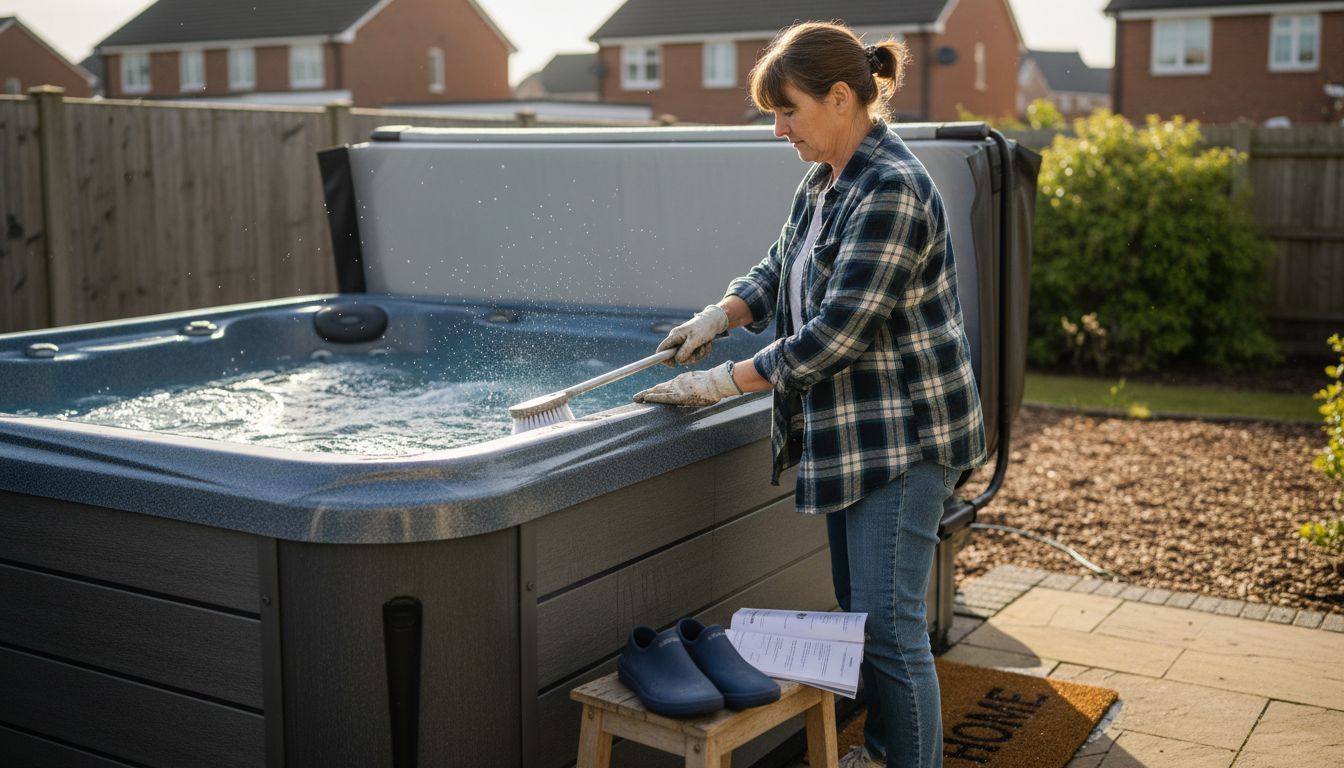
The Health and Safety Executive points out that proper maintenance is more than the occasional surface wipe. Regular inspection, deep cleaning and sticking to the manufacturer's guidance are all part of responsible ownership. Good maintenance ties together several linked tasks that protect both the kit and the people using it.
The key routine jobs include:
-
Weekly Maintenance Checklist
- Test the water chemistry
- Clean and check the filters
- Check the water level
- Wipe the surfaces
- Look over the equipment for wear
-
Monthly Deep Cleaning
- Drain and thoroughly clean the spa
- Check the jets and plumbing
- Replace filters if needed
- Check the electrical connections
- Lubricate moving parts
-
Seasonal Equipment Assessment
- Full system inspection
- A professional technical check
- Replace worn parts
- Update your water treatment routine
Good care means knowing what your particular spa model needs. The manufacturer's instructions give tailored guidance, factoring in things like how often it is used, water hardness and the local conditions.
Steady, proactive care is an investment in how well your spa runs and how long it lasts. Put the time into a routine and you avoid costly repairs, keep the water clean and enjoy a safe, relaxing spa for years.
Common Spa Care Mistakes to Avoid
Skipping routine care can undermine a spa's safety and performance in ways many owners never see coming. Knowing the common traps is key to avoiding health risks and pricey damage.
The Health and Safety Executive warns that water management mistakes often come from underestimating how much spa care involves. Most owners unwittingly create the very conditions that breed bacteria and wear the system down, through habits that seem harmless.
The most serious spa care mistakes include:
-
Inconsistent Chemical Management
- Irregular testing
- Wrong chemical amounts
- Neglecting the pH balance
- Using expired chemicals
-
Poor Filtration Practices
- Cleaning the filter too rarely
- Not replacing filters on schedule
- Ignoring the filter's condition
- Running the spa with a struggling filter
-
Water Circulation Neglect
- Too little water movement
- Blocked jets
- Irregular pump maintenance
- Overlooking the circulation system
-
Contamination Risks
- Getting in without showering
- Using the spa with open wounds
- Letting pets near the water
- Ignoring personal hygiene
Frequent, thorough care heads off most spa problems. These jobs might feel like a lot at first, but they get straightforward once you are into a routine and understand the basics of water chemistry.
Remember, your spa is an investment in relaxation and wellbeing. Treat it with informed, methodical care and you keep it running well and enjoyable for years.
Maintain Pristine Spa Water with Expert Support from Zagosa Spa & Pool
Good spa care needs the right chemical balance, steady water testing and effective treatment to keep harmful bacteria out and every soak safe. If pH, sanitiser levels or filter care have given you trouble, Zagosa Spa & Pool has trusted products to simplify your routine and protect your investment.

Take a look at our tried and tested range of hot tub chemicals and water treatment products, made to help you keep the water in top condition, hold bacteria back and extend your spa's life. Take charge of your spa care today by visiting Zagosa's full product range. Start your journey to easy spa maintenance and enjoy a hygienic, refreshing soak without the worry.
Frequently Asked Questions
How often should I test the water in my spa?
Test at least twice a week to keep the chemistry balanced and the water safe and hygienic.
What are the ideal pH levels for spa water?
The ideal pH range is 7.0 to 7.6, which prevents corrosion and gets the best out of your disinfectant.
What types of chemical treatments can I use for my spa?
Common options are chlorine, bromine and oxidation treatments. Each has its strengths, for example bromine stays more stable at higher temperatures than chlorine.
What are the most common mistakes to avoid in spa care?
The usual ones are inconsistent chemical management, poor filtration, neglecting circulation, and contamination risks like getting in without showering first.