By The Zagosa Team. Published .
Reviewed or updated .
Every UK hot tub owner wants crystal-clear water, but many are surprised to learn that a single session can introduce huge numbers of bacteria into the tub. Keeping that water sparkling takes more than simply tipping in chemicals. Shock treatment is not just about cleanliness, it protects you and your equipment from real health risks lurking below the surface. Here is why proper shock treatment matters and how it can make all the difference to your hot tub.
Table of Contents
- What Is Shock Treatment For Hot Tubs?
- Different Types Of Shock Treatments Explained
- How Shock Treatment Cleans And Sanitises Water
- Risks And Safety Measures For Shock Use
- Benefits Versus Alternatives For Water Maintenance
Key Takeaways
| Point | Details |
|---|---|
| Importance of Shock Treatment | Shock treatment is key to good water quality, clearing harmful contaminants that normal sanitising cannot reach. |
| Types of Shock Treatments | There are two main types, chlorine-based and non-chlorine, each suited to particular care needs. |
| Risks and Safety Measures | Careful handling and safety steps are essential when using shocks, to avoid chemical hazards and keep users safe. |
| Advantages Over Alternatives | Shock treatment sanitises better than routine methods, giving a thorough clean and holding back microbial growth. |
What Is Shock Treatment for Hot Tubs?
Shock treatment is a key bit of care that clears harmful bacteria, contaminants and organic compounds from the water. By briefly pushing the chlorine level very high, you can sanitise the water thoroughly and head off potential health risks. It works by oxidising the unwanted stuff, bringing back the clarity and keeping the soak safe.
The main point of a shock is to deal with things a normal sanitise cannot. When bacteria like Legionella take hold in a hot tub system, everyday chemical treatments may not be enough. A shock gives an aggressive clean that breaks down built-up organic matter, clears microbial contaminants and resets the water chemistry to where it should be. The Chartered Institute of Plumbing and Heating Engineering stresses that careful care prevents bacterial growth and keeps a hot tub safe to run.
A typical shock means adding a concentrated chlorine or non-chlorine product straight into the water. This usually happens weekly or fortnightly, depending on how much the tub is used and the state of the water. Signs that a tub needs a shock include:
- Cloudy or discoloured water
- A strong chlorine or chemical smell
- Visible biofilm or scum lines
- Reduced clarity
- Persistent foam or residue
In the end, a shock is not just a cleaning job but a key preventative health measure that protects both the equipment and the people using it from potential waterborne hazards.
Different Types of Shock Treatments Explained
Shock treatments split into two main types, chlorine-based and non-chlorine, each with its own role in water care. Good chemical treatment is key to controlling microbial growth and holding the water quality, with owners picking a shock to suit their own tub and water conditions.
Chlorine-based shocks mean adding a high dose of chlorine, an aggressive sanitise that clears bacteria, algae and organic contaminants. They are particularly powerful, able to break down complex organic compounds and reset the chemistry. Non-chlorine shocks, by contrast, use oxygen-based compounds that oxidise contaminants without adding more chlorine, which makes them ideal for sensitive skin or anyone who prefers a milder approach.
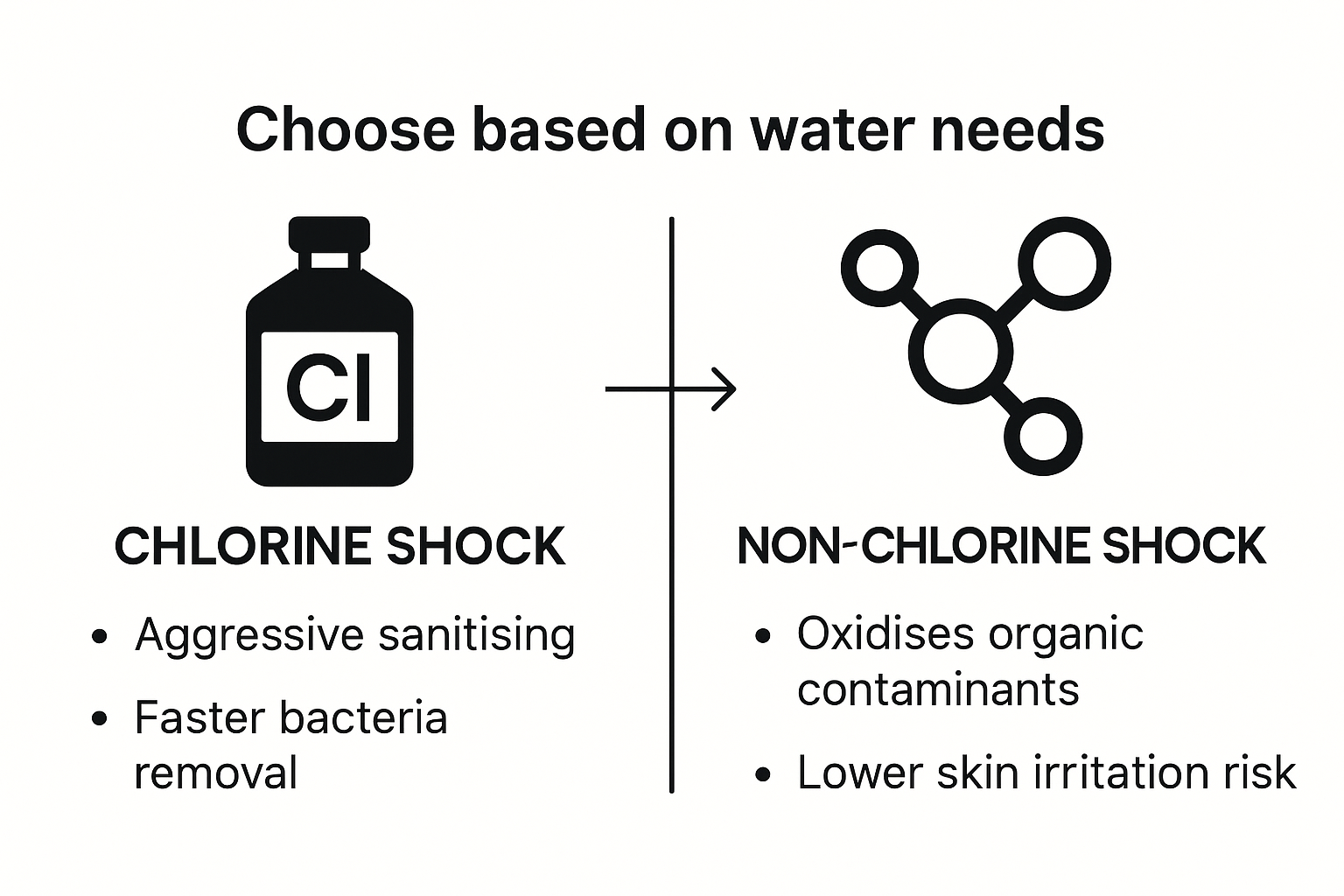
The Chartered Institute of Plumbing and Heating Engineering points out there is no one-size-fits-all shock, and your care approach has to suit your particular system. The different shocks each bring their own strengths:
Chlorine Shock Treatments:
- Maximum bacterial clearance
- The most cost-effective option
- The strongest oxidation power
- Ideal for busy hot tubs
Non-Chlorine Shock Treatments:
- Gentler on equipment and skin
- Faster water recovery time
- Less chemical smell
- Suited to sensitive users
In the end, the right shock depends on things like how much the tub is used, the water quality, user sensitivity and what the maker recommends. Regular, sensible use keeps the soak clean, safe and enjoyable.
How Shock Treatment Cleans and Sanitises Water
A shock is a powerful sanitising process that steadily clears harmful microorganisms and organic contaminants from the water. Good disinfection means adding high concentrations of oxidisers that break down microscopic debris, neutralise bacteria and reset the chemistry to pristine conditions.
The cleaning works through an advanced oxidation process that tackles several sources of contamination at once. When a shock goes in, the powerful compounds penetrate biofilms, destroy bacterial cell structures and neutralise organic matter that normal filtration might miss. Careful water care is about more than a surface clean.

The sanitising process involves several key steps:
Oxidation Mechanism:
- Breaks down complex organic compounds
- Clears microscopic contaminants
- Disrupts bacterial cell membranes
- Neutralises ammonia and nitrogen compounds
Contamination Removal Process:
- Targets invisible microorganisms
- Removes body oils and skin residue
- Destroys algae and bacterial colonies
- Prevents biofilm forming
In the end, a shock is a sophisticated way of purifying the water that goes well beyond ordinary cleaning, keeping the water crystal clear, safe and free of potentially harmful microbes.
Risks and Safety Measures for Shock Use
Thinking through the risks is vital when handling shocks, since poor chemical management can create real health and safety problems. Shocks use powerful oxidisers that need careful handling, precise measuring and strict safety steps to avoid harming users or equipment.
The main risks come from the chemical concentration, potential skin irritation and incorrect use. Careful care means understanding how the chemicals interact and following the maker's guidance to keep the dangers down. Users need to be aware of the specific risks that can come from mishandling shocks.
The key safety steps for a shock include:
Personal Protection Measures:
- Wear protective gloves
- Use safety goggles
- Work in well-ventilated areas
- Avoid direct skin contact with chemicals
Chemical Handling Precautions:
- Always add chemicals to water, never water to chemicals
- Measure precise amounts
- Store chemicals in a locked, cool place
- Keep chemicals away from children and pets
- Use dedicated measuring tools
In the end, using a shock responsibly means understanding the chemical properties, the risks and the careful safety steps that keep hot tub care safe and effective.
Benefits Versus Alternatives for Water Maintenance
Looking at the full picture of water care, a shock has clear advantages over other ways of managing the water. While routine filtration and standard chemical treatments give a basic clean, a shock is a more intensive, thorough sanitise that tackles several water quality problems at once.
Other care methods each have their own limits that a shock overcomes. Standard chlorination gives basic bacterial control but struggles to break down complex organic compounds, whereas a shock reaches deeper into biofilms and neutralises microscopic contaminants. Careful care is about thorough treatment, not just a surface clean.
The main comparative advantages of a shock include:
Shock Treatment Benefits:
- Complete clearance of organic contaminants
- Rapid chemistry reset
- Thorough microbial clearance
- Long-lasting clarity
- Prevents biofilm forming
Alternative Method Limitations:
- Only partial cleaning
- Slower contaminant removal
- Limited bacterial control
- Inconsistent water quality
- Higher chance of leftover contamination
In the end, a shock is a sophisticated approach to water care that sanitises better than the rest, keeping the water pristine, safe and free of potentially harmful microorganisms.
Keep Your Hot Tub Crystal Clear with Expert Shock Treatment Solutions
Keeping the water safe and sparkling is essential for avoiding bacteria build-up, cloudy water and unpleasant smells, as this guide has explained. A shock plays a vital part in breaking down organic contaminants and resetting the chemistry. But finding the right products and knowing how to use them safely can be tricky for any owner. At Zagosa Spa & Pool, we get these worries and offer a wide range of quality hot tub chemicals made to help you shock the water effectively with confidence and ease.

Discover trusted solutions that protect your equipment and keep every soak safe and enjoyable. Shop our full collection of water treatment products at Zagosa Spa & Pool and see how our expert recommendations can simplify your routine. Do not wait for cloudy water or strong chemical smells to take hold, act now with Zagosa's quality products and support.
Frequently Asked Questions
What is shock treatment for hot tubs?
Shock treatment means adding a high dose of a chlorine or non-chlorine product to the water. It clears harmful bacteria and contaminants, brings back the clarity and keeps the soak safe.
How often should I perform shock treatment on my hot tub?
Usually weekly or fortnightly, depending on how much the tub is used and the state of the water. Keeping an eye on the clarity and chemical levels helps you settle on the right frequency.
What are the signs that my hot tub needs shock treatment?
Signs a tub may need a shock include cloudy or discoloured water, a strong chlorine smell, visible scum lines, reduced clarity and persistent foam or residue.
What is the difference between chlorine and non-chlorine shock treatments?
Chlorine shocks add a high dose of chlorine to clear bacteria and contaminants, while non-chlorine shocks use oxygen-based compounds to oxidise impurities without adding more chlorine. Non-chlorine options are gentler on sensitive skin and on the equipment.
Recommended
- Why are hot tub bromine tablets so widely used? - Zagosa Spa & Pool
- Water Shock Treatements - Zagosa Spa & Pool
- How to Shock a Hot Tub Naturally for Zagosa Results - Zagosa Spa & Pool
- Why is Total Alkalinity so important in hot tubs or pools - Zagosa Spa & Pool
- Understanding the Effects of Water Contamination - My WordPress