By The Zagosa Team. Published .
Reviewed or updated .
More than half of British homeowners weighing up a hot tub want easier upkeep and healthier water for the family. Saltwater hot tubs are catching on across the UK for their automated chlorine generation and their soothing soak. Yet myths and confusion about how these systems work, and what they need, can leave buyers unsure. This guide helps British households see past the common misunderstandings and make confident choices about reliable water care and its wellness benefits.
In This Guide
- Saltwater Hot Tubs And The Myths
- The Types And Technology Behind Them
- How Saltwater Sanitising Really Works
- Health And Upkeep Benefits For UK Homes
- Safety Rules, Risks, And Running Costs
- Saltwater Against Chlorine Alternatives
The Main Points
| Point | Details |
|---|---|
| How Saltwater Systems Work | Saltwater hot tubs use electrolysis to make chlorine automatically, unlike traditional methods that need manual chemical additions. |
| Upkeep Benefits | These systems mean less ongoing upkeep, less chemical handling and less skin irritation. |
| Cost Considerations | The upfront cost may be higher, but savings come over time from buying fewer chemicals and steadier water quality. |
| Health and Safety Compliance | Regular monitoring and following UK rules are vital for safe running and to reduce risks such as Legionnaires' disease. |
Saltwater hot tubs and the myths
A saltwater hot tub is a clever take on treating spa water, using a chlorine generation system that works quite differently from traditional chemical sanitising. Rather than adding chemicals by hand, saltwater systems make chlorine automatically through electrolysis, turning salt into a natural sanitising agent.
Many homeowners hold mistaken ideas about saltwater hot tubs, thinking they are completely chlorine-free or need no upkeep. In truth, these systems still produce chlorine, just through a more controlled, automated process. Spa-pool systems can pose potential health risks if not properly managed, which is why it helps to understand how they work and what they need.
Common myths cover their complexity, their value for money and their health benefits. Contrary to popular belief, these systems are not much dearer to install than traditional hot tubs and can actually give more consistent water quality. They cut the need for frequent manual balancing and reduce the skin and eye irritation that comes with traditional chlorine.
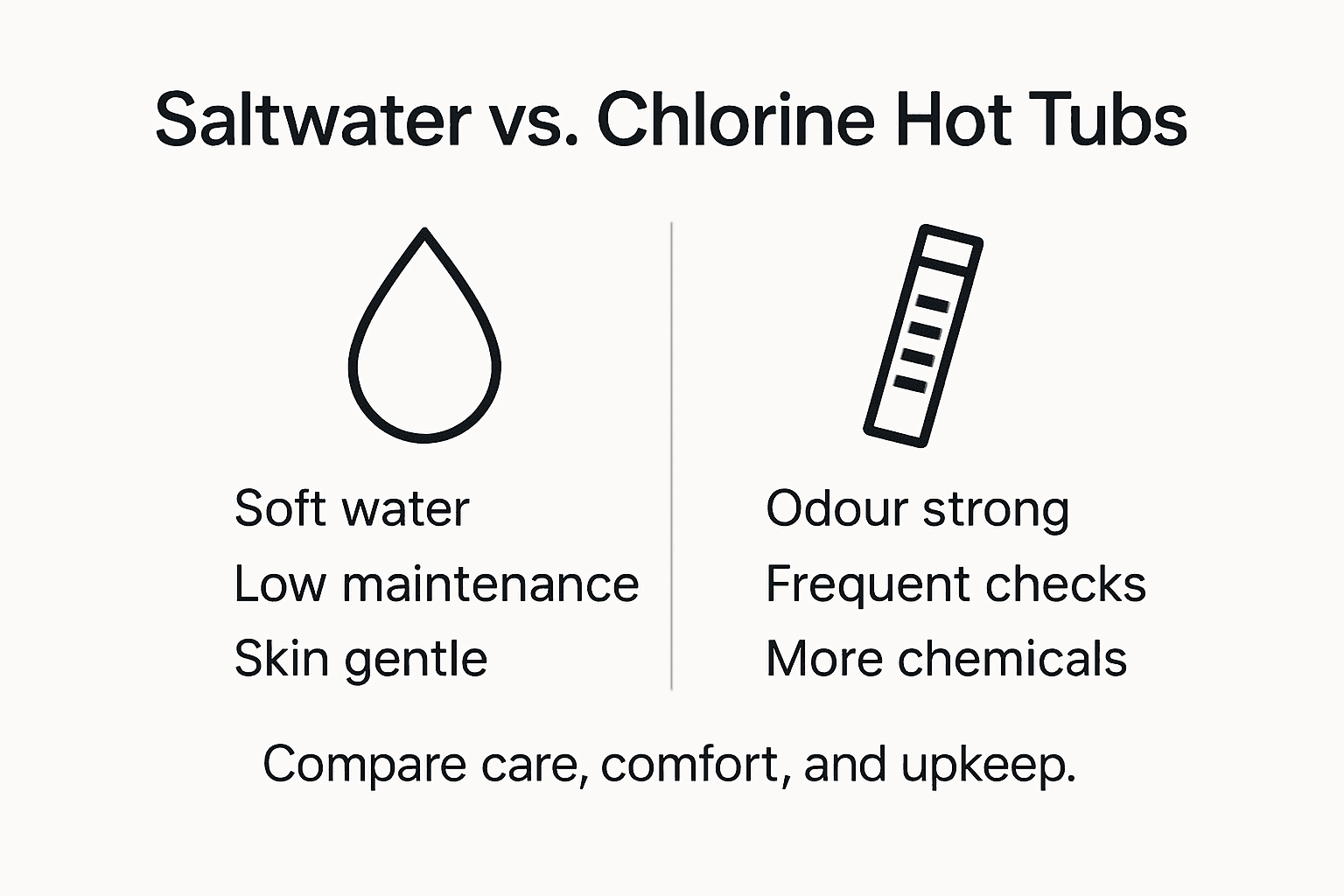
Here is a quick comparison of saltwater, traditional chlorine and mineral hot tub systems:
| System Type | Main Sanitising Method | Typical Maintenance Level | Skin Sensitivity Impact |
|---|---|---|---|
| Saltwater | Electrolytic chlorine | Low (automated generation) | Reduced irritation risk |
| Traditional Chlorine | Manual chemical addition | Moderate to high (frequent) | Higher irritation possible |
| Advanced Mineral System | Mineral ionisation, UV, etc. | Low to moderate (blended tech) | Minimal irritation, very gentle |
Pro tip: Consider consulting a professional spa technician for a personalised assessment of whether a saltwater hot tub system suits your specific home and lifestyle requirements.
The types and technology behind them
Saltwater hot tub systems come in a few distinct forms, each with its own way of sanitising and maintaining the water. The main categories are chlorine generation systems, which use electrolysis to turn salt into chlorine, and more advanced mineral-based sanitisation technologies that bring several purification methods together.
Spa-pool systems vary significantly in their design and operational technologies, with clear differences between domestic and commercial setups. Home saltwater hot tubs usually have smaller electrolytic chlorine generators that make sanitiser through a low-voltage electrical process, while commercial systems often use tougher multi-stage filtration and sanitising.
The core technologies fall into three main types: traditional salt chlorine generators, advanced mineral sanitisation systems and hybrid setups that combine salt generation with extra purification. Each has its strengths, with salt chlorine generators giving steady chlorine production, mineral systems cutting the reliance on chemicals, and hybrids offering all-round treatment.
Key technological components across these systems include:
- Electrolytic cell for chlorine generation
- Salt sensor and concentration monitoring
- Advanced water flow control mechanisms
- Integrated pH and alkalinity balancing systems
Pro tip: Consult with a professional hot tub technician to determine which saltwater system technology best matches your specific water quality requirements and maintenance preferences.
How saltwater sanitising really works
Saltwater sanitising is a clever treatment process that turns ordinary salt into an effective sanitiser through a precise electrolytic mechanism. The system relies on an electrolytic cell, which uses a low-voltage electrical current to break down salt (sodium chloride) molecules, making natural chlorine that clears harmful microorganisms from the water.

Chlorine-based sanitisation works by systematically destroying harmful microorganisms through a controlled chemical process. The electrolysis makes free chlorine that goes after and neutralises bacteria, viruses and other dangerous pathogens. This gives continuous purification without frequent manual dosing, keeping the water quality and hygiene steady.
The core sanitising process runs through several key stages:
- Salt conversion through electrolytic cell
- Chlorine generation via electrical current
- Continuous water circulation and filtration
- Automatic monitoring of chlorine concentration
- pH level regulation and balance maintenance
On top of that, many advanced saltwater systems add extra technologies such as UV disinfection and mineral purification to strengthen the treatment. These layered approaches give several lines of protection, cut the reliance on chemicals and lift the overall water quality.
Pro tip: Regularly test your saltwater hot tub's salt levels and chlorine concentration to maintain optimal sanitisation performance and prevent potential water treatment issues.
Health and upkeep benefits for UK homes
Saltwater hot tubs bring real health and upkeep advantages that suit UK homeowners after a more refined soak. A well-kept system offers genuine therapeutic benefits while keeping chemical exposure low, making it a strong alternative to traditional chlorinated tubs.
The health benefits reach well beyond simple water treatment. These systems offer hydrotherapy that helps ease muscle tension, improve circulation and encourage relaxation. By making chlorine through natural electrolysis, saltwater hot tubs reduce the skin and eye irritation that often comes with traditional treatments, which is especially good for anyone with sensitive skin or allergies.
Upkeep advantages for UK homes include:
- Reduced chemical storage requirements
- Lower ongoing chemical purchasing costs
- Simplified water treatment processes
- Minimised risk of chemical handling accidents
- More consistent water quality management
In practical terms, saltwater systems steady the water chemistry more effectively, needing fewer interventions and giving a more stable, comfortable tub. This not only makes home upkeep simpler but also fits a more environmentally aware, health-focused approach to wellness for British households.
Pro tip: Invest in a professional water testing kit specifically designed for saltwater systems to ensure optimal performance and maintain your hot tub's health benefits.
Safety rules, risks, and running costs
Legal compliance matters a great deal for UK owners, with strict rules covering spa pool safety and how they run. Health and safety requirements mandate comprehensive risk assessments and operational guidelines to head off health hazards and protect users.
In particular, preventing Legionnaires' disease is a key part of hot tub safety rules, calling for careful water treatment and routine monitoring. Saltwater owners need a systematic approach to water management, including:
- Regular water quality testing
- Maintaining appropriate chemical balance
- Implementing effective filtration protocols
- Documenting maintenance procedures
- Ensuring proper system sanitisation
Running costs for saltwater hot tubs usually fall between £300 and £800 a year, taking in electricity, salt replacement, water treatment chemicals and maintenance. The figure varies with how often you use it, how complex the system is and local energy prices. The upfront cost may be higher than a traditional chlorine system, but the long-term savings come through buying fewer chemicals and more efficient treatment.
Owners should also think about potential legal liabilities, arranging good insurance cover and following the manufacturer's guidance to reduce the risks that come with owning and running a hot tub.
The table below sums up the key running costs and legal points for UK saltwater hot tubs:
| Cost/Compliance Aspect | Saltwater Hot Tub Estimate | Notes |
|---|---|---|
| Annual Running Cost | £300-£800 | Includes energy, salt, maintenance |
| Chemical Purchasing Cost | Lower than chlorine systems | Fewer chemicals required overall |
| Legal Monitoring Required | Regular water testing | Essential for compliance and health |
| Legionella Risk Management | Mandatory | Routine management by UK law |
Pro tip: Consult a professional hot tub technician annually to conduct a comprehensive safety audit and ensure full compliance with current UK health and safety regulations.
Saltwater against chlorine alternatives
Chlorine treatment methods have long led the way in hot tub water care, but saltwater systems are quickly reshaping how British households look after their spas. Saltwater chlorination offers a more environmentally responsible alternative to traditional chemical treatments, giving a refined approach to sanitising that keeps harsh chemical interactions to a minimum.
The basic difference lies in how the chemical is made. Traditional chlorine systems need tablets or liquids added by hand, whereas saltwater hot tubs generate chlorine through electrolysis, creating a steadier, more controlled result. Stainless steel components in saltwater systems must be carefully selected to withstand the saline environment, which brings engineering considerations you would not have with a standard chlorine pool.
The key points to compare include:
- Chemical handling requirements
- User skin and eye sensitivity
- Ongoing maintenance complexity
- Environmental impact
- Long-term operational costs
Saltwater systems tend to come out on top across these points, with less chemical storage, gentler treatment and steadier sanitising levels. The upfront cost might be a touch higher, but the long-term gains include lower chemical bills, less skin irritation and more consistent water quality.
Pro tip: Request a professional water analysis before transitioning between chlorine and saltwater systems to ensure optimal compatibility with your existing hot tub infrastructure.
Easier, Healthier Hot Tub Care with Zagosa Spa & Pool
Keeping a saltwater hot tub in perfect balance can feel daunting with all the technical terms like electrolytic cell, chlorine generation and pH regulation. If you want to avoid skin irritation, cut down on chemical handling and enjoy steady water quality, Zagosa Spa & Pool has solutions to suit. Our quality water treatment products are made to simplify your saltwater upkeep and keep your soak safe and relaxing.

Take charge of your hot tub care today. Visit Zagosa Spa & Pool to browse our carefully tested range of hot tub chemicals and spa essentials. With Zagosa Spa & Pool, you get expert-backed products that cut your upkeep time and support your wellness. Do not wait to build the healthier, easier spa routine your home deserves.
Frequently Asked Questions
What are the main benefits over chlorine systems?
Saltwater hot tubs bring several benefits, including less skin and eye irritation, steadier water quality and lower ongoing chemical bills. They also generate chlorine automatically, which simplifies upkeep.
How does the sanitising process work?
Saltwater hot tubs use an electrolytic cell to turn salt into chlorine through electrolysis. This gives a continuous supply of chlorine that sanitises the water without frequent manual dosing.
Are there health risks with saltwater hot tubs?
Saltwater hot tubs generally carry fewer risks thanks to lower chemical exposure, but good water management and hygiene remain vital. Owners must test the water regularly to prevent issues such as Legionnaires' disease, as safety rules require.
What upkeep does a saltwater hot tub need?
Saltwater hot tubs need low to moderate upkeep, mainly regular water testing, keeping an eye on salt and chlorine levels and ensuring good filtration. The automated system makes it simpler than a traditional chlorine tub.