By The Zagosa Team. Published .
Reviewed or updated .
Fresh hot tub water takes more than a scoop of chemicals and a bit of hope. Every UK owner learns sooner or later that one skipped clean or a tired filter can turn a relaxing soak into a hygiene worry. The S1 filter is the strongest guard your tub has, pairing mechanical filtration with biological support to physically catch bacteria, debris and microbes so the water stays clearer and safer for everyone.
Table of Contents
- What An S1 Filter Is And The Job It Does
- The Two Filtration Methods Working Together
- Keeping Your Spa Water Clean With An S1
- Cleaning, Life Span And When To Replace
- Heading Off The Usual S1 Filter Problems
Key Takeaways
| Point | Details |
|---|---|
| Essential Filtration Role | S1 filters are crucial for maintaining safe, clean hot tub water, removing debris, bacteria, and supporting chemical disinfection. |
| Regular Maintenance Required | Clean and replace your S1 filter every 2-4 weeks to prevent clogging and ensure optimal water quality. |
| Biological and Mechanical Filtration | The combination of mechanical and biological filtration in S1 filters enhances water quality beyond chemical treatment alone. |
| Preventive Measures are Key | Maintaining proper water chemistry and avoiding common mistakes can prevent filter complications and ensure consistent performance. |
What An S1 Filter Is And The Job It Does
S1 filters are cartridge-style filters made specifically for hot tubs and spa pools. The "S1" label is a standard filter classification used across the UK for spa systems. These cartridges sit at the heart of your whole water treatment approach.
Picture the S1 as your tub's front-line guard. It catches debris, shed skin cells and stray particles before they cause trouble. Without solid filtration, the water quickly becomes a home for contaminants.
An S1 works by pairing mechanical filtration with biological support. The mechanical side snares visible particles, while the media itself gives beneficial bacteria a surface to settle on. Together this dual action keeps water cleaner than chemicals could ever manage alone.
Spa pools are recognised sources of infectious disease risks, which is exactly why filtration counts for so much. Your S1 traps pathogens and microbes physically in the media, easing the load on your chemical sanitiser.
The main jobs an S1 filter handles are:
- Removing suspended particles and debris from circulation
- Trapping bacteria and microorganisms before they proliferate
- Supporting the overall chemical disinfection process
- Improving water clarity and appearance
- Reducing strain on your pump and pipework
Most UK owners have no idea how hard their filter works. A clean S1 pulls out particles down to 20 microns or smaller, roughly one fiftieth the width of a human hair.
Your S1 filter is not optional - it’s the backbone of safe, clean hot tub water.
Filters function to trap particles and microbes, backing up your chemical system and holding back bacterial growth. As a filter clogs, circulation slows and contaminants gather faster, which is precisely why steady cleaning and timely replacement matter so much.
S1 cartridges come in a range of sizes to suit different hot tub models. Check your manual or the old cartridge for the right fit before you buy, because a filter that does not seat properly lets water bypass the media entirely.
| Filter Type | Filtration Level | Maintenance | Home Spa Suitability |
|---|---|---|---|
| S1 Pleated Cartridge | Removes particles to 20 microns | Low-medium (monthly cleaning) | Highly suitable (most common) |
| Sand Filter | Removes particles to 30-40 microns | Medium (backwashing required) | Occasional (mainly pools) |
| Ceramic Disc | Removes particles to 5-15 microns | Low (rinse when dirty) | Rarely used (costly for homes) |
| Foam Filter | Removes particles to 40-60 microns | High (frequent cleaning needed) | Temporary/portable spa models |
Pro tip: Check your S1 filter monthly - if it feels rigid or has visible dirt buildup, schedule a clean or replacement to maintain optimal water quality and circulation.
The Two Filtration Methods Working Together
An S1 filter runs two filtration methods side by side to keep water safe. Mechanical filtration clears visible debris, while biological filtration breaks down harmful organic compounds. Plenty of UK owners never realise both matter just as much as each other.
Mechanical filtration removes solid debris by pushing water through media such as foam or pleated cartridges. It works like a sieve, catching anything larger than the media's pores. The pleated design of an S1 packs in surface area, so it grabs debris far better than a flat sheet would.
Biological filtration is the clever part. Beneficial bacteria settle into the media and digest ammonia and organic waste, turning harmful compounds into gentler substances and improving water quality naturally alongside your chemicals.
The sequence runs like this:
- Mechanical stage catches particles and debris first
- Water flows through beneficial bacteria colonies
- Bacteria metabolise harmful organic compounds
- Cleaner water returns to your hot tub
- Both methods support each other for optimal results
Pressure filters operate under feed pressure, which is exactly how an S1 system runs. The pump drives water through the cartridge under pressure, capturing particles efficiently, and it does this far better than a gravity-fed system would in a hot tub.
Most S1 filters use pleated cartridge media made from polyester or a similar synthetic. Those pleats hugely increase the surface available for both trapping particles and hosting bacteria, so a single cartridge can offer the equivalent of several metres of flat material.
Water flows inward from outside the pleats, driving particles deeper into the media. Smaller particles travel further before they lodge, which creates layers of different filtration efficiency across the cartridge.
Both mechanical and biological filtration matter equally - skip one, and your water quality suffers.
An S1 typically removes particles down to 20 microns. For comparison, a human hair is around 75 microns thick, so this level of mechanical filtration heads off most visible cloudiness and debris.
The biological side builds up over time. On a fresh fill there are no beneficial bacteria present, but within days to weeks they colonise the media naturally, steadily lifting water quality beyond what chemicals alone deliver.
Water temperature shapes both processes. Warmer water speeds biological activity but also encourages bacterial growth, which is why holding correct sanitiser levels stays essential even with excellent filtration.
Getting to grips with how different filter types work helps you see why the S1 remains the sensible choice for home systems. Its dual action gives reliable, low-fuss purification.
Pro tip: Allow your S1 filter 3-4 weeks to develop beneficial bacteria colonies before hosting guests - this significantly improves water clarity and reduces chlorine demand.
Keeping Your Spa Water Clean With An S1
Your S1 filter is the workhorse that keeps spa water safe and clear. It actively stops dangerous microorganisms multiplying while holding the conditions your chemicals need to do their job. Without it, even first-rate chemical treatment falls short.
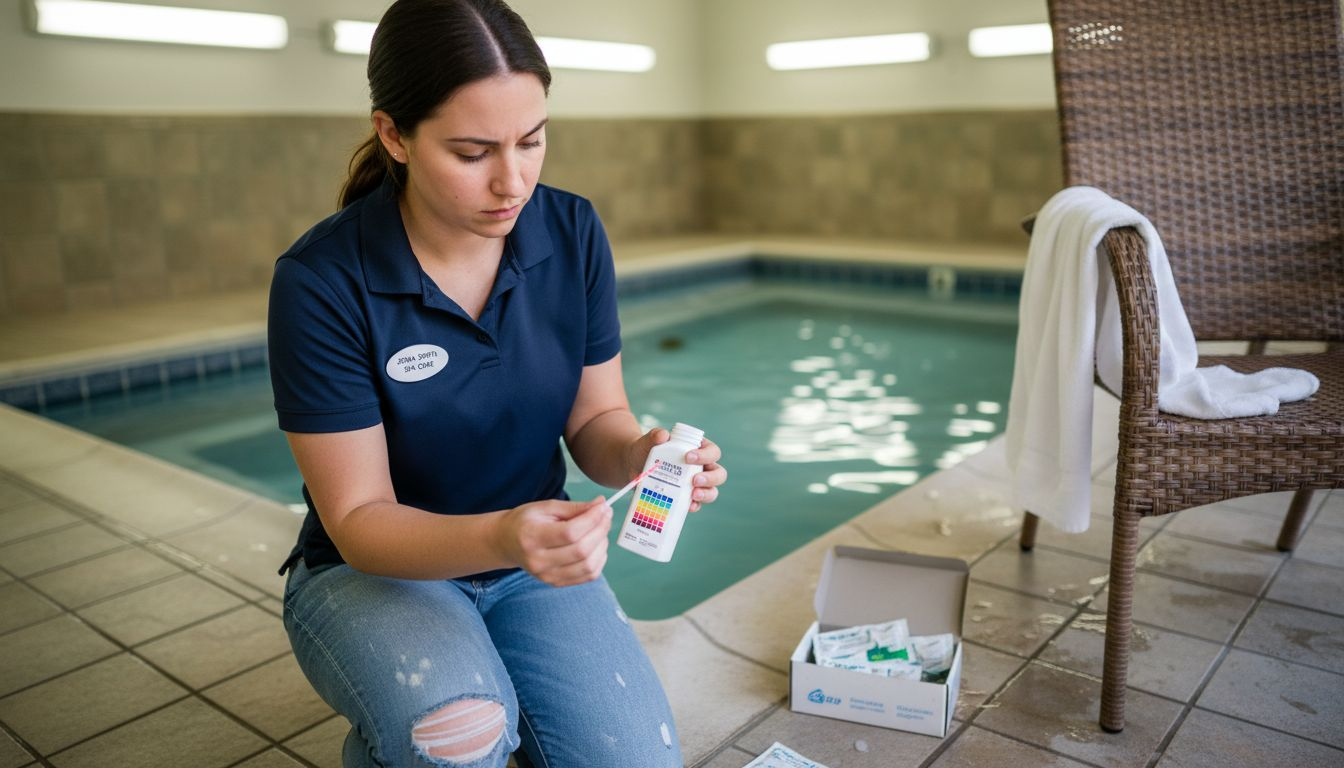
Regular maintenance and appropriate filtration are essential for holding back legionella and keeping water microbiologically safe. Your S1 traps the particulate matter that would otherwise become a breeding ground for harmful bacteria, and that mechanical action directly cuts the microbial load your disinfectants must deal with.
Here is how an S1 filter keeps water quality up:
- Removes suspended particles before they cloud your water
- Traps organic matter that bacteria would metabolise
- Reduces the workload on your chemical sanitisers
- Creates conditions where beneficial bacteria thrive
- Prevents biofilm formation on pipework and jets
Once a filter clogs, circulation drops straight away. Stagnant pockets form quicker and contaminants collect in dead zones, so filter condition feeds directly into water quality.
Filter media must be regularly cleaned or replaced in line with best practice to prevent fouling and keep treatment consistent. A clogged S1 loses its mechanical edge first, then its biological effectiveness, so you lose both at once.
Your chemicals work harder when the filter clogs. Chlorine or bromine ends up fighting bacteria a clean filter would already have removed, which strains your balance and often leaves water looking poor despite correct sanitiser readings.
A clean filter is worth more than additional chemicals - prevention beats treatment every time.
The biological side of an S1 keeps lifting water quality over time. Beneficial bacteria break down ammonia and organic compounds your chemicals cannot touch, which lowers total chemical demand and reduces both cost and irritation.
Temperature stability matters too. When circulation slows through fouling, the tub struggles to hold a steady temperature, the pump works harder, chemicals spread unevenly, and cold spots appear.
Checking filter condition is easy. Read the pressure gauge on the housing weekly, and rising pressure means debris is building up and a clean is due. Most S1 filters reach that point every 2-4 weeks depending on use.
Clarity gives you another clue. If the water looks slightly hazy despite correct chlorine readings, the filter likely needs attention. Genuinely clear water tells you the mechanical and chemical sides are pulling together.
Proper spa maintenance treats regular filter checks and cleaning as a core task. That single habit prevents the vast majority of water quality problems UK owners run into.
Pro tip: Clean your S1 filter when pressure rises 0.5 bar above baseline - don’t wait for maximum pressure readings, as early cleaning prevents efficiency loss and extends cartridge lifespan.
Cleaning, Life Span And When To Replace
Keeping the S1 clean is the single most valuable maintenance job you can do. A clean filter holds clarity, cuts chemical demand and heads off system failures, yet most UK owners neglect it until a problem forces their hand.
Clean your S1 when pressure climbs 0.5 bar above your baseline reading. Do not wait for the maximum, because early action protects efficiency. Most cartridges need cleaning every 2-4 weeks depending on bather load and debris.
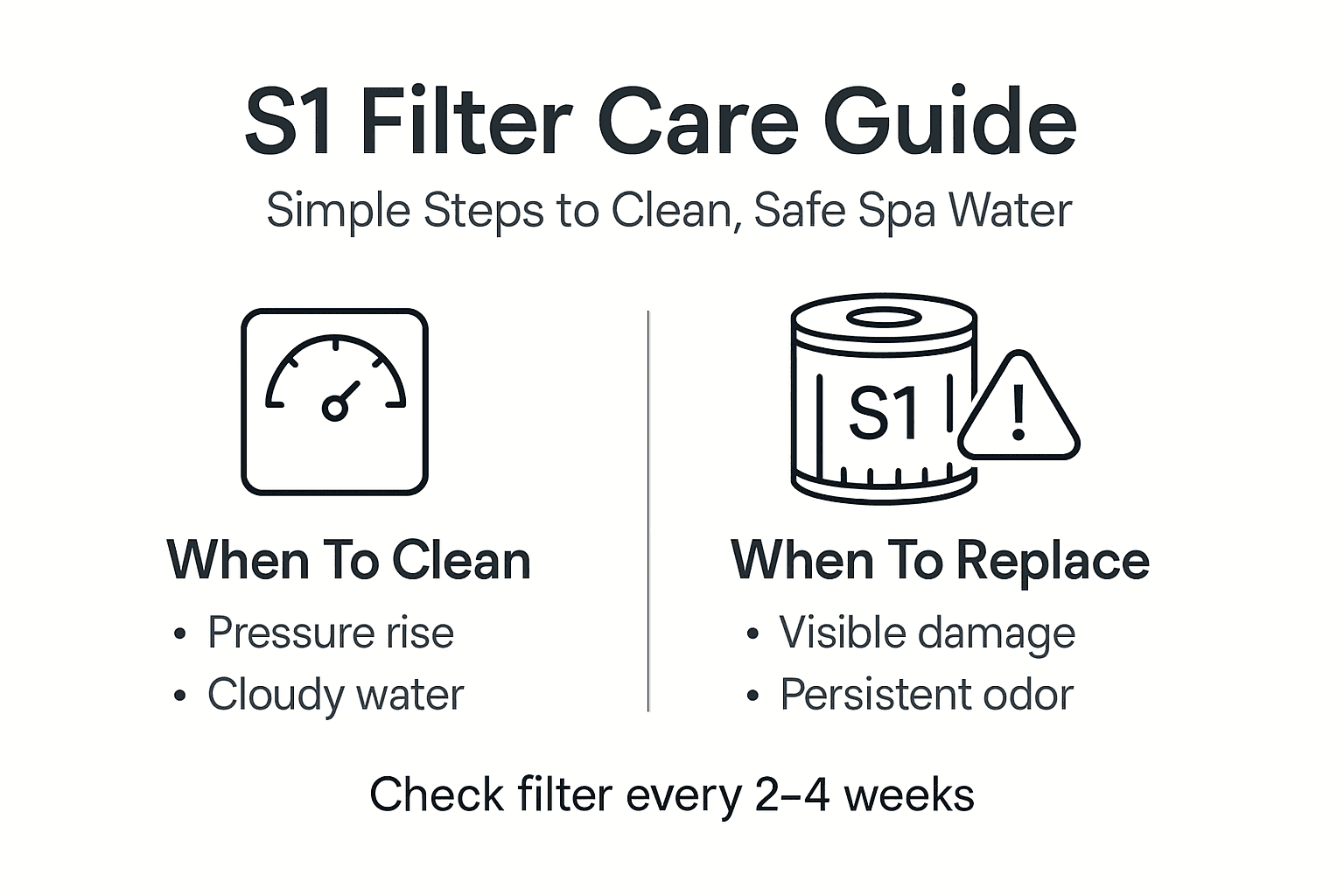
Routine cleaning and appropriate replacement keep biological fouling in check, since fouling drags down both efficiency and life span. Proper cleaning strips out accumulated debris, dead bacteria and chemical residue that degrade performance, and keeping a record of it helps hold water quality steady.
The S1 cleaning process runs as follows:
- Turn off your pump system completely
- Access your filter housing and remove the cartridge carefully
- Rinse with clean water from a hose, working top to bottom
- Use a filter cleaning solution for stubborn buildup
- Inspect for tears or damage before reinstalling
- Replace the cartridge if damage is visible
Never take a pressure washer to an S1 cartridge. High-pressure water wrecks the pleated media and ruins the filter. A garden hose at ordinary pressure does the job perfectly.
Clean filters cost nothing; replacing damaged ones costs £40-80 - prevention wins every time.
Documented cleaning procedures ensure removal of microbial and chemical residues. Keep a note of your cleaning dates and what condition the filter was in. That simple log helps you spot patterns and plan replacements before anything fails.
An S1 filter usually lasts 12-18 months with good care. Life span depends on use, water chemistry and how often you clean, and heavy use or poor balance shortens it noticeably.
Replace your filter when:
- The pleats show visible tears or damage
- Pressure stays high even after cleaning
- Water clarity doesn’t improve after cleaning
- The cartridge has reached 18 months old
- Visible mould or discolouration appears
Do not push a failing filter on. A damaged S1 lets debris bypass filtration and spread problems through the system, and bypass water damages your pump and jets.
For quick reference, here is a guide to troubleshooting S1 filter performance issues:
| Symptom | Likely Cause | Suggested Action |
|---|---|---|
| Cloudy water | Dirty or clogged filter | Rinse with hose, deep clean or replace |
| High pressure reading | Excessive debris/biofilm | Thorough cleaning, inspect pleats |
| Rapid chlorine loss | Biological contaminant build-up | Disinfect filter and check spa water |
| Reduced water flow | Blocked cartridge/pipework | Remove cartridge, check for obstructions |
| Persistent odours | Filter fouling/bacterial issue | Clean filter, check water balance |
Winter storage affects life span too. Store the filter somewhere cool and dry if the tub sits unused for months, and never store it wet, because that invites mould that ruins the media.
Order a replacement cartridge before the current one gives out. Keeping a spare means zero downtime when the moment comes, and most UK suppliers stock S1 cartridges for quick delivery.
Pro tip: Take photos of your filter pressure gauge reading after cleaning - this establishes your baseline, making it easy to spot when pressure has risen enough to warrant your next clean.
Heading Off The Usual S1 Filter Problems
Most S1 filter problems are avoidable with a little knowledge and steady maintenance. Knowing what tends to go wrong lets you catch trouble before it turns expensive, and UK owners often repeat the same mistakes without realising.
Biofilm buildup is the sneakiest of them. This slimy bacterial layer grows inside the pleats, throttling flow and sheltering pathogens. You cannot see it forming, but the pressure gauge gives it away.
Biofilm develops when:
- You skip regular filter cleaning
- Water temperature drops below 38°C
- Chlorine or bromine levels fall too low
- Dead organic matter accumulates in the filter
Balanced water is your best defence against biofilm. Hold sanitiser at the correct level and clean the filter on schedule, and the slime never gets a foothold. If you suspect it has, soak the cartridge in a dedicated filter cleaner overnight and rinse thoroughly.
Chemical damage is another common own goal. Pouring undiluted chemicals straight onto the filter, or letting pH drift far out of range, degrades the media prematurely. Always pre-dissolve chemicals where the instructions say so, and keep pH between 7.2 and 7.8 to protect the cartridge.
Fitting the wrong cartridge causes endless grief too. A filter that does not seat correctly lets unfiltered water slip past, so the water never fully clears no matter how often you clean. Match the part number to your tub every time.
Following a proper maintenance routine prevents almost all of these issues. Consistency beats reaction, and a few minutes each week saves hours of cloudy-water troubleshooting later.
Pro tip: If chlorine vanishes overnight even after a clean, disinfect the filter itself - biofilm inside the pleats keeps consuming sanitiser until you kill it off completely.
Keep Your Spa Water Safe With Zagosa Spa & Pool
Reliable filtration and steady chemistry go hand in hand, and Zagosa Spa & Pool supplies both the S1 replacement cartridges and the water treatment products to back them up. Everything is tested for UK water conditions so you get clear water with less effort.

Pair a fresh S1 cartridge with our tested hot tub chemicals from Zagosa Spa & Pool and keep your filtration doing its job all year. Visit us today and take the guesswork out of clean, safe spa water.
Frequently Asked Questions
What is an S1 hot tub filter?
An S1 filter is a pleated cartridge filter classified for UK spa systems. It combines mechanical filtration, trapping particles down to around 20 microns, with biological support that helps break down organic waste, keeping your hot tub water clean and safe.
How often should I clean my S1 filter?
Clean your S1 filter every 2 to 4 weeks, or whenever the housing pressure rises about 0.5 bar above your clean baseline. Rinse with a garden hose and deep clean with a filter solution monthly for best results.
When should I replace an S1 filter?
Replace your S1 filter every 12 to 18 months, or sooner if you see torn pleats, mould, persistent high pressure after cleaning, or water that will not clear. Keeping a spare cartridge on hand avoids any downtime.
Can I pressure wash my S1 filter?
No. High-pressure washing tears the pleated media and ruins the cartridge. Always rinse with a standard garden hose at moderate pressure, working top to bottom between the pleats to dislodge trapped debris.