By The Zagosa Team. Published .
Reviewed or updated .
A dip in the pool should be a treat, not a battle with sore eyes or corroding fittings. For a lot of UK pool owners, low pH is one of those things that feels murky, particularly once the water turns acidic and starts causing more grief than it is worth. Getting a handle on your pH levels is what keeps corrosion at bay and swimming safe for everyone, so every dip stays worry-free.
Table of Contents
- What Low Pool pH Actually Means
- What Pushes Pool pH Down
- The Toll On Swimmers And Equipment
- Testing For Low pH The Right Way
- Bringing pH Back Up Safely
Key Takeaways
| Point | Details |
|---|---|
| pH Levels are Crucial | Maintaining pH levels between 7.2 and 7.8 is essential to prevent water from becoming corrosive and to protect both pool equipment and swimmers. |
| Regular Testing is Necessary | Consistent monitoring using reliable testing methods is vital to identify and correct pH imbalances promptly. |
| Impact on Swimmers and Equipment | Low pH can lead to skin irritation for swimmers and accelerated corrosion of metal components, necessitating proactive management. |
| Effective Solutions for pH Correction | Strategies like using sodium carbonate or aeration can effectively raise pH levels, but they must be applied carefully to avoid overcorrection. |
What Low Pool pH Actually Means
A pool relies on a fine chemical balance, and pH levels sit right at the heart of it. When we talk about low pH, we simply mean water that has turned acidic, dropping below the ideal 7.2 to 7.8 band on the pH measurement scale.
Knowing what pH is doing matters for upkeep. A low reading means more acidity, and that sets off a run of unwanted reactions. The tell-tale signs of acidic pool water are:
- Increased corrosiveness towards pool equipment
- Potential damage to pool surfaces and liner materials
- Higher risk of skin and eye irritation for swimmers
- Reduced effectiveness of chlorine and other sanitising chemicals
The knock-on effects go well beyond chemistry on paper. Acidic water can cause real structural and mechanical trouble that hits both the pool itself and the people using it.
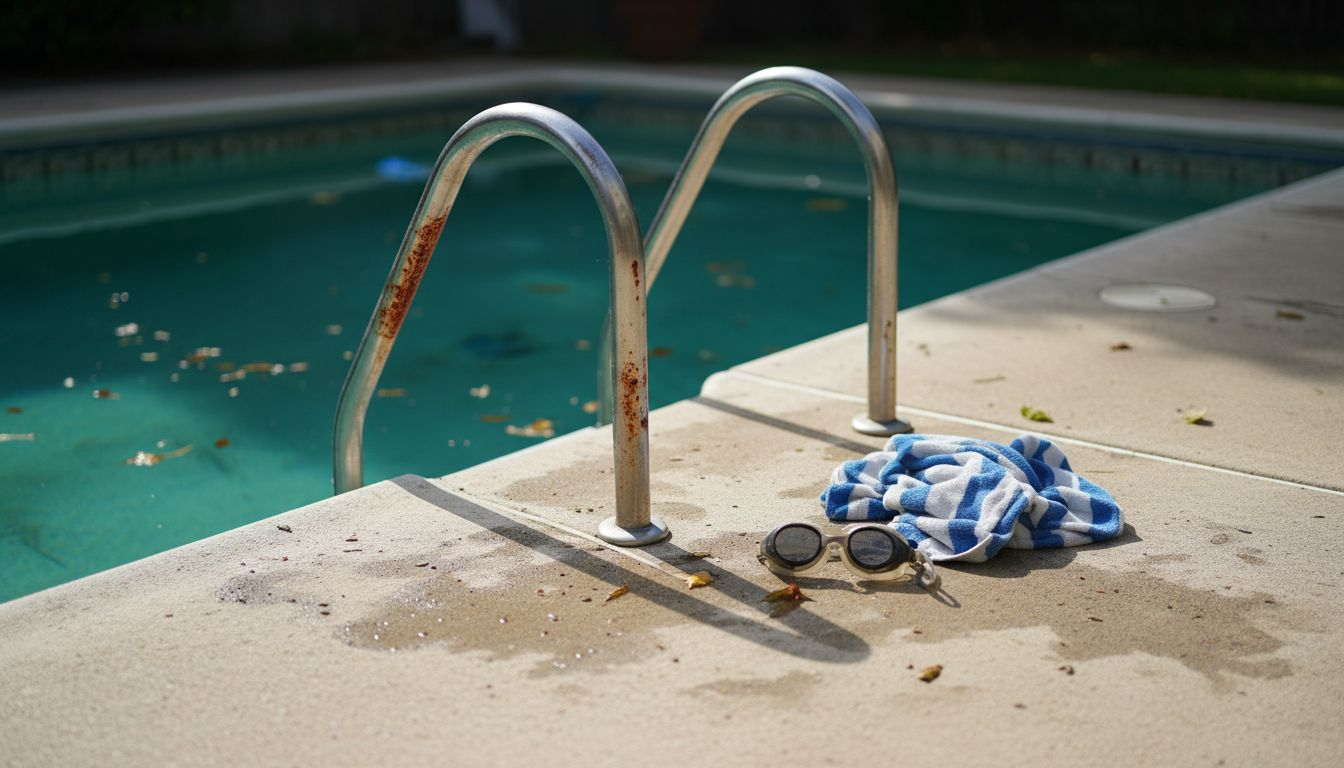
Where pH stays low, metal parts such as ladders, filters and heaters corrode fast. That not only ruins costly equipment but leaches metals into the water, throwing the balance out further still.
Low pH water acts like a chemical solvent, gradually breaking down pool materials and creating potential health risks for swimmers.
Pro tip: Regularly test your pool water using reliable pH testing strips and aim to maintain pH levels between 7.2 and 7.8 to prevent potential damage and ensure optimal swimming conditions.
What Pushes Pool pH Down
To keep the chemistry right, it helps to know what drags pH lower in the first place. Pool water chemistry disruptions come from several directions, each nudging the water towards acidity.
The usual culprits behind a falling pH are:
- Excessive rainfall introducing acidic environmental contaminants
- Frequent use of chlorine-based sanitising agents
- High levels of dissolved carbon dioxide
- Improper chemical balancing during maintenance
- Organic debris and swimmer contamination
- Incorrect chemical dosage during water treatment
Chemistry itself does a lot of the damage. Chlorine sanitisers are vital for hygiene, yet their acidic nature slowly drags pH down. It pays to remember that everything you add to the water tips the balance one way or another.
The environment plays its part too. Water pollution sources such as nearby runoff, rotting organic matter and the surrounding air can all introduce acidic compounds that lower your pool's pH.
Consistent monitoring and proactive chemical management are crucial for maintaining optimal pool water chemistry.
Pro tip: Invest in a reliable digital pH testing kit and conduct weekly water chemistry checks to catch and correct pH imbalances before they become significant problems.
The Toll On Swimmers And Equipment
The fallout from low pH runs a lot deeper than the water chemistry, reaching both the comfort of swimmers and the machinery keeping the pool running. Acidic water is bad news for people and kit alike.
For swimmers, the effects are worth taking seriously:
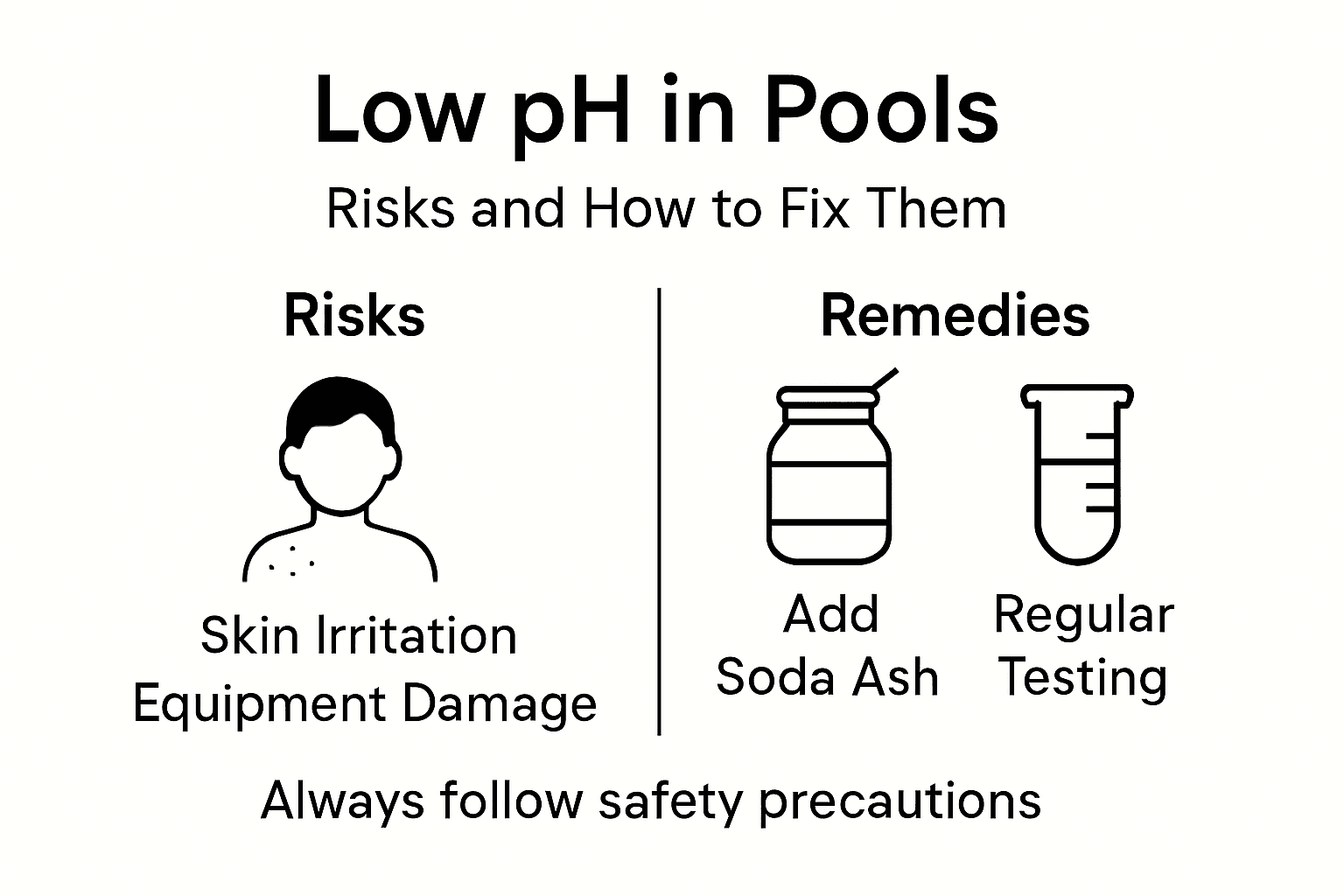
- Increased skin irritation and potential dermatological reactions
- Heightened risk of eye inflammation and discomfort
- Potential compromise of natural skin barrier protection
- Increased vulnerability to chlorine-related sensitivities
- Higher likelihood of experiencing itching and dryness
The mechanical side fares no better. Metal fittings, pumps, filters and heaters all become prone to faster corrosion and can fail before their time. Metallic components are the most at risk, with acidic water steadily eating through protective coatings and weakening the parts underneath.
Swimming pool water conditions can slide from an asset to a hazard once pH stays stubbornly below the safe range. The damage builds up bit by bit, often unnoticed until a big repair or replacement is staring you in the face.

Low pH water acts as a silent destroyer, gradually compromising both human comfort and mechanical infrastructure.
Pro tip: Implement a comprehensive monthly inspection routine that includes pH testing, equipment evaluation, and proactive maintenance to mitigate potential long-term damage caused by acidic water conditions.
Testing For Low pH The Right Way
Pool water testing techniques are the backbone of a safe, comfortable pool. Reading pH accurately comes down to a careful approach and the right kit.
You have a few ways to check your water safely:
- Digital pH metre testing
- Liquid reagent test kits
- Colour-changing test strips
- Electronic handheld testing devices
- Professional laboratory water analysis
Each method has its place when it comes to spotting pH level variations. Digital metres give you precise numbers, while colour-changing strips are quick and visual. Plenty of pool managers use more than one method to cross-check results and be sure of the picture.
Here is how the common testing methods stack up:
| Testing Method | Accuracy Level | Speed of Results | Typical Cost |
|---|---|---|---|
| Digital pH metre | High, precise reading | Moderate | Higher initial price |
| Liquid reagent kit | Reliable, colour-based | Moderate | Low ongoing cost |
| Colour-changing test strips | Moderate, easy to use | Fast | Affordable packs |
| Electronic handheld device | High, portable | Fast | Moderate to high |
| Laboratory analysis | Highest professional | Slowest | Premium per test |
Water quality testing protocols call for careful handling and sensible reading of the results. Doing it well means knowing the standard colour charts, keeping your kit in good order, and understanding your readings against the recommended safe ranges.
Consistent and accurate pH testing is the first line of defence in maintaining a safe swimming environment.
Pro tip: Calibrate your pH testing equipment regularly and store test strips in a cool, dry environment to maintain their accuracy and reliability.
Bringing pH Back Up Safely
Restoring pH takes a considered, precise approach rather than a quick tip-in. Knowing the correct way to raise it is what keeps the pool safe and comfortable to swim in.
The methods that reliably lift pool pH include:
- Adding sodium carbonate (soda ash)
- Introducing sodium bicarbonate
- Using specialised pH increasing chemicals
- Implementing proper aeration techniques
- Reducing carbon dioxide levels in the water
- Balancing total alkalinity
Raising pH is a job for careful maths and a gradual hand. Chemical dosage is the thing that keeps you from overshooting, which only creates fresh problems. The sound advice is to add alkaline products a little at a time and retest after each step.
Here is a quick look at the main methods and what to expect from each:
| Method | Speed of Effect | Risk if Overused |
|---|---|---|
| Sodium carbonate | Rapid | Alkalinity imbalance |
| Sodium bicarbonate | Gradual | Cloudy water |
| Aeration technique | Slow | Minimal risk |
| Specialist chemicals | Rapid | Safety precautions |
Swimming pool water treatment is really about understanding how the different chemicals play off one another. Sodium carbonate stays the go-to for raising pH, typically lifting it by 0.2 to 0.3 units per recommended dose.
Precise and measured chemical interventions are key to maintaining optimal pool water chemistry.
Pro tip: Always add chemicals to water, not water to chemicals, and wear protective equipment during pool maintenance to ensure personal safety and accurate treatment.
Restore Perfect Pool pH with Trusted Solutions from Zagosa Spa & Pool
Keeping pH in balance is what protects your equipment and keeps swimmers comfortable. As we have seen, low pH turns the water corrosive, chews through metal parts and stings skin and eyes. What you need are water treatment products that raise pH safely without upsetting the wider chemical balance. Zagosa Spa & Pool offers a full range of carefully tested chemicals from a Zagosa Ltd Brand focused on your pool and hot tub.

Take charge of your pool chemistry today with quality hot tub and pool chemicals from Zagosa Spa & Pool. Enjoy the reassurance of trusted products made to stop equipment corrosion, ease swimmer discomfort and keep the water sparkling. Do not wait for the damage to show. Visit Zagosa Spa & Pool now and find safe, effective solutions that keep your pool water perfectly balanced.
Frequently Asked Questions
What does a lower pH level in pools indicate?
A lower pH level in pools indicates that the water has become more acidic, falling below the ideal range of 7.2 to 7.8. This increased acidity can lead to several issues, including corrosion of pool equipment and irritation for swimmers.
What causes low pH levels in swimming pools?
Low pH levels can be caused by factors such as excessive rainfall, the frequent use of chlorine-based sanitising agents, high levels of dissolved carbon dioxide, improper chemical balancing, and organic debris contamination.
How can I safely test the pH levels of my pool water?
You can test the pH levels of your pool water using various methods, including digital pH metres, liquid reagent test kits, colour-changing test strips, electronic handheld testing devices, and professional laboratory analysis. Each method has its advantages regarding accuracy and speed of results.
What are effective solutions to raise low pH levels in pool water?
Effective solutions for raising low pH levels include adding sodium carbonate (soda ash), sodium bicarbonate, or using specialised pH increasing chemicals. It's important to introduce these substances gradually and retest the water after each adjustment to prevent overcorrection.
Recommended
- What Pool Chemicals Do You Need for a Swimming Pool - Here's the top 5 things? - Zagosa Spa & Pool
- What is the most critical pool chemical? - Zagosa Spa & Pool
- pH & Alkalinity Reducer - Sodium Bisulphate - Zagosa Spa & Pool
- The Power of Chlorine: Ensuring Clean and Safe Pool Water - Zagosa Spa & Pool