By The Zagosa Team. Published .
Reviewed or updated .
A good share of hot tub owners admit they feel lost about water care in their first year. Safe water is about more than relaxation, it protects your skin, prevents equipment damage and keeps every soak worry-free. Whether you have a brand-new spa or an older one, learning to test, treat and monitor the chemistry gives you peace of mind and clear water every time.
Table of Contents
- Step 1: Check the state of your water
- Step 2: Work out which chemicals you need
- Step 3: Compare products and brands
- Step 4: Work out and apply the right dose
- Step 5: Check the water after treatment
Quick Summary
| Key Point | Explanation |
|---|---|
| 1. Test the water daily | Regular testing confirms every chemical level sits within a safe range for use. |
| 2. Use the right chemicals | Focus on sanitisers, pH balancers, alkalinity adjusters and shock treatments. |
| 3. Follow the dosing instructions | Accurate doses prevent chemistry problems and protect the equipment. |
| 4. Check the water after treating | Testing after treatment confirms the chemicals worked and the water is safe. |
| 5. Keep a testing log | Tracking results helps spot patterns and hold a steady, safe water environment. |
Step 1: Check the state of your water
Before you reach for any chemicals, you need to know where your water stands. According to Premier Hot Tubs, daily testing is important, especially for new owners, to keep an eye on key levels and keep the water safe.
Start with a reliable test kit. These usually measure key things like pH, total alkalinity, sanitiser level and mineral content. Take a sample from about 45 centimetres below the surface, away from the jets and skimmer. Dip the strip for the recommended time, usually 5 to 10 seconds, then compare the colours to the chart to read your current chemistry.
Quick tip: always wash your hands before handling strips and avoid touching the reactive pad. Testing in direct sunlight can throw off the colours, so pick a shaded spot for the most accurate reading. Once you know where the water stands, you are ready to move on to targeted treatments for clear water.
Step 2: Work out which chemicals you need
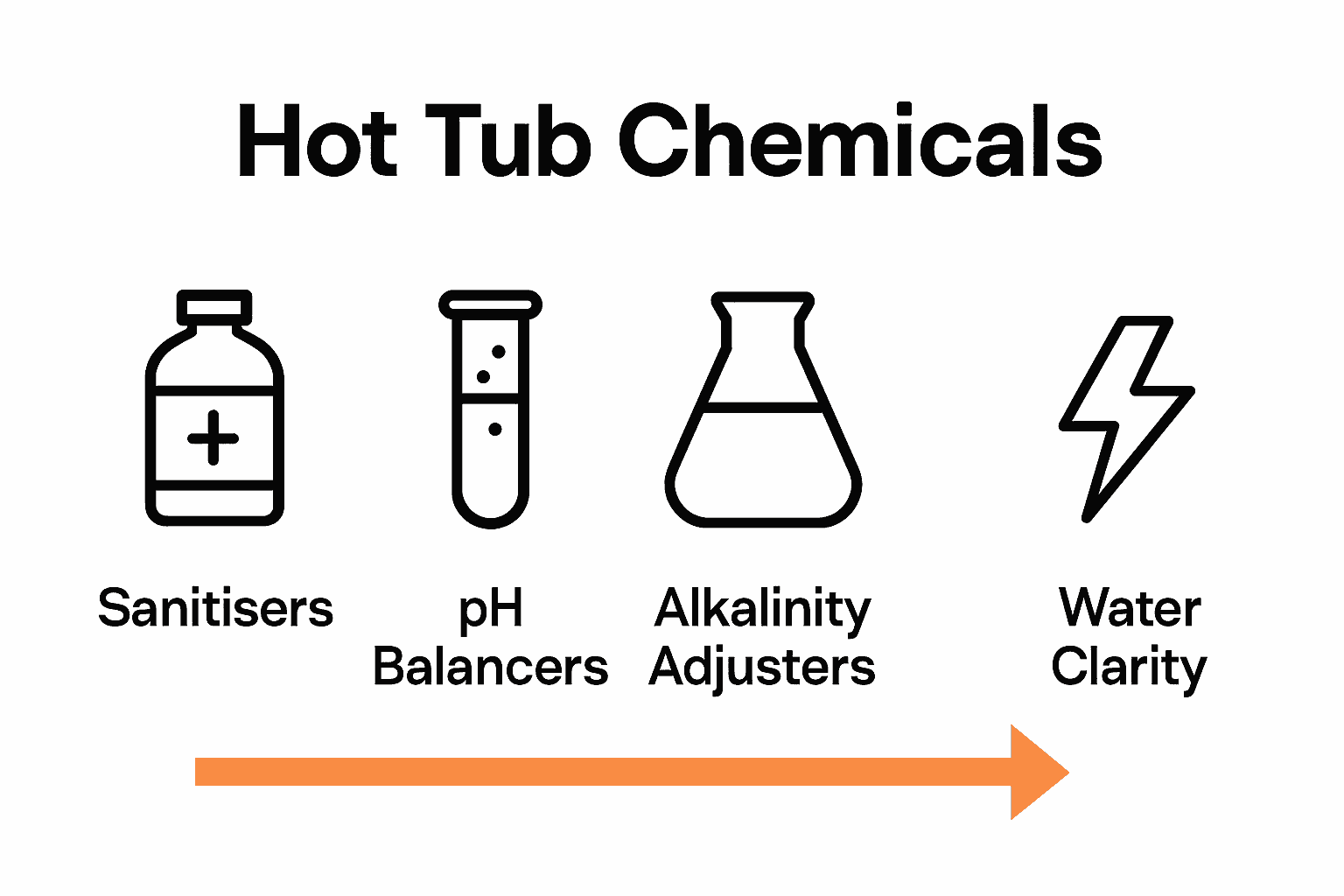
Choosing the right chemicals is key to keeping the water in good shape and every soak safe and enjoyable. In hot tub chemistry, focus on four main groups: sanitisers, pH balancers, alkalinity adjusters and shock treatments. Understanding Hot Tub Chemistry Basics notes that each plays its own part in keeping the water healthy.
Sanitisers like chlorine or bromine are your first line of defence against bacteria and microbes. They clear harmful contaminants and stop the water becoming a home for dangerous microorganisms. pH balancers keep the acidity or alkalinity right, which matters for comfort and for protecting the equipment. Alkalinity adjusters steady the water, buffering it against rapid pH swings. Shock treatments give a strong clean that oxidises organic contaminants, keeping the water clear and hygienic.
Tip: always buy chemicals made specifically for hot tubs, as pool chemicals can differ a lot in strength and make-up. Store them somewhere cool and dry out of direct sunlight, and always follow the maker's instructions. Understand and manage these essentials and you are well on the way to a safe, inviting hot tub.
Step 3: Compare products and brands
Choosing the right chemicals means comparing the products and brands on the market. Why are hot tub bromine tablets so widely used? highlights how much it helps to understand each treatment's traits before you decide.
When comparing brands, weigh a few key things: effectiveness, concentration, whether they suit your particular tub, ease of use and overall cost per treatment. Look for reputable brands with clear instructions and good reviews. Pay attention to the make-up, as hot tub chemicals differ from pool ones. Some brands sell full kits with sanitisers, pH balancers and shock treatments together, which can simplify your routine and keep water quality steady.
Tip: ask different makers for samples or small trial packs to test compatibility before committing to a big buy. Check the concentrations match your water volume and how often you use the tub. User forums and professional advice can be handy for spotting which brands reliably deliver. The aim is a chemical setup that keeps the water right without too much fuss or cost.
Step 4: Work out and apply the right dose
Precise dosing is the key to balanced, safe water. Top Tips for Balancing Chemical Levels in Your Hot Tub stresses that accurate measuring is crucial for heading off chemistry problems.
To work out the dose, you need your tub's exact water volume. Most hold between 1000 and 1500 litres, but the maker lists the specific figure in the manual. Use a measuring cup or the dosing instructions on each product to get the right amount. Different chemicals need different methods, some go straight in, others need diluting first. Always add chemicals to water, never water to chemicals, and keep the pump running to spread the treatment evenly.
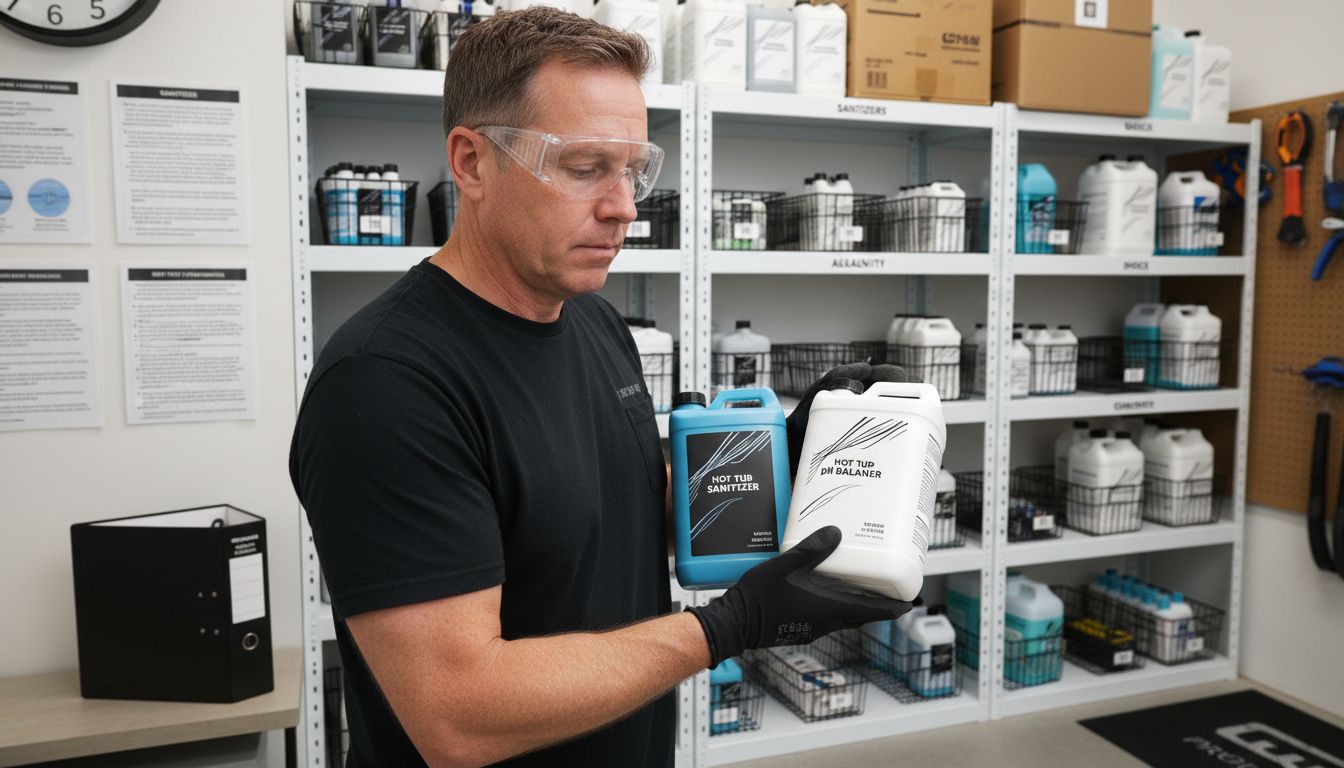
Tip: keep a dedicated measuring container for your chemicals and never use kitchen utensils or guess by eye. Overdosing can damage the equipment and irritate skin, while underdosing leaves the water open to bacterial growth. Wear protective gloves and safety glasses when handling chemicals, and add them gradually while watching your test results closely. Careful attention keeps the soak safe and enjoyable.
Step 5: Check the water after treatment
Premier Hot Tubs recommends regular testing to make sure your chemicals went in correctly and did their job. Checking afterwards is the final key step to a safe, enjoyable tub. Once you have added the treatments, wait around 20 to 30 minutes to let everything spread and settle.
Use your test kit to check the key readings, including pH, sanitiser level and total alkalinity. Ideal pH sits between 7.2 and 7.8, while sanitiser usually needs to be 3 to 5 parts per million. Compare the strips against the maker's chart carefully. If any reading falls outside the ideal range, make small adjustments by adding a little balancing chemical.
Tip: test at different times of day and after each use to see how the levels shift with activity. Keep a log of the results to understand how your particular tub behaves. Bear in mind steady monitoring matters more than hitting perfect numbers every time. The aim is a stable, safe water environment that protects both the equipment and the people using it.
Keep Your Hot Tub Water Perfect With Zagosa Spa & Pool
Choosing the right chemicals can feel like a lot with so many options and precise doses to manage. This guide flags the usual challenges: getting pH balanced, holding sanitiser between 3 and 5 parts per million, and heading off cloudiness or equipment damage. You want a simple, effective way to keep the water clear and safe without guesswork or costly mistakes.
Zagosa Spa & Pool offers a trusted range of premium hot tub chemicals tailored to your water care needs. Our expertly formulated sanitisers, pH balancers, shock treatments and alkalinity adjusters are thoroughly tested to help you get water conditions right quickly and with confidence. With Zagosa Spa & Pool products you protect your investment and enjoy clean, soothing water every time you step in.
Take charge of your hot tub water today. See how easy water care can be by browsing our full collection at Zagosa Spa & Pool.
Ready to leave confusing doses and cloudy water behind? Visit Zagosa Water Treatment Solutions and start enjoying clear, well-balanced hot tub water.
Frequently Asked Questions
How do I assess my hot tub water condition before adding chemicals?
Use a reliable test kit to measure pH, total alkalinity and sanitiser level. Take a sample, dip the strip as instructed, then compare against the chart. Do this at least daily, especially as a new owner, to keep the water safe and balanced.
What are the essential types of chemicals I need for my hot tub?
You need four: sanitisers, pH balancers, alkalinity adjusters and shock treatments. Pick products made specifically for hot tubs to keep water quality up, and monitor these levels regularly to keep the water clear and hygienic.
How do I compare different hot tub chemical brands effectively?
Look at effectiveness, concentration and how well each suits your particular tub. Read reviews and choose products with clear instructions. Small trial packs help you check compatibility before a larger buy.
What is the correct way to calculate dosages for hot tub chemicals?
First find your tub's water volume, usually listed in the manual. Use a measuring cup to apply the right amount per the instructions, adding chemicals to the water with the pump running for even spread. Start with smaller amounts and check the levels after treating.
How can I verify that my hot tub chemicals are working effectively?
Test the water 20 to 30 minutes after treating. Check pH, sanitiser level and total alkalinity against the recommended ranges, make small adjustments if anything is off, and keep a log to track changes over time.
How often should I test my hot tub water for chemical balance?
Test at least once a day and after each use to catch shifts in the levels. Regular testing keeps the water stable and safe, protecting both the equipment and the people using it, and helps you spot problems early.