By The Zagosa Team. Published .
Reviewed or updated .
Plenty of UK hot tub owners find their water quality slips faster in summer. As the temperature climbs, keeping a spa clean and safe gets trickier, and matters all the more. With a few simple maintenance and testing habits, you can enjoy a spotless, refreshing hot tub right through the hottest weeks of the British summer while protecting your health and your investment.
Table of Contents
- Stage 1: Prepare Your Hot Tub For Summer Use
- Stage 2: Balance Water Chemistry And Sanitise
- Stage 3: Clean Filters And Spa Surfaces Regularly
- Stage 4: Monitor And Adjust Water Levels
- Stage 5: Test And Verify Water Quality Frequently
Quick Summary
| Key Point | Explanation |
|---|---|
| 1. Test and balance water chemistry | Keep an eye on pH and alkalinity to hold safe water and stop bacteria. Aim for a pH between 7.2 and 7.8. |
| 2. Clean hot tub surfaces and filters | Give the tub a proper clean and swap the filters to clear contaminants and keep things hygienic through summer. |
| 3. Monitor water levels regularly | Check the level weekly to protect the pump and hold the chemical balance, so the tub keeps performing. |
| 4. Conduct frequent water quality tests | Test several times a week to catch and fix imbalances, keeping the water safe for everyone all summer. |
| 5. Schedule maintenance during cooler hours | Do the cleaning in the morning to cut chemical loss to evaporation, for more effective treatment. |
Stage 1: Prepare your hot tub for summer use
Getting your tub ready for summer takes a bit of planning to keep it performing and the water clean. With the right start, you can turn the spa into a spotless summer retreat.
First, give the water a proper once-over. Test the chemistry with reliable strips and adjust the levels as needed. Summer warmth speeds up bacteria, so holding the water standards is key to avoiding health risks. Aim for a pH between 7.2 and 7.8 for safe, hygienic conditions.
Next, clean the inside surfaces thoroughly. Drain the old water fully, scrub the walls with a proper spa cleaner and rinse carefully. Pay particular attention to replacing or deep cleaning the filter cartridges. Summer brings more debris and contaminants, so a spotless starting point really is non-negotiable.
Pro tip: Do your cleaning in the cooler morning hours to stop the chemicals evaporating too fast and make the treatment more effective. Put the time into good prep and you set up a safe, refreshing tub for the whole summer.
Stage 2: Balance water chemistry and sanitise
Balancing the chemistry is the foundation of a safe, enjoyable summer spa. Get the chemicals right and you keep bacteria out and the water in good condition.
Start by testing methodically with reliable strips, which shows you where the pH, alkalinity and sanitiser currently sit. The aim is a chemical balance that keeps harmful bugs at bay while protecting the equipment. The ideal pH is between 7.2 and 7.8, with total alkalinity held between 80 and 120 parts per million.
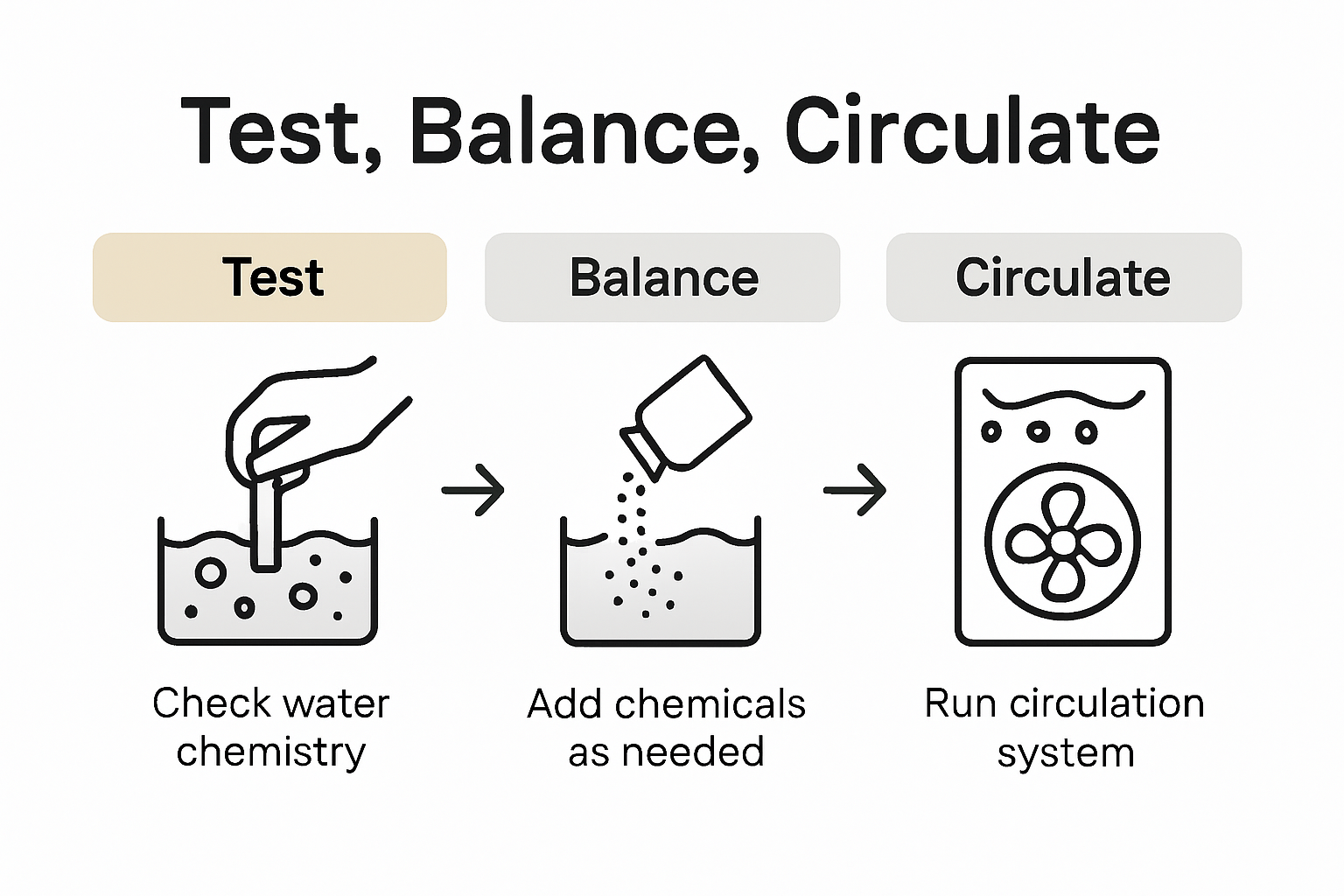
Pick a good sanitiser such as chlorine or bromine to clear bacteria effectively. Regular testing and the right chemical treatment are vital for hygienic water, so check and adjust the chemistry at least twice a week over summer. Add the sanitiser to the maker's instructions, usually the recommended dose after testing, so protection stays steady.
Pro tip: Always add chemicals to water, never water to chemicals, and give it time to circulate so the treatment spreads evenly through the tub.
Stage 3: Clean filters and spa surfaces regularly
Cleaning the filters and surfaces regularly keeps the tub performing and hygienic through summer. A well-kept hot tub not only looks inviting, it protects your health and extends the life of your investment.
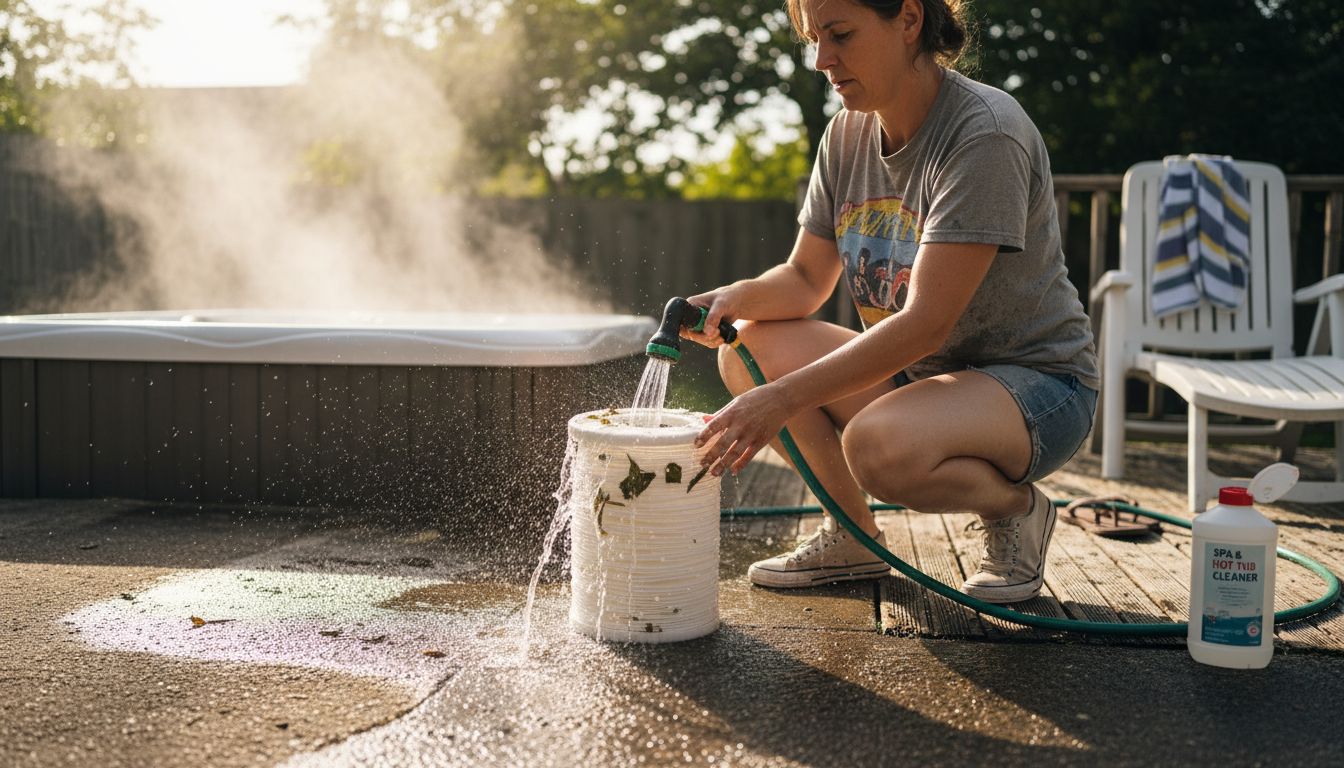
Routine cleaning of the filters and surfaces heads off contamination and keeps performance up. Start by taking out and rinsing the filter cartridge each week with a garden hose, working the debris out from between the pleats. For a deep clean, soak the filter in a proper cleaning solution once a month, which shifts the oils, lotions and residue a rinse cannot.
For the surfaces, use a soft cloth or sponge with a non-abrasive cleaner made for hot tub materials. Water Safety Scotland recommends a thorough surface clean to cut the health risks of unclean water. Pay extra attention to the waterline, seats and jets where grime and bacteria gather. Rinse well afterwards so no chemical residue upsets the water balance.
Pro tip: Rotate between two filter cartridges so each one dries fully and does not grow bacteria during cleaning cycles.
Stage 4: Monitor and adjust water levels
Keeping the water at the right level is key to safe running and avoiding equipment damage over summer. Good water management protects both your spa and your enjoyment of it.
Water Safety Scotland highlights how important it is to watch the level to avoid problems. Check it weekly, making sure it sits between the minimum and maximum markers inside the skimmer. Too low and you risk pump damage, too high and it can overflow and waste your carefully balanced chemicals.
The Royal Life Saving Society recommends regular level checks as a basic part of hot tub care, especially in summer when more water evaporates. Top up with fresh water through a garden hose, adding it slowly to avoid an air lock in the plumbing. Always add water with the jets and pumps off, so it spreads evenly and the equipment stays safe.
Pro tip: Keep a measuring jug by the tub to make topping up precise and easy.
Stage 5: Test and verify water quality frequently
Testing the water regularly is the backbone of a safe, enjoyable summer soak. Steady monitoring lets you catch small issues before they turn into big ones that could affect your health or damage the spa.
Water Safety Scotland stresses how vital frequent testing is for spotting and dealing with hazards promptly. Get a good testing kit that reads several parameters, including pH, sanitiser, total alkalinity and calcium hardness. Aim to test at least twice a week in summer, when the heat speeds up chemical changes and bacteria. Use strips or a digital tester for accurate readings and compare them against the recommended ranges.
The Royal Life Saving Society recommends systematic testing as a basic safety measure, keeping the tub safe and hygienic. When a reading shows something off, act straight away by adding the right chemicals in the recommended amounts. Keep a detailed log of your results to follow the trends and spot anything that keeps recurring.
Pro tip: Always test the water before and after adding any chemicals, so you know exactly how they affect your tub's balance.
Keep Your Hot Tub Crystal Clear All Summer Long
Looking after your tub in summer starts with the big jobs, balancing the chemistry and keeping the filters clean, to protect your health and the equipment. If regularly testing pH, sanitising the water or watching the level feels like a lot, you are not alone. Plenty of owners share the same worries and the same goal of a clean, safe, soothing soak without the hassle.
Zagosa Spa & Pool gets it, and offers a full range of quality chemicals and spa essentials made to simplify your summer maintenance. From precisely tested sanitisers to dedicated filter cleaners, our products help you hit the right chemical balance and hygiene that changing summer conditions demand.
Ready to get more from your tub this summer and relax without the worry? Visit Zagosa Spa & Pool today to browse our range of water treatment products and spa care solutions. Take charge of your maintenance with trusted tools made to hold the water quality right and get the most out of the season. Act now to keep your hot tub inviting and safe all summer long.
Frequently Asked Questions
How do I prepare my hot tub for summer use?
Start with a thorough water quality check. Test the chemistry and adjust to hold a pH between 7.2 and 7.8, then give the inside surfaces a proper clean and replace or deep clean the filter cartridges.
How often should I test the water chemistry during summer?
Test at least twice a week in summer. Regular checks head off bacteria and keep the water in good condition, especially as the heat speeds up chemical changes.
What sanitiser should I use for my hot tub during summer?
A good sanitiser like chlorine or bromine is essential for clearing bacteria. Follow the maker's dosing instructions, usually adjusting the amount after each test to hold the right level.
How can I ensure my hot tub filters are clean?
Rinse the cartridge weekly with a garden hose to clear debris. For a deeper clean, soak the filter in a proper cleaning solution once a month to break down built-up oils and residue.
How do I maintain proper water levels in my hot tub?
Check the level weekly, keeping it between the minimum and maximum markers inside the skimmer. Top up with fresh water as needed, adding slowly with the jets and pumps off so it spreads evenly.
Why is regular water quality testing important for hot tubs?
Regular testing is key to spotting hazards and keeping the soak safe. Test at least twice a week, focusing on pH, sanitiser and total alkalinity to head off big problems that could affect your health or equipment.
Recommended
- How to Winterise Your Hot Tub: A Step-by-Step Guide - Zagosa Spa & Pool
- 7 Best Practices for Hot Tubs Every UK Owner Should Know - Zagosa Spa & Pool
- Essential Hot Tub Maintenance Checklist for 2025 Success - Zagosa Spa & Pool
- Essential Carbon Steel Care Routines for Lasting Performance - Brass & Steel