By The Zagosa Team. Published .
Reviewed or updated .
A hot tub is one of life's simple pleasures, but keeping the water clear is not always straightforward, especially when the chemistry drifts or the tub sees a lot of use. Testing before you treat, an approach echoed by researchers at Cranfield University and Loughborough University, is what gives owners the confidence to work from safe and balanced water before any shock goes in. This guide walks you through checking, measuring and safely dosing so you end up with clear, welcoming water every time.
Table of Contents
- Step 1: Check The Water First
- Step 2: Gather And Measure Your Shock
- Step 3: Add The Shock Safely
- Step 4: Circulate For Even Dispersion
- Step 5: Retest And Confirm Clarity
Quick Summary
| Key Point | Explanation |
|---|---|
| 1. Assess water quality first | Conduct comprehensive tests using strips or kits to check pH, alkalinity, sanitiser, and calcium levels before shocking. |
| 2. Gather proper shock treatment materials | Collect essential items such as shock chemicals, measuring tools, and protective equipment. Follow manufacturer guidelines for accurate dosing. |
| 3. Add chemicals safely | Always wear protective gear and add shock chemicals according to guidelines. Mix in a plastic bucket and pour evenly around the tub. |
| 4. Ensure thorough water circulation | Activate all jets and pumps to promote uniform distribution of shock chemicals. Run the system for at least 20-30 minutes. |
| 5. Test water clarity and balance | Wait 20 minutes after shocking, then test water parameters. Record results to maintain ideal conditions for safety and clarity. |
Step 1: Check the water first
Before any shock goes in, you need a clear picture of where the water stands. Water quality monitoring techniques let you pin down the chemical balance and the level of contamination that the shock has to deal with.
Run a full test with dependable strips or a digital testing kit and note these key readings:
- pH levels: Ideal range between 7.2 and 7.8
- Total alkalinity: Target range 80-120 parts per million (ppm)
- Sanitiser levels: Chlorine or bromine concentration
- Calcium hardness: Recommended 150-250 ppm
Getting this assessment right heads off problems like bacterial growth, skin irritation and treatments that simply do not work. Water engineering research makes the same point: know your numbers before you reach for any chemical.
Here is a quick summary of the readings and what each one means:
| Parameter | Ideal Range | If Too Low | If Too High |
|---|---|---|---|
| pH Level | 7.2 - 7.8 | Corrosive, irritates skin | Scale build-up, cloudiness |
| Total Alkalinity | 80 - 120 ppm | pH instability | pH difficult to adjust |
| Sanitiser Level | Varies (type) | Bacterial contamination | Skin/eye irritation |
| Calcium Hardness | 150 - 250 ppm | Corrosion of components | Scale deposits, cloudy |
With those numbers in hand, you are set to pick the right shocking method and dose for your particular tub.
Expert tip: Always test your water at least twice weekly and immediately before shocking to ensure precise treatment.
Step 2: Gather and measure your shock
A good result comes down to careful prep and handling the chemicals with respect. Chemical safety assessment matters here, both for choosing the right product and measuring it correctly.
Have these to hand before you start:
- Shock treatment chemicals: Chlorine or non-chlorine shock specific to hot tub use
- Measuring cup with clear markings
- Protective equipment: Rubber gloves and safety glasses
- Manufacturer’s instruction manual
- Digital scale (for precise measurements)
Always verify the specific shock treatment requirements for your particular hot tub model and water volume.
Chemical storage safety guidance stresses reading product labels carefully and following exact manufacturer instructions. Measure your shock treatment precisely:
- Check your hot tub’s total water volume
- Consult the product label for recommended dosage
- Use a clean, dedicated measuring cup
- Measure chemicals at eye level for accuracy
- Never mix different types of shock treatments
Take your time over the measuring and you will get clear water without tipping the chemistry off balance.
The main shock types compared:
| Shock Type | Strengths | Best For |
|---|---|---|
| Chlorine-based shock | Powerful disinfection, fast action | Removing bacteria, heavy use |
| Non-chlorine shock | Less odour, quick re-entry | Regular maintenance, mild issues |
| Bromine-based shock | Stable at high temperatures | Spas with bromine systems |
Expert tip: Always wear protective gloves and measure chemicals in a well-ventilated area away from children and pets.
Step 3: Add the shock safely
Getting the shock into the water is where care really counts. Chemical handling guidance makes clear how important it is to follow the manufacturer's instructions and protect yourself as you go.
Set yourself up properly first:
- Wear protective equipment: Safety goggles and chemical-resistant gloves
- Choose a calm, wind-free area for chemical mixing
- Keep children and pets away from the work area
- Ensure proper ventilation
Never add shock chemicals directly to a hot tub with people present.
Then work through the dosing like this:
- Dilute shock chemicals in a clean plastic bucket
- Add chemicals to water (not water to chemicals)
- Stir gently with a dedicated plastic mixing tool
- Pour mixture evenly around hot tub perimeter
- Run hot tub jets to circulate treatment
Safe chemical handling practices recommend a steady, careful routine so you avoid any accidental reactions or health risks.
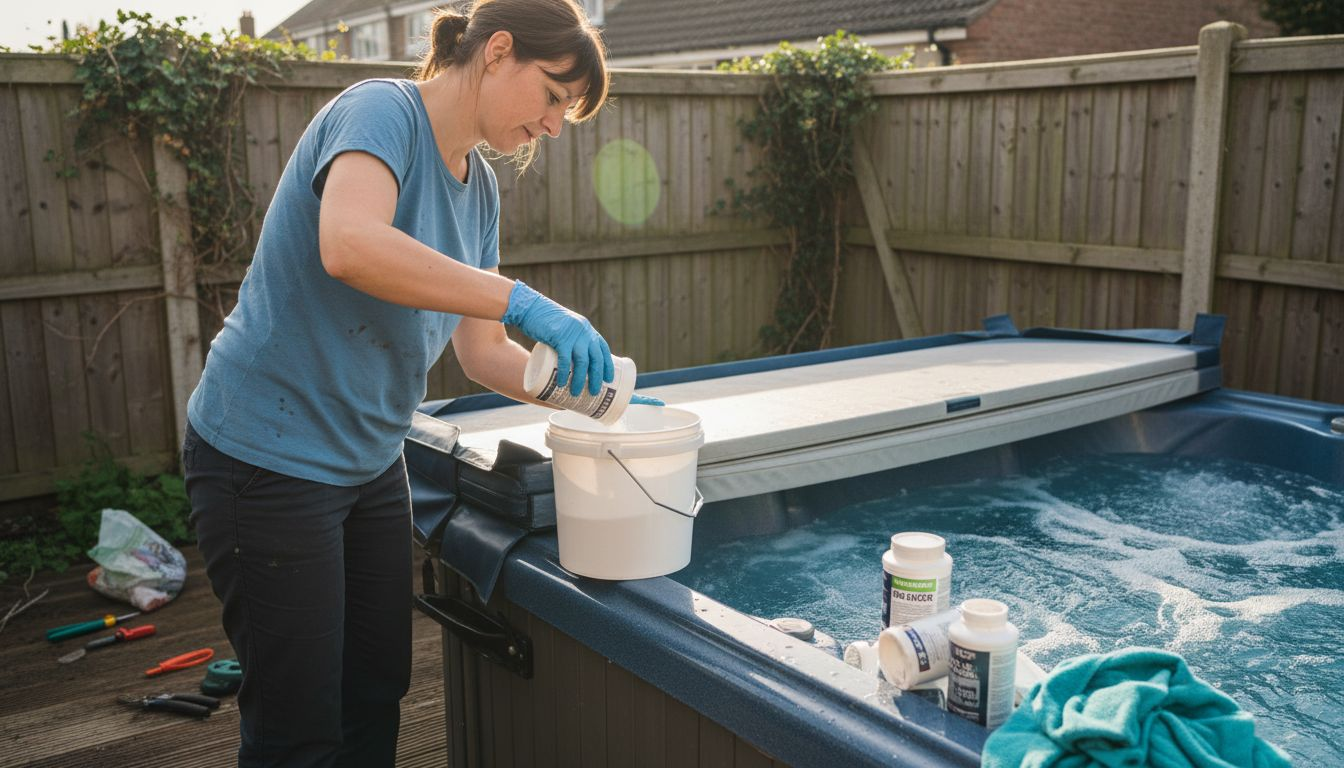
Expert tip: Always read the specific product instructions carefully, as shock treatment requirements can vary between different chemical formulations.
Step 4: Circulate for even dispersion
Once the shock is in, getting the water moving is what spreads it evenly through the whole tub. Water circulation dynamics show how deliberate movement carries the chemical through every corner of the water.
To get the fullest dispersion, fire up the circulation like this:
- Turn on all available jets
- Run the main circulation pump at full speed
- Open all air valves to enhance water movement
- Ensure water flows through all pipe sections
Consistent water movement prevents chemical concentration in specific areas.
A reliable routine looks like this:
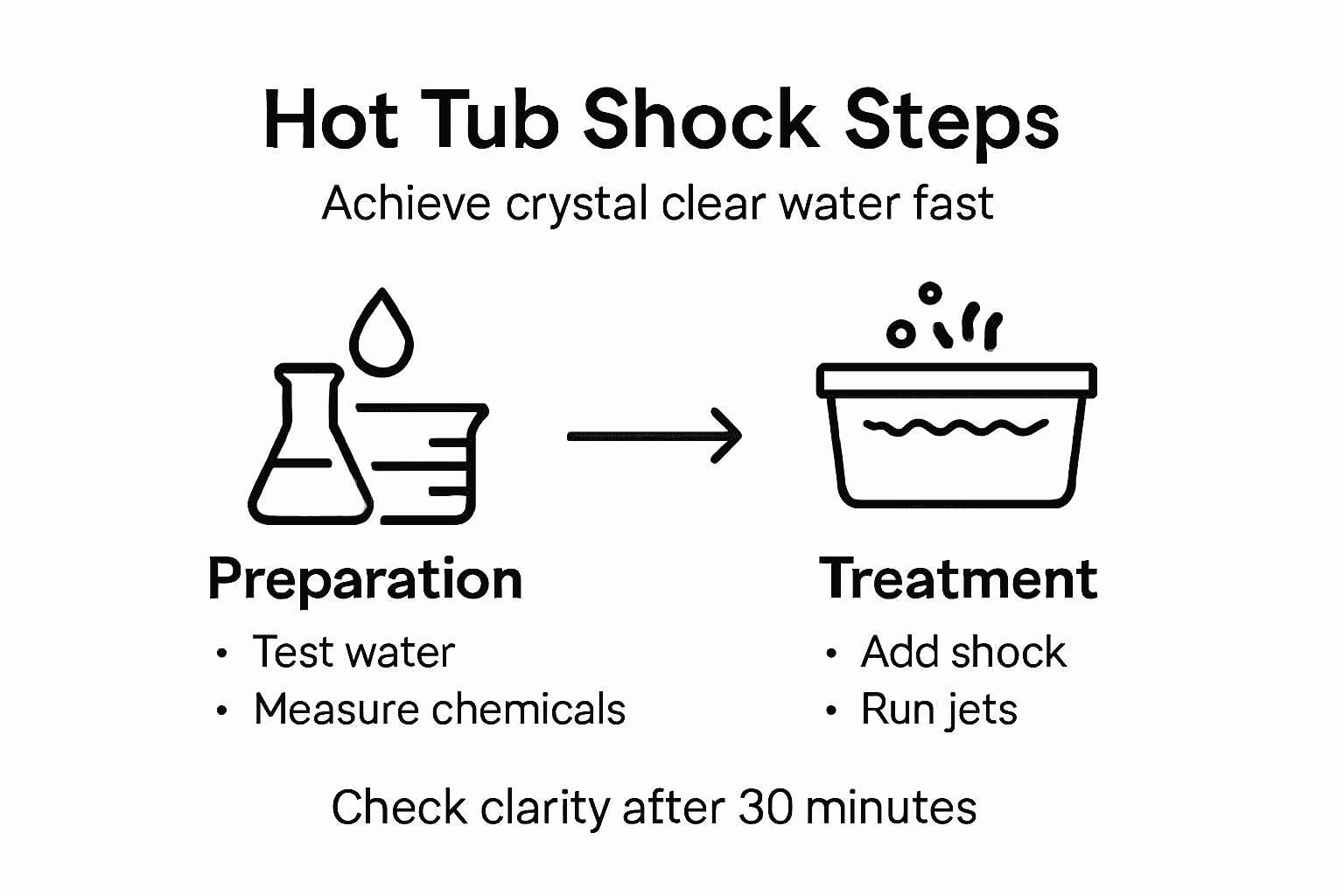
- Activate the main circulation pump immediately after adding shock chemicals
- Run pumps for at least 20-30 minutes
- Alternate between high and low jet settings
- Observe water movement patterns
- Check that all areas receive uniform circulation
Dispersion modelling principles underline why steady flow matters: it stops the chemical settling in layers and makes sure the whole body of water gets treated.
Expert tip: Rotate your hot tub cover periodically during circulation to prevent heat loss and support more efficient chemical distribution.
Step 5: Retest and confirm clarity
Water quality standards point to why testing after you shock matters so much: it is how you know the tub is safe and truly clear. A proper retest confirms the shock did its job and tells you what, if anything, still needs adjusting.
For a thorough retest you will want:
- Digital water testing kit
- pH testing strips
- Chlorine/bromine test strips
- Total alkalinity test strips
- Calcium hardness test kit
Visual clarity is just as important as chemical balance.
Work through it in this order:
- Wait 20 minutes after shock treatment
- Collect water sample in clean testing container
- Test pH levels first
- Check chlorine/sanitiser concentration
- Measure total alkalinity
- Verify calcium hardness
Water quality monitoring techniques suggest holding your results up against the ideal ranges to see whether any further tweaks are called for.
Expert tip: Record your test results in a dedicated hot tub maintenance log to track water chemistry trends over time.
Achieve Crystal Clear Hot Tub Water with Expert Care and Quality Products
Keeping the water in balance through proper shocking is what keeps bacterial contamination, itchy skin and cloudiness at bay. As this guide shows, it comes down to measuring the shock accurately, adding it with care, and circulating the water fully so the whole tub sparkles. Doing that well takes both know-how and dependable products made for the job.

Enhance your hot tub experience today with Zagosa Spa & Pool, a trusted Zagosa Ltd Brand offering a wide range of premium hot tub chemicals and spa essentials. Our rigorously tested products help you maintain ideal pH levels, sanitiser balance, and calcium hardness to keep your spa safe and inviting. Take control of your hot tub care now and explore how our carefully crafted water treatment solutions make shocking your spa simple, safe, and effective. Visit Zagosa Spa & Pool to discover expert products designed for lasting water clarity and comfort.
Frequently Asked Questions
How do I assess my hot tub water quality before shocking?
Start by using reliable test strips or a digital water testing kit to measure critical parameters such as pH levels, total alkalinity, sanitiser levels, and calcium hardness. Ensure pH is between 7.2 and 7.8 and total alkalinity is between 80-120 parts per million for optimal treatment.
What type of shock treatment should I use for my hot tub?
Choose between chlorine-based shock, non-chlorine shock, or bromine-based shock based on your needs. For heavy usage or bacteria removal, chlorine-based shock is effective, while non-chlorine shock is suitable for regular maintenance and mild issues.
How do I safely add shock chemicals to my hot tub?
Always wear protective gloves and goggles when handling shock chemicals. Dilute the chemicals in a clean plastic bucket and pour the mixture evenly around the hot tub perimeter to ensure safe and effective distribution.
How long should I run the jets after shocking the water?
Run the hot tub jets for at least 20-30 minutes after adding the shock chemicals to promote complete circulation and chemical dispersion. This helps maintain water clarity and prevents chemical stratification.
What should I test for after shocking my hot tub?
Test for pH levels, sanitiser concentration, total alkalinity, and calcium hardness after waiting 20 minutes post-treatment. Aim for pH between 7.2 and 7.8 and calcium hardness between 150-250 parts per million to ensure optimal water balance.
How often should I shock my hot tub for best results?
Shock your hot tub at least once a week, or immediately after heavy use or when water clarity diminishes. Regular shocking helps maintain water clarity and sanitation, ensuring a safe and enjoyable hot tub experience.
Recommended
- Shock Treatment for Hot Tubs - Why It Matters - Zagosa Spa & Pool
- Shock Treatment in Hot Tubs: What It Does for You - Zagosa Spa & Pool
- Spa Water Clarity: Key Steps for a Sparkling Hot Tub - Zagosa Spa & Pool
- Water Shock Treatements - Zagosa Spa & Pool
- 6 Essential Steps for an Effective House Maintenance Schedule - Guestly Homes