By The Zagosa Team. Published .
Reviewed or updated .
Ask around and you will find most UK hot tub owners quietly dread water testing, unsure what the numbers mean or worried they will get it wrong. Yet keeping the water clean is not just about comfort, it is a health matter, with risks like Legionella to keep in mind. Learn a handful of steps and keep the right testing kit to hand, and you can finally get a grip on your chemistry and step in without a second thought.
Table of Contents
- Keep the right testing kit to hand
- Set the tub up for a fair sample
- Take a clean, representative sample
- Read your strips or kit correctly
- Adjust the chemistry to suit
- Recheck to confirm the balance
Quick Summary
| Key Insight | Explanation |
|---|---|
| 1. Keep testing kit ready | Have pH testers and a TDS meter to hand so testing is accurate and quick. |
| 2. Prepare the tub | Turn off jets and wipe the surface before drawing a sample from the right depth. |
| 3. Sample carefully | Submerge the container about 30 centimetres down, clear of surface debris, for credible results. |
| 4. Read results correctly | Start with total alkalinity and pH, comparing against the chart for precise readings. |
| 5. Recheck after adjusting | Wait 20 minutes after dosing, then test again to confirm you are within range. |
Keep the right testing kit to hand
Good testing starts with the right tools and knowing exactly what you are checking. As Spatex notes, the Health & Safety Executive guidance HSG282 puts regular water testing at the heart of controlling risks like Legionella.
Your kit should include digital tools that give accurate readings. Hanna Instruments points to electronic meters made for hot tub upkeep. Aim to have the following to hand:
- Digital pH tester
- Chlorine measurement photometer
- Total dissolved solids (TDS) meter
- Cyanuric acid test strips
- Waterproof notebook for recording results
- Clean sampling containers
- Disposable gloves
Pro tip: buy fresh supplies and swap out test strips regularly. Out-of-date kit can hand you misleading numbers that steer your water the wrong way.
With the kit ready, you are set for the careful sampling that keeps your water clear and safe.
Set the tub up for a fair sample
Before you draw any water, get the conditions right for an accurate reading. As HydroFit notes, daily testing is worth doing however often the tub gets used.
Switch off the jets and circulation so the water settles and goes still. Take the cover right off and make sure the light is good enough to see the water clearly. You want a sample that reflects the true state of the chemistry.
Wipe away any surface film or debris with a clean cloth so nothing contaminates the reading. When you sample, take water from around 30 centimetres below the surface and roughly 45 centimetres away from any wall or jet. That spot gives the most honest picture of your overall water.
Pro tip: wash your hands well and wear clean gloves so you do not add contaminants to the sample. A tainted sample leads to misleading numbers and the wrong treatments.
With the tub ready, you can move to the sampling stage that keeps your water clear and safe. Learn more about water balancing techniques in our comprehensive guide on chemical levels.
Take a clean, representative sample
A precise sample is the key to understanding your chemistry. Hanna Instruments suggests drawing from the middle of the tub for the most representative result.
Take your clean container and submerge it about 30 centimetres below the surface. Hold it sideways and let the water flow in slowly, keeping clear of surface turbulence or debris. The goal is water that truly reflects what is in the tub.
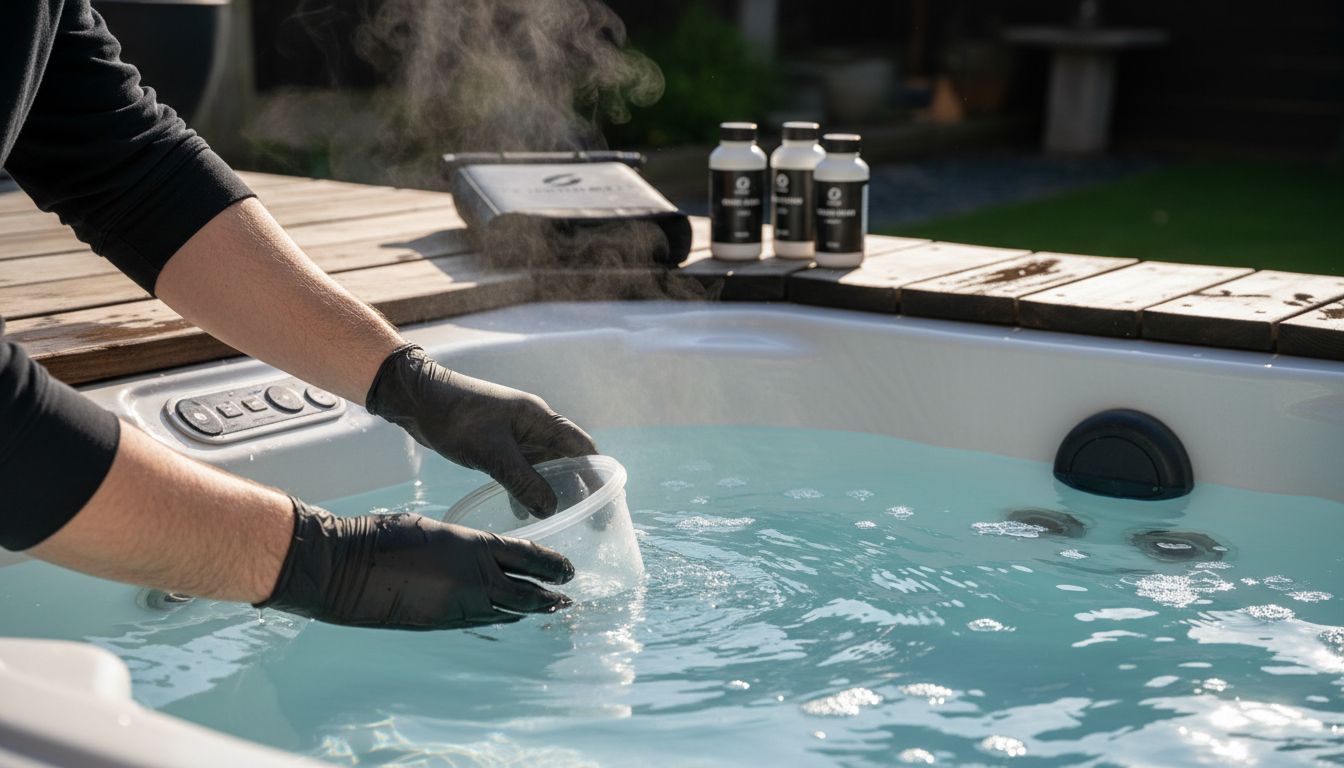
Lift the container out carefully so you do not introduce anything on the way. HydroFit stresses following the strip instructions to the letter for accurate readings of sanitiser, pH and total alkalinity.
Pro tip: with strips, take one out only when you are ready to test, and keep your fingers off the reactive pad. Moisture or skin oils can throw the result off.
Sample in hand, you are ready for the testing and analysis itself. Learn more about water balancing techniques in our comprehensive guide on chemical levels.
Read your strips or kit correctly
Reading the results takes a little care. WhatSpa? suggests starting with total alkalinity, since it underpins the overall stability of your water.
HydroFit explains that the pH scale runs from 0 to 14, with 7 being neutral. When you compare strip colours, hold the strip against the chart straight after testing for the truest match. Look for the colour that lines up with the reference chart supplied with your kit.
Check total alkalinity first, which ideally sits between 80 and 120 parts per million. It buffers your pH and stops sudden swings. Next, look at pH, which should land between 7.2 and 7.8. Any real drift from that calls for a prompt adjustment to keep the water safe and comfortable.
Pro tip: read colours in natural daylight or against a white background so poor lighting does not fool you.
With the results read, you are ready to fine-tune the chemistry. Learn more about water balancing techniques in our comprehensive guide on chemical levels.
Adjust the chemistry to suit
HydroFit stresses that daily testing and careful adjustment keep the water in good shape. Your readings tell you exactly which corrections to make.
If total alkalinity drops below 80 parts per million, add an alkalinity increaser gradually. Pour the recommended amount into the water with the circulation running so it spreads evenly. When pH strays outside 7.2 to 7.8, add pH increaser or decreaser bit by bit to bring it back into range.
For sanitiser, whether chlorine or bromine, dose to suit your reading. As a rule, keep chlorine between 1 and 3 parts per million. Add in small amounts with the circulation running to mix it through and avoid hotspots.
Pro tip: always add chemicals to water, not water to chemicals, and wear gloves to protect your skin. Give it at least 20 minutes after dosing before you retest so everything integrates.
With the chemistry adjusted, your water is back on track. Learn more about water balancing techniques in our comprehensive guide on chemical levels.
Recheck to confirm the balance
Hanna Instruments stresses retesting after any adjustment. This confirms the water is back in range and keeps things safe for users.
Give it around 20 minutes after dosing so everything circulates and settles. Draw a fresh sample using the same careful method as before. Use a clean strip or a digital meter and compare against your earlier readings, watching total alkalinity, pH and sanitiser to confirm they now sit where they should.
HydroFit recommends testing daily, even when the tub is not being used. If a recheck shows a level still out of range, make another small adjustment and test again. Patience and precision are what get you to properly balanced water.
Pro tip: jot down your readings and adjustments in a dedicated notebook. Tracking them helps you learn how your tub behaves and makes future upkeep easier.
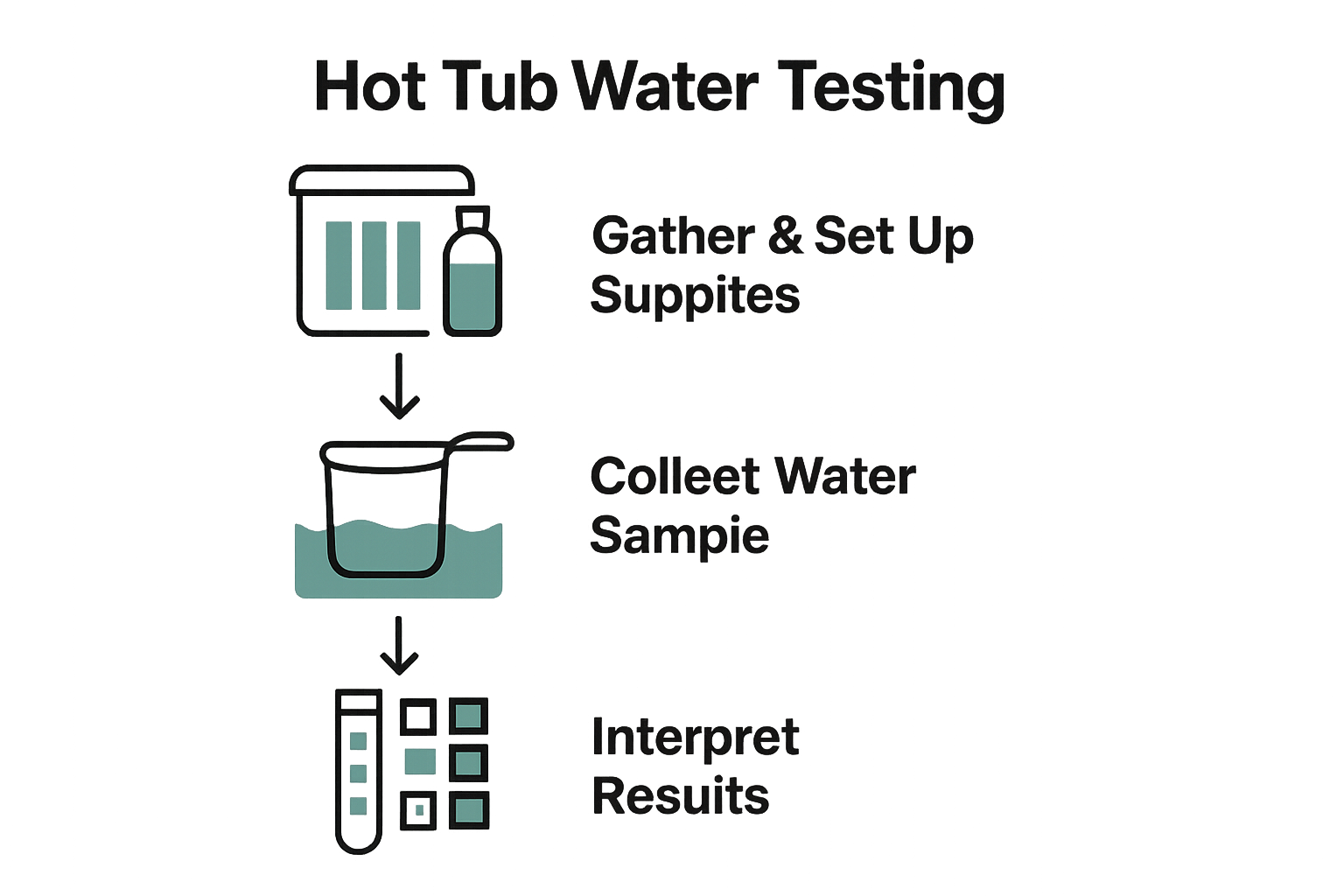
With the chemistry confirmed and balanced, you can settle in for a safe, comfortable soak. Learn more about water balancing techniques in our comprehensive guide on chemical levels.
Keep Your Hot Tub Water Perfectly Balanced with Zagosa Spa & Pool
Keeping hot tub water clear runs through a chain of technical steps, sampling properly, reading the chemistry and adjusting with care. This routine shows why reliable testing tools and effective treatment matter for a spa that stays safe and enjoyable. Chasing pH swings or wobbly sanitiser readings can feel like a lot, but you do not have to work it out alone.
Lean on Zagosa Spa & Pool, a Zagosa Ltd brand offering a full range of quality hot tub chemicals and testing essentials. Built for precise balance and safety, our products help you manage total alkalinity, pH and sanitiser with confidence. Make a start on easier water management today and keep your hot tub safe and relaxing. Explore the full range at Zagosa Spa & Pool, dig into targeted tips with our water balancing guide, and equip yourself with trusted tools to make testing simpler at Zagosa Spa & Pool. Turn your hot tub care into a simple, steady habit.
Frequently Asked Questions
How often should I conduct hot tub water testing?
Daily testing is worth doing whatever your usage. Make checking the chemistry a routine so the water stays safe and comfortable.
What supplies do I need for accurate hot tub water testing?
For accurate testing, keep a digital pH tester, a chlorine photometer, a TDS meter and cyanuric acid test strips. Have clean sampling containers ready and wear disposable gloves to avoid contaminating the sample.
How do I collect a water sample from my hot tub?
Turn off the jets and circulation, then submerge a clean container about 30 centimetres below the surface. Hold it sideways and let the water flow in steadily without stirring up turbulence.
What do I do if my test results show imbalanced water chemistry?
Adjust to suit the readings. If total alkalinity is low, for instance, add an alkalinity increaser gradually with the circulation running until it reaches the 80 to 120 parts per million range.
How can I ensure my test results are accurate?
Compare strip colours against the chart straight away in natural light or against a white background. Keep your fingers off the reactive pads to avoid contamination and skewed readings.
What should I do after adjusting the chemicals in my hot tub?
Wait about 20 minutes for it to mix through, then retest with the same method. That confirms your levels are back within the safe recommended ranges.