By The Zagosa Team. Published .
Reviewed or updated .
Keeping a hot tub running well takes more than a splash of chlorine and a quick scrub. You might think it is all relaxing soaks and clear water. But over 80 percent of hot tub owners face preventable breakdowns simply because basic maintenance is skipped or done wrong. The good news is that with a smarter routine and the right supplies, anyone can turn hot tub care from a chore into a simple, satisfying habit.
Table of Contents
- Step 1: Gather Your Hot Tub Maintenance Supplies
- Step 2: Test Water Chemistry Regularly
- Step 3: Clean Filters And Replace When Necessary
- Step 4: Inspect And Maintain Equipment Components
- Step 5: Drain And Refill The Hot Tub Periodically
- Step 6: Verify Overall System Functionality
Quick Summary
| Key Point | Explanation |
|---|---|
| 1. Gather essential maintenance supplies | Collect water testing strips, chemical treatments, and cleaning tools for effective hot tub care. |
| 2. Test water chemistry regularly | Conduct tests bi-weekly to maintain proper pH, alkalinity, and sanitiser levels for safe spa use.[1] |
| 3. Clean and replace filters as needed | Rinse filters weekly, perform monthly deep cleans, and replace every 12-18 months to ensure optimal performance. |
| 4. Perform regular equipment inspections | Check visible components and connections monthly to identify potential issues and maintain spa efficiency. |
| 5. Drain and refill every 3-4 months | Refresh hot tub water periodically to prevent mineral buildup and ensure a clean bathing environment.[1] |
Step 1: Gather Your Hot Tub Maintenance Supplies
Good hot tub maintenance starts with a bit of preparation and the right set of tools and supplies. Before you get stuck in, putting together a full kit makes the whole job smoother and helps you deal with water quality problems efficiently.
Your basic toolkit should include a few essentials that make cleaning thorough and water management easy. Start with water testing strips, which you need for keeping an eye on the chemical balance and making sure the spa stays safe and comfortable. They help you track pH, chlorine and other key readings. Alongside the strips, get a reliable water testing kit for more detailed, precise measurements.
Next, collect chemical treatments made for hot tub water. Your kit should include sanitising agents like chlorine or bromine granules, pH balancers, alkalinity adjusters and shock treatments. These keep the water clear, stop bacteria growing and protect the tub's inner workings from damage. Learn more about water treatment techniques to keep your spa performing well.
Cleaning tools matter just as much. Get a good spa skimmer net for lifting surface debris, a soft-bristled brush for the interior surfaces and cleaning cloths that will not scratch delicate materials. Other handy items include filter cleaning solution, a spare water filter and protective gloves to keep your hands safe during maintenance.
Pro tip: keep all your supplies in a dedicated, waterproof container near the spa. Being organised saves time and means everything is within reach when you do your routine. Invest in good supplies and keep them handy, and hot tub care goes from a potential chore to a simple, manageable task.
The table below sums up the essential tools and supplies, with what each one is for in your routine.
| Item | Purpose |
|---|---|
| Water testing strips | Monitor pH, chlorine, and chemical balance |
| Water testing kit | Provides detailed water analysis and precise measurements |
| Sanitising agents | Maintain water clarity and prevent bacterial growth |
| pH balancers & alkalinity adjusters | Correct and stabilise water chemistry |
| Spa skimmer net | Remove surface debris from the water |
| Soft-bristled brush | Scrub interior surfaces without causing damage |
| Specialised cleaning cloths | Clean spa surfaces gently |
| Filter cleaning solution | Deep clean filters to remove oils and minerals |
| Water filter replacement | Replace worn or damaged filters for optimal performance |
| Protective gloves | Protect hands during cleaning and chemical handling |
Step 2: Test Water Chemistry Regularly
Regular water testing is the cornerstone of good hot tub care, your first line of defence against water quality problems. Understanding and managing the chemical balance takes steady, systematic checking, not the occasional glance.
Set up a consistent testing routine and check the chemistry at least twice a week.[1] Use good test strips or a digital kit to measure the key readings, including pH, alkalinity, sanitiser concentration and calcium hardness. These give you a clear picture of the water's health and what treatment it needs. Explore professional water testing techniques to sharpen your routine.
When you test, aim for specific target ranges. Ideal pH sits between 7.2 and 7.8, which keeps the sanitiser working well and protects the equipment. Alkalinity acts as a pH buffer and should stay between 80 and 120 parts per million.[2] Sanitiser levels, chlorine or bromine, need watching too, usually held between 1 and 3 parts per million to kill harmful bacteria while avoiding skin irritation.
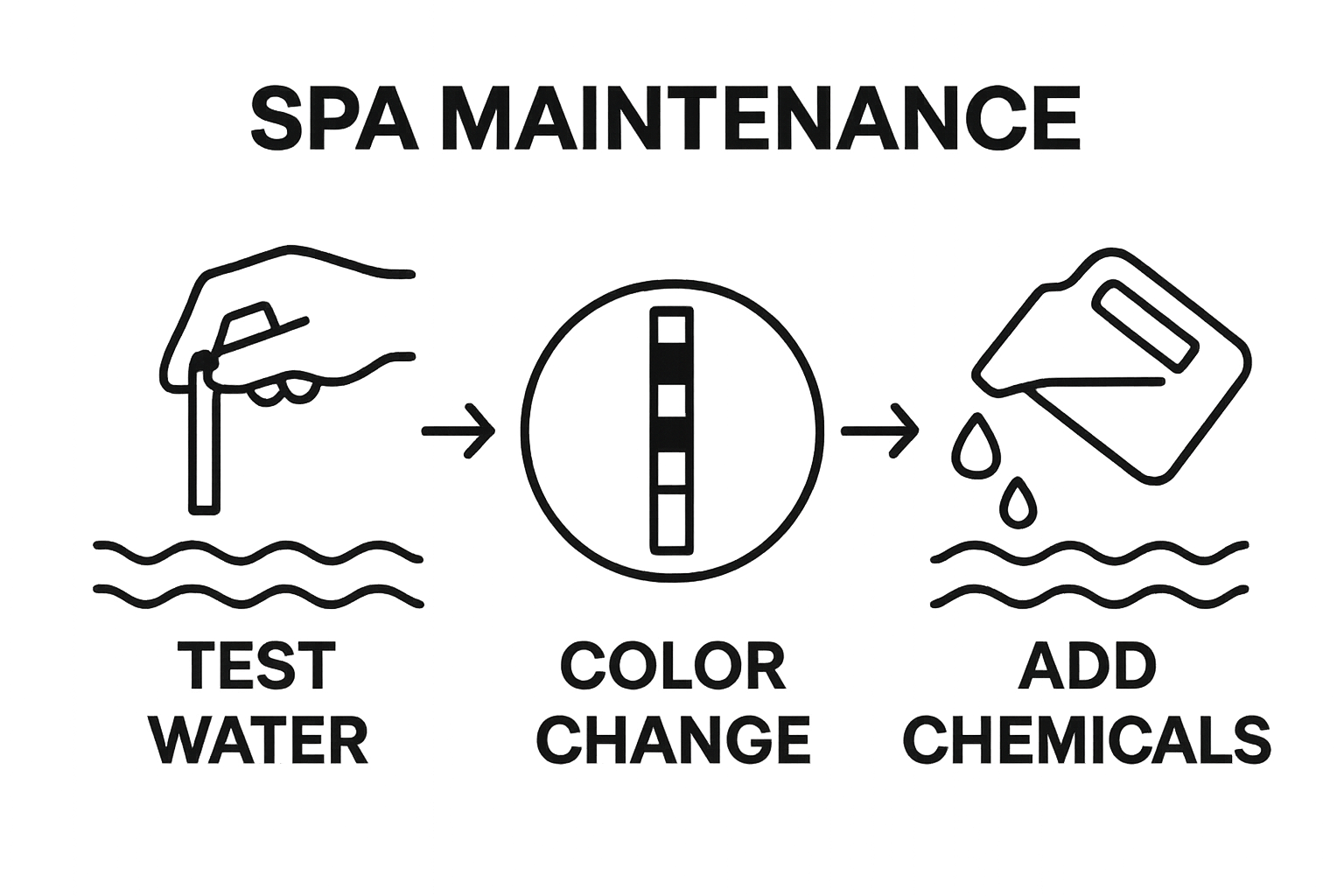
Keep an eye out for warning signs of imbalance. Cloudy water, odd smells, skin irritation after a soak or visible scale all mean you need to act straight away.[2]
Here is a troubleshooting table showing common water problems, likely causes and what to do about them, so you can tackle issues early.
| Problem | Possible Cause | Solution |
|---|---|---|
| Cloudy water | Chemical imbalance, dirty filter | Test and adjust pH/sanitiser, clean or replace filter |
| Unusual odours | Poor sanitisation, bacteria | Shock treat water, maintain correct sanitiser levels |
| Skin irritation | High chemicals, low pH | Balance chemicals within target range |
| Visible scale | High mineral content, pH imbalance | Perform deep cleaning, use scale remover, monitor calcium |
| Reduced water flow | Clogged/old filter | Clean or replace filter |
Remember that water testing is not a one-off; it is an ongoing commitment. The seasons, how often you use the tub and the surroundings can all shift the water quality quickly, which makes regular testing a core part of responsible ownership.
Step 3: Clean Filters and Replace When Necessary
Filters are the quiet workhorses of hot tub care, the main defence against debris, contaminants and water quality problems. Knowing how to clean, look after and eventually replace them keeps your spa clean and working at its best.
Set up a regular cleaning routine, removing and rinsing the filter cartridge at least once a week. Use a garden hose at moderate pressure to spray between the pleats and clear trapped dirt. This simple step stops build-up and keeps the filtration efficient.
Discover advanced filter maintenance techniques to get more from your spa.
A monthly deep clean is essential to keep the filter working well. Soak the cartridge in a specialist filter cleaning solution, which dissolves oils, minerals and stubborn contaminants that rinsing alone cannot shift. Leave it in the solution for about an hour, then rinse thoroughly with clean water. This restores the filter's ability to trap tiny particles and keep the water clear.
Knowing when to replace the filter matters just as much. Most makers recommend a complete replacement every 12 to 18 months, depending on how much you use it and how well you maintain it. Signs it needs replacing now include visible wear, reduced water flow, ongoing cloudiness after cleaning, or physical damage like tears or warping. A worn filter not only drops the water quality but can also strain the pump and heater, leading to bigger, costlier repairs.
Pro tip: always keep a spare cartridge on hand. That lets you rotate two filters, so filtration continues while one is being cleaned or dried. Good filter care is not just about cleanliness; it protects your investment and keeps the tub safe and enjoyable for years.
Step 4: Inspect and Maintain Equipment Components
Thorough equipment inspection is the backbone of preventative hot tub care, protecting your investment and keeping performance up. Regular checks catch problems before they turn into costly repairs, so the spa keeps running smoothly.
Start with a careful visual inspection of everything you can see, paying attention to electrical connections, pump seals and external piping. Look for wear such as cracks, corrosion or odd discolouration that hints at trouble underneath. Check that electrical connections stay tight and free of oxidation, since loose ones create safety hazards and cut efficiency. Learn more about advanced equipment maintenance techniques.
Lubrication is key to keeping mechanical parts happy. Apply a silicone-based lubricant to O-rings, gaskets and moving parts to cut friction and wear. Give the pump seals and jet mechanisms extra attention, as these wear fastest. Check the heater element for scale or mineral deposits that could hamper it, and clean these areas gently with the maker's recommended solutions, taking care not to damage delicate parts.
Electrical maintenance needs a careful eye. Check that all circuit breakers and ground fault interrupt (GFI) switches work by testing them monthly. Listen for odd sounds from pumps or motors that might warn of a failure coming. Grinding, squealing or clicking noises often mean it is time for a professional look. Note your findings in a maintenance log so you can track each component over time.
Pro tip: consider booking a professional inspection once a year, even if you keep up regular maintenance. Expert technicians spot subtle issues an untrained eye would miss, which can save you from expensive repairs and add years to your tub's life.
Step 5: Drain and Refill the Hot Tub Periodically
Draining and refilling is a key part of care that freshens the water, prevents mineral build-up and keeps the tub clean. It is more than swapping water; it acts as a full reset for the whole system.
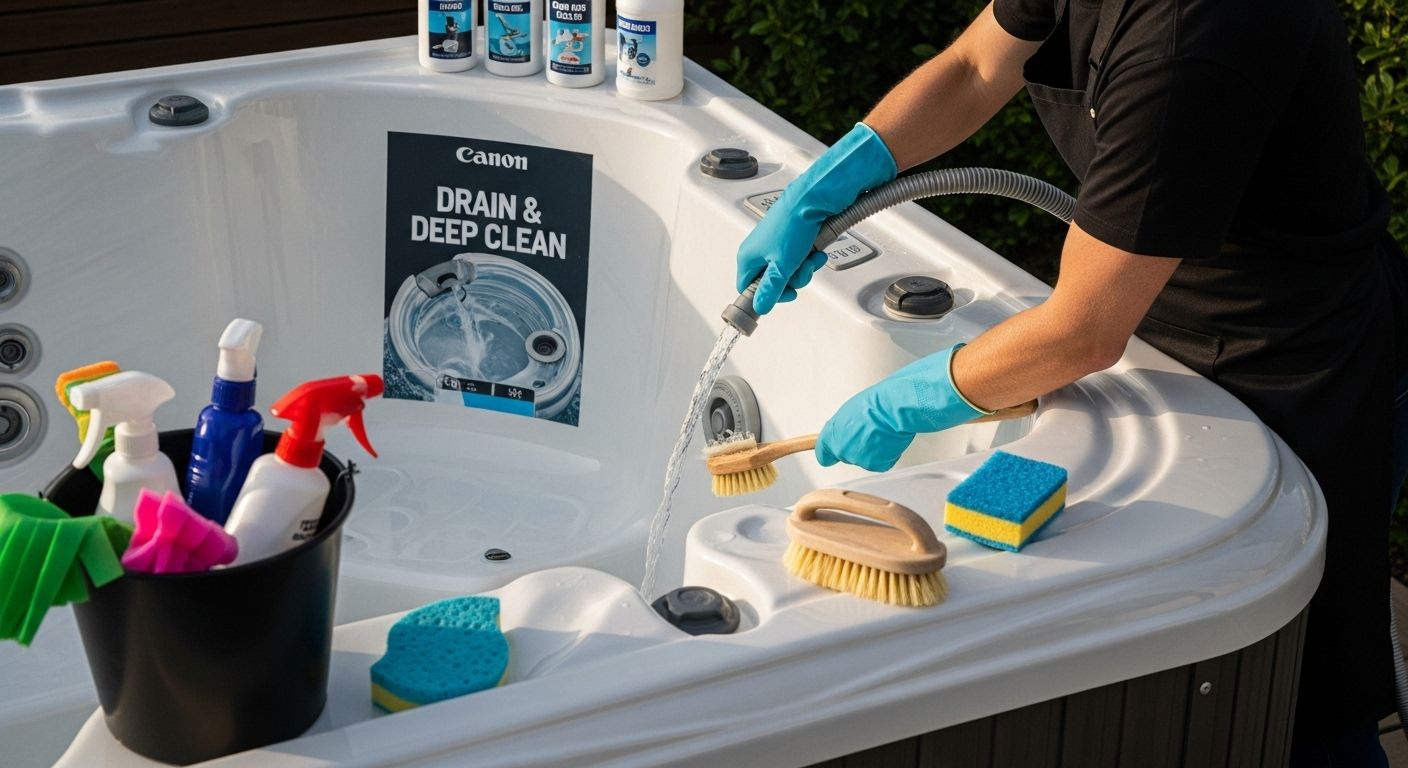
Most owners should plan to completely drain and refresh the water every three to four months, depending on use and water quality. Start by disconnecting the power for safety during draining. Find the drain valve, usually at the bottom of the tub, and attach a garden hose to send the water away from planting or foundations. Some modern tubs have a built-in drain pump that speeds this up. Explore professional water management strategies to sharpen your routine.
Once it is empty, take the chance to clean the interior thoroughly. Use a non-abrasive spa surface cleaner to remove biofilm, scale or residue along the shell, jets and seats. Give the awkward corners and jet surrounds special attention, where bacteria and minerals tend to gather. Check the empty shell for any damage, cracking or wear that might need professional repair before you refill.
Refilling needs a bit of care. Use a pre-filter attachment on the hose to catch contaminants as the water goes in. Fill slowly, letting the water enter through the intended intake ports to avoid airlocks in the plumbing. Once full, add the right start-up chemical treatments straight away to balance the chemistry and stop bacteria growing. Run the pumps for a few minutes to circulate these and check the system works properly.
Pro tip: log every drain and refill. Note the water quality, anything you spotted and the date. This steady approach turns routine care into a proactive plan for a longer-lasting tub and a better soak.
Step 6: Verify Overall System Functionality
Checking the whole system works is the final and most important stage of hot tub care, making sure the spa runs safely, efficiently and reliably. This ties all the earlier steps together into one overall look at the tub's health and performance.
Start with a full electrical check, going carefully over all control panels, buttons and displays for responsiveness and accuracy. Confirm the temperature controls work precisely, the heating engages correctly and every electronic interface responds without delay.[3] Listen for odd sounds from pumps, jets or electrical parts that might hint at mechanical strain. Explore advanced system diagnostics to sharpen your routine.
Inspect all the physical connections, including electrical cables, plumbing joints and mounting points, to check they are secure and aligned. Look for wear, corrosion or signs of water getting in that could undermine the system. Test safety features like the GFI switches and circuit breakers to confirm they trip immediately if something goes wrong electrically. Run each jet through its full cycle, checking for steady pressure, smooth movement and no vibration or odd noise.
Do a thorough heat test by setting the tub to different temperatures and watching how quickly and accurately it reaches and holds them. Note the heat distribution and any cold spots or uneven warming that could point to trouble with the heater or circulation. Pay attention to how quickly the spa recovers its temperature after use, since slow recovery can signal an inefficient pump or heater.
Pro tip: log your system test results in a dedicated maintenance record. Note the date, what you observed and any action taken. This steady approach turns routine checks into a proactive plan, helping you catch problems before they become costly repairs. Consistent, methodical checking is the key to a safe, enjoyable and long-lasting hot tub.
Transform Your Hot Tub Routine with Zagosa Spa & Pool
Battling cloudy water, stubborn chemical imbalances or worn-out filters even though you follow your checklist closely? This guide shows how easy it is to miss a key step or reach for the wrong product. At Zagosa Spa & Pool, we know the pressure to keep clear water, the right pH and spotless equipment. Let those essentials slip and you risk both your comfort and your investment.
Let Zagosa Spa & Pool put you in control. We supply only quality water treatment solutions and spa care products made to take the uncertainty out of every step. With our top-tier hot tub chemicals, filters and cleaning essentials, you can handle water testing, equipment checks and deep cleans with confidence. Visit https://zagosaspapool.com today and shop the very tools highlighted in this checklist. Get the right supplies now and enjoy a sparkling, stress-free hot tub all year round.
Frequently Asked Questions
What supplies are needed for hot tub maintenance?
You will need water testing strips, a water testing kit, chemical treatments (sanitising agents, pH balancers, alkalinity adjusters), cleaning tools (spa skimmer net, soft-bristled brush, cleaning cloths), and gloves. This comprehensive toolkit will streamline your maintenance process.
How often should I test the water chemistry of my hot tub?
It's recommended to test your hot tub water chemistry at least twice a week. Maintaining proper pH, alkalinity, and sanitiser levels is crucial for water quality and safety.
How do I clean and care for my hot tub filters?
You should rinse your filter cartridge weekly and perform a deep clean monthly using a specialised filter cleaning solution. Filters typically need to be replaced every 12 to 18 months, or sooner if you notice signs of damage or reduced water flow.
How often should I drain and refill my hot tub?
You should plan to completely drain and refill your hot tub every three to four months, depending on usage and the quality of the water. This helps refresh water quality and prevent mineral buildup.
Recommended
- 5 Hot Tub Water Problems
- How to Winterise Your Hot Tub
- Is an Ozonator Necessary for Your Hot Tub?
- Water Management Blogs
Sources and review
Reviewed on . Next review due .
- HSG282: The control of legionella and other infectious agents in spa-pool systems - Health and Safety Executive
- PWTAG Code of Practice: the management and treatment of swimming pool water - Pool Water Treatment Advisory Group
- Guidelines for safe recreational water environments. Volume 2: swimming pools and similar environments - World Health Organization