By The Zagosa Team. Published .
Reviewed or updated .
Here is something that catches a lot of people out: roughly 40 percent of British hot tub owners admit they are not confident about looking after their spa safely. Skip the basic checks and you often end up with water problems or, worse, an expensive breakdown, and that is especially true for anyone new to hot tubs in the UK. This guide walks through each part of a proper inspection in plain terms, so it is straightforward to keep both your health and your spa in good shape.
What's Covered
- Step One: Get Your Tools And Safety Gear Ready
- Step Two: Test The Water And Chemistry
- Step Three: Look Over Filters, Jets And Circulation
- Step Four: Check The Electrics
- Step Five: Check Cleanliness And Condition
The Short Version
| Important Insight | Explanation |
|---|---|
| 1. Gather the right tools | Have a multimeter, pH strips and protective gear ready so the check is safe and thorough. |
| 2. Test the water regularly | Measure pH, alkalinity and sanitiser to keep the water safe and hygienic for everyone. |
| 3. Go over filters and jets | Inspect and clean filters and jets to stop blockages and keep the water circulating freely. |
| 4. Work through the electrics | Check every connection for wear or damage to keep things safe and head off shocks or faults. |
| 5. Keep it clean and sound | Give surfaces and parts a proper look to extend the tub's life and keep it safe to use. |
Step One: Get your tools and safety gear ready
Before you start inspecting anything, get the right kit together so the whole check is safe and complete. Safety equipment recommendations from HSE make the point that good preparation matters for any technical examination.
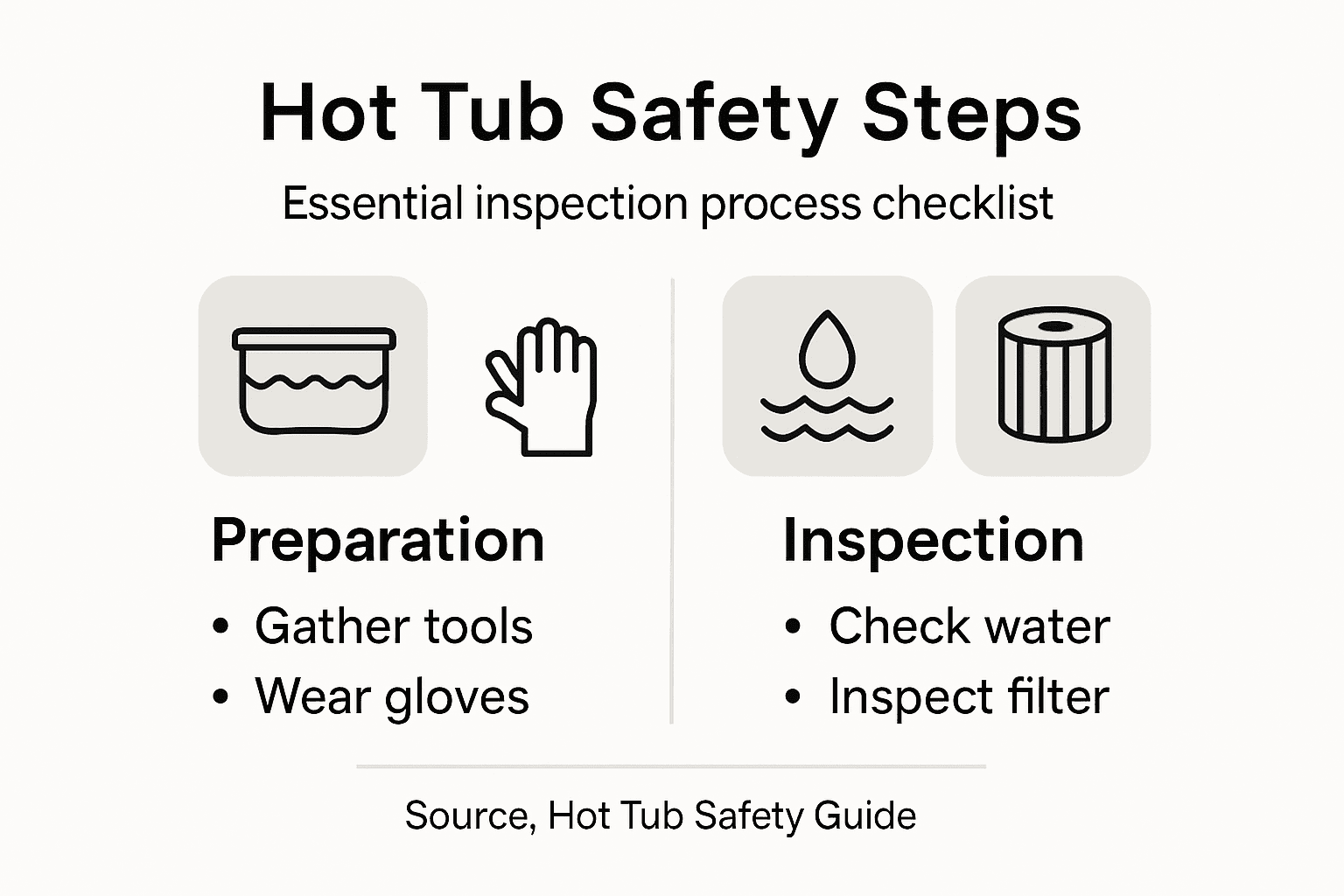
Put together a toolkit built for the job. That means waterproof gloves, a multimeter for electrical testing, pH test strips, a torch for peering into tight spots, a digital thermometer and protective eyewear. Sort out your personal protective equipment too: non-slip shoes with decent grip, comfortable clothing you can move in, and waterproof overalls if you expect to get wet during the check.
The exact kit shifts a little depending on your model, but the basics do not change. University of Essex guidance on hand tool safety suggests checking every tool is in good order before you begin. Make sure cutting tools are sharp, handles are firm and each tool suits the job at hand. Keep everything in a waterproof case so water does not damage it.
Helpful hint: Create a dedicated hot tub inspection checklist and laminate it to keep track of your tools and safety requirements during each assessment.
Step Two: Test the water and chemistry
This is the part that keeps the water safe and clean to sit in, so it pays to be thorough. Hazardous substance regulations underline just how important it is to understand and control your water quality.
Start with good test strips to read the key figures. Check the pH (aim for 7.2 to 7.8), the total alkalinity (between 80 and 120 parts per million) and your sanitiser level, whether that is chlorine or bromine. Those readings help keep microbes at bay and protect your health. Electrical safety considerations also note that badly balanced chemistry can raise the water's conductivity and create an electrical risk.
Note your results down and compare them against the manufacturer's figures for your model. If anything sits outside the ideal range, nudge it back with small, gradual doses of the right chemical. Follow the manufacturer's instructions to the letter, wear protective gloves and make sure the area is well ventilated while you work.
Here is a summary of the target figures and what happens if they drift:
| Parameter | Ideal Range | Why It Matters | Common Issues if Out of Range |
|---|---|---|---|
| pH | 7.2 - 7.8 | Comfort, corrosion prevention | Skin irritation, component damage |
| Total Alkalinity | 80 - 120 ppm | pH stability | Cloudy water, pH drift |
| Chlorine/Bromine | As manufacturer advised | Disinfection and hygiene | Risk of infection, unpleasant odours |
| Water Temperature | Typically 37-40°C | User safety, pathogen control | Overheating, increased bacteria build-up |
Expert recommendation: Invest in a digital water testing kit for more precise measurements and maintain a logbook to track your hot tub's chemical history.
Step Three: Look over filters, jets and circulation
This step covers the parts that keep your spa performing and safe, so work through them methodically. Swim spa component inspection asks for careful attention to each part of the water system.
Start by pulling out the filter and giving it a close look. Check for wear, scale build-up or damage that could dent its performance, then clean it well with a proper filter cleaner to shift any trapped debris or scale. A healthy circulation system keeps both electrical and hygiene problems away. Next, look over the jets for blockages or mineral deposits, using a soft brush on the nozzles so they move freely and stay clear. Give the circulation pump some attention too, listening for odd noises and checking for leaks or wear around the seals and connections.
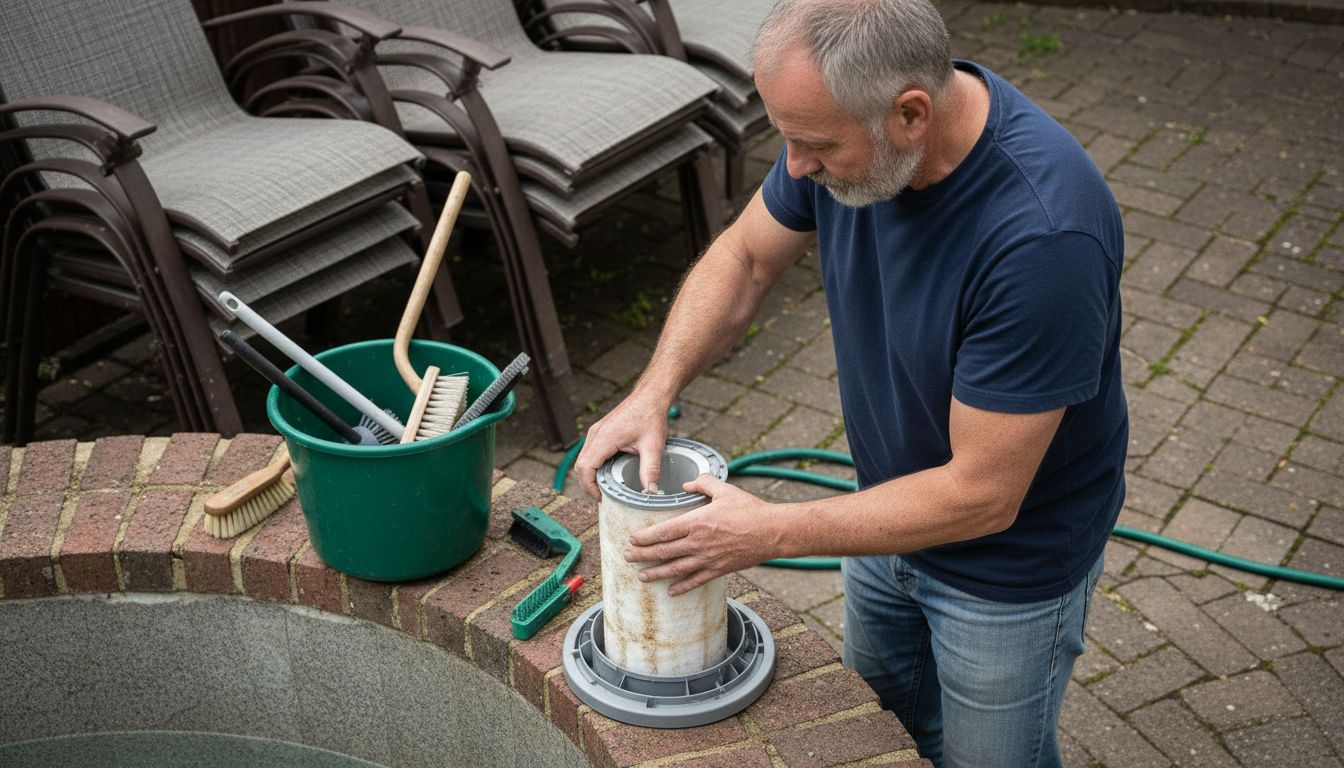
Go over the whole circulation system for corrosion, loose fittings or any sign of leaking. Check the water runs smoothly through every jet and that the pump works without straining. If the flow seems off or you hear anything unusual, that can point to a mechanical fault that is best handled by a professional.
Expert recommendation: Take photographs of your inspection findings to track changes over time and create a comprehensive maintenance history for your hot tub.
Step Four: Check the electrics
The electrical side needs careful checking to keep users safe and avoid hazards. Portable appliance testing guidelines give a useful steer on how to work through the components properly.
Begin with a visual once-over of all the electrical connections, watching for wear, corrosion or damage. Look at the power cable for fraying, cracks or exposed wiring that could be dangerous. Electrical safety rules stress the need for a solid protective earth connection, particularly on tubs with immersed heating elements. Check that every junction box is sealed tight and free of moisture, and use a non-contact voltage tester around the tub to make sure no stray voltage is putting anyone at risk.
Give the control panels particular attention, checking that buttons and switches work smoothly without sticking or any sign of arcing. Watch for discolouration around electrical parts, which can mean overheating or a fault on the way. If anything looks off or you are unsure about any electrical point, call in a qualified electrician who knows hot tub installations.
Expert recommendation: Invest in a digital multimeter and learn basic electrical testing techniques to conduct more thorough periodic checks between professional inspections.
Step Five: Check cleanliness and condition
The last step is about making sure the tub is clean and structurally sound throughout. There are clear standards for surface cleanliness that give you a thorough checklist to follow.
Start with a careful visual sweep of every surface, watching for wear, discolouration or damage. Look over the interior shell for cracks, chips or spots where bacteria could gather. Pay close attention to seals, panel edges and the awkward corners where grime settles. Surface particle concentration assessments suggest using a bright light and a magnifying glass to spot the tiny flaws that can undermine hygiene.
Have a good look at the cover as well, checking for tears, mould or any weak spots. Make sure it fits snugly and seals properly when shut. Test the removable bits such as headrests and drink holders for cleanliness and a secure fit. Run your hands over the surfaces to feel for rough patches or hidden problems that are not easy to see.
Expert recommendation: Document your inspection findings with dated photographs to track the hot tub's condition over time and identify potential developing issues early.
This table shows what each step tackles and why it is worth doing:
| Step | Focus Area | Key Risk Addressed | Added Value for Owners |
|---|---|---|---|
| Tool & PPE Preparation | Personal Safety | Injury, ineffective checks | Reduces accidents & missed faults |
| Water Quality & Chemistry | Hygiene/Health | Microbial growth, corrosion | Maintains safe water environment |
| Filters & Circulation | Mechanical Health | Blockages, system strain | Prevents major repairs |
| Electrical Check | Electrical Safety | Shock, fire, malfunction | Ensures compliance and safety |
| Surface & Cover Cleanliness | Integrity/Cleaning | Structural and hygiene risks | Extends hot tub lifespan |
Keep Your Spa Safe with Zagosa Spa & Pool
Getting the water quality and chemistry right sits at the heart of a safe hot tub inspection. As this guide shows, the big risks to head off are microbial growth, corrosion and electrical hazards, all of which come back to keeping your chemistry in check. At Zagosa Spa & Pool we know these worries well and offer a broad range of quality hot tub chemicals and spa essentials to keep your water clean, safe and comfortable for every soak.
Take charge of your hot tub care today with Zagosa's trusted products. Visit Zagosa Spa & Pool to browse our well-made water treatment range. Do not wait for problems to crop up, pick quality solutions that support every stage of your inspection and help your spa last longer.
Frequently Asked Questions
What tools do I need for an inspection?
You will want waterproof gloves, a multimeter for electrical testing, pH test strips, a torch, a digital thermometer and protective eyewear. Keep them together in a waterproof case so they stay organised and in good order for every check.
How do I test the water?
Use good test strips to read the pH, total alkalinity and sanitiser level. Aim for a pH between 7.2 and 7.8 and total alkalinity between 80 and 120 parts per million to keep the water safe and clean.
What should I check in the filtration system?
Take out the filter and clean it, checking for wear or damage. Look over the jets for blockages and examine the circulation pump for leaks or odd noises so it keeps running well without strain.
How do I check electrical safety?
Give all the electrical connections a visual once-over for wear or corrosion. Use a non-contact voltage tester to pick up any stray currents and make sure every junction box is sealed tight against moisture.
What should I look for when checking cleanliness?
Go over all the surfaces for discolouration, cracks or damage. Pay close attention to seals and corners, and to the cover, making sure everything is clean and sound to avoid hygiene and structural problems.
How often should I inspect my hot tub?
Aim to check it at least once a month so you spot issues early and keep it safe to use. Regular inspections help maintain water quality, electrical safety and overall condition, and can extend the tub's life by around 20 percent.