By The Zagosa Team. Published .
Reviewed or updated .
Clear water is about more than looks, it is about safety and comfort too. Hot tubs that get regular care run into far fewer problems with bacteria build-up. If you want a relaxing soak without health worries, keeping the water balanced and free of debris is a must. This guide sets out simple steps that make chlorinating a hot tub stress-free, so you have peace of mind every time you step in.
Table of Contents
- Step 1: Check the water and clear debris
- Step 2: Test and balance the chemistry
- Step 3: Measure and add the right amount of chlorine
- Step 4: Spread the chlorine and circulate the water
- Step 5: Check the chlorine level before use
Quick Summary
| Key Point | Explanation |
|---|---|
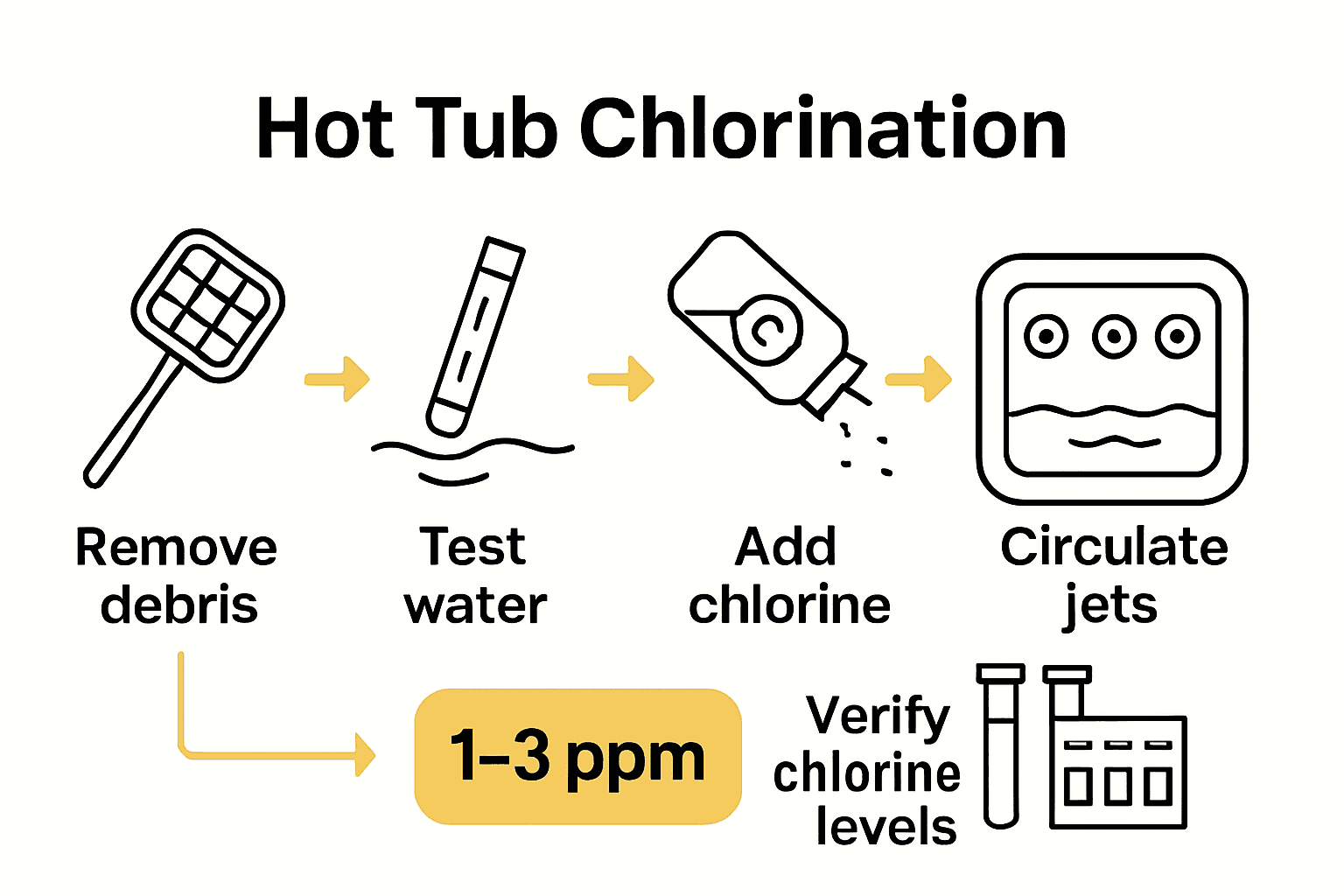
| 1. Clear debris from the water | Skim out leaves and floating bits regularly to keep the tub hygienic and safe. |
| 2. Test and balance the chemistry | Use a test kit to check pH, alkalinity and sanitiser, adjusting as needed for safety. |
| 3. Measure the right dose | Work out the chlorine amount from your tub's capacity for proper, safe sanitisation. |
| 4. Run the jets to mix it in | Run the jets at full power after adding chlorine for thorough mixing and sanitisation. |
| 5. Check the level before use | Test the chlorine to confirm it is within the safe range of 1 to 3 parts per million before you get in. |
 |
Step 1: Check the water and clear debris
Getting your hot tub ready for chlorine starts with a proper look at the water and a debris clear-out. According to phta.org, regular upkeep is crucial for a safe, enjoyable soak.
Start by scanning the water surface and the inside of the tub. Look for leaves, insects, twigs or any floating bits that could spoil the water. Use a skimmer net to lift them out, working steadily from one side to the other. Pay particular attention to corners and the spots near the jets, where debris tends to gather. phta.org stresses that keeping the water free of debris matters for hygiene and for heading off safety problems.
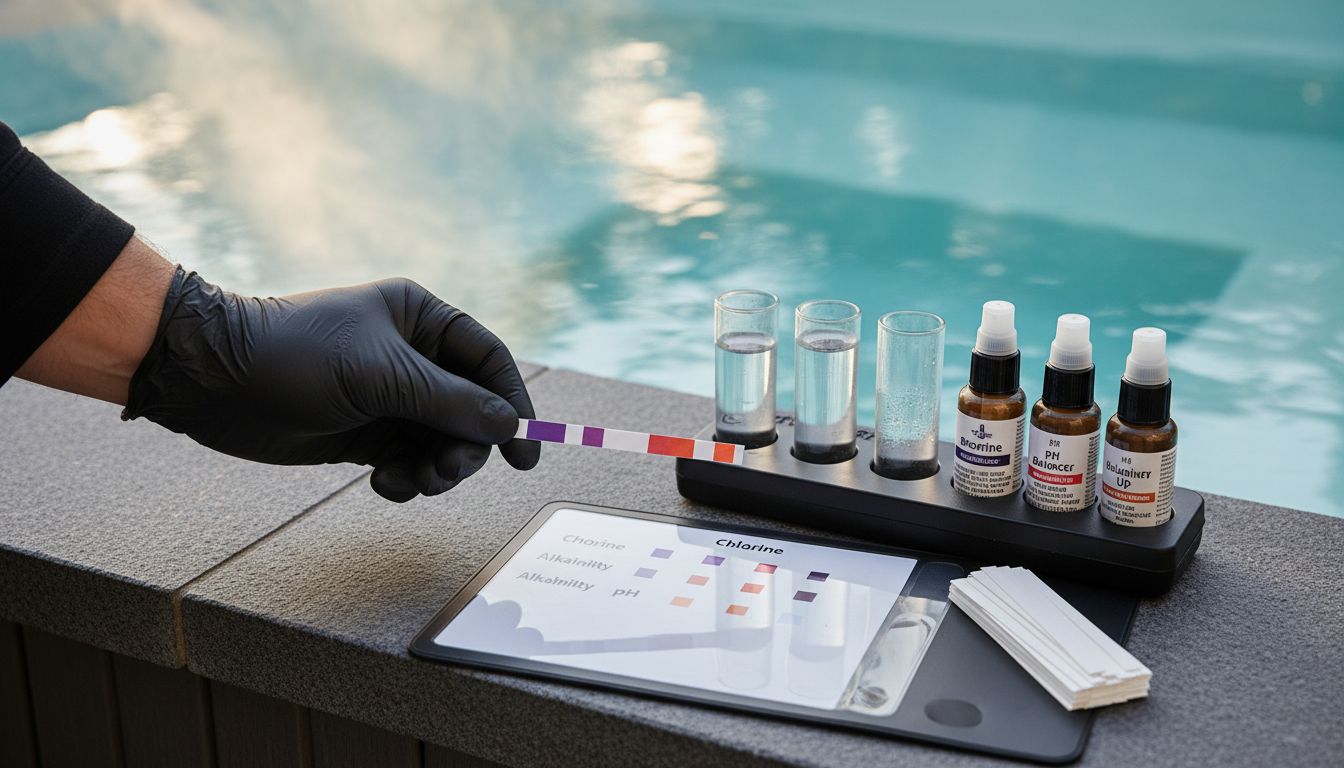
Once the visible debris is gone, take a clean test strip to check the chemistry. You want a clear baseline before adding chlorine. Dip the strip just below the surface for a few seconds, then compare the colours to the chart with your kit to read the current pH and sanitiser levels. This makes sure you add the right amount of chlorine.
Pro tip: keep your skimmer net and test strips within easy reach of the tub for quick upkeep.
With a clean base to work from, you are ready to move on to adding chlorine.
Step 2: Test and balance the chemistry
Once the debris is out, the next key step is testing and balancing the chemistry. phta.org stresses that the right chemistry is essential for a safe, comfortable soak.
Start with a full test kit made for hot tubs. These usually measure several things, including pH, total alkalinity, calcium hardness and sanitiser level. Dip the strip in, keeping it fully under for the recommended time, usually around 15 seconds, then compare the colours to the chart to read your current chemistry. Check pH (ideally 7.2 to 7.8), total alkalinity (80 to 120 parts per million) and sanitiser level.
Balancing takes careful adjustment. If pH is too low, add a pH increaser; if it is too high, use a pH reducer. For total alkalinity, add an alkalinity increaser or reducer as needed. phta.org notes that the right balance prevents bacterial growth and protects the equipment from damage.
Pro tip: add chemicals a little at a time and retest after each change to avoid overcorrecting.
With the chemistry balanced, you are ready for the next step, adding chlorine.
Step 3: Measure and add the right amount of chlorine
phta.org stresses that sanitising with the right amount of chlorine is key to clean, bacteria-free water. The correct dose depends on your tub's water volume, which usually falls between 300 and 500 gallons.
Start by checking your tub's volume on the maker's label or in the manual. Most standard home hot tubs need roughly 1 to 2 teaspoons of chlorine granules per 100 gallons. Use a reliable measuring spoon kept just for pool chemicals to be precise. Sprinkle the granules across the surface, spreading them evenly, then let the jets run for a few minutes to circulate and dissolve the chlorine.
As phta.org notes, the right chemical balance prevents bacterial growth and protects the equipment. After adding chlorine, wait around 20 to 30 minutes before retesting to confirm the sanitiser sits within the recommended 1 to 3 parts per million.
Pro tip: always wear protective gloves and safety glasses when handling chlorine to avoid skin and eye irritation.
Your hot tub is now ready to use safely, with the chlorine properly balanced.
Step 4: Spread the chlorine and circulate the water
phta.org stresses that good circulation is crucial for water quality and for spreading chemicals evenly. The trick to dispersing chlorine well is understanding your tub's jets and how the water moves.
Turn all the jets to full power after adding chlorine. That creates plenty of movement to spread the chemicals right through the tub. Stand by the control panel and turn the jets on one by one. Some tubs have several jet settings, so try different setups to get the most thorough circulation. Move around the tub and watch the water, making sure no areas stay still. The aim is a gentle but steady flow that helps dissolve and spread the chlorine evenly.
Pay close attention to the areas around the return jets and near the surface, as these are key for even spread. Let the jets run for about 10 to 15 minutes, which gives enough time for the chemicals to blend in fully. phta.org recommends steady circulation to keep water quality consistently high.
Pro tip: run the jets at different speeds to create varied currents that spread the chemicals as widely as possible.
With the chlorine spread evenly, your hot tub is set for good sanitisation and a pleasant soak.
Step 5: Check the chlorine level before use
phta.org stresses that regular testing is essential to keep the tub safe and ready. Checking the chlorine level is the final key step before you enjoy the water.
Take your test kit and dip a fresh strip just below the surface for about 15 seconds, moving it gently through the water for an accurate reading. Compare the colours to the chart with your kit. For chlorine, you want a reading between 1 and 3 parts per million. If the colour shows it is too low, add more chlorine. If it is too high, leave the tub with the cover open to let the excess disperse.
phta.org notes that the right chemical balance prevents bacterial growth and protects the equipment. A well-balanced tub keeps the water safe and helps the spa and its parts last longer.
Pro tip: keep a log of your test results to track how the chemistry changes over time.
With the chlorine level confirmed, you are ready to enjoy your hot tub safely.
Keep Your Hot Tub Sparkling Clean with Zagosa Spa & Pool
Holding the right chlorine level and balanced chemistry can feel fiddly and time-consuming. You want water that is safe and inviting every time you step in. Zagosa Spa & Pool understands that and offers a carefully chosen selection of quality hot tub chemicals built to support every step of water care, from testing to treatment. Take the guesswork out and avoid overcorrecting with products you can trust.
Explore our range of professional-grade products made to keep your chlorine level just right and your water clear. Visit Zagosa Spa & Pool to find the essentials for easy, effective hot tub care. Do not wait until the chemistry drifts out of balance. Take charge now for a safer, more relaxing soak every time.
Frequently Asked Questions
How often should I test the chlorine levels in my hot tub?
Test before each use and at least once a week as part of regular upkeep. Use a test kit to confirm chlorine sits within the ideal 1 to 3 parts per million.
What should I do if my chlorine levels are too low?
Add more chlorine. Measure roughly 1 to 2 teaspoons of granules per 100 gallons, then wait 20 to 30 minutes before retesting.
Can I add chlorine to my hot tub without testing the water first?
No, always test the chemistry first. That way you know the current levels and can add the right amount for proper sanitisation.
How can I ensure the chlorine is evenly distributed in my hot tub?
Turn all the jets to full power after adding chlorine and run them for about 10 to 15 minutes to circulate the water and spread the chemicals evenly.
What should I do if my chlorine levels are too high?
Leave the tub with the cover open to let the excess chlorine disperse. It may take a few hours to drop into the recommended range, so retest now and then.
Why is maintaining proper water chemistry important for my hot tub?
The right chemistry, chlorine included, prevents bacterial growth and protects the equipment. A well-balanced tub keeps the water safe and helps the spa last longer.