By The Zagosa Team. Published .
Reviewed or updated .
Keeping hot tub water fresh and safe can feel like a constant juggling act. For UK spa owners, knowing the difference between free chlorine and total chlorine is key to holding harmful bacteria at bay and getting the most from your investment. Focus on free chlorine as the active sanitiser and you can sidestep cloudy water, off odours and skin irritation, while keeping a relaxing soak that sits within UK guidance.
Table of Contents
- Free Chlorine Explained For Hot Tub Owners
- How Free Chlorine Works In Hot Tub Water
- Testing And Maintaining Proper Chlorine Levels
- UK Standards And Health Implications
- Common Mistakes When Managing Chlorine
Key Takeaways
| Point | Details |
|---|---|
| Importance of Free Chlorine | Free chlorine is crucial for sanitising hot tub water, actively killing bacteria and contaminants while combined chlorine is ineffective. |
| Optimal Chlorine Levels | Maintain free chlorine levels between 2 and 4 parts per million (ppm) for safety; below this, bacteria can thrive, and above can cause irritation. |
| Regular Testing | Test free chlorine levels every 2 to 3 days and after heavy use or rain to prevent water quality issues. |
| Common Missteps | Avoid underestimating the need for consistent testing and adjusting chlorine levels based on actual usage to ensure a safe hot tub environment. |
Free Chlorine Explained for Hot Tub Owners
Free chlorine is the active form of chlorine that actually disinfects your hot tub water. As chlorine dissolves, it turns into hypochlorous acid, the compound that does the real work of killing bacteria, algae and other nasties. That is why free chlorine matters far more than total chlorine when you test your spa.
Picture it this way: total chlorine takes in both the active free chlorine and the 'spent' chlorine that has already done its job. That spent portion, known as combined chlorine, no longer sanitises well. Your test kit tells the two apart, and it is the free chlorine you want to keep on top of.
Here is a quick reference comparing free chlorine and combined chlorine:
| Type of Chlorine | Role in Spa Water | Effectiveness | Typical Testing Method |
|---|---|---|---|
| Free Chlorine | Actively sanitises and oxidises contaminants | Highly effective | Measured directly with test kits |
| Combined Chlorine | Indicates spent chlorine, forms after reaction | Poor, causes irritation | Calculated from total minus free chlorine |
Understanding how chlorine forms in aqueous solutions helps explain why free chlorine is your main concern. When you add chlorine tablets or liquid, that initial spike is the free chlorine available to sanitise. Over time, as it neutralises contaminants, some of it turns into combined chlorine, which is why routine testing and topping up become necessary.
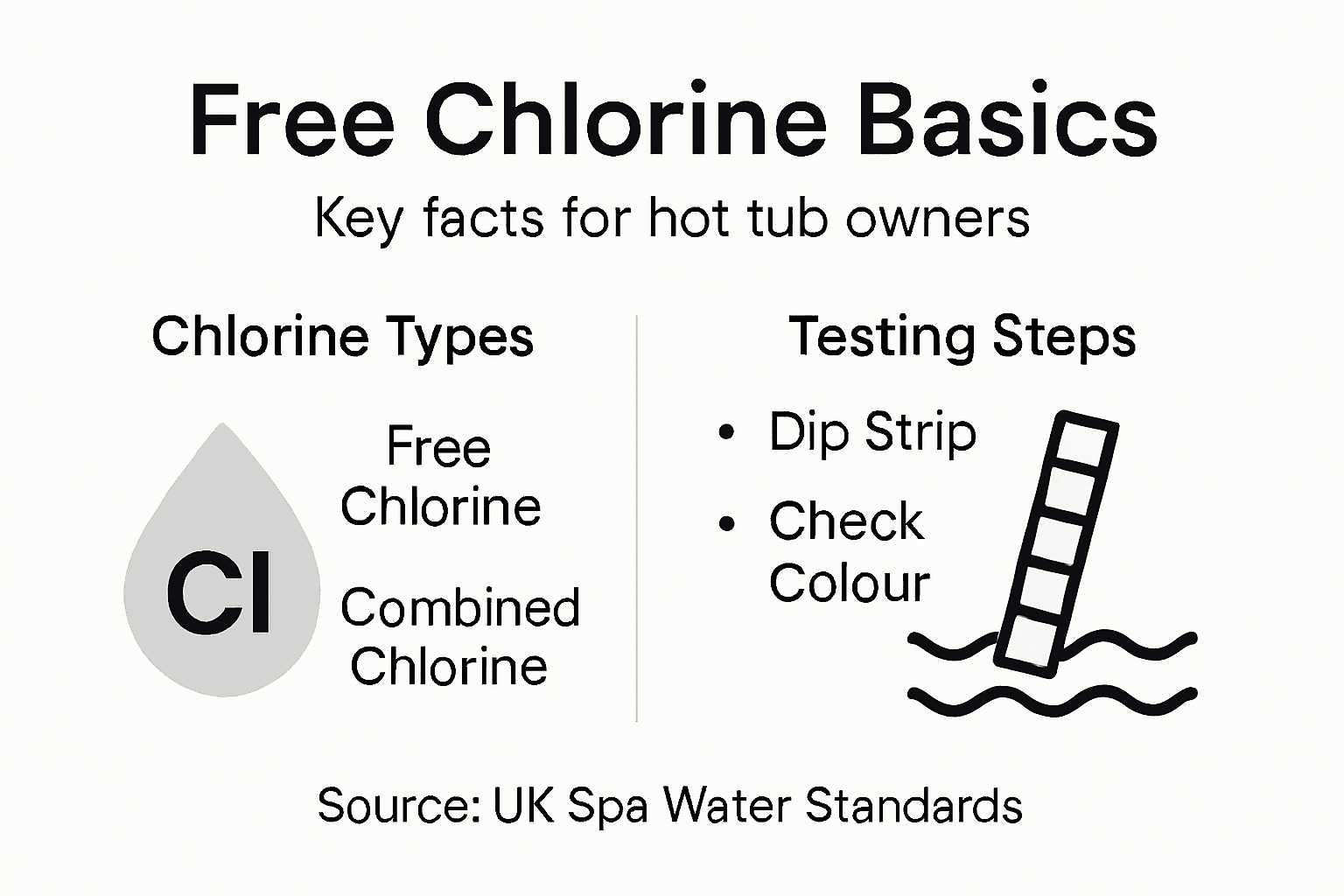
Most hot tub guides suggest holding free chlorine between 2 and 4 parts per million (ppm) for the best mix of safety and comfort. Below 2 ppm, bacteria can start to multiply. Above 4 ppm, you will likely notice a chlorine smell, eye irritation and that classic pool odour, which actually points to chloramine buildup rather than too much chlorine. Get this balance right and your spa goes from uncomfortable to genuinely relaxing.
The reason chlorine's oxidative properties prove essential for water treatment is simple: those oxidising agents break down organic matter and kill microorganisms. Your tub's warm water speeds up the reaction, which is why spas need slightly higher chlorine levels than pools.
Pro tip: Test your free chlorine every 2 to 3 days during regular use, and immediately after heavy bather load or rain, to catch problems before they affect water quality.
How Free Chlorine Works in Hot Tub Water
When you add chlorine to your hot tub, something rather clever happens at the molecular level. The chlorine dissolves and converts into hypochlorous acid (HOCl), the actual disinfectant doing all the heavy lifting. This change is exactly why free chlorine counts for so much. Without it, your chlorine tablets would just sit in the tub achieving nothing.
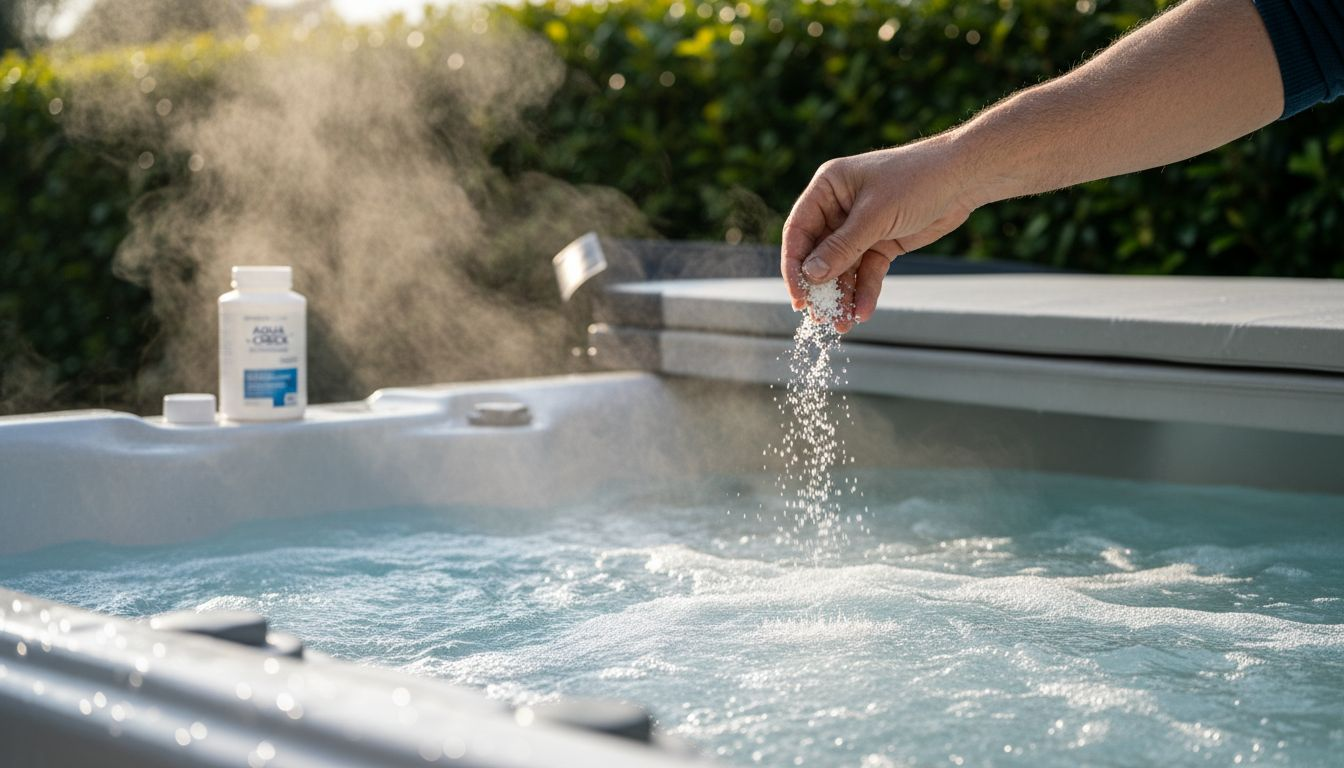
Hypochlorous acid works by attacking the cell walls of bacteria, viruses and algae. Chlorine's oxidative action essentially breaks these microorganisms down from the inside out. Your hot tub stays clear and safe because this acid is always patrolling the water, neutralising anything harmful before it becomes a problem. The process runs on continuously as long as you keep free chlorine at the right level.
The warmth of your tub actually speeds this reaction up. Your spa heats the water to around 37 to 40 degrees Celsius, which makes free chlorine oxidise contaminants faster than in a swimming pool held at 25 degrees Celsius. That is why hot tubs usually need higher free chlorine concentrations than pools.
How well chlorine sees off pathogens through oxidation depends partly on your water's pH. When the water is slightly acidic (pH around 7.0 to 7.4), the hypochlorous acid form stays dominant and works best. Let pH drift too high and more chlorine converts to a weaker form, the hypochlorite ion, meaning you need more chlorine for the same disinfection.
As free chlorine does its work, it gradually runs down. The molecules that have neutralised contaminants turn into combined chlorine and can no longer sanitise. This cycle keeps repeating, which is why regular testing and top-ups are essential to a safe spa.
Pro tip: Check your water pH regularly alongside free chlorine levels, as proper pH ensures your chlorine works at peak efficiency and prevents wasteful over-chlorination.
Testing and Maintaining Proper Chlorine Levels
Testing your water regularly is the only way to know whether your free chlorine is pulling its weight. A simple test kit shows your current free chlorine level in seconds. You can use liquid reagent kits or digital testers; both give accurate readings when used properly. Testing twice a week during regular use keeps you ahead of trouble.
When you test, you are measuring the amount of active chlorine available to sanitise the water. Maintaining effective disinfectant concentrations means knowing your target range. For hot tubs, that target sits between 2 and 4 ppm. Below 2 ppm, bacteria multiply quickly. Above 4 ppm, you risk irritation and chlorine-taste complaints from bathers.
How much chlorine to add depends on your test results. If levels drop below 2 ppm, top them up with chlorine tablets, liquid or powder. Keeping chlorine in the safe range protects both the water and the people in it. Most owners add chlorine every few days, though it varies with bather load, sunlight and water temperature.
How often you add matters as much as how much. Busy weekends or warm weather burn through chlorine faster, calling for more frequent testing and topping up. The weather plays its part too. Ultraviolet light from sunshine breaks free chlorine down quickly, which is why outdoor spas need more chlorine than covered ones.
Summary of factors influencing hot tub free chlorine levels:
| Influencing Factor | Impact on Chlorine Levels | Suggested Action |
|---|---|---|
| Warm water temperature | Accelerates chlorine depletion | Test and dose more frequently |
| High bather load | Increases contaminant introduction | Increase testing after use |
| Sunlight exposure | Breaks down chlorine rapidly | Add chlorine more often outdoors |
| Incorrect storage | Decreases chlorine potency | Store in cool, dry, ventilated place |
Do not overlook your test kit's expiry date. Out-of-date reagents give false readings, leading you to add too much or too little chlorine. Replace your kit yearly, or whenever the results turn inconsistent. Store it out of direct sunlight and away from extreme temperatures to keep it accurate.
Pro tip: Test your free chlorine every morning before the spa is used, then again in the evening after bathers have finished, giving you a complete picture of how quickly your chlorine depletes during actual use.
UK Standards and Health Implications
The UK keeps strict standards for chlorine use in water treatment, hot tubs and spas included. These rules exist to protect public health and keep water safe across both home and commercial installations. Knowing them helps you stay compliant while keeping everyone who uses your spa safe.
Recommended limits for free chlorine concentrations come from UK water industry guidelines. For hot tubs in particular, the acceptable range sits between 2 and 4 ppm of free chlorine. That range kills pathogens well while staying safe for bathers. Going above 4 ppm raises health risks without adding any extra sanitising benefit.
Too much chlorine brings real health problems. Eye irritation, red skin and respiratory irritation all trace back to over-chlorination. Plenty of people take a strong chlorine smell as a sign of safety, but that odour actually signals chloramine forming, a mark of poor water management. Good free chlorine control removes both the smell and those health worries.
Under-chlorinated water brings different but equally serious problems. Bacteria, viruses and algae multiply fast once free chlorine drops below 2 ppm. Bathers can pick up legionella, pseudomonas and other waterborne pathogens from contaminated spa water. Regular testing heads this off entirely by catching chlorine levels before they become a problem.
UK rules also cover handling and storage safety. Chlorine products must be kept away from heat, direct sunlight and incompatible chemicals. Many owners stash chlorine tablets in damp basements or garages, a risky habit that speeds up degradation and can trigger dangerous chemical reactions. Keep your chlorine somewhere cool, dry and well ventilated.
Personal protective equipment matters when handling concentrated chlorine solutions. Gloves and eye protection prevent chemical burns. Always add chlorine to water, never the other way round. Adding water to concentrated chlorine causes violent reactions that can cause serious injury.
Pro tip: Keep records of your free chlorine readings and chlorine additions, creating a maintenance log that demonstrates compliance with UK standards and helps identify patterns in your spa's chemical consumption.
Common Mistakes When Managing Chlorine
Most owners make the same predictable chlorine mistakes that undercut water quality and safety. Knowing the pitfalls helps you dodge them completely. The good news is that once you spot these errors, they are easy enough to put right.
Skipping regular testing is the most common slip. Many owners assume chlorine stays steady between additions, then wonder why the water clouds over or starts to smell. A patchy testing schedule stops you catching chlorine problems early, letting under- or over-chlorination build up unchecked. Test your free chlorine at least twice a week to catch issues before they turn serious.
Poor storage quickly degrades your chlorine supply. Keeping tablets in a damp bathroom, in direct sunlight or near heat sources cuts their effectiveness sharply. The chlorine may look unchanged while its potency has quietly dropped. Store tablets somewhere cool, dry and ventilated, ideally in a sealed container inside a dedicated cabinet.
Adding chlorine without checking the current level leads to dangerous over-chlorination. You might dose on a routine rather than on what the test actually says. That wastes chlorine and makes for an uncomfortable soak. Dose too rarely, on the other hand, and the chlorine runs down, letting bacteria multiply. Base every addition on your most recent reading.
Muddling up free and total chlorine trips up plenty of new owners. You might fixate on total chlorine when free chlorine is what actually sanitises the water. Total chlorine includes spent chlorine that does no sanitising at all. Always test and maintain free chlorine specifically, not total chlorine.
Failing to adjust for how the tub is used creates predictable problems. A quiet week needs very little chlorine, but a busy weekend with several guests drains it fast. Heavy bather loads, warm weather and rain all speed up consumption. Anticipate these spells and test more often to match.
Pro tip: Set phone reminders for testing days and note your readings in a simple spreadsheet, making it easy to spot trends and adjust your routine before water quality issues develop.
Keep Your Hot Tub Safe and Sparkling with Zagosa Spa & Pool
Holding the right level of free chlorine is essential to a relaxing, safe spa. Balancing free chlorine between 2 and 4 ppm, keeping chloramine buildup at bay and testing often can all feel like a lot to manage. Zagosa Spa & Pool understands these sticking points, whether it is the confusing gap between free and combined chlorine, the effect of warm water or the need for reliable, easy-to-use products that help you keep the water right without the fuss.

Take full charge of your water treatment with Zagosa's range of premium hot tub chemicals and spa essentials. Our products are carefully designed and thoroughly tested to help you manage free chlorine efficiently and keep pH in the ideal range, so hypochlorous acid does its job perfectly every time. See how simple it is to keep your spa hygienic and comfortable by visiting Zagosa Spa & Pool today. Explore reliable water treatment solutions and stop worrying about eye irritation or unpleasant smells. Start enjoying your spa safely with professional-quality products from a trusted Zagosa Ltd Brand.
Frequently Asked Questions
What is free chlorine and why is it important for hot tubs?
Free chlorine is the active form of chlorine that disinfects hot tub water by converting into hypochlorous acid. It is essential for killing bacteria, algae, and other contaminants, making it crucial for maintaining water safety.
How often should I test the free chlorine levels in my hot tub?
It is recommended to test free chlorine levels every 2 to 3 days during regular use, and immediately after heavy bather loads or rain, to ensure that water quality remains optimal.
What should my free chlorine levels be for safe hot tub use?
For safe and effective sanitisation, free chlorine levels should be maintained between 2 and 4 parts per million (ppm). Levels below 2 ppm can lead to bacterial growth, while levels above 4 ppm can cause skin and eye irritation.
How does temperature affect free chlorine effectiveness in a hot tub?
The warm water temperature of a hot tub accelerates the oxidation process, making free chlorine work more effectively. This means hot tubs typically require higher chlorine concentrations than swimming pools to maintain proper disinfection.
Recommended
- Free Chlorine in Hot Tubs: Why Water Balance Matters - Zagosa Spa & Pool
- Why are chlorine tablets so popular as a biocide - Zagosa Spa & Pool
- Why are hot tub bromine tablets so widely used? - Zagosa Spa & Pool
- Global market for bromine hot tubs and pools - Zagosa Spa & Pool
- Why Build a Pool in Central Florida? Key Benefits