By The Zagosa Team. Published .
Reviewed or updated .
Fresh, inviting spa water is a daily job for owners up and down the UK. Every new guest arrives expecting the water to be clean and safe, so choosing the right chlorine approach is a lot more than ticking a box. Keep the water clear and hold free chlorine in the recommended 1 to 3 parts per million (ppm) band, and you can meet the strict safety rules while giving every visitor a soak worth having.
Table of Contents
- What Chlorine Does for Spa Water
- Types of Chlorine Used in Spas
- Safe Dosing and Application Standards
- Health Risks and Common Mistakes
- UK Legal Responsibilities for Spa Operators
- Alternatives to Chlorine-Based Spa Treatment
Key Takeaways
| Point | Details |
|---|---|
| Chlorine is Essential for Spa Water Safety | Chlorine effectively eliminates harmful microorganisms, ensuring user safety in a shared spa environment. Maintaining free chlorine levels between 1 and 3 ppm is critical for optimal sanitisation. |
| Selection of Chlorine Compounds Matters | Different chlorine types, such as Calcium Hypochlorite and Chlorine Dioxide, offer unique benefits for spa maintenance. Choosing the right compound based on specific needs is crucial for effective water treatment. |
| Rigorous Monitoring is Key | Regular testing of water chemistry is essential to maintain safe chlorine levels and optimal pH balance. Testing should occur a minimum of three times daily to prevent imbalances. |
| Legal Compliance is Non-Negotiable | Spa operators must adhere to UK regulations regarding water safety management and staff training. A comprehensive compliance manual should be maintained to ensure all legal obligations are met. |
What Chlorine Does for Spa Water
At its heart, spa water care leans on chlorine as the key sanitiser, shielding bathers from harmful microbial contamination. Once it dissolves, chlorine turns into powerful disinfecting compounds that see off the bacteria, viruses and other microorganisms that would otherwise make the water unsafe.
Chlorine does several important jobs in spa water:
- Eliminates Harmful Microorganisms: Destroys bacteria, viruses, and algae
- Prevents Biofilm Formation: Stops microbial colonies from establishing on surfaces
- Maintains Water Clarity: Helps remove organic contaminants that cause cloudiness
- Controls Pathogen Spread: Reduces transmission risks in shared spa environments
The disinfecting itself happens through hypochlorous acid production, which actively breaks down the cell structures of microbes. Those chemical reactions turn chlorine compounds into strong oxidisers that neutralise the health risks.
The professional guidance is to hold free chlorine levels between 1 and 3 parts per million (ppm) for proper sanitisation. Anything above 5 ppm needs sorting straight away to avoid irritating users or throwing the chemistry out.
Proper chlorine management is not just about adding chemicals, but creating a precise, balanced water environment that ensures user safety and enjoyment.
Pro tip: Always test your spa water chlorine levels weekly and adjust concentrations systematically to maintain the ideal 1-3 ppm range.
Types of Chlorine Used in Spas
Spa treatment draws on several chlorine compounds, each bringing its own qualities to the job of keeping water clean. Hypochlorite solutions are the most familiar chlorine types in spa upkeep, with different formulations built for different treatment needs.
The main chlorine types used in spas are:
- Calcium Hypochlorite Tablets:
- Solid form with 33-35% chlorine concentration
- Easy to store and measure
- Quickly dissolves in water
- Liquid Chlorine Hypochlorites:
- Contains 10-15% chlorine solution
- Rapid distribution in water
- Ideal for quick sanitisation
- Chlorine Dioxide:
- Powerful oxidising agent
- Less corrosive than traditional chlorine
- Requires careful handling due to potential explosiveness
Whichever you choose, each type produces hypochlorous acid as it dissolves, and that is the real disinfecting agent. What suits you comes down to spa size, how often you maintain it, and your particular treatment needs.
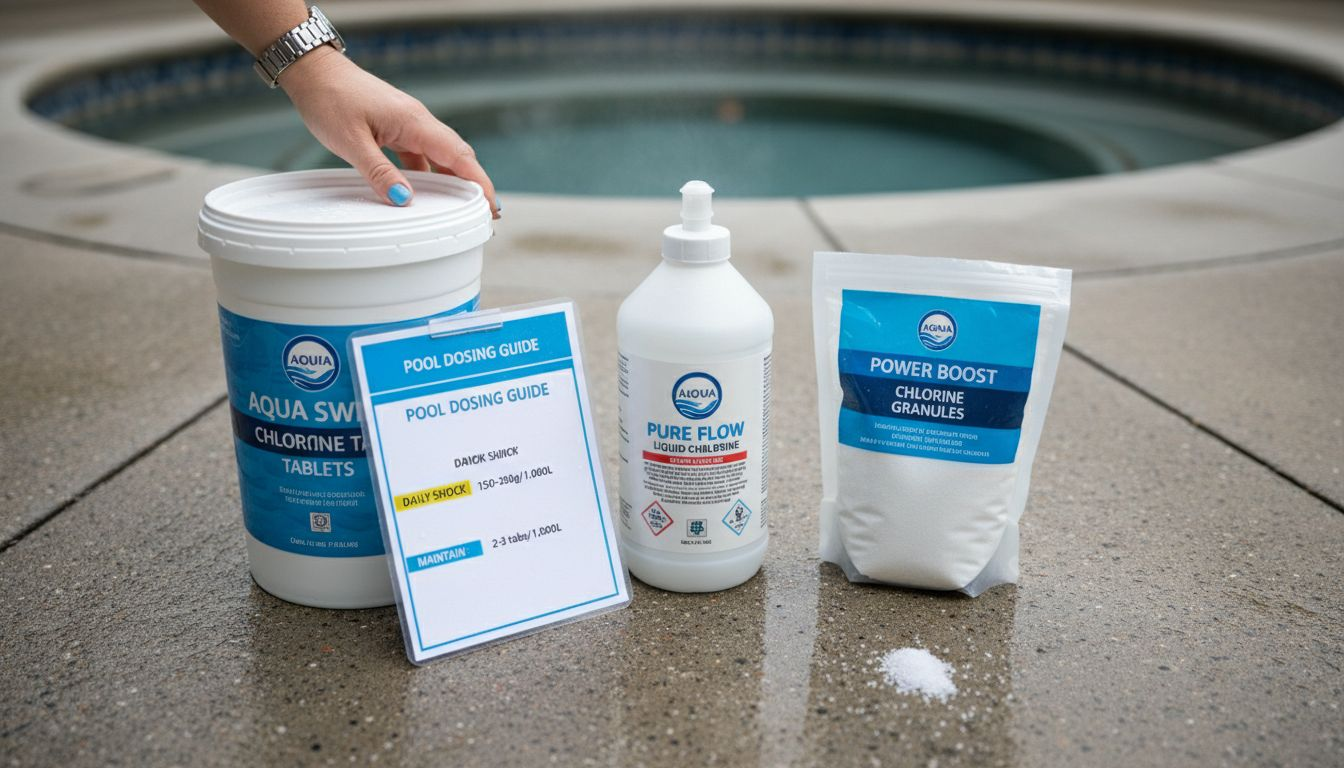
Here is how the common spa chlorine types compare:
| Chlorine Compound | Typical Use in Spa | Key Advantages | Notable Drawbacks |
|---|---|---|---|
| Calcium Hypochlorite | Tablet dosing for regular | Simple measurement, long shelf life | Leaves calcium residue |
| Liquid Chlorine Hypochlorite | Rapid-response dosing | Fast action, easy mixing | Lower concentration, degrades fast |
| Chlorine Dioxide | Advanced spa disinfection | Reduces odour, less corrosive | Special handling requirements |
Selecting the right chlorine compound is crucial for maintaining optimal water hygiene and protecting spa users from potential microbial risks.
Pro tip: Consult with a water treatment professional to determine the most suitable chlorine type for your specific spa environment and usage patterns.
Safe Dosing and Application Standards
Holding chlorine concentrations steady takes real care over dosing standards and how you measure. Water quality guidelines set the key parameters for safe, effective treatment, and they lean hard on steady monitoring and controlled dosing.
The dosing standards to work to are:
- Optimal Chlorine Concentration:
- 1-3 parts per million (ppm) free chlorine
- Immediate action required if levels exceed 5 ppm
- Prevents microbial growth while avoiding chemical overexposure
- Monitoring Frequency:
- Test water chemistry minimum three times daily
- Check pH levels (ideal range 7.2-7.6)
- Record all test results and corrective actions
- Dosing Calculations:
- Use approved 'ready-reckoner' tables
- Calculate precise chlorine quantities
- Ensure accurate and consistent application
Temperature and water volume both matter a great deal when working out the right dose. Operators need to flex their treatment around how busy the spa is, the bather load and the conditions on the day.
Precision in chlorine dosing is not just a technical requirement - it's a fundamental aspect of ensuring user safety and maintaining water quality.
Pro tip: Invest in a reliable digital water testing kit to simplify and standardise your chlorine concentration measurements.
Health Risks and Common Mistakes
Chlorine management asks for a careful eye to keep both health hazards and slip-ups at bay. Chlorine exposure risks cover a range of concerns that operators need to understand and get ahead of.
The common risks and mistakes to watch for are:
- Respiratory Complications:
- Can exacerbate existing asthma conditions
- Potential for toxic inhalation
- Irritation of mucous membranes
- Chemical Mishandling:
- Improper ventilation during chemical preparation
- Failure to use protective personal equipment
- Incorrect chemical storage and mixing
- Water Chemistry Errors:
- Excessive chlorine concentration
- Inadequate pH balance
- Inconsistent monitoring practices
Skin and eye irritation are the big risks when chlorine is not handled well. Operators need firm safety routines in place to protect staff and bathers alike from any chemical-related trouble.
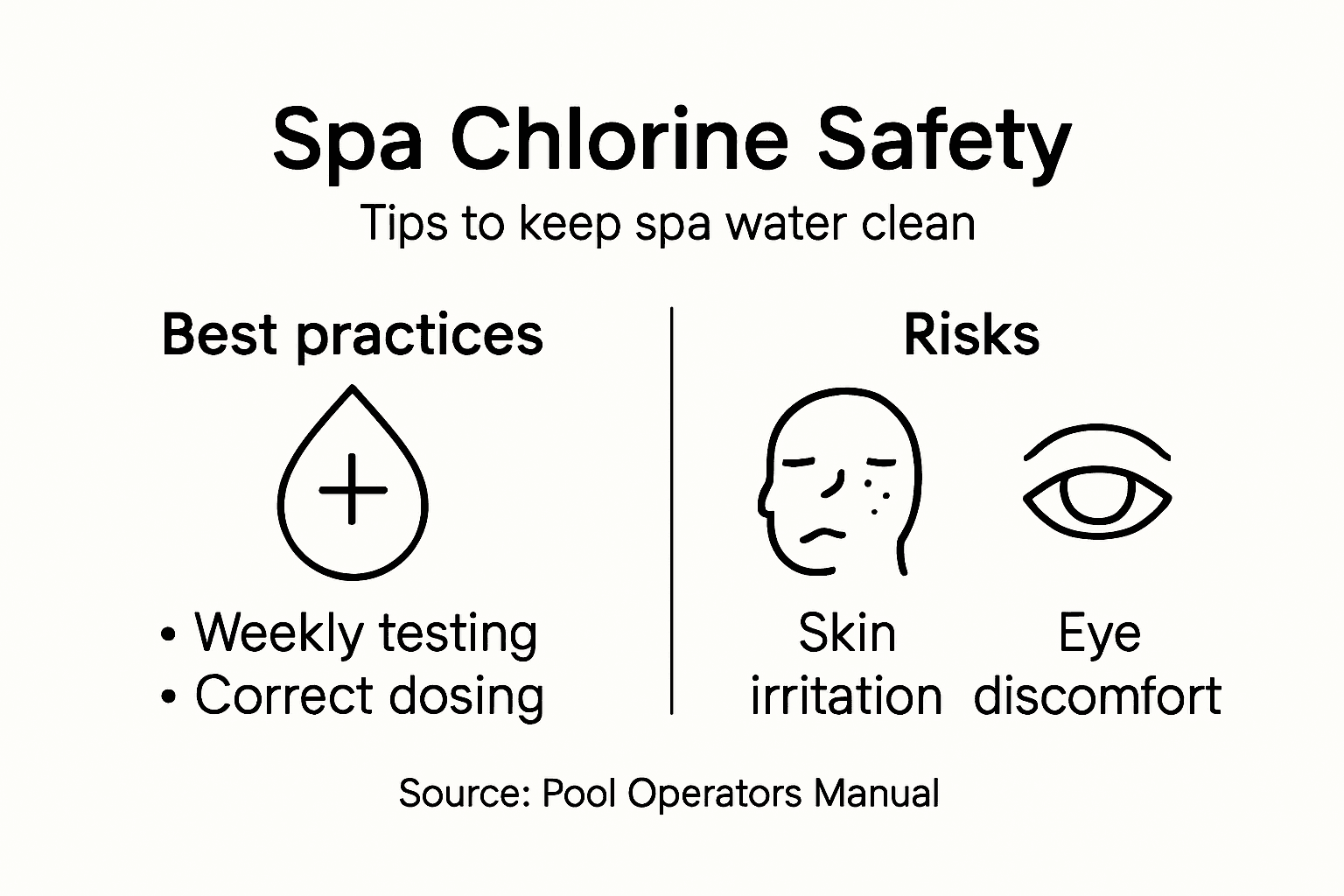
The table below sets out the common water risks alongside practical ways to prevent them:
| Risk Category | Example Hazard | Prevention Method |
|---|---|---|
| Respiratory Issues | Mucous membrane irritation | Ensure good ventilation |
| Chemical Exposure | Skin/eye contact with chlorine | Use gloves and safety goggles |
| Water Imbalance | Excess chlorine or low pH | Monitor levels three times daily |
| Inadequate Training | Incorrect chemical application | Provide certified staff training |
Vigilance in chlorine management is not optional - it's a critical responsibility that directly impacts user safety and health.
Pro tip: Create a comprehensive safety checklist and train all staff members on proper chlorine handling and emergency response procedures.
UK Legal Responsibilities for Spa Operators
Spa operators in the UK carry firm legal duties around water safety and protecting users. The National Pool Plant Operators Certificate is the benchmark for sound water management and staying on the right side of the rules in hydrotherapy settings.
Those duties fall into a few critical areas:
- Water Hygiene Management:
- Maintain strict water quality standards
- Implement regular chemical testing protocols
- Document and record water treatment procedures
- Risk Assessment:
- Conduct comprehensive safety evaluations
- Identify potential health hazards
- Develop mitigation strategies for water-related risks
- Staff Training Requirements:
- Ensure staff obtain recognised professional certifications
- Provide ongoing training in water treatment techniques
- Maintain updated competency records
Under the Health and Social Care Act, operators have to show they are actively working to prevent avoidable harm. That means sound disinfection, safe equipment and solid infection control across the board.
Legal compliance is not merely a bureaucratic requirement, but a fundamental duty of care towards spa users and staff.
Pro tip: Develop a comprehensive compliance manual that details all regulatory requirements and keeps your documentation systematically organised and easily accessible.
Alternatives to Chlorine-Based Spa Treatment
Spa treatment keeps moving on, and newer options are stepping up to cover the gaps that traditional chlorine leaves behind. Monochloramine presents a promising alternative that offers better water management while easing some of chlorine's downsides.
The main alternatives to chlorine-based treatment are:
- Bromine-Based Treatments:
- More stable at higher temperatures
- Less irritating to skin and eyes
- Effective across broader pH ranges
- Monochloramine Disinfection:
- Longer-lasting residual protection
- Reduced corrosion potential
- Enhanced biofilm penetration
- Natural Antimicrobial Strategies:
- Exploring biological compounds
- Potentially lower chemical exposure
- Inspired by natural brine environments
Each of these brings something different, tackling particular problems that come with plain chlorine. Which one suits you depends on your spa, how sensitive your users are, and what you want from your water management.
Alternative sanitisation methods are not about replacing chlorine entirely, but about finding more sophisticated and user-friendly water treatment solutions.
Pro tip: Consider consulting a water treatment specialist to evaluate the most suitable alternative sanitisation method for your specific spa environment.
Ensure Crystal Clear Spa Water with Expert Chlorine Solutions
Holding chlorine between 1 and 3 ppm is what keeps spa water safe, clear and pleasant to sit in. As we have covered, accurate dosing and steady monitoring are what keep health risks such as breathing trouble and irritation at bay. With everything from safe handling to legal compliance to keep on top of, spa water treatment can feel like a handful.

Zagosa Spa & Pool makes it easier with a full range of premium water treatment products built for spa care. Whether you want reliable chlorine tablets, liquid hypochlorite or specialist additives, our products back your aim of keeping the water hygienic day in, day out. Visit Zagosa Spa & Pool now to explore trusted solutions that take the strain out of spa maintenance. Take charge of your water quality today and protect yourself, your guests and your spa.
Frequently Asked Questions
What is the role of chlorine in spa water management?
Chlorine is a critical sanitisation agent that eliminates harmful microorganisms, prevents biofilm formation, maintains water clarity, and controls pathogen spread, ensuring a safe environment for spa users.
How do I maintain optimal chlorine levels in my spa?
Maintain free chlorine levels between 1 and 3 parts per million (ppm). Test your spa water weekly and adjust concentrations as needed, taking care to respond immediately if levels exceed 5 ppm to prevent irritation and imbalances.
What types of chlorine compounds are commonly used in spas?
Commonly used chlorine compounds in spas include calcium hypochlorite tablets, liquid chlorine hypochlorites, and chlorine dioxide, each offering unique benefits and considerations for effective water sanitisation.
What precautions should I take when handling chlorine for my spa?
Ensure proper ventilation during chemical preparation, use protective personal equipment like gloves and goggles, and follow safe storage and mixing practices to avoid health risks from chlorine exposure.